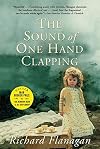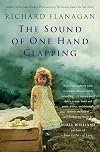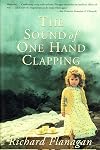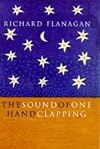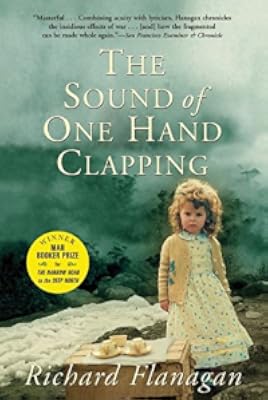
The Sound of One Hand Clapping
by Richard Flanagan
On This Page
Description
In the winter of 1954, in a construction camp in the remote Tasmanian highlands, when Sonja Buloh was three years old and her father was drinking too much, Sonja's mother walked into a blizzard never to return. Some thirty-five years later, when Sonja visits Tasmania and her drunkard father, the shadows of the past begin to intrude ever more forcefully into the present - changing for ever his living death and her ordered life...The Sound Of One Hand Clapping is about the underbelly of show more Australia, the barbarism of Europe, and the destiny of those in the country beyond hope who seek to redeem themselves through love. 'Heart-wrenching and beautifully written... show lessTags
Recommendations




















Member Recommendations
Member Reviews
Review of: The Sound of One Hand Clapping, by Richard Flanagan
by Stan Prager (6-4-17)
To my mind, great literature is best defined by the visceral reaction it triggers and its stubborn lingering effect. After the plot has faded, the names of the characters erased, and the book itself diminished by passing time into a sort of vague mental snapshot of its encounter, the way a great novel makes you feel while you read it cuts a kind of indelible groove that resonates long after the cover is closed. That is not only fine writing: that is art. And that is the art in the novels crafted by Tasmanian author Richard Flanagan.
My first encounter with Flanagan was Gould’s Book of Fish, a stunningly original and brilliant blend of satire, show more heartache, love, cruelty, comedy, and existential tragedy, tossed with a superb use of magical realism. Think William Faulkner, Gabriel Garcia Marquez and John Irving, all stirring the same pot with different shaped spoons. Originally published in 2001, I consider it the finest novel of the millennium to date. I have since read five of the six books Flanagan has written, including The Narrow Road to the Deep North, winner of the prestigious Man Booker Prize in 2014. *
The Sound of One Hand Clapping is a much earlier work, published in 1997. The central character is Sonja Buloh, a strong but troubled woman in her late-thirties who returns to her birthplace in Tasmania. The novel’s title–adapted from the famous Zen kōan–evokes the bleak narrative that marked the formative years of Sonja’s life, abandoned at three years old by a mother who disappears into a blizzard, and thereafter shuttled between various temporary households by her often alcoholic and sometimes violent father, Bojan Bojan, a Slovenian immigrant whose parenting ranges from adoration to abuse. Flourishing a technique reminiscent of André Brink in A Chain of Voices, Flanagan skillfully moves between moments in time without losing anchor to the present, exploring Sonja’s childhood and, significantly, Bojan’s young manhood, which smacks of memories littered with atrocities and corpses of Nazis and Slovenian partisans. This is a book of much tragedy, of much disappointment, yet also one of hope and redemption. There is just a hint of the magical realism later manifested Gould’s Book of Fish. But there is here, as in all of Flanagan’s fiction, an abundance of fine prose as well as a masterful use of the objective correlative–a literary device that conjures emotion in the inanimate–often seen in the works of Hemingway and Garcia Marquez.
The Sound of One Hand Clapping has much of the feel of a first novel, although it is not. Flanagan’s first novel was the magnificent Death of a River Guide, which was no doubt a hard act to follow. ** One Hand Clapping seems rougher and less sophisticated than River Guide. There are portions that seem extraneous and beg for edit. It can be slow-going, especially because the elements that make you want to care about the characters are not fully fleshed out until the last third of the book. On more than one occasion there is the thud of the anticlimactic dully falling flat. And yet …
And yet the quality of the prose never disappoints; warts-and-all this is a novel that generously rewards the reader for patience and loyalty to the narrative. After it is done, there remains a powerful urge to read it through again. There are few writers of contemporary literary fiction that can deliver at this level, something a review like this can certainly attest but by all rights demands to be heard in Flanagan’s own voice:
In the great forests beyond, the devils and quolls and possums and potaroos and wombats and wallabies also came to curious life in the night, and they roamed the earth for what little they could scavenge to keep themselves alive, and when they mistakenly ventured onto the new gravel roads that were everywhere invading their world, it was to be mesmerised by the sudden shock of moving electric light that rendered them no longer an element of the great forests or plains, but a poor pitiful creature alone whose fate it was to be crushed between rubber and metal. Having being shown by the electric light to have no existence or meaning or world beyond a glaring outline upon the gravel, each animal was killed easily by the men who drove drunk to and from their place of work, heading to or from the whores and grog and the card games of the bigger towns. By day the roads were speckled red with the resultant carnage and startled hawks feasting on the carcasses would hastily rise into the air dragging rapidly unravelling viscera behind them, a shock of bloodied intestine stretching across the blue sky as if the world itself were wounded. Jiri had told Bojan some people believed that the animals reincarnated as spirits or other animals or even as people. But when Bojan hit a fellow animal he hoped he had done it a favour and relieved it of the burden of life forever. [p268-69]
That is great literature. That is art. That is why, even if it is not his finest novel, The Sound of One Hand Clapping should be penciled into everyone’s to-be-read list.
* I reviewed The Narrow Road to the Deep North here: https://regarp.com/2015/02/02/review-of-the-narrow-road-to-the-deep-north-by-ric...
** I reviewed Death of a River Guide here: https://regarp.com/2015/07/23/review-of-death-of-a-river-guide-by-richard-flanag...
My review of The Sound of One Hand Clapping by Richard Flanagan is live on the book blog here http://wp.me/p5Hb6f-dF show less
by Stan Prager (6-4-17)
To my mind, great literature is best defined by the visceral reaction it triggers and its stubborn lingering effect. After the plot has faded, the names of the characters erased, and the book itself diminished by passing time into a sort of vague mental snapshot of its encounter, the way a great novel makes you feel while you read it cuts a kind of indelible groove that resonates long after the cover is closed. That is not only fine writing: that is art. And that is the art in the novels crafted by Tasmanian author Richard Flanagan.
My first encounter with Flanagan was Gould’s Book of Fish, a stunningly original and brilliant blend of satire, show more heartache, love, cruelty, comedy, and existential tragedy, tossed with a superb use of magical realism. Think William Faulkner, Gabriel Garcia Marquez and John Irving, all stirring the same pot with different shaped spoons. Originally published in 2001, I consider it the finest novel of the millennium to date. I have since read five of the six books Flanagan has written, including The Narrow Road to the Deep North, winner of the prestigious Man Booker Prize in 2014. *
The Sound of One Hand Clapping is a much earlier work, published in 1997. The central character is Sonja Buloh, a strong but troubled woman in her late-thirties who returns to her birthplace in Tasmania. The novel’s title–adapted from the famous Zen kōan–evokes the bleak narrative that marked the formative years of Sonja’s life, abandoned at three years old by a mother who disappears into a blizzard, and thereafter shuttled between various temporary households by her often alcoholic and sometimes violent father, Bojan Bojan, a Slovenian immigrant whose parenting ranges from adoration to abuse. Flourishing a technique reminiscent of André Brink in A Chain of Voices, Flanagan skillfully moves between moments in time without losing anchor to the present, exploring Sonja’s childhood and, significantly, Bojan’s young manhood, which smacks of memories littered with atrocities and corpses of Nazis and Slovenian partisans. This is a book of much tragedy, of much disappointment, yet also one of hope and redemption. There is just a hint of the magical realism later manifested Gould’s Book of Fish. But there is here, as in all of Flanagan’s fiction, an abundance of fine prose as well as a masterful use of the objective correlative–a literary device that conjures emotion in the inanimate–often seen in the works of Hemingway and Garcia Marquez.
The Sound of One Hand Clapping has much of the feel of a first novel, although it is not. Flanagan’s first novel was the magnificent Death of a River Guide, which was no doubt a hard act to follow. ** One Hand Clapping seems rougher and less sophisticated than River Guide. There are portions that seem extraneous and beg for edit. It can be slow-going, especially because the elements that make you want to care about the characters are not fully fleshed out until the last third of the book. On more than one occasion there is the thud of the anticlimactic dully falling flat. And yet …
And yet the quality of the prose never disappoints; warts-and-all this is a novel that generously rewards the reader for patience and loyalty to the narrative. After it is done, there remains a powerful urge to read it through again. There are few writers of contemporary literary fiction that can deliver at this level, something a review like this can certainly attest but by all rights demands to be heard in Flanagan’s own voice:
In the great forests beyond, the devils and quolls and possums and potaroos and wombats and wallabies also came to curious life in the night, and they roamed the earth for what little they could scavenge to keep themselves alive, and when they mistakenly ventured onto the new gravel roads that were everywhere invading their world, it was to be mesmerised by the sudden shock of moving electric light that rendered them no longer an element of the great forests or plains, but a poor pitiful creature alone whose fate it was to be crushed between rubber and metal. Having being shown by the electric light to have no existence or meaning or world beyond a glaring outline upon the gravel, each animal was killed easily by the men who drove drunk to and from their place of work, heading to or from the whores and grog and the card games of the bigger towns. By day the roads were speckled red with the resultant carnage and startled hawks feasting on the carcasses would hastily rise into the air dragging rapidly unravelling viscera behind them, a shock of bloodied intestine stretching across the blue sky as if the world itself were wounded. Jiri had told Bojan some people believed that the animals reincarnated as spirits or other animals or even as people. But when Bojan hit a fellow animal he hoped he had done it a favour and relieved it of the burden of life forever. [p268-69]
That is great literature. That is art. That is why, even if it is not his finest novel, The Sound of One Hand Clapping should be penciled into everyone’s to-be-read list.
* I reviewed The Narrow Road to the Deep North here: https://regarp.com/2015/02/02/review-of-the-narrow-road-to-the-deep-north-by-ric...
** I reviewed Death of a River Guide here: https://regarp.com/2015/07/23/review-of-death-of-a-river-guide-by-richard-flanag...
My review of The Sound of One Hand Clapping by Richard Flanagan is live on the book blog here http://wp.me/p5Hb6f-dF show less
I knew the title was a koan, but had to look it up......
"What is the Sound of the Single Hand clapping? When you clap together both hands a sharp sound is heard; when you raise the one hand there is neither sound nor smell. Is this the High Heaven of which Confucius speaks? Or is it the essentials of what Yamamba describes in these words: "The echo of the completely empty valley bears tidings heard from the soundless sound?" This is something that can by no means be heard with the ear. If conceptions and discriminations are not mixed within it and it is quite apart from seeing, hearing, perceiving, and knowing, and if, while walking, standing, sitting, and reclining, you proceed straightforwardly without interruption in the study of show more this koan, you will suddenly pluck out the karmic root of birth and death and break down the cave of ignorance. Thus you will attain to a peace in which the phoenix has left the golden net and the crane has been set free of the basket. At this time the basis of mind, consciousness, and emotion is suddenly shattered; the realm of illusion with its endless sinking in the cycle of birth and death is overturned." p.164, Yabukoji, in The Zen Master Hakuin: Selected Writings, Translated by Philip B. Yampolsky,
In the winter of 1954, in a remote Tasmanian hydroelectric construction camp of migrant workers, Sonja Buloh’s mother walks out of their hut, leaving her three year old daughter alone. Her distraught father Bojan perseveres with the dream of a new life in a new country, but he is soon crushed into an alcoholic despair. By the time Sonja turns 16, she is driven to leave him. Nearly 20 years later, single and pregnant, she returns to Tasmania’s highlands and her father, in an attempt to put the pieces of her life into some perspective. Initial awkwardness and pain notwithstanding, she slowly unravels her family’s history, especially a secret she never knew about her vanished mother.
This is also about a hidden dark side of Australia's multiculturalism, of the struggle of migrants & refugees in a new unfamiliar land, in a time when there were no counsellors and people were expected to get on with living and not talk about their past. While Sonja and her family are from war torn Slovenia you don't find too many facts about it here and although Bojan does talk about it briefly, it's more their emotional limbo & pain you become immersed in as you read, & not so much the particulars of their past horrors. Personally would have liked more background about their life in Slovenia, but it isn't that kind of story - it's not a history in that sense. Flanagan manages to get inside Sonja's head so well you begin to think the writer might be a woman. On the other hand sometimes I felt Bojan's character a little typecast and undeveloped until the end of the book where he begins to blossom and find hope and redemption. Perhaps that was Flanagan's way to show him speechless & lost in a new land.
While not all migrants suffered like Bojan's family when they arrived in Australia, from what I know the hydroelectric construction camp in Tasmania was remote and conditions would have been hard & bleak. As a child I visited the Snowy River Scheme in NSW with my parents, my father thinking of working there. My mother took one look at the camps and refused point blank. Not everyone would have had that option. The Snowy River Scheme took 25 years to build and was completed in 1974. More than 100,000 people from over 30 countries came to work in the mountains. It makes you think what were their stories and were they redeemed like Bojan?.
......................................................................
About to re-read this again (2010), I was distracted the first time around (2000).
This is also a film, has anyone seen it?
Halfway through.
So far.... Infinitely sad, infinitely brutal, infinitely beautiful. show less
"What is the Sound of the Single Hand clapping? When you clap together both hands a sharp sound is heard; when you raise the one hand there is neither sound nor smell. Is this the High Heaven of which Confucius speaks? Or is it the essentials of what Yamamba describes in these words: "The echo of the completely empty valley bears tidings heard from the soundless sound?" This is something that can by no means be heard with the ear. If conceptions and discriminations are not mixed within it and it is quite apart from seeing, hearing, perceiving, and knowing, and if, while walking, standing, sitting, and reclining, you proceed straightforwardly without interruption in the study of show more this koan, you will suddenly pluck out the karmic root of birth and death and break down the cave of ignorance. Thus you will attain to a peace in which the phoenix has left the golden net and the crane has been set free of the basket. At this time the basis of mind, consciousness, and emotion is suddenly shattered; the realm of illusion with its endless sinking in the cycle of birth and death is overturned." p.164, Yabukoji, in The Zen Master Hakuin: Selected Writings, Translated by Philip B. Yampolsky,
In the winter of 1954, in a remote Tasmanian hydroelectric construction camp of migrant workers, Sonja Buloh’s mother walks out of their hut, leaving her three year old daughter alone. Her distraught father Bojan perseveres with the dream of a new life in a new country, but he is soon crushed into an alcoholic despair. By the time Sonja turns 16, she is driven to leave him. Nearly 20 years later, single and pregnant, she returns to Tasmania’s highlands and her father, in an attempt to put the pieces of her life into some perspective. Initial awkwardness and pain notwithstanding, she slowly unravels her family’s history, especially a secret she never knew about her vanished mother.
This is also about a hidden dark side of Australia's multiculturalism, of the struggle of migrants & refugees in a new unfamiliar land, in a time when there were no counsellors and people were expected to get on with living and not talk about their past. While Sonja and her family are from war torn Slovenia you don't find too many facts about it here and although Bojan does talk about it briefly, it's more their emotional limbo & pain you become immersed in as you read, & not so much the particulars of their past horrors. Personally would have liked more background about their life in Slovenia, but it isn't that kind of story - it's not a history in that sense. Flanagan manages to get inside Sonja's head so well you begin to think the writer might be a woman. On the other hand sometimes I felt Bojan's character a little typecast and undeveloped until the end of the book where he begins to blossom and find hope and redemption. Perhaps that was Flanagan's way to show him speechless & lost in a new land.
While not all migrants suffered like Bojan's family when they arrived in Australia, from what I know the hydroelectric construction camp in Tasmania was remote and conditions would have been hard & bleak. As a child I visited the Snowy River Scheme in NSW with my parents, my father thinking of working there. My mother took one look at the camps and refused point blank. Not everyone would have had that option. The Snowy River Scheme took 25 years to build and was completed in 1974. More than 100,000 people from over 30 countries came to work in the mountains. It makes you think what were their stories and were they redeemed like Bojan?.
......................................................................
About to re-read this again (2010), I was distracted the first time around (2000).
This is also a film, has anyone seen it?
Halfway through.
So far.... Infinitely sad, infinitely brutal, infinitely beautiful. show less
If you like relentless misery this could well be the book for you. The story of a European immigrant family living in Tasmania in the 1950s sounded interesting enough, but I think it was the manner of the telling that put me off. I acknowledge the author has a poetic way with words, and could write about the wild landscape of Tasmania for page after page and make it different every time, but I found myself dragged down by the constant unhappiness and dissatisfaction. I’ve enjoyed plenty of downbeat books but in this case there seemed too little in the way of dialogue or proper sketching of personality for me to get a grip on the characters emotionally. They just felt like blobs of introspective misery. Occasionally, the story would show more spark into life – the bits involving the Heaney family and the dunny were like the sun coming out, though it was only temporary. It soon went back behind its cloud. I’ve given the book a low-ish star rating – not because it’s a bad book but because it just wasn’t something I enjoyed reading. show less
Telling the story of a brutish Slovenian refugee who arrived in Tasmania with his wife and young daughter around 1954, Flanagan gradually reveals the extent of the familial dysfunctionality But without judgement.
His writing is smooth as ever, with some wonderful phrases. This one caught me enough to write down. There could be a dozen others:
“The chipboard was held together with his tears and the laminex with his love. And every day he was smuggling out of that cavernous workshop his message to them all.”
His writing is smooth as ever, with some wonderful phrases. This one caught me enough to write down. There could be a dozen others:
“The chipboard was held together with his tears and the laminex with his love. And every day he was smuggling out of that cavernous workshop his message to them all.”
An intriguing examination of an immigrant past and a new future, fractured by tragedy and memory. I do believe, though, that Flanagan's writing improved after the early novels.
Beautifully written, this was the most depressing book i've read since One Day In The Life Of Ivan Denisovitch. An unrelenting and very personal story of the pain of war, dislocation, and alcoholism.
Obviously, I have an interest in this book from the perspective of the Slovenian immigrants in Australia after the Second World War. I've never read any other of Flanagan's works so this was the first time I came into contact with his prose.
While I liked the story and how Flanagan developed the inner workings of the two main protagonists, his style of writing wasn't really to my taste. I found some of his metaphors too obvious and the style in places (particularly the passages dealing with the past) too lyrical and pompous for my taste. But the story was compelling enough to divert my attention enough so I could nevertheless enjoy the read.
While I liked the story and how Flanagan developed the inner workings of the two main protagonists, his style of writing wasn't really to my taste. I found some of his metaphors too obvious and the style in places (particularly the passages dealing with the past) too lyrical and pompous for my taste. But the story was compelling enough to divert my attention enough so I could nevertheless enjoy the read.
Members
- Recently Added By
Lists

A Novel Cure
742 works; 23 members
Author Information

21+ Works 9,947 Members
Richard Flanagan was born in Longford, Tasmania, in 1961. He received a Master of Letters degree from Oxford University. His first novel, Death of a River Guide, won Australia's National Fiction Award. His works include The Sound of One Hand Clapping, The Unknown Terrorist, and four history books. He has received numerous awards including the show more Commonwealth Writers Prize for Gould's Book of Fish, the 2011 Tasmania Book Prize for Wanting, and the 2014 Man Booker Prize for The Narrow Road to the Deep North. He directed a feature film version of The Sound of One Hand Clapping. He was also shortlisted for the UK Indie Booksellers Award with The Narrow Road to the Deep North. This same title was won the Margaret Scott Prize for best book by a Tasmanian writer 2015. In 2018, The Narrow Road to the Deep North will be made into an international television series. The University of Melbourne has appointed him as the Boisbouvier Founding Chair in Australian Literature at the University of Melbourne, a new professorship to 'advance the teaching, understanding and public appreciation of Australian literature'. (Bowker Author Biography) show less
Some Editions
Awards and Honors
Common Knowledge
- Canonical title
- The Sound of One Hand Clapping
- Original title
- The Sound of One Hand Clapping
- Original publication date
- 1997
- People/Characters
- Bojan Buloh; Sonja Buloh; Maria Buloh
- Important places
- Australia; Tasmania, Australia
- Related movies
- The Sound of One Hand Clapping (1998 | IMDb)
- Dedication
- for
Archie Flanagan
Helen Flanagan
Anton Smolej
Forgive me its failings, but I tell it with love. - First words
- All this you will come to understand but can never know, and all of it took place long, long ago in a world that has since perished into peat, in a forgotten winter on an island of which few have ever heard.
- Original language
- English
- Disambiguation notice*
- Paru chez Actes Sud sous le titre : L'odeur d'un arbre sans fleurs
*Some information comes from Common Knowledge in other languages. Click "Edit" for more information.
Classifications
Statistics
- Members
- 836
- Popularity
- 32,941
- Reviews
- 18
- Rating
- (3.60)
- Languages
- 8 — Danish, Dutch, English, French, German, Italian, Polish, Romanian
- Media
- Paper, Audiobook, Ebook
- ISBNs
- 34
- ASINs
- 5