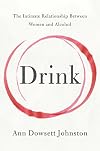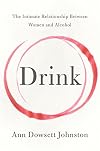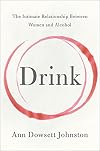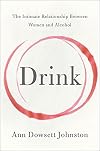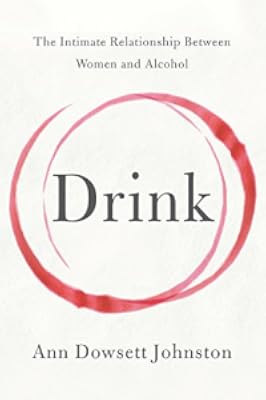
Drink: The Intimate Relationship Between Women and Alcohol
by Ann Dowsett Johnston
On This Page
Description
"In Drink: The Intimate Relationship Between Women and Alcohol, award-winning journalist Anne Dowsett Johnston combines in-depth research with her own personal story of recovery, and delivers a groundbreaking examination of a shocking yet little recognized epidemic threatening society today: the precipitous rise in risky drinking among women and girls.With the feminist revolution, women have closed the gender gap in their professional and educational lives. They have also achieved equality show more with men in more troubling areas as well. In the U.S. alone, the rates of alcohol abuse among women have skyrocketed in the past decade. DUIs, "drunkorexia" (choosing to limit eating to consume greater quantities of alcohol), and health problems connected to drinking are all rising--a problem exacerbated by the alcohol industry itself.Battling for women's dollars and leisure time, corporations have developed marketing strategies and products targeted exclusively to women. Equally alarming is a recent CDC report showing a sharp rise in binge drinking, putting women and girls at further risk.As she brilliantly weaves in-depth research, interviews with leading researchers, and the moving story of her own struggle with alcohol abuse, Johnston illuminates this startling epidemic, dissecting the psychological, social, and industry factors that have contributed to its rise, and exploring its long-lasting impact on our society and individual lives"-- "An exploration of the rise in alcohol consumption and abuse among women in recent years. Drink covers health risks, marketing, current trends and sociological underpinnings of this new epidemic. The author beautifully weaves reportage with her personal recovery story into a compelling and informative narrative addressing one of the most pressing issues for women today"-- show lessTags
Recommendations







Member Reviews
Interesting take on alcohol in American culture and how alcohol companies began targeting advertising and products towards women, especially since the rise of feminism in the 60s and 70s. Woman have made gains for equality in a lot areas but also caught up to men when it comes to numbers of alcoholics and the diseases that are associated with alcohol.
None of this is revolutionary, just things I wouldn't have thought of without being shown what has happened. She starts with her story and gives more details about her life throughout the book but includes a lot of anecdotes from other women she has talked to in her research for this book.
A big take away from this book is the stigma that surrounds alcoholism in North America especially show more when it comes to women. Very few women allowed their real names to be used in association with their stories. In addition, every woman she talked to and asked, would you rather people know you had depression or were an alcoholic, chose depression. show less
None of this is revolutionary, just things I wouldn't have thought of without being shown what has happened. She starts with her story and gives more details about her life throughout the book but includes a lot of anecdotes from other women she has talked to in her research for this book.
A big take away from this book is the stigma that surrounds alcoholism in North America especially show more when it comes to women. Very few women allowed their real names to be used in association with their stories. In addition, every woman she talked to and asked, would you rather people know you had depression or were an alcoholic, chose depression. show less
I wish the author would have stuck with journalistic reporting. Those parts of the book were very good. Eye-opening and scary at times. However, her recounting of her personal sobriety journey was tiresome. I found it especially difficult to appreciate her soul-searching ramblings that occurred during her lengthy (and costly) meditative retreats when earlier in the book she outlined the incidence of alcoholism and struggles of young, economically disadvantaged women.
Thins is a book which should be read by every woman, even if you don't think you have a problem with alcohol. You may know someone who does and this book would be very helpful to them.I quit drinking almost three years ago because I thought I was turning into a drunk. Although I did not go through the pain and suffering that the author did, I'm really glad that I quit. The book is the author's journey to recovery. Along the way she provides a great deal of information about what's going on today with women and alcohol. A number of things that I learned are that women are drinking more now than ever before; if you have a good job and the finances to do so, you will drink more; drinking is often caused by a trauma in your past; recovery show more is painful and will likely be followed by depression; binge drinking is on the increase with younger drinkers; young women are trying to keep,up,with their male counterparts and are bingeing, are often sexually assaulted and have no memory of the events.
This book is full of the research Into alcoholism and women and how the physical and mental impacts are different than on men. Women feel so much shame because of the disease and it's impact on their loved ones.
The author tells her own story of her mother's alcoholism and how this impacted her family.
The booze business is where tobacco was 40 years ago. The advertising for all alcohol products is very subtle where one is guaranteed a good time if one drinks. Public policy needs to start looking at ways of curving advertising and the availability of alcohol to minors.
I highly recommend this show less
This book is full of the research Into alcoholism and women and how the physical and mental impacts are different than on men. Women feel so much shame because of the disease and it's impact on their loved ones.
The author tells her own story of her mother's alcoholism and how this impacted her family.
The booze business is where tobacco was 40 years ago. The advertising for all alcohol products is very subtle where one is guaranteed a good time if one drinks. Public policy needs to start looking at ways of curving advertising and the availability of alcohol to minors.
I highly recommend this show less
In Drink: The Intimate Relationship Between Women and Alcohol, award-winning journalist Anne Dowsett Johnston combines in-depth research with her own personal story of recovery, and delivers a groundbreaking examination of a shocking yet little recognized epidemic threatening society today: the precipitous rise in risky drinking among women and girls.
With the feminist revolution, women have closed the gender gap in their professional and educational lives. They have also achieved equality with men in more troubling areas as well. In the U.S. alone, the rates of alcohol abuse among women have skyrocketed in the past decade. DUIs, “drunkorexia” (choosing to limit eating to consume greater quantities of alcohol), and health problems show more connected to drinking are all rising—a problem exacerbated by the alcohol industry itself.
Battling for women’s dollars and leisure time, corporations have developed marketing strategies and products targeted exclusively to women. Equally alarming is a recent CDC report showing a sharp rise in binge drinking, putting women and girls at further risk.
As she brilliantly weaves in-depth research, interviews with leading researchers, and the moving story of her own struggle with alcohol abuse, Johnston illuminates this startling epidemic, dissecting the psychological, social, and industry factors that have contributed to its rise, and exploring its long-lasting impact on our society and individual lives. show less
With the feminist revolution, women have closed the gender gap in their professional and educational lives. They have also achieved equality with men in more troubling areas as well. In the U.S. alone, the rates of alcohol abuse among women have skyrocketed in the past decade. DUIs, “drunkorexia” (choosing to limit eating to consume greater quantities of alcohol), and health problems show more connected to drinking are all rising—a problem exacerbated by the alcohol industry itself.
Battling for women’s dollars and leisure time, corporations have developed marketing strategies and products targeted exclusively to women. Equally alarming is a recent CDC report showing a sharp rise in binge drinking, putting women and girls at further risk.
As she brilliantly weaves in-depth research, interviews with leading researchers, and the moving story of her own struggle with alcohol abuse, Johnston illuminates this startling epidemic, dissecting the psychological, social, and industry factors that have contributed to its rise, and exploring its long-lasting impact on our society and individual lives. show less
Ratings
Members
- Recently Added By
Lists

Top Five Books of 2018
802 works; 264 members

Books Read in 2014
2,343 works; 89 members
Author Information

6 Works 166 Members
Common Knowledge
- Epigraph
- Our excesses are the best clue we have to our own poverty, and our best way of conceling it from ourselves. -Adam Phillips, British psychoanalyst
the laughing heart
by Charles Bukowski
your life is your life
don't let it be clubbed into dank
submission.
be on the watch.
there are ways out.
there is a light somewhere.
it may not b... (show all)e much light but
it beats the
darkness.
be on the watch.
the gods will offer you
chances.
know them, take them.
you can't beat death but
you can beat death
in life,
sometimes.
and the more often you
learn to do it
the more light there will
be.
your life is your life.
know it while you have
it.
you are marvelous.
the gods wait to delight
in
you. - Dedication
- TO MY MOTHER,
for her courage and love
AND TO NICOLAS,
for his infinite wisdom - First words
- Hang out in the brightly lit rooms of AA, or in coffee shops, talking to dozens of women who have given up drinking, and this is the conclusion you come to: for most, booze is a loan hark, someone they trusted for a while, ca... (show all)me too count on, before it turned ugly. -Prologue
For me, it happened this way: I took a geographic cure to fix what I thought was wrong with my life, and the cure failed. -Chapter 1, The Monkey Diary: The Beginning of the End - Canonical DDC/MDS
- 362.292082
- Canonical LCC
- HV5137.J645
Classifications
- Genres
- Nonfiction, General Nonfiction, Biography & Memoir, Sexuality and Gender Studies
- DDC/MDS
- 362.292082 — Society, government, & culture Social problems and social services Social Welfare Mental illness Substance abuse
- LCC
- HV5137 .J645 — Social sciences Social pathology. Social and public welfare. Criminology Social pathology. Social and public welfare. Alcoholism. Intemperance. Temperance reform
- BISAC
Statistics
- Members
- 161
- Popularity
- 202,875
- Reviews
- 4
- Rating
- (3.42)
- Languages
- English
- Media
- Paper, Audiobook, Ebook
- ISBNs
- 13
- ASINs
- 2