Rosalind Franklin and DNA
by Anne Sayre
On This Page
Description
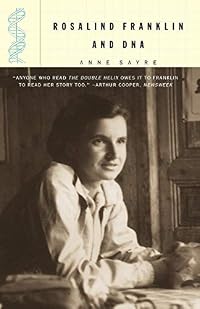
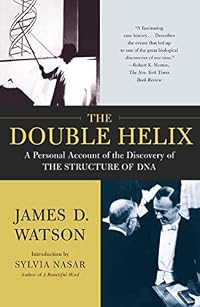
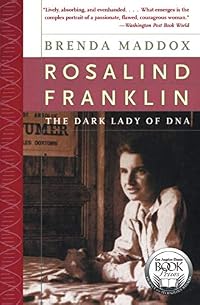
Rosalind Franklin's research was central to the Nobel Prize-winning discovery of DNA's double-helix structure. Known only as the bossy, unfeminine "Rosy" in James Watson's The Double Helix, Franklin never received the credit she was due during her lifetime. In this classic work, the author sets the record straight.Tags
Recommendations










Member Reviews
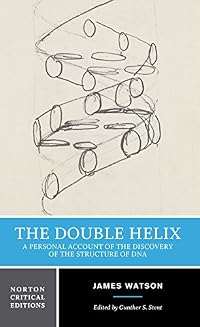
A must read, if you have read The Double Helix. This work serves as a corrective to the "Rosy" presented by Watson, one that many of us saw through without the book about Franklin, because it was so obvious that he was operating in a mode of "woman must appeal to man" - but this book demonstrates that it was more than that, he was actively lying about her, since he referred to spectacles she did not wear, diminished the job she held as a full-fledged scientist down to a mere assistant, and claimed beliefs for her that she never held (and which he had to know she didn't hold, since he had been at a meeting when she had presented a paper defending the helical shape of DNA two years before Watson and Crick presented their model). Well show more written, an easy read. My one complaint is that I think she is too generous to Watson, but then, I am speaking with the benefit of an additional 40 years of experience to which she was not privy when this book was written. show less
OK, so it's probably a little biased because it's clear that the author was close friends with Ms Franklin, but nonetheless, it painted a very interesting picture of the woman who made many contributions to the scientific field, and who alas, received very little recognition for her work. Certainly James Watson who wrote [The Double Helix] appeared to discredit Ms Franklin almost every time he mentions her, even going so far as giving her a diminutive nickname of 'Rosy'.
This book attempts to not just describe Rosalind's drive in challenging herself and others around her, but delves also into her impressive family history, and through that, we start to see how Rosalind's character was shaped. Her confidence and penchant for discussions, show more even her enjoyment of dissenting opinions, was sometimes perceived by other less confident individuals as arrogance. She unfortunately, lived in a time when women were merely tolerated but hardly respected in her chosen fields in England. It was only during her years in Paris that she appeared to be at her happiest, where the environment of enthusiastic discussions and information sharing was, for her, simply ideal.
If her environment at King's College had been similar to what she experienced in Paris, it is thought she may have broken the DNA code much sooner. Instead, apart from a student, she worked in isolation. If not for the copious and detailed notes she took and which survived her, we would not have known how far she had come in her DNA research.
Once Crick and Watson had published their paper on DNA, Rosalind, not only wasn't bitter, but she wrote a supporting paper that displayed her delight in the beauty and perfection of the model. show less
This book attempts to not just describe Rosalind's drive in challenging herself and others around her, but delves also into her impressive family history, and through that, we start to see how Rosalind's character was shaped. Her confidence and penchant for discussions, show more even her enjoyment of dissenting opinions, was sometimes perceived by other less confident individuals as arrogance. She unfortunately, lived in a time when women were merely tolerated but hardly respected in her chosen fields in England. It was only during her years in Paris that she appeared to be at her happiest, where the environment of enthusiastic discussions and information sharing was, for her, simply ideal.
If her environment at King's College had been similar to what she experienced in Paris, it is thought she may have broken the DNA code much sooner. Instead, apart from a student, she worked in isolation. If not for the copious and detailed notes she took and which survived her, we would not have known how far she had come in her DNA research.
Once Crick and Watson had published their paper on DNA, Rosalind, not only wasn't bitter, but she wrote a supporting paper that displayed her delight in the beauty and perfection of the model. show less
Excellent scientific biography, which challenges the self-interested account of the discovery of DNA by James Watson.
Very good condition.
Ratings
Members
- Recently Added By
Lists

al.vick-wishlist-science and nature
83 works; 1 member

In Our Time books
4,934 works; 2 members
Author Information
2+ Works 172 Members
Common Knowledge
- Original publication date
- 1975
- People/Characters
- Rosalind Franklin; Maurice Wilkins
Classifications
Statistics
- Members
- 170
- Popularity
- 189,810
- Reviews
- 4
- Rating
- (3.91)
- Languages
- English, Spanish
- Media
- Paper
- ISBNs
- 4