Safe Space: Gay Neighborhood History and the Politics of Violence (Perverse Modernities: A Series Edited by Jack Halberstam and Lisa Lowe)
by Christina B. Hanhardt
Perverse Modernities
On This Page
Description
A historical and ethnographic account of how LGBT activism for safe neighborhoods inadvertently dovetailed with and reinforced anticrime measures harmful to the poor and people of color.Tags
Recommendations
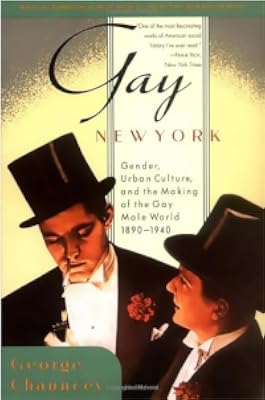

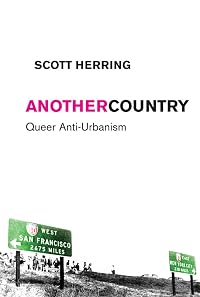
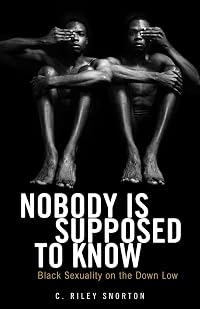
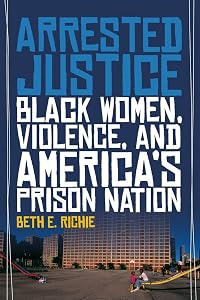









Member Reviews
Where the gays are
Safe Space: Gay Neighborhood History and the Politics of Nonviolence by Christna B. Hanhardt (Duke University Press, $25.95)
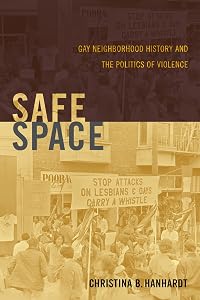
In an interesting turnaround of received wisdom, Christina Hanhardt, a professor at the University of Maryland, posits that rather than offering safety for gays and lesbians fleeing discrimination and violence in the ‘burbs and hamlets, so-called “gay ghettos” or “gayborhoods” actually make violence against gays easier to enact. In one sense, by providing a community for connection, these perceived “safe spaces” made possible the gay rights movement, but at the same time by clustering gay people in one place, they also increased the likelihood of anti-gay violence.
That makes show more sense.
What’s next, though, is a thorough analysis of the ways in which these perceived “safe spaces” have changed over the years, including the gay gentrification of parts of San Francisco and New York (and, from experience, Des Moines—back in the day, we called the what was then-rundown and in the process of being gentrified Sherman Hill neighborhood “homo heights.” It’s now a very desirable address—for people with money).
Hanhardt also tackles issues of racism, classism and gender-policing, especially in Greenwich Village’s “Take Back Our Streets” movement in the early 2000s. While the point, in the Guiliani years, was to go after quality-of-life problems like noise and loitering, in fact most of the “problem” that residents wanted addressed was the influx of black and Latino gay youth to the area around the piers on Hudson River (they’d already been chased out of Washington Park by a police crackdown).
Hanhardt is clear about how gays are not a monolithic group, and that what was, in this instance, perceived as anti-gay by some was actually more about race, class and gender presentation—and was actually supported by some white gays in the neighborhood.
This is a deep and intriguing study of what neighborhood and safety have meant—and seemed to mean—to different facets of the gay community at different times in its development in the period following WWII. The tensions within the community and between white gays and other minority groups (remember blaming Prop. 8 on the black vote? Totally not true, but harmful, nonetheless). Hanhardt does focus extensively on San Francisco and New York, but then, those are the cities with the largest—and most active—gay populations. While obviously written for an academic audience, Safe Space will be accessible to most readers, and offers some insights into ways that gay spaces may not have been quite what we thought they were.
(Published on Lit/Rant on 2/26/2014: http://litrant.tumblr.com/post/77900167224/where-the-gays-are-safe-space-gay-nei... show less
Safe Space: Gay Neighborhood History and the Politics of Nonviolence by Christna B. Hanhardt (Duke University Press, $25.95)
In an interesting turnaround of received wisdom, Christina Hanhardt, a professor at the University of Maryland, posits that rather than offering safety for gays and lesbians fleeing discrimination and violence in the ‘burbs and hamlets, so-called “gay ghettos” or “gayborhoods” actually make violence against gays easier to enact. In one sense, by providing a community for connection, these perceived “safe spaces” made possible the gay rights movement, but at the same time by clustering gay people in one place, they also increased the likelihood of anti-gay violence.
That makes show more sense.
What’s next, though, is a thorough analysis of the ways in which these perceived “safe spaces” have changed over the years, including the gay gentrification of parts of San Francisco and New York (and, from experience, Des Moines—back in the day, we called the what was then-rundown and in the process of being gentrified Sherman Hill neighborhood “homo heights.” It’s now a very desirable address—for people with money).
Hanhardt also tackles issues of racism, classism and gender-policing, especially in Greenwich Village’s “Take Back Our Streets” movement in the early 2000s. While the point, in the Guiliani years, was to go after quality-of-life problems like noise and loitering, in fact most of the “problem” that residents wanted addressed was the influx of black and Latino gay youth to the area around the piers on Hudson River (they’d already been chased out of Washington Park by a police crackdown).
Hanhardt is clear about how gays are not a monolithic group, and that what was, in this instance, perceived as anti-gay by some was actually more about race, class and gender presentation—and was actually supported by some white gays in the neighborhood.
This is a deep and intriguing study of what neighborhood and safety have meant—and seemed to mean—to different facets of the gay community at different times in its development in the period following WWII. The tensions within the community and between white gays and other minority groups (remember blaming Prop. 8 on the black vote? Totally not true, but harmful, nonetheless). Hanhardt does focus extensively on San Francisco and New York, but then, those are the cities with the largest—and most active—gay populations. While obviously written for an academic audience, Safe Space will be accessible to most readers, and offers some insights into ways that gay spaces may not have been quite what we thought they were.
(Published on Lit/Rant on 2/26/2014: http://litrant.tumblr.com/post/77900167224/where-the-gays-are-safe-space-gay-nei... show less
Ratings
Members
- Recently Added By
Lists

Queer History - Specialized
37 works; 1 member
Author Information
1 Work 74 Members
Christina B. Hanhardt is Associate Professor of American Studies at the University of Maryland, College Park.
Awards and Honors
Series

Common Knowledge
- Epigraph
- Every great city has a dumping ground, a plot of land it allocates to the people it will not tolerate anywhere else. The Central City performs this function for the city of San Francisco. Into the target area have been moved ... (show all)all the people and problems our society, at some time in the past, decided it would ignore: the older person, the homosexual, the alcoholic, the dope user, the black (and just about every other minority group), the immigrant, the uneducated, the dislocated alienate youth, -Tom Ramsey
- First words
- On May 6, residents, business owners, and politicians staged an anticrime rally called "Take Back Our Streets" in Christopher Park, in New York City's Greenwich Village. The location chosen was symbolic; the park is located a... (show all)t what had been the center of the uprising at the Stonewall Inn bar, the famed riots of June 1969 that have been central to many legacies of lesbian, gay, bisexual and transgender (LGBT) political organizing. Yet in recent years the memory of "Stonewall" (as the riots are now called) as a long overdue, passionate expression of selfhood often omits the facts that it was a collective challenge to the police and that it was just the latest clash in an ongoing struggle. -Introduction
The observation quoted in the epigraph was made by Tom Ramsey, a political organizer active in San Francisco's Western Addition neighborhood after he was asked in 1968 to assess the viability of San Francisco's downtown Centr... (show all)al City area for mass community action. -Chapter 1, "The White Ghetto," Sexual Deviancy, Police Accountability, and the 1960s War on Poverty - Canonical DDC/MDS
- 306.76
- Canonical LCC
- HQ76.U5
Classifications
- Genres
- Nonfiction, LGBTQ+, Sexuality and Gender Studies, History, General Nonfiction
- DDC/MDS
- 306.76 — Society, government, & culture Social sciences, sociology & anthropology Social Behavior - Dating, Marriage, Divorce Sexual relations Sexual orientation, transgender identity, intersexuality
- LCC
- HQ76 .U5 — Social sciences The family. Marriage, Women and Sexuality The Family. Marriage. Women Sexual life Homosexuality. Lesbianism
- BISAC
Statistics
- Members
- 73
- Popularity
- 421,794
- Reviews
- 1
- Rating
- (4.33)
- Languages
- English
- Media
- Paper, Ebook
- ISBNs
- 4
- ASINs
- 1