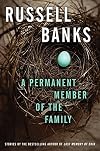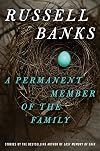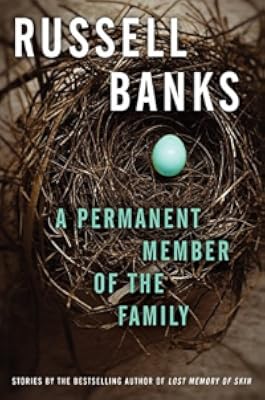
A Permanent Member of the Family
by Russell Banks
On This Page
Description
A collection of twelve short works that portrays contemporary American family life visits morally complex themes in a fractured nation of inhabitants searching for connection and understanding.Tags
Recommendations




Member Reviews
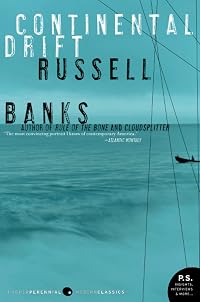
Russell Banks has written some great novels (Continental Drift is still my favorite). But I think he is also a great short story writer. Many of his stories are about people on the boundary, not making it and not completely defeated either.
Ventana in the story Blue is a good example -- having saved $3500, she is ready to buy a used car. She has passed by the lot countless times on her way home from work. The day finally arrives when she can actually buy. She's a nothing to the sales people -- you feel the contrast between how big a day this is for her and how insignificant she and her $3500 are to the sales people. They send her to the back of the lot and forget about her. After closing, she's still there, trapped with a threatening show more guard dog. Pretty much what her life feels like.
The story that really hit home with me was Snowbirds. Isabel's husband has died at 73 years of age. Isabel doesn't react with grief. She realizes she has a second chance, 63 years old herself. A second chance in life at 63. Her friend Jane comes to help her in what Jane believes will be grieving and getting back on her feet -- instead she catches the second chance bug herself. It's not just about having fallen into a rut, it's about having made too much peace with the limitations that the life you have chosen has built around you. There's a contrast between the two women -- one has been set free, as awful as it sounds, by her husband's death; the other has not.
There are 12 stories in the book, most very short, some less than 10 pages. One other story stood out to me, as much for style as for the content of the story itself. Searching for Veronica is a conversation between the narrator, named Russell -- the only time I can remember Banks using his own name in a story -- and a woman in an airport pub. From the beginning the conversation seems unlikely and a little surreal, the woman spilling out a very personal story to a complete stranger without prompting. By the end, Russell has questioned her about the story, whether she made it up to take the place of a much more disturbing story about herself. But we, as the readers of HIS story might begin to wonder if he's making up the story of her story to disguise a disturbing and real story about himself. It's downright postmodern, very out of character for Banks.
Reading this book strangely brought Hunter Thompson to mind for me -- they could hardly be more different writers, especially in style. But each, I think, writes (wrote, in the case of Thompson) about the American Dream. For Thompson, it turned into a hideous illusion, a shimmering Las Vegas facade that perversely twists into its opposite when you get inside it. Banks on the other hand writes about how the dream dies in us, sometimes through our own choices, and sometimes because it never really had much of a chance anyway -- everything would have had to fall improbably right, and in fact, entropy took over. There's something in common between the two in that the myth dies, although for one, in agonizing defiant screeches and, for the other, in a kind of bittersweet unfolding of fate. show less
Ventana in the story Blue is a good example -- having saved $3500, she is ready to buy a used car. She has passed by the lot countless times on her way home from work. The day finally arrives when she can actually buy. She's a nothing to the sales people -- you feel the contrast between how big a day this is for her and how insignificant she and her $3500 are to the sales people. They send her to the back of the lot and forget about her. After closing, she's still there, trapped with a threatening show more guard dog. Pretty much what her life feels like.
The story that really hit home with me was Snowbirds. Isabel's husband has died at 73 years of age. Isabel doesn't react with grief. She realizes she has a second chance, 63 years old herself. A second chance in life at 63. Her friend Jane comes to help her in what Jane believes will be grieving and getting back on her feet -- instead she catches the second chance bug herself. It's not just about having fallen into a rut, it's about having made too much peace with the limitations that the life you have chosen has built around you. There's a contrast between the two women -- one has been set free, as awful as it sounds, by her husband's death; the other has not.
There are 12 stories in the book, most very short, some less than 10 pages. One other story stood out to me, as much for style as for the content of the story itself. Searching for Veronica is a conversation between the narrator, named Russell -- the only time I can remember Banks using his own name in a story -- and a woman in an airport pub. From the beginning the conversation seems unlikely and a little surreal, the woman spilling out a very personal story to a complete stranger without prompting. By the end, Russell has questioned her about the story, whether she made it up to take the place of a much more disturbing story about herself. But we, as the readers of HIS story might begin to wonder if he's making up the story of her story to disguise a disturbing and real story about himself. It's downright postmodern, very out of character for Banks.
Reading this book strangely brought Hunter Thompson to mind for me -- they could hardly be more different writers, especially in style. But each, I think, writes (wrote, in the case of Thompson) about the American Dream. For Thompson, it turned into a hideous illusion, a shimmering Las Vegas facade that perversely twists into its opposite when you get inside it. Banks on the other hand writes about how the dream dies in us, sometimes through our own choices, and sometimes because it never really had much of a chance anyway -- everything would have had to fall improbably right, and in fact, entropy took over. There's something in common between the two in that the myth dies, although for one, in agonizing defiant screeches and, for the other, in a kind of bittersweet unfolding of fate. show less
Not every story is top notch, but good Russell Banks is great for this reader. And there are a couple great Banks stories here, too. I think that he is mapping a picture of America in the present time that will last, without self-consciously trying to "capture our times." He does it one individual at a time...Look forward to his next novel.
I once dreaded short stories, but since so many of my favorite writers have been producing such gems as these stories by Russell Banks, I'm completely won over. Tom Perrotta, Andre Dubus III, Jess Walters - all their collections have been great recent pleasures.
Here Russell Banks explores his two home turfs, mean and rural New Hampshire and frowsy Miami, with realistically rendered characters and situations. In fact, in my favorite "Searching for Veronica", he is in the tale.
Other favorites were "Former Marine", about a father in dire straits, "Transplant", where an organ recipient meets the wife of a his donor, and "Snowbirds", a gem of a widow's tale of two states, NH and FL.
Rather than feeling cheated by the lack of novel length, I'm show more now very happy with the feelings evoked by these brief encounters. show less
Here Russell Banks explores his two home turfs, mean and rural New Hampshire and frowsy Miami, with realistically rendered characters and situations. In fact, in my favorite "Searching for Veronica", he is in the tale.
Other favorites were "Former Marine", about a father in dire straits, "Transplant", where an organ recipient meets the wife of a his donor, and "Snowbirds", a gem of a widow's tale of two states, NH and FL.
Rather than feeling cheated by the lack of novel length, I'm show more now very happy with the feelings evoked by these brief encounters. show less
Russell Banks’ writes a collection of highly accessible stories about Americans, who have failed or are struggling for one reason or another and are now face opportunities for redemption. Should they take a chance, stay the course or just sit it out? The answers are not entirely clear for any of his characters. An African-American woman saves up to pay cash of a used car, but finds herself trapped in a situation that offers her few viable options. A middle-aged plumbing and heating supplier is offered a second chance for an extra-marital dalliance at a convention. An ex-marine resorts to armed robbery to make ends meet after losing his job. A newly widowed woman seeks to convince a close friend to join her in a new life in Florida. A show more heart transplant recipient meets his donor’s widow. Some characters cope with loss while others win big. Still others seem to be content to just sit on the sidelines and watch others. show less
This was my first Russell Banks collection of short stories and it was excellent. Previously I had read a couple of his novels, one of which "The Cloudsplitter" was a great book about John Brown. The stories in this collection were about people mainly in upstate New York or Miami who are dealing with the downside of life. He quickly gets into the story and the characters and writes his prose in a clear style free from the word smithing that we are seeing so much today. I do appreciate an author's ability to use language but a simple style and an interesting story are still what good writing is all about. One story "Blue" about a woman in a used car dealership was worth the entire collection. This was a short collection and having read show more this I now intend to go back and read some more Russell Banks. show less
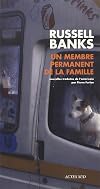
Un mari humilié qui rôde dans la maison de son ex-femme, un serveur déprimé qui invente à une inconnue une vie qui n'est pas la sienne pour la sauver d'un hypothétique désespoir, des hommes et des femmes qui, pour transcender leur existence ordinaire, mentent ou affaulent à l'envi, sous le soleil de Miami ou sous des cieux plus sombres...
There's something really compassionate in his story-telling that I responded well to.
Members
- Recently Added By
Lists

Books Read in 2015
3,299 works; 129 members

Books That Deserve A Wider Audience
36 works; 1 member
Author Information

40+ Works 11,885 Members
The oldest of four children, Russell Banks spent his childhood and adolescence in New Hampshire and Eastern Massachusetts. His blue collar, working class background is strongly reflected in his writing. The first in his family to attend college, Banks studied at Colgate University and later graduated Phi Beta Kappa from the University of North show more Carolina, at Chapel Hill. While he was establishing himself as a writer, Banks spent time as a plumber, shoe salesman, and a window dresser. Banks's titles include Searching for Survivors, Family Life, Hamilton Stark, The New World, The Book of Jamaica, Trailerpark, The Relation of My Imprisonment, Continental Drift, Success Stories, Affliction, The Sweet Hereafter and Dreaming Up America. Banks has also written numerous poems, stories, and essays. Banks is the recipient of several awards and prizes. Among his accolades are the St. Lawrence Award for Short Fiction, the John Dos Passos Award, and the Literature Award from the American Academy of Arts and Letters. In 1986, Continental Drift was a finalist for the Pulitzer Prize. (Bowker Author Biography) show less
Common Knowledge
- Canonical title
- A Permanent Member of the Family
- Original publication date
- 2013
- Blurbers
- McCann, Colum
Classifications
Statistics
- Members
- 217
- Popularity
- 150,519
- Reviews
- 10
- Rating
- (3.61)
- Languages
- English, French
- Media
- Paper, Audiobook, Ebook
- ISBNs
- 12
- ASINs
- 4