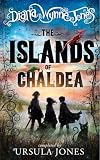
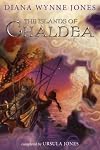
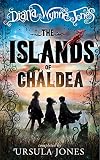
The Islands of Chaldea
by Diana Wynne Jones
On This Page
Description
Aileen's family of magic makers includes Aunt Beck, the most powerful magician on Skarr, but her own magic does not show itself until a mission for the King and a magical cat help her find strength and confidence.Tags
Recommendations










Member Reviews
I finally got around to reading Jones' last novel—luckily I haven't gotten all the way through her backlist, so I still have many wonderful books to look forward to.
Aileen's strong narrative voice was the highlight of this book. Despite her insecurities, she's an extremely self-confident twelve-year-old, which is somewhat rare in children's literature and makes for a witty, engaging narrator.
I also enjoyed the worldbuilding, which captured the feel of medieval Britain and Ireland much more accurately than most Celtic-inspired fantasy. The humor ranged from silly to satirical, including some jabs at Scottish and Welsh Protestantism that, again, grounded the setting in authentic British culture.
Ursula Jones did a heroic job completing show more the book, especially since (as I learned from the afterword), Diana left no notes. I have no idea where she left off, but Ursula masters Aileen's voice completely and her ending is very satisfying. I will say that during the last 20–30 pages, I could sort of tell the author had changed, but only because I've read so many of DWJ's books and the off-kilter, explosive alchemy of a Diana Wynne Jones ending is not to be replicated by mere mortals. show less
Aileen's strong narrative voice was the highlight of this book. Despite her insecurities, she's an extremely self-confident twelve-year-old, which is somewhat rare in children's literature and makes for a witty, engaging narrator.
I also enjoyed the worldbuilding, which captured the feel of medieval Britain and Ireland much more accurately than most Celtic-inspired fantasy. The humor ranged from silly to satirical, including some jabs at Scottish and Welsh Protestantism that, again, grounded the setting in authentic British culture.
Ursula Jones did a heroic job completing show more the book, especially since (as I learned from the afterword), Diana left no notes. I have no idea where she left off, but Ursula masters Aileen's voice completely and her ending is very satisfying. I will say that during the last 20–30 pages, I could sort of tell the author had changed, but only because I've read so many of DWJ's books and the off-kilter, explosive alchemy of a Diana Wynne Jones ending is not to be replicated by mere mortals. show less
Twelve year old Aileen and her aunt, the Wise Woman of Skarr, are unexpectedly sent out on a quest through the islands of Chaldea. Their goal is to find a way to bring down the barrier which separates Logra from the rest of the islands and rescue those who have been trapped behind it.
This has lots of Jones trademarks. A strong sense of place. Animals with strong personalities who are important to the plot. Quirky people with strong personalities. Magic that is approached intuitively, almost instinctively. An ending in which the pieces come together in a great and not-always-completely-clear rush.
As an adventure of a band of characters travelling across a pseudo-Medieval fantasy landscape, it's straightforward. As a mystery, it twists show more into something that's not so straightforward. As a coming-of-age story about a 12 year old, it's absolutely delightful. I love Aileen's voice and seeing the islands of Chaldea through her eyes. I love the way she comes into her own - comes into an understanding of her own worth and her own abilities.
There are two, very small things I'd change about the ending, if I was granted that magical power: something I would add and something I would take away. But that aside, I thought it was charming, whimsical and satisfying. It feels sparser than some of other novels, which makes me wonder if she had intended to add in more details on a subsequent draft, but it is also possibly an intentional choice. (There's a great range in Jones' novels in terms of narrative complexity and target audience, after all.)
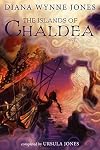
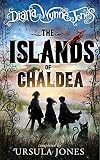
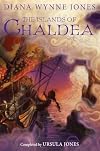
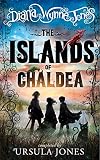
I really like the cover, too. show less
This has lots of Jones trademarks. A strong sense of place. Animals with strong personalities who are important to the plot. Quirky people with strong personalities. Magic that is approached intuitively, almost instinctively. An ending in which the pieces come together in a great and not-always-completely-clear rush.
As an adventure of a band of characters travelling across a pseudo-Medieval fantasy landscape, it's straightforward. As a mystery, it twists show more into something that's not so straightforward. As a coming-of-age story about a 12 year old, it's absolutely delightful. I love Aileen's voice and seeing the islands of Chaldea through her eyes. I love the way she comes into her own - comes into an understanding of her own worth and her own abilities.
There are two, very small things I'd change about the ending, if I was granted that magical power: something I would add and something I would take away. But that aside, I thought it was charming, whimsical and satisfying. It feels sparser than some of other novels, which makes me wonder if she had intended to add in more details on a subsequent draft, but it is also possibly an intentional choice. (There's a great range in Jones' novels in terms of narrative complexity and target audience, after all.)
I really like the cover, too. show less
Aileen lives with her Aunt Beck, the Wise Woman of Skarr. Some day, Aileen will be a Wise Woman, too, but at the moment she's feeling pretty dubious about that, since she just failed her Initiation. But she must put her self-doubt aside when she and her Aunt Beck are summoned by the king -- and not just the king of Skarr, but the High King over all of the islands of Chaldea. Years ago, the neighboring island kingdom of Logra cast a powerful curse that created a barrier to prevent anyone from traveling from the islands of Chaldea to Logra. Since the Chaldean islands depend on trade with Logra, this has had a dreadful impact on the economy. Worse, the Lograns have the son of the High King as a captive Now a prophecy has come to light, show more saying that a Wise Woman of Skarr must travel to Logra by way of the other islands, accompanied by a man from each island, and thence enter Logra. Aunt Beck sets little store by this prophecy, but the High King insists, so Beck and Aileen set out, accompanied by Prince Ivar of Skarr and his servant Ogo. Along the way, they are joined by a magical cat, a prophetic parrot, a monk, a lizard, and some of Aileen's distant relatives on her father's side. The journey is arduous, but it will be worth it if they can break the curse. Of course, when they get to Logra, they discover that nothing is as straightforward as it originally seemed, and Aileen will have a more significant role to play than she ever expected.
What can I say? It's a new Diana Wynne Jones when I thought there would never be another new Diana Wynne Jones, and I honestly can't tell where DWJ's manuscript left off and Ursula Jones' writing begins. Fellow fans of DWJ's quirky brand of fantasy should be sure to pick this one up. show less
What can I say? It's a new Diana Wynne Jones when I thought there would never be another new Diana Wynne Jones, and I honestly can't tell where DWJ's manuscript left off and Ursula Jones' writing begins. Fellow fans of DWJ's quirky brand of fantasy should be sure to pick this one up. show less
The late Diana Wynne Jones would have been 80 this year if she had been still with us. As always with posthumous novels the worry is, will this work be up to her usual standard, or will disappointment cloud the reputation that she painstakingly established for herself?
We find ourselves in on an alternate Earth, one of the author’s Related Worlds which are similar to but not the same as our own, chiefly because magic is always prevalent. The Islands of Chaldea (the real Mesopotamian polity of Chaldea was famed for its magicians) are Skarr, Bernica, Gallis and Logra, loosely based on Scotland, Ireland, Wales and England. The four countries, as well as being separated from each other by water, are further divided by a magical barrier show more that has for some years closed Logra off from the other three islands. On Skarr lives Aileen, a potential young Wise Woman who despairs of inheriting the talents that she is supposed to develop. Unexpectedly she is sent, with her Aunt Beck, idle princeling Ivar and servant Ogo, on a journey to Logra via Bernica and Gallis, to help resolve the situation and to fulfil a prophecy. We sense the classic premise of the lowliest achieving greatness through discovering and using innate gifts and skills.
Aileen, with green eyes and hair "the colour of toffee", is also the narrator, diminutive in stature but growing in maturity. She describes how she is sent with some odd companions and a disreputable crew to achieve an ill-defined quest, in which barriers galore -- and not just the magical one -- are placed in the way of success. First they arrive on the tiny island called Lone, where they encounter a rather peculiar creature. Next, they cross over to Bernica where they acquire another companion and another creature, as green as our own Emerald Isle is supposed to be. (There's an episode here involving humans turned into donkeys that recalls Petronius, Shakespeare, Kingsley and Collodi, who also riff on the theme.) They somehow get to Gallis where more companions join them, and yet another creature puts in an appearance. Then they have to find a way to surmount that final obstacle to reach Logra where, if the pattern holds, we must expect another beast to present another crucial piece of the puzzle. Will solutions be forthcoming?
Such a bald outline in no way does justice to the author's narrative skill, especially in her ability to recapture a young person's tone in relating a story. In addition, for those in the know, there is the delight of discovering how much she has drawn in the myth, legend and folklore of the British Isles to almost, dare one say it, make a political statement about individual cultures coexisting within shared traditions. And, in answer to the common question she got asked -- "Where do you get your ideas from?" -- her usual inventiveness is displayed in the way, magpie-like, she has picked up various shiny objects to line the nest of her story.
Let's start with the animals. The red winged lizard that appears in this story is associated with Gallis, not surprising as the emblem of Wales is a dragon. Less obvious is the talking green parrot that Aileen and her companions discover in Bernica (this name derived, of course, from an old name for Ireland). A green bird would be appropriate for Ireland, but why has the author hit on a non-native bird? Perhaps the legendary island called Hy Brasil to the west of Ireland suggested to her the modern country of Brazil, through which flows the Amazon; and in its jungles are the medium-sized green birds, good at imitating speech, called Amazon parrots.
The third of the four animals is a large cat, no ordinary beast this but one which can disappear at will, rather like the Cheshire Cat. With its 'long legs [and] small head' I wonder if a European lynx is meant rather than the Scottish wildcat, even though Aileen hails from the Chaldean equivalent of Scotland. The lynx apparently survived in Britain into the Dark Ages, and may have furnished a basis for the lions encountered in Arthurian legends as the Welsh Cath Palug ("clawing cat") and the chapulu of French Alpine lore. I think what confirms this for me is Aileen's nickname for the cat, Plug-Ugly. The Land of Lone where Plug-Ugly is found could represent the Isle of Man, but Jones has also woven in strands from folktales about the sunken land of Cantre'r Gwaelod, the Welsh Lowland Hundred that disappeared in Cardigan Bay as the result of human error.
And the fourth animal? Surely Diana drew on the traditional symbols of the four evangelists for inspiration here, coming up with the bull, symbol of St Luke, to represent Logra. (The parrot derives from St John's eagle and the cat from St Mark's winged lion; only the dragon deviates from St Matthew's man, though both of course have wings. Ultimately the four creatures derive from the cherubim who according to Ezekiel supported God's throne, appearing as man, lion, ox and eagle.)
Helpful Companions are the staple of traditional fairytales, where they aid the hero or heroine in accomplishing impossible tasks. Often they collectively form a group of seven, as here, and without them Aileen wouldn't be able to achieve her quest. For example, Aileen's Aunt Beck has the gift of visions; a wonderful character who must surely have been drawn from life, she unfortunately suffers from what appears to be a stroke -- though of course, this being a literary fairytale, this affliction is the traditional 'fairy stroke', the result of a malevolent spell, rather than the more lasting physical ailment that we know by the name. Meanwhile the Bernican monk called Finn is the owner of the wonderful parrot which gives more appropriate advice than is usual for these talking birds. Riannan from Gallis has the ability to sing spells, rather like her counterpart in Welsh tales who converses with birds, while her brother Rees infuses mechanical inventions with magic. And Ivar and Ogo have their own significant roles to play too.
Fairytales have their villains, and here the baddie is someone whose name aptly includes a Germanic element which means 'rule' or 'power'. We must be very grateful to Ursula Jones for finding a way to successfully resolve the very complex plot from a clue presented early on in Diana's incomplete manuscript. Ursula doesn't say what this clue is but I suspect it's the handing over of a purse, supposedly "for expenses" but of course nothing of the kind. I haven't yet spotted where the transition to a different author is, though I sense a change in style and pace around Chapter Fourteen. What is definitely Diana's contribution, however, is the introduction of a hot-air balloon into the plot. Bristol, where she lived, is host of a spectacular International Balloon Fiesta every summer, and she would have been very familiar with the sight of Montgolfier balloons floating across the river Avon and over Clifton.
The Islands of Chaldea is a love-letter to Britain, a hymn to hope and a celebration of true magic, which is the life of the imagination. While fans may regret her passing, whether as friend or author, this final novel is a fitting addition to the canon and one to be grateful for now that it has been completed in style.
Finally, I’d like here to report on a coincidence, if coincidence it is. Diana Wynne Jones and I shared a regular correspondent, the late Bill Russell. Bill, a professor emeritus of sociology, was president of the Pendragon Society, an Arthurian group for which I edited the journal. In spring 2005 I published an article I’d put together called ‘A Concise Arthurian Bestiary’ listing a number of creatures associated with Arthurian legends and folklore, including cat, dragon and parrot. Now Bill was in the habit of sending some of his complimentary copies of Pendragon to other correspondents, and as I’d included his review of Diana’s Hexwood in the same issue I suspect there’s every chance that he’d sent a copy of this to her. It’s distantly possible that her choice of featured animals in The Islands of Chaldea was influenced or at least confirmed by the mention of cat, dragon and parrot in the bestiary article – though admittedly more likely that Diana was already familiar with their associations.
http://wp.me/s2oNj1-chaldea show less
We find ourselves in on an alternate Earth, one of the author’s Related Worlds which are similar to but not the same as our own, chiefly because magic is always prevalent. The Islands of Chaldea (the real Mesopotamian polity of Chaldea was famed for its magicians) are Skarr, Bernica, Gallis and Logra, loosely based on Scotland, Ireland, Wales and England. The four countries, as well as being separated from each other by water, are further divided by a magical barrier show more that has for some years closed Logra off from the other three islands. On Skarr lives Aileen, a potential young Wise Woman who despairs of inheriting the talents that she is supposed to develop. Unexpectedly she is sent, with her Aunt Beck, idle princeling Ivar and servant Ogo, on a journey to Logra via Bernica and Gallis, to help resolve the situation and to fulfil a prophecy. We sense the classic premise of the lowliest achieving greatness through discovering and using innate gifts and skills.
Aileen, with green eyes and hair "the colour of toffee", is also the narrator, diminutive in stature but growing in maturity. She describes how she is sent with some odd companions and a disreputable crew to achieve an ill-defined quest, in which barriers galore -- and not just the magical one -- are placed in the way of success. First they arrive on the tiny island called Lone, where they encounter a rather peculiar creature. Next, they cross over to Bernica where they acquire another companion and another creature, as green as our own Emerald Isle is supposed to be. (There's an episode here involving humans turned into donkeys that recalls Petronius, Shakespeare, Kingsley and Collodi, who also riff on the theme.) They somehow get to Gallis where more companions join them, and yet another creature puts in an appearance. Then they have to find a way to surmount that final obstacle to reach Logra where, if the pattern holds, we must expect another beast to present another crucial piece of the puzzle. Will solutions be forthcoming?
Such a bald outline in no way does justice to the author's narrative skill, especially in her ability to recapture a young person's tone in relating a story. In addition, for those in the know, there is the delight of discovering how much she has drawn in the myth, legend and folklore of the British Isles to almost, dare one say it, make a political statement about individual cultures coexisting within shared traditions. And, in answer to the common question she got asked -- "Where do you get your ideas from?" -- her usual inventiveness is displayed in the way, magpie-like, she has picked up various shiny objects to line the nest of her story.
Let's start with the animals. The red winged lizard that appears in this story is associated with Gallis, not surprising as the emblem of Wales is a dragon. Less obvious is the talking green parrot that Aileen and her companions discover in Bernica (this name derived, of course, from an old name for Ireland). A green bird would be appropriate for Ireland, but why has the author hit on a non-native bird? Perhaps the legendary island called Hy Brasil to the west of Ireland suggested to her the modern country of Brazil, through which flows the Amazon; and in its jungles are the medium-sized green birds, good at imitating speech, called Amazon parrots.
The third of the four animals is a large cat, no ordinary beast this but one which can disappear at will, rather like the Cheshire Cat. With its 'long legs [and] small head' I wonder if a European lynx is meant rather than the Scottish wildcat, even though Aileen hails from the Chaldean equivalent of Scotland. The lynx apparently survived in Britain into the Dark Ages, and may have furnished a basis for the lions encountered in Arthurian legends as the Welsh Cath Palug ("clawing cat") and the chapulu of French Alpine lore. I think what confirms this for me is Aileen's nickname for the cat, Plug-Ugly. The Land of Lone where Plug-Ugly is found could represent the Isle of Man, but Jones has also woven in strands from folktales about the sunken land of Cantre'r Gwaelod, the Welsh Lowland Hundred that disappeared in Cardigan Bay as the result of human error.
And the fourth animal? Surely Diana drew on the traditional symbols of the four evangelists for inspiration here, coming up with the bull, symbol of St Luke, to represent Logra. (The parrot derives from St John's eagle and the cat from St Mark's winged lion; only the dragon deviates from St Matthew's man, though both of course have wings. Ultimately the four creatures derive from the cherubim who according to Ezekiel supported God's throne, appearing as man, lion, ox and eagle.)
Helpful Companions are the staple of traditional fairytales, where they aid the hero or heroine in accomplishing impossible tasks. Often they collectively form a group of seven, as here, and without them Aileen wouldn't be able to achieve her quest. For example, Aileen's Aunt Beck has the gift of visions; a wonderful character who must surely have been drawn from life, she unfortunately suffers from what appears to be a stroke -- though of course, this being a literary fairytale, this affliction is the traditional 'fairy stroke', the result of a malevolent spell, rather than the more lasting physical ailment that we know by the name. Meanwhile the Bernican monk called Finn is the owner of the wonderful parrot which gives more appropriate advice than is usual for these talking birds. Riannan from Gallis has the ability to sing spells, rather like her counterpart in Welsh tales who converses with birds, while her brother Rees infuses mechanical inventions with magic. And Ivar and Ogo have their own significant roles to play too.
Fairytales have their villains, and here the baddie is someone whose name aptly includes a Germanic element which means 'rule' or 'power'. We must be very grateful to Ursula Jones for finding a way to successfully resolve the very complex plot from a clue presented early on in Diana's incomplete manuscript. Ursula doesn't say what this clue is but I suspect it's the handing over of a purse, supposedly "for expenses" but of course nothing of the kind. I haven't yet spotted where the transition to a different author is, though I sense a change in style and pace around Chapter Fourteen. What is definitely Diana's contribution, however, is the introduction of a hot-air balloon into the plot. Bristol, where she lived, is host of a spectacular International Balloon Fiesta every summer, and she would have been very familiar with the sight of Montgolfier balloons floating across the river Avon and over Clifton.
The Islands of Chaldea is a love-letter to Britain, a hymn to hope and a celebration of true magic, which is the life of the imagination. While fans may regret her passing, whether as friend or author, this final novel is a fitting addition to the canon and one to be grateful for now that it has been completed in style.
Finally, I’d like here to report on a coincidence, if coincidence it is. Diana Wynne Jones and I shared a regular correspondent, the late Bill Russell. Bill, a professor emeritus of sociology, was president of the Pendragon Society, an Arthurian group for which I edited the journal. In spring 2005 I published an article I’d put together called ‘A Concise Arthurian Bestiary’ listing a number of creatures associated with Arthurian legends and folklore, including cat, dragon and parrot. Now Bill was in the habit of sending some of his complimentary copies of Pendragon to other correspondents, and as I’d included his review of Diana’s Hexwood in the same issue I suspect there’s every chance that he’d sent a copy of this to her. It’s distantly possible that her choice of featured animals in The Islands of Chaldea was influenced or at least confirmed by the mention of cat, dragon and parrot in the bestiary article – though admittedly more likely that Diana was already familiar with their associations.
http://wp.me/s2oNj1-chaldea show less
Aileen is the niece of a Wise Woman of Skarr, but she hasn't shown any sign of her power yet. When the King of Skarr and the High King of the islands sends Aileen, her Aunt Beck, Prince Ivar of Skarr, and Ogo nicknamed "the Ogre from Logra" out to fulfill a prophecy - that with a Wise Woman and a man from each of the islands of Chaldea the barrier around Logra would be lifted - Aileen has to come into her own to see the task through.
This was Diana Wynne Jones' unfinished manuscript, completed by her sister Ursula (an author in her own right) after Diana's death. Though it's younger and less complex than my favorite DWJ books, it's inventive, imaginative and fun fantasy. The writing and editing process was extremely well done, as I found show more no seam between where one author stopped and the other picked up. show less
This was Diana Wynne Jones' unfinished manuscript, completed by her sister Ursula (an author in her own right) after Diana's death. Though it's younger and less complex than my favorite DWJ books, it's inventive, imaginative and fun fantasy. The writing and editing process was extremely well done, as I found show more no seam between where one author stopped and the other picked up. show less
I was beyond thrilled to find that there was another, posthumous, DWJ book. Unfortunately, DWJ died before she could finish the book, and to me, it was very, very obvious where she'd left off and her sister had taken over. Most DWJ books have a twist-ending that is built on the seemingly irrelevant facts introduced earlier. In contrast, in The Islands, I found the tail-end rushed and flat. I think her sister found the half-finished manuscript and just tried to get it done as soon as possible. Even in DWJ's very young adult books, there's a sincerity and depth to the plot and character development and especially coming of age that just doesn't shine through in the Islands of Chaldea.
It's still a fun romp. In particular, I enjoyed the show more alternate history of the UK/Ireland feel. I thought the world-building felt relatively complete. The animals and child protagonists were cute.
Yeah, I don't have that much to say -- it just felt shallow and unfinished. show less
It's still a fun romp. In particular, I enjoyed the show more alternate history of the UK/Ireland feel. I thought the world-building felt relatively complete. The animals and child protagonists were cute.
Yeah, I don't have that much to say -- it just felt shallow and unfinished. show less
This book was still unfinished at the point of the author's untimely death and was, as explained in an afterword, finished by one of her sisters after the rest of the family could not think of how to progress it - DWJ did not do plotlines or leave notes. Possibly this is why I found it a bit disatisfying although I liked certain elements of it, for example, the parrot and the little dragon, plus the idea of the young heroine who believes she is a failure as an apprentice Wise Woman when actually she is nothing of the sort.
Briefly, the protagonist Aileen and her Aunt Beck, Wise Woman of the island of Skarr, are summoned by the king and high king and told they must form an expedition to try to break the spell of the barrier which has been show more in place for some years between the three islands of Skarr, Bernice and Gallis on the one hand and the larger island of Logra on the other. Logra had been waging war against them but was losing when its wizards constructed a sort of energy barrier. Since then they also staged a raid using magic to kidnap the high king's son and his hunting party which included Aileen's own father.
A prophecy says that a group consisting of men from each of the three islands plus a Wise Woman will succeed in overturning the barrier spell. And so Eileen and Aunt Beck set off, accompanied at first by the younger son of the king and queen, Ivar, and his servant Ogo, a boy from Logra who was left behind at the time of the barrier's raising. This being a DWJ novel things are not what they seem and complications soon arise including the suspicion that their mission has been sabotagued at the offset seemingly by Ivar's parents.
The nature of the book is that it has the structure of a travelogue from one place to another meeting various people on the way and acquiring other men as representatives of other islands, plus some animals with mysterious powers such as a cat, a parrot and a red miniature dragon. I think the main problem for me is that it begins to unravel a bit when they reach Logra where I couldn't really believe that the kidnapped prince was being consulted on how to run the mismanaged country behind the back of the evil Regent who is responsible for the barrier . The final denoument also seems rather rushed with an unconvincing battle and the decision by Aileen to change her set and childish notion of marrying Prince Ivar to actually marrying someone else - which seemed a bit odd if she was still only twelve. So, nice to have a final extra book by DWJ but for me it doesn't rank among her best and hence I can only rate it 3 stars. show less
Briefly, the protagonist Aileen and her Aunt Beck, Wise Woman of the island of Skarr, are summoned by the king and high king and told they must form an expedition to try to break the spell of the barrier which has been show more in place for some years between the three islands of Skarr, Bernice and Gallis on the one hand and the larger island of Logra on the other. Logra had been waging war against them but was losing when its wizards constructed a sort of energy barrier. Since then they also staged a raid using magic to kidnap the high king's son and his hunting party which included Aileen's own father.
A prophecy says that a group consisting of men from each of the three islands plus a Wise Woman will succeed in overturning the barrier spell. And so Eileen and Aunt Beck set off, accompanied at first by the younger son of the king and queen, Ivar, and his servant Ogo, a boy from Logra who was left behind at the time of the barrier's raising. This being a DWJ novel things are not what they seem and complications soon arise including the suspicion that their mission has been sabotagued at the offset seemingly by Ivar's parents.
The nature of the book is that it has the structure of a travelogue from one place to another meeting various people on the way and acquiring other men as representatives of other islands, plus some animals with mysterious powers such as a cat, a parrot and a red miniature dragon. I think the main problem for me is that it begins to unravel a bit when they reach Logra
Members
- Recently Added By
Published Reviews
ThingScore 50
This isn’t quite up to Jones’ best. It was written under trying circumstances and finished by someone who had to make educated guesses as to where Jones was going with her plot. Jones on her own has written better books. However, the book was still a tolerable read. It’s much better than most necrolaborations.
added by JalenV
Lists

Stories About Other Worlds
145 works; 12 members

Favourite books by Diana Wynne Jones
35 works; 3 members

2010s
241 works; 3 members

Books Read in 2017
4,249 works; 129 members
Author Information

111+ Works 80,196 Members
Diana Wynne Jones was born in London on August 16, 1934. In 1953, she began school at St. Anne's College Oxford and attended lectures by J. R. R. Tolkien and C. S. Lewis. After graduation, she created plays for children that were performed at the London Arts Theatre. Her first book was published in 1973. She wrote over 40 books during her lifetime show more including Dark Lord of Derkholm, Earwig and the Witch, and the Chrestomanci series. She won numerous awards including the Guardian Award for Children's Books in 1977 for Charmed Life, the Boston Globe-Horn Book Award in 1984 for Archer's Goon, the Mythopeic Award in 1999, the Karl Edward Wagner Award in 1999, and the Life Achievement Award from the World Fantasy Organization in 2007. Her book Howl's Moving Castle was adapted into an animated film by director Hayao Miyazaki, and the film was nominated for an Academy Award for Best Animated Feature. She died from lung cancer on March 26, 2011 at the age of 76. (Bowker Author Biography) show less
All Editions
Some Editions
Awards and Honors
Awards
Notable Lists
Work Relationships
Common Knowledge
- Original publication date
- 2014
- People/Characters
- Aileen; Aunt Beck; Ogo; Ivar; Finn Fitzfinn; Green Greet (parrot) (show all 7); Plug-Ugly (cat)
- Important places
- Skarr; Land of Lone; Bernica; Gallis; Logra
- Dedication
- To Dave (Diana Wynne Jones)
Diana, her family, friends and her readers (Ursula Jones) - First words
- Porridge is my Aunt Beck's answer to everything.
- Last words
- (Click to show. Warning: May contain spoilers.)We stay a while with each other, then part.
Classifications
- Genres
- Fiction and Literature, Kids, Tween, Fantasy
- DDC/MDS
- 823.914 — Literature & rhetoric English & Old English literatures English fiction 1900- 1901-1999 1945-1999
- LCC
- PZ7 .J684 .I — Language and Literature Fiction and juvenile belles lettres Fiction and juvenile belles lettres Juvenile belles lettres
- BISAC
Statistics
- Members
- 418
- Popularity
- 73,681
- Reviews
- 28
- Rating
- (3.69)
- Languages
- English
- Media
- Paper, Audiobook, Ebook
- ISBNs
- 14
- ASINs
- 7