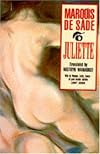
Juliette
by D.A.F. de Sade
On This Page
Description
"An amazing sequence of imaginatively bizarre sexual adventures punctuated by philosophical and theological digression. Mlle. De Maupin, Lolita, Candy--all pale beside Juliette."--Library Journal.Tags
Recommendations














































Member Recommendations

Member Reviews
(Original Review, 1981-04-04)
Histoire de Juliette ou les Prospérités du Vice (Story of Juliette or The Prosperities of Vice) by de Sade.
Profoundly disturbing - not only in its depiction of cold-hearted indulgence, by way of a text nearly as long as War and Peace, in murder, rape, robbery and more horrors besides, but also in its capability to beguile and confuse readers of a feminist persuasion.
Angela Carter fell for it: "[Sade's] great women [characters in Juliette], ... once they have tasted power, once they know how to use their sexuality as an instrument of aggression, they use it to extract vengeance for the humiliations they were forced to endure as the passive objects of the sexual energy of others ...”
"Sade declares himself show more unequivocally for the right of women to fuck - as if the period in which women fuck aggressively, tyrannously and cruelly will be a necessary stage in the development of a general human consciousness of the nature of fucking, that if it is not egalitarian, it is unjust... Sade ... urges women to fuck as actively as they are able so that, powered by their enormous and hitherto untapped sexual energy, they will then be able to fuck their way into history and, in doing so, to change it...”
"... I would like to think that he put pornography in the service of women, or, perhaps, allowed it to be invaded by an ideology not inimical to women."
Both quotes from “The Sadeian Woman” by Angela Carter
Not so. Juliette, the young protagonist of the novel, might be a great, potent criminal, risen from poverty, endowed with high intelligence, dauntless daring and a sharp gift of the gab, seeming fit to set phallocracy trembling and to show the way for new women of nerve, verve and organisation. However, she operates always on a tether and on a precipice, always subject to men even more steeped in crime and even more rich and powerful than she. The narrative repeatedly re-introduces one of these overlords, with whom the male reader may identify and who has all women, even the polymath-in-vice Juliette, within his grasp. She has to refrain from any attack on any of the arch-fiendish men who teach her, supervise her and employ her as director and star turn of many bloody orgies.
Sade's vast novel is a sophisticated “aide masturbatoire” for male (and some female) Reachers who want their lusty, lusting, beautiful heroines always on the rein and the bridle, however gleaming and gilded the leather and the steel, of a master. On the other hand, someone could argue that my reading of Carter is far too dismissive and superficial. I would even suggest that I may have "fallen for" the oft-rehearsed position that sees Carter's analysis as resting on Juliette as a counterforce to patriarchal dominance. It's worth looking more closely, at what she has to say about Justine, for instance. In de Sade's day it was most unusual for female characters to have their own distinctive voice, let alone agency. De Sade has his 'heroines' do or experience horrible things, but they do have a voice and we understand and care about what happens to them. show less
Histoire de Juliette ou les Prospérités du Vice (Story of Juliette or The Prosperities of Vice) by de Sade.
Profoundly disturbing - not only in its depiction of cold-hearted indulgence, by way of a text nearly as long as War and Peace, in murder, rape, robbery and more horrors besides, but also in its capability to beguile and confuse readers of a feminist persuasion.
Angela Carter fell for it: "[Sade's] great women [characters in Juliette], ... once they have tasted power, once they know how to use their sexuality as an instrument of aggression, they use it to extract vengeance for the humiliations they were forced to endure as the passive objects of the sexual energy of others ...”
"Sade declares himself show more unequivocally for the right of women to fuck - as if the period in which women fuck aggressively, tyrannously and cruelly will be a necessary stage in the development of a general human consciousness of the nature of fucking, that if it is not egalitarian, it is unjust... Sade ... urges women to fuck as actively as they are able so that, powered by their enormous and hitherto untapped sexual energy, they will then be able to fuck their way into history and, in doing so, to change it...”
"... I would like to think that he put pornography in the service of women, or, perhaps, allowed it to be invaded by an ideology not inimical to women."
Both quotes from “The Sadeian Woman” by Angela Carter
Not so. Juliette, the young protagonist of the novel, might be a great, potent criminal, risen from poverty, endowed with high intelligence, dauntless daring and a sharp gift of the gab, seeming fit to set phallocracy trembling and to show the way for new women of nerve, verve and organisation. However, she operates always on a tether and on a precipice, always subject to men even more steeped in crime and even more rich and powerful than she. The narrative repeatedly re-introduces one of these overlords, with whom the male reader may identify and who has all women, even the polymath-in-vice Juliette, within his grasp. She has to refrain from any attack on any of the arch-fiendish men who teach her, supervise her and employ her as director and star turn of many bloody orgies.
Sade's vast novel is a sophisticated “aide masturbatoire” for male (and some female) Reachers who want their lusty, lusting, beautiful heroines always on the rein and the bridle, however gleaming and gilded the leather and the steel, of a master. On the other hand, someone could argue that my reading of Carter is far too dismissive and superficial. I would even suggest that I may have "fallen for" the oft-rehearsed position that sees Carter's analysis as resting on Juliette as a counterforce to patriarchal dominance. It's worth looking more closely, at what she has to say about Justine, for instance. In de Sade's day it was most unusual for female characters to have their own distinctive voice, let alone agency. De Sade has his 'heroines' do or experience horrible things, but they do have a voice and we understand and care about what happens to them. show less
Epic, excessive, bleak, darkly comic, and disturbingly beautiful. The companion volume to DAF Sade's "Justine." The subtitle of the book is "The Triumph of Vice" -- not to be confused with the memoirs of Rev. Ted Haggard and Sen. Larry Craig -- so it warns you right on the title page. Not for the faint-hearted, easily-bored, or sanctimoniously prim.
The story follows the ups and down of Juliette, sister of Justine, from her formative years in a very depraved convent to a very depraved aristocracy and even into the arms of a very depraved Pope. Every sexual combination you could imagine or not dare to imagine is enacted. Hey, Ayn Rand fans, like long speeches about freedom and free enterprise? Give this book a shot. Seriously. Sade show more advocates a darkly utopian vision based on extending freedom to its very limits. This is high-octane libertine libertarianism. Something that's kind of expected if you've spent a lot of time in prison.
"Juliette" is the black cathedral of pain and wisdom. It holds a valuable place in the Western Canon, alongside William Blake, Ferdinand Celine, and Antonin Artaud. Sade was a highly articulate atheist bisexual, a philosopher and a pornographer. He tears into the sacred cows of organized religion and organized government with the gusto and ferocity of a Soviet tank division. (Christopher Hitchens is a dithering twit by comparison.)
Yes, there is rape, there is murder, there is death, there is hatred, but the Bible has far more of all those. Far less people get killed in 1200 pages than in the first 10 chapters of Genesis. Something to ponder. show less
The story follows the ups and down of Juliette, sister of Justine, from her formative years in a very depraved convent to a very depraved aristocracy and even into the arms of a very depraved Pope. Every sexual combination you could imagine or not dare to imagine is enacted. Hey, Ayn Rand fans, like long speeches about freedom and free enterprise? Give this book a shot. Seriously. Sade show more advocates a darkly utopian vision based on extending freedom to its very limits. This is high-octane libertine libertarianism. Something that's kind of expected if you've spent a lot of time in prison.
"Juliette" is the black cathedral of pain and wisdom. It holds a valuable place in the Western Canon, alongside William Blake, Ferdinand Celine, and Antonin Artaud. Sade was a highly articulate atheist bisexual, a philosopher and a pornographer. He tears into the sacred cows of organized religion and organized government with the gusto and ferocity of a Soviet tank division. (Christopher Hitchens is a dithering twit by comparison.)
Yes, there is rape, there is murder, there is death, there is hatred, but the Bible has far more of all those. Far less people get killed in 1200 pages than in the first 10 chapters of Genesis. Something to ponder. show less
A bizarre combo horny/perverted - philosophical treatise classic I've read three times now. It's huge and takes forever to get through and it can get a little redundant, but it's still my favorite de Sade book. Now for the prim or faint of heart though...
It's difficult to tell whether Sade actually believed in what he was writing about or if he merely wanted to shock the knickers off of anyone who dared peek inside his books. If you don't take his novels too seriously you'll find that the Marquis had a pretty good sense of humor and a knack for pointing out human hypocrisy--especially among the elites of his time. If you DO take his work seriously, however, you'll probably get sick to your stomach. It's not easy stuff to swallow.
This is actually the last book you should read, if and only if you are trying to master American Philosophy. For all the other reasons to read Marquis de Sade, 120 Days of Sodom will be the book you are looking for. This book is redundant, and long. The nuances between the redundancies are showing you a parody. What authoritarianisms end state was, and what George Washington and the other Libertarians of the Americas rebelled against, is best surmised here.
Sadomasochism is simply a paraphrase of Authoritarianism. Authoritarianism is fed with censorship, the opposite, Libertarianism, is fed with education. This book explores doing everything socially wrong, in the era that preceded the resurgence of democracy. Be warned, don't read it if show more you don't need to. But it is one of the most important books for a philosopher to have read. show less
Sadomasochism is simply a paraphrase of Authoritarianism. Authoritarianism is fed with censorship, the opposite, Libertarianism, is fed with education. This book explores doing everything socially wrong, in the era that preceded the resurgence of democracy. Be warned, don't read it if show more you don't need to. But it is one of the most important books for a philosopher to have read. show less
Like Justine, this book is heavy, but much more than "Justine". The scenes of sadism and torture are much more severe than in Justine.
Where Justine ends with a message of hope and redemption, this does not. In fact, this book ends with Juliette's lover sodomizing the corpse of her sister - Justine - and, this does not point towards hope.
This book is meant for a very select few.
Where Justine ends with a message of hope and redemption, this does not. In fact, this book ends with Juliette's lover sodomizing the corpse of her sister - Justine - and, this does not point towards hope.
This book is meant for a very select few.
Sex! Sex! Sex! Orgies! Rape! Sodomy! Murder! Death! Adultery! Homosexuality & hate for the Catholic Church written in the most disgustingly beautiful way. I had the pleasure & I do mean PLEASURE of reading this as an adult that can cogitate the meaning de Sade wished to express. This is very heavy, dense literature! Extremely philosophical, & definitely penetrating!
One can't help but appreciate the author's writing or his views on authority which at the time happened to be the Catholic Church, not God! A topic that is still arguable today.
This is a sequel to "Justine", & also three times as long. I would recommend this to an intellectual that can digest the severity of Sade's writing & like it or not the reader has to appreciate the show more syntax created by Sade! He was a genius of expression, let us not forget "sade" is the origin of "sadist". show less
One can't help but appreciate the author's writing or his views on authority which at the time happened to be the Catholic Church, not God! A topic that is still arguable today.
This is a sequel to "Justine", & also three times as long. I would recommend this to an intellectual that can digest the severity of Sade's writing & like it or not the reader has to appreciate the show more syntax created by Sade! He was a genius of expression, let us not forget "sade" is the origin of "sadist". show less
Members
- Recently Added By
Author Information

The Marquis De Sade was born in Paris, France on June 2, 1740. He fought in the French Army during the Seven Years War before being tried and sentenced to death in 1772 for a series of sexual crimes. He escaped to Italy but upon his return to France in 1777, he was recaptured and thrown into the prison at Vincennes. De Sade spent six years at show more Vincennes before being transferred first to the Bastille and then to Charenton lunatic asylum in 1789. He was released from the asylum in 1790 but was arrested again in 1801. He was moved from prison to prison before returning to Charenton in 1803, where he later died on December 2, 1814. A French novelist and playwright, he is largely known for his pathological sexual views and ethical nihilism. His works include Justine, Philosophy in the Bedroom, Juliette, and Aline and Valcourt or The Philosophic Novel. (Bowker Author Biography) show less

Marquis de Sade has a Legacy Library. Legacy libraries are the personal libraries of famous readers, entered by LibraryThing members from the Legacy Libraries group.
Some Editions
Series
Belongs to Publisher Series
Common Knowledge
- Canonical title*
- JULIETTE
- Original title
- Juliette, ou les Prospérités du vice
- Original publication date
- 1797
- People/Characters
- Juliette de Lorsange; Ferdinand IV of Naples; Pope Pius VI
- Important places
- Paris, France; Florence, Tuscany, Italy; Rome, Italy; Venice, Veneto, Italy; Naples, Campania, Italy
- First words
- 'Twas at Panthemont we were brought up, Justine and I, there that we received our education.
*Some information comes from Common Knowledge in other languages. Click "Edit" for more information.
Classifications
Statistics
- Members
- 994
- Popularity
- 26,404
- Reviews
- 10
- Rating
- (3.53)
- Languages
- 12 — Czech, Dutch, English, French, German, Hungarian, Italian, Polish, Portuguese, Spanish, Swedish, Turkish
- Media
- Paper, Ebook
- ISBNs
- 49
- ASINs
- 23