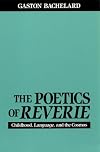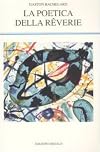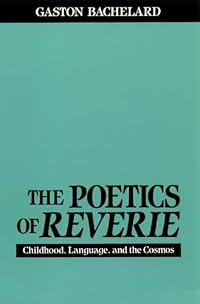
The Poetics of Reverie: Childhood, Language, and the Cosmos
by Gaston Bachelard
On This Page
Description
In this, his last significant work, an admired French philosopher provides extraordinary meditations on the relations between the imagining consciousness and the world, positing the notion of reverieas its most dynamic point of reference. In his earlier book, The Poetics of Space, Bachelard considered several kinds of "praiseworthy space" conducive to the flow of poetic imagery. In Poetics of Reverie he considers the absolute origins of that imagery- language, sexuality, childhood, the show more Cartesian ego, and the universe. Approaching the psychology of wonder from the phenomenological viewpoint, Bachelard demonstrates the aurgentative potential of all that awareness. Thus he distinguishes what is merely a phenomenon of relaxation from the kind of reverie which "poetry puts on the right track, the track of expanding consciousness" show lessTags
Recommendations






























Member Reviews
Interesting observations hampered by outdated views of gender and a tendency to wax super romantic.
"La poética de la ensoñación" de Gastón Bachelard es un ensayo filosófico que explora la relación entre la imaginación y el sueño en la creación poética. Bachelard analiza cómo la ensoñación permite acceder a un mundo de imágenes profundas y significativas, alejadas de la racionalidad estricta.
807064130
Ratings
Members
- Recently Added By
Author Information

64+ Works 5,818 Members
Born in Bar-sur-Aube, France, in 1884, Gaston Bachelard received his doctorate in 1927. He became professor of philosophy at the University of Dijon in 1930, and held the chair in the history and philosophy of science at the University of Paris from 1940 to 1954. In epistemology and the philosophy of science, Bachelard espoused a dialectical show more rationalism, or dialogue between reason and experience. He rejected the Cartesian conception of scientific truths as immutable; he insisted on experiment as well as mathematics in the development of science. Bachelard described the cooperation between the two as a philosophy of saying no, of being ever ready to revise or abandon the established framework of scientific theory to express the new discoveries. In addition to his contributions to the epistemological foundations of science, Bachelard explored the role of reverie and emotion in the expressions of both science and more imaginative thinking. His psychological explanations of the four elements-earth, air, fire, water-illustrate this almost poetic aspect of his philosophy. (Bowker Author Biography) show less
Some Editions
Series
Belongs to Publisher Series
Common Knowledge
- Original title
- La poétique de la rêverie
- Original publication date
- 1961
- First words
- In previous works devoted to the poetic imagination, we have tried to show the value of phenomenological method.
- Last words
- (Click to show. Warning: May contain spoilers.)But just the same, so that it may not be said that the anima is the being of our whole life, we would still want to write another book which, this time, would be the work of an animus.
- Original language
- French
Classifications
- Genres
- Philosophy, Literature Studies and Criticism, Fiction and Literature
- DDC/MDS
- 801.9 — Literature & rhetoric Literature, rhetoric & criticism Philosophy and theory Nature and character
- LCC
- B829.5 .B313 — Philosophy, Psychology and Religion Philosophy (General) By period Modern Special topics and schools of philosophy
- BISAC
Statistics
- Members
- 369
- Popularity
- 84,608
- Reviews
- 4
- Rating
- (4.17)
- Languages
- 8 — Czech, English, French, Italian, Japanese, Portuguese (Portugal), Spanish, Turkish
- Media
- Paper, Ebook
- ISBNs
- 24
- UPCs
- 1
- ASINs
- 3