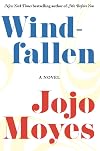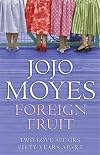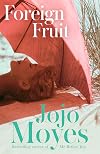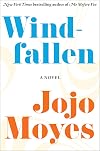
Foreign Fruit
by Jojo Moyes
On This Page
Description
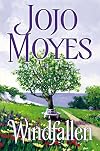
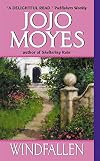
Fiction. Literature. Romance. The tiny, well-ordered seaside village of Merham holds little to interest the adventurous-except for Arcadia, the breathtaking art deco house perched above the shoreline. Attracted to this magical place, young Lottie Swift surrenders freely to its temptations and ultimately must face the hard consequences of her actions. Years later, another young woman comes to Merham. A designer hired to make over the now-empty Arcadia, Daisy Parsons seeks a new beginning, as show more Lottie once did. Fleeing a broken relationship, Daisy finds refuge at Arcadia, and something more-a love she thought she would never know again. show lessTags
Recommendations
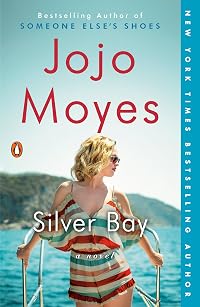
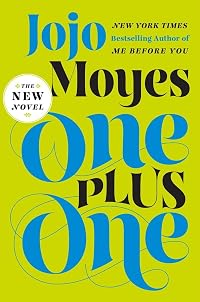






Member Reviews
Having discovered that I loved the writing of Jojo Moyes, I’ve set about to read through her backlist. Windfallen is her second novel, and was originally published in the UK as Foreign Fruit, which, to my thinking, is a much more appropriate title.
The novel begins in the 1950’s in the conservative seaside town of Merham a couple of hours from London. The community is appalled when a previously empty 1930’s art deco house known as Arcadia is taken over by a group of bohemians with ambigious domestic relationships. But 18-year-olds Celia Holden and her friend Lottie Swift (who lives with Celia’s family), are bedazzled. They are fit to burst from the constricting binds of Celia’s uptight mother and Merham’s equally uptight fear show more of change. They begin to visit the newcomers, entranced by the exotic way they live and their lack of inhibitions. Celia’s mother finds out and sends her off to London. Eight weeks later Celia returns with a fiancé, Guy Bancroft. But everything becomes upended, and Lottie is forced to leave town.
Fifty years later, we pick up with the story of Daisy Parsons, an interior designer who has been hired to restore Arcadia as a hotel. Daisy, 28, has just been abandoned by the father of her four-month old daughter, but needs to pull herself together and complete this job in order to turn her life around. As she uncovers the secrets of Arcadia, she not only helps bring change to Merham, but discovers her own destiny in the process.
Evaluation: Jojo Moyes is an excellent and engrossing storyteller, and of course she had me sobbing by three-quarters of the way through the book. If you like sagas about lost love and found love with a well-written historical background, this will definitely appeal to you. I suppose it is properly considered a “romance,” and in fact it won the 2004 Romance Novelist Association (RNA) Book of the Year Award (under its British title, Foreign Fruit). But I would certainly class Jojo Moyes head and shoulders above many writers designated by that genre. show less
The novel begins in the 1950’s in the conservative seaside town of Merham a couple of hours from London. The community is appalled when a previously empty 1930’s art deco house known as Arcadia is taken over by a group of bohemians with ambigious domestic relationships. But 18-year-olds Celia Holden and her friend Lottie Swift (who lives with Celia’s family), are bedazzled. They are fit to burst from the constricting binds of Celia’s uptight mother and Merham’s equally uptight fear show more of change. They begin to visit the newcomers, entranced by the exotic way they live and their lack of inhibitions. Celia’s mother finds out and sends her off to London. Eight weeks later Celia returns with a fiancé, Guy Bancroft. But everything becomes upended, and Lottie is forced to leave town.
Fifty years later, we pick up with the story of Daisy Parsons, an interior designer who has been hired to restore Arcadia as a hotel. Daisy, 28, has just been abandoned by the father of her four-month old daughter, but needs to pull herself together and complete this job in order to turn her life around. As she uncovers the secrets of Arcadia, she not only helps bring change to Merham, but discovers her own destiny in the process.
Evaluation: Jojo Moyes is an excellent and engrossing storyteller, and of course she had me sobbing by three-quarters of the way through the book. If you like sagas about lost love and found love with a well-written historical background, this will definitely appeal to you. I suppose it is properly considered a “romance,” and in fact it won the 2004 Romance Novelist Association (RNA) Book of the Year Award (under its British title, Foreign Fruit). But I would certainly class Jojo Moyes head and shoulders above many writers designated by that genre. show less
I listened to this book. I enjoy Jojo Moyes books and this was no exception. It starts in a seaside town in the early 50's with two young women, Lottie and Celia and their love interests and then moves to present day (which was about 18 years ago when this book was written). In both narratives, a house called Arcadia House figures prominently. The characters were well-developed though I thought the older Lottie had a different voice than the younger Lottie which didn't really ring true to me. But in general, it was a satisfying read that kept my interest and I liked the ending even though it only hinted at some things that may or may not have been revealed.
Lottie, originally an evacuee, spends her teenage years with the Holden family. Celia is close to Lottie in age, and they are good friends. Against the wishes of Celia's parents, they become friendly with some 'bohemians', rather scandalous people for the time, who live in a large house called Arcadia. Lottie learns to question some of her beliefs and values, but eventually their involvement is too much and Celia is sent away. She returns with London gloss, engaged to a young man called Guy. And Lottie falls for him in a big way.
There's a huge cast of characters in the book; people in the village, visitors to Arcadia, even Celia's family. Her younger siblings seem almost irrelevant to the plot, and I never did get a handle on most of show more the others. In one sense it didn't matter, but equally it made it very hard to concentrate as I kept wanting to flick back to find out who was whom.
I was just getting interested in the story when it switched abruptly to a different set of characters, fifty years later. Daisy, a single mother with a young baby, agrees to take charge of renovating an old house - which turns out to be Arcadia. I realised that there were going to be some connections with the people in the first half of the book, but was so dazed by the different names that I didn't spot the obvious one until it was revealed quite a way through, and by that stage I'd almost forgotten what the first part of the story was about.
It probably didn't help that I've read it over three weeks, just a chapter or two at bedtime; I finally finished the last hundred pages or so yesterday, and it did make more sense. The intertwining of past and present worked well, and the ending was encouraging. However there was then a brief epilogue which left me confused once more; perhaps it was too subtle.
Three and a half stars would be fairer than three; the writing is good, and the characterisation of the main characters works well. Had I read it over a few days I might have given it four. show less
There's a huge cast of characters in the book; people in the village, visitors to Arcadia, even Celia's family. Her younger siblings seem almost irrelevant to the plot, and I never did get a handle on most of show more the others. In one sense it didn't matter, but equally it made it very hard to concentrate as I kept wanting to flick back to find out who was whom.
I was just getting interested in the story when it switched abruptly to a different set of characters, fifty years later. Daisy, a single mother with a young baby, agrees to take charge of renovating an old house - which turns out to be Arcadia. I realised that there were going to be some connections with the people in the first half of the book, but was so dazed by the different names that I didn't spot the obvious one until it was revealed quite a way through, and by that stage I'd almost forgotten what the first part of the story was about.
It probably didn't help that I've read it over three weeks, just a chapter or two at bedtime; I finally finished the last hundred pages or so yesterday, and it did make more sense. The intertwining of past and present worked well, and the ending was encouraging. However there was then a brief epilogue which left me confused once more; perhaps it was too subtle.
Three and a half stars would be fairer than three; the writing is good, and the characterisation of the main characters works well. Had I read it over a few days I might have given it four. show less
For Lottie Swift, Arcadia has always been magical. The breathtaking art deco house perched above the shoreline of the well-ordered village of Merham seems to stand still throughout the years. It has never changed, not really, but Lottie's fate and fortune have been inextricably linked with those of the beautiful house, and it will forever be fixed in her mind as a symbol of adventure, youth, and loves lost and gained. Even as her life—and the house—falls into disrepair.
Years later another young woman comes to Merham. A designer hired to make over the now-empty Arcadia, Daisy Parsons seeks a new beginning, as Lottie once did. Fleeing a broken relationship and now facing being a single mother, Daisy finds refuge in the house, and show more something more—a love she thought she would never know again and a friendship unlike any she's experienced before. show less
Years later another young woman comes to Merham. A designer hired to make over the now-empty Arcadia, Daisy Parsons seeks a new beginning, as Lottie once did. Fleeing a broken relationship and now facing being a single mother, Daisy finds refuge in the house, and show more something more—a love she thought she would never know again and a friendship unlike any she's experienced before. show less
The book I read had a 2003 copyright so I assume this is one of Moyes earlier works that has had subsequent printings. Although the beginning was a little confusing as was the jump in time later in the book, as usual, I love the way Moyes writes and how she provides a complete picture, no pun intended, with her writing---full of detail both physical and emotional. I have another one of her older books in my hands for "next."
I stopped reading it after 1/3 of the book, as it seemed to me a waste of time. There are so many books to read. I imagine many others liked it as the writing was fine, but it just read like it was written for teens.
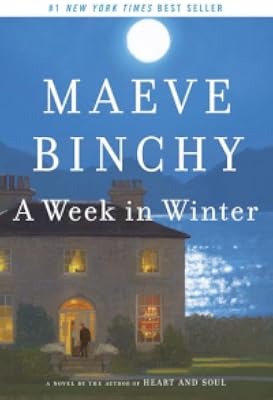
Maeve Binchey fans will enjoy Moyes' story set in a small English village on the sea. Beginning in the 1950's the story revolves around Lottie, who came to live with the village doctor's family as a London evacuee. When she falls in love with a man she can't have she takes flight to France where she lives with the bohemian benefactor. Her benefactor leaves Lottie the big house back in the English village. Now in the 21st century, Lottie, the acerbic matron sells the house to a London developer, and a young single mom, Daisy, resides there while doing the renovations. As Daisy uncovers the past, both she and Lottie are changed.
Members
- Recently Added By
Author Information

38+ Works 42,711 Members
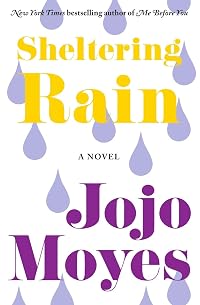
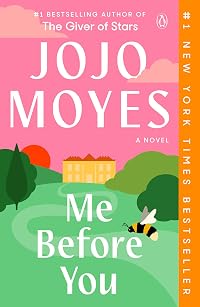
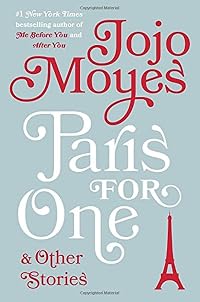
Jojo Moyes was born in London, England on August 4, 1969. She studied at Royal Holloway, University of London and Bedford New College, London University. In 1992, she won a bursary financed by The Independent newspaper to attend the postgraduate newspaper journalism course at City University, London. She subsequently worked for The Independent for show more the next 10 years in various roles including assistant news editor and arts and media correspondent. Her first book, Sheltering Rain, was published in 2002. Her other works include Me Before You, One Plus One, The Girl You Left Behind, Silver Bay, The Ship of Brides, Honeymoon in Paris, After You, Windfallen, Paris for One and Other Stories, and The Horse Dancer. She won the Romantic Novelists' Association's Romantic Novel of the Year Award in 2004 for Foreign Fruit and in 2011 for The Last Letter from Your Lover. (Bowker Author Biography) show less
Awards and Honors
Awards
Common Knowledge
- Canonical title
- Foreign Fruit
- Original title
- Foreign Fruit
- Alternate titles
- Windfallen
- Original publication date
- 2003-04
- People/Characters
- Lottie Swift; Celia Holden; Daisy Parsons; Guy Brancroft; Camille Hatton; Joe Bernard
- Important places
- Merham, England, UK
- Original language
- English
- Disambiguation notice
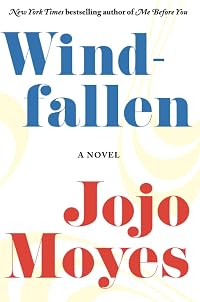
- Original title "Foreign Fruit" reedited in US as "Windfallen".
Classifications
Statistics
- Members
- 489
- Popularity
- 62,044
- Reviews
- 16
- Rating
- (3.17)
- Languages
- 12 — Danish, Dutch, English, French, German, Italian, Norwegian (Bokmål), Polish, Portuguese (Portugal), Russian, Spanish, Swedish
- Media
- Paper, Audiobook, Ebook
- ISBNs
- 65
- ASINs
- 13