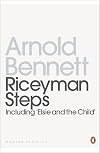
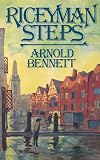
Riceyman Steps
by Arnold Bennett
On This Page
Description
In the "great metropolitan industrial district" of East London, Riceyman Steps lead from King's Cross Road to Riceyman Square. Here in this busy neighborhood, Henry Earlforward, the proprietor of a secondhand bookstore, takes a keen interest in Violet Arb, the widowed owner of a nearby confectionary shop. The middle-aged shopkeepers marry, but their chance for late-in-life happiness is increasingly shadowed by Henry's compulsive miserliness. Violet slowly realizes that her husband views show more everyday necessities -- heating, electricity, even food -- as extravagances to be resisted through self-denial. Starved for love as well as physical nourishment, the couple's only hope for survival lies with Elsie, their maid, and her warm-hearted generosity. Winner of the 1924 James Tait Black Memorial Prize, England's oldest literary award, Riceyman Steps weaves an atmospheric re-creation of London's harsh post-World War I mood. Its powerful exploration of sexual hunger and repression, written simply and with a deceptively light ironic tone, offers a compelling story of alienation, thwarted passion, and obsession. show lessTags
Recommendations





















Member Reviews
Bennett's attempt 'to invent a form to supersede Balzac'
By sally tarbox on 4 Jan. 2013
Format: Paperback
Utterly engrossing tale of bookseller Mr Earlforward, who becomes taken with neighbouring shopkeeper Mrs Arb when he sees how prudent she is with money (she refuses to pay the full shilling for one of his books.) For the bookseller's grand passion in life is saving money in every possible way.
I loved the description of Mrs Arb having a nose round her suitor's shabby home prior to the wedding:
'Coming out of the bedroom, she perceived between it and the stairs a long, narrow room. Impossible to enter this room because of books; but Mrs Arb did the impossible, and after some excavation with her foot disclosed a bath, which was full to the show more brim and overflowing with books.'
Also of the frugal existence they come to share together:
'Husband and wife, he in his overcoat and she in her mantle, took their places at the glass-covered table in the fireless room; and the teapot was there and the bread and margarine was there...The blinds were drawn, the curtains were drawn; electric current was burning, if not the gas fire; despite the blackness of the hearth the room had an air, or half an air, of domestic cosiness. Violet poured out the tea, an operation simplified by the total absence of sugar.'
Sharing the couple's life is Elsie, the 'general' who previously worked as a cleaner for each of them. There are issues with Elsie eating too much; and Elsie is pining for her young man who is disturbed from shell shock...
I can't recommend this work enough. It's set in a very small environment, yet Bennett's brilliant understanding of human behaviour makes it utterly enthralling. show less
By sally tarbox on 4 Jan. 2013
Format: Paperback
Utterly engrossing tale of bookseller Mr Earlforward, who becomes taken with neighbouring shopkeeper Mrs Arb when he sees how prudent she is with money (she refuses to pay the full shilling for one of his books.) For the bookseller's grand passion in life is saving money in every possible way.
I loved the description of Mrs Arb having a nose round her suitor's shabby home prior to the wedding:
'Coming out of the bedroom, she perceived between it and the stairs a long, narrow room. Impossible to enter this room because of books; but Mrs Arb did the impossible, and after some excavation with her foot disclosed a bath, which was full to the show more brim and overflowing with books.'
Also of the frugal existence they come to share together:
'Husband and wife, he in his overcoat and she in her mantle, took their places at the glass-covered table in the fireless room; and the teapot was there and the bread and margarine was there...The blinds were drawn, the curtains were drawn; electric current was burning, if not the gas fire; despite the blackness of the hearth the room had an air, or half an air, of domestic cosiness. Violet poured out the tea, an operation simplified by the total absence of sugar.'
Sharing the couple's life is Elsie, the 'general' who previously worked as a cleaner for each of them. There are issues with Elsie eating too much; and Elsie is pining for her young man who is disturbed from shell shock...
I can't recommend this work enough. It's set in a very small environment, yet Bennett's brilliant understanding of human behaviour makes it utterly enthralling. show less
Middle-aged love in a slightly down-at-heel area of London, just after The Great War may not sound like an original, amusing, or enticing premise for a novel. But the central character is a bookseller, and Arnold Bennett conjures an atmospheric, surprising, and poignant tale that even includes a short-lived tabloid frenzy. A century doesn’t feel so very long ago.
Quietly fizzing with the novelty of the new
Bennett delights in detailed descriptions of the latest tech, even if some of his characters are less enamoured: piped gas, running hot water, electric light, underground railway, telephone, typewriter, thermos flask, trams, an expensive double saucepan, and most memorably, a two-man vacuum cleaner truck.
Image: Edwardian vacuum show more cleaner truck (Source.)
There’s also the huge postal depot that Henry Earlforward prefers to walk to, rather than using the nearby post box:
“The mighty Mount Pleasant organism, with its terrific night-movement of vans and flung mailbags.”
I once stayed in a hotel overlooking it and the description still fits!
Nevertheless, the main novelty is the marriage between a widow and a confirmed bachelor: “He blossomed slowly, late, but he blossomed.” This is not a marriage of convenience or mere companionship; there are clear sexual tremours. There’s nothing explicit, but even “an implied criticism… proved that they were getting intimate”, and there’s plenty of symbolism (an umbrella (broken, then replaced), wedding cake, an old slipper on silk ribbon, two safes, potted bulbs, and a tattered love letter). Their love, irritation, and passion are touching, insightful, and realistic, with the balance of influence fluctuating with the circumstances. Love is tempered, spiced, and sweetened by a dash of fear or dread (but never hate, as in DH Lawrence).
There is nuanced, convincing, and endearing development of all the characters, especially loyal, imperfect, hungry Elsie. She is a char (cleaner) for both before their marriage, but becomes a live-in maid after. The effect of shifting knowledge, health, and power is deftly done.
Miser(y)?
“It was a new pound note. The paper was white and substantial; not a crease in it. The dim water-marks whispered genuineness. The green and brown of the design were more beautiful than any picture… The thing was as lovely and touching as a young virgin daughter.”
The word “miser” is irredeemably pejorative, and has the same etymological root as “misery”. Henry and Violet Earlforward both acknowledge he’s a miser. But not only does Violet love him in spite of some shocking and unnecessary economies, Bennett makes her love believable: Henry is a (mostly) likeable miser. Infuriating as well, but not a typical nasty, grasping, miserable miser.
Love of money books?
“It depends on me having lots of books lying about as if they weren't anything at all. That's just what book-collectors like… Whenever they see a pile of books in the dark they think there must be bargains.”
Henry is very different personality from Aziraphale in Good Omens (see my review HERE), but his bookshop is delightfully similar:
"The effect was of mysterious and vast populations of books imprisoned for ever in everlasting shade, chained, deprived of air and sun and movement, hopeless, resigned, martyrized."
Image: Bookshop interior (Source.)
Even unsatisfied customers know they will return:
“Because the shop had the goods he wanted, and didn't care whether he bought them or not. If he could have ruined the shop by never coming into it again he would perhaps have ruined the shop. But it was the shop's cursed indifference that spiritually beat him and ensured the triumph of the astonishing system.”
Violet has no interest in reading, which she regards as “a refuge from either idleness or life”, and “She was never idle, and she loved life”. And although Elsie has “the magic gift to decipher their rather arbitrary signs and so induce perplexing ideas in her own head, she would not have dreamed of doing so”.
But Henry never demonstrates pleasure in reading either, so maybe it is all about their value?
Descriptive triplets
Bennett often uses adjectives and adverbs in trios (there are more than a few in this review). Often, one of the three is slightly unexpected. Sometimes they’re in consecutive sentences:
“The scheme became absurd, impossible, inconceivable. Elsie was utterly defeated by the child's affection, ardour, and sorrow.”
Real Riceyman Steps
Image: Riceyman Steps, with church visible in the gap at the top (Source.)
The steps are in Clerkenwell, just off King’s Cross Road, still with “outworn shabbiness, grime and decay”, as described. You can find them on Google Street View, though Riceyman Square is now called Granville Square.
Unfortunately, the church Bennett describes so memorably (actually St Philip’s) was demolished in 1936:
“St Andrew's, of a considerably mixed Gothic character, had architecturally nothing whatever to recommend it. Its general proportions, its arched windows, its mullions, its finials, its crosses, its spire, and its buttresses, were all and in every detail utterly silly and offensive. The eye could not rest anywhere upon its surface without pain. And time, which is supposed to soften and dignify all things, had been content in malice to cover St. Andrew's with filth and ridicule.”
Image: St Philip’s church, seen from below Riceyman Steps, dated c1860, but it doesn’t show all the houses built around it in “the hungry ‘forties”. (Source.)
Quotes
* “A man interested in a strange woman acquires one equine attribute - he can look in two directions at once.”
* “Cheap cookery-books that professed to teach rationed house-wives how to make substance out of shadow.”
* “There's no bounce to this business [confectioner’s shop]... It's like hitting a cushion.”
* “Making love as honest love is made by lovers whose sole drawing-rooms and sofas are the street.”
* “The dreadful den expressed intolerably to Mrs Arb the pathos of the existence of a man who is determined to look after himself.”
* “They embraced sleep passionately, voraciously, voluptuously.” show less
Quietly fizzing with the novelty of the new
Bennett delights in detailed descriptions of the latest tech, even if some of his characters are less enamoured: piped gas, running hot water, electric light, underground railway, telephone, typewriter, thermos flask, trams, an expensive double saucepan, and most memorably, a two-man vacuum cleaner truck.
Image: Edwardian vacuum show more cleaner truck (Source.)
There’s also the huge postal depot that Henry Earlforward prefers to walk to, rather than using the nearby post box:
“The mighty Mount Pleasant organism, with its terrific night-movement of vans and flung mailbags.”
I once stayed in a hotel overlooking it and the description still fits!
Nevertheless, the main novelty is the marriage between a widow and a confirmed bachelor: “He blossomed slowly, late, but he blossomed.” This is not a marriage of convenience or mere companionship; there are clear sexual tremours. There’s nothing explicit, but even “an implied criticism… proved that they were getting intimate”, and there’s plenty of symbolism (an umbrella (broken, then replaced), wedding cake, an old slipper on silk ribbon, two safes, potted bulbs, and a tattered love letter). Their love, irritation, and passion are touching, insightful, and realistic, with the balance of influence fluctuating with the circumstances. Love is tempered, spiced, and sweetened by a dash of fear or dread (but never hate, as in DH Lawrence).
There is nuanced, convincing, and endearing development of all the characters, especially loyal, imperfect, hungry Elsie. She is a char (cleaner) for both before their marriage, but becomes a live-in maid after. The effect of shifting knowledge, health, and power is deftly done.
Miser(y)?
“It was a new pound note. The paper was white and substantial; not a crease in it. The dim water-marks whispered genuineness. The green and brown of the design were more beautiful than any picture… The thing was as lovely and touching as a young virgin daughter.”
The word “miser” is irredeemably pejorative, and has the same etymological root as “misery”. Henry and Violet Earlforward both acknowledge he’s a miser. But not only does Violet love him in spite of some shocking and unnecessary economies, Bennett makes her love believable: Henry is a (mostly) likeable miser. Infuriating as well, but not a typical nasty, grasping, miserable miser.
Love of money books?
“It depends on me having lots of books lying about as if they weren't anything at all. That's just what book-collectors like… Whenever they see a pile of books in the dark they think there must be bargains.”
Henry is very different personality from Aziraphale in Good Omens (see my review HERE), but his bookshop is delightfully similar:
"The effect was of mysterious and vast populations of books imprisoned for ever in everlasting shade, chained, deprived of air and sun and movement, hopeless, resigned, martyrized."
Image: Bookshop interior (Source.)
Even unsatisfied customers know they will return:
“Because the shop had the goods he wanted, and didn't care whether he bought them or not. If he could have ruined the shop by never coming into it again he would perhaps have ruined the shop. But it was the shop's cursed indifference that spiritually beat him and ensured the triumph of the astonishing system.”
Violet has no interest in reading, which she regards as “a refuge from either idleness or life”, and “She was never idle, and she loved life”. And although Elsie has “the magic gift to decipher their rather arbitrary signs and so induce perplexing ideas in her own head, she would not have dreamed of doing so”.
But Henry never demonstrates pleasure in reading either, so maybe it is all about their value?
Descriptive triplets
Bennett often uses adjectives and adverbs in trios (there are more than a few in this review). Often, one of the three is slightly unexpected. Sometimes they’re in consecutive sentences:
“The scheme became absurd, impossible, inconceivable. Elsie was utterly defeated by the child's affection, ardour, and sorrow.”
Real Riceyman Steps
Image: Riceyman Steps, with church visible in the gap at the top (Source.)
The steps are in Clerkenwell, just off King’s Cross Road, still with “outworn shabbiness, grime and decay”, as described. You can find them on Google Street View, though Riceyman Square is now called Granville Square.
Unfortunately, the church Bennett describes so memorably (actually St Philip’s) was demolished in 1936:
“St Andrew's, of a considerably mixed Gothic character, had architecturally nothing whatever to recommend it. Its general proportions, its arched windows, its mullions, its finials, its crosses, its spire, and its buttresses, were all and in every detail utterly silly and offensive. The eye could not rest anywhere upon its surface without pain. And time, which is supposed to soften and dignify all things, had been content in malice to cover St. Andrew's with filth and ridicule.”
Image: St Philip’s church, seen from below Riceyman Steps, dated c1860, but it doesn’t show all the houses built around it in “the hungry ‘forties”. (Source.)
Quotes
* “A man interested in a strange woman acquires one equine attribute - he can look in two directions at once.”
* “Cheap cookery-books that professed to teach rationed house-wives how to make substance out of shadow.”
* “There's no bounce to this business [confectioner’s shop]... It's like hitting a cushion.”
* “Making love as honest love is made by lovers whose sole drawing-rooms and sofas are the street.”
* “The dreadful den expressed intolerably to Mrs Arb the pathos of the existence of a man who is determined to look after himself.”
* “They embraced sleep passionately, voraciously, voluptuously.” show less
At the heart of the novel are three characters: Mr. Earlforward and Mrs. Arb and Elsie (who does for the former in the mornings, in the building which also houses the bookshop, and does for the latter in the afternoons, across the way in the building which also houses the confectioner's shop). The relationships between these three (fellow shop-keepers and employer-employee) quickly grow more complicated and intimacies develop.
Not always comfortable intimacies, sometimes the irritating and constraining types, although as one of them observes, that's a matter of how you choose to look at things. "This was the end of the honeymoon; or, if you prefer it, their life was one long honeymoon." As this statement suggests, times are changing, not show more only at the personal level, but in a broader sense; Riceyman Steps was once a thriving community but those days are long gone and, seemingly, unlikely to return. The business model that Mr. Earlforward follows is static and the bookstore's popularity wanes, although a certain bookishness remains.
It is a novel about relationships (business, community, marital) characterized by pride, fear, and loneliness. In many ways, it is a sad story (in the way that some of Barbara Pym's stories are sad), but that, too, could be said to be all about a reader's perspective. Another reader might see this as a story about "[s]imple souls, somehow living very near the roots of happiness -- though precariously." show less
Not always comfortable intimacies, sometimes the irritating and constraining types, although as one of them observes, that's a matter of how you choose to look at things. "This was the end of the honeymoon; or, if you prefer it, their life was one long honeymoon." As this statement suggests, times are changing, not show more only at the personal level, but in a broader sense; Riceyman Steps was once a thriving community but those days are long gone and, seemingly, unlikely to return. The business model that Mr. Earlforward follows is static and the bookstore's popularity wanes, although a certain bookishness remains.
It is a novel about relationships (business, community, marital) characterized by pride, fear, and loneliness. In many ways, it is a sad story (in the way that some of Barbara Pym's stories are sad), but that, too, could be said to be all about a reader's perspective. Another reader might see this as a story about "[s]imple souls, somehow living very near the roots of happiness -- though precariously." show less
(btw, don't buy this book; download it!)
Riceyman Steps by Arnold Bennett. The novel, Riceyman Steps, though nowhere as successful as his best work Old Wives Tale, nonetheless deserves plaudits for ambition and its tight focus on three expertly-drawn characters. The sentences are beautiful and give profound insights into characters, but lack of incident and forward action leave us with little desire to proceed. Characters don’t really make choices to change their fate; instead, they live on and on, with the occasional traumatic episode thrown in for good measure. The best thing about the work is how it avoids stereotypes about character types; for example, a miser may have real qualms about spending money, but can be persuaded in the show more right context to spend lavishly (though later he will resent doing so). I had trouble with the ending (which I’ll spell out only obliquely, although there isn’t much suspense); first, why did the novel give so much prominence to Joe (the housekeeper’s boyfriend) near the ending? It seemed out of place. Second, the death doesn’t really have any meaning except to confirm the narrator’s view that people ultimately get what they deserve. Okay, fine, but did the characters really choose their fates (or were they merely burdened by their ill habits?) Bennett doesn’t really present any alternatives; are any people in his world capable of living salutary lifestyles? That, I think, is a flaw of the novel; it fails to give us a glimpse into people who are avoiding the pitfalls of the protagonists. Conspicuously absent are children in this novel; there are literally no opportunities in this novel for the characters to display generosity or affection towards the outside world. How much of this penury is simply a result of the couple’s being childless? Bennett seems convinced that these people are not particularly sinister and even deserving of sympathy; still, the book’s ultimate purpose is moralistic; it exhort us to examine our hearts to see if we possess the same myopic shortcomings. show less
Riceyman Steps by Arnold Bennett. The novel, Riceyman Steps, though nowhere as successful as his best work Old Wives Tale, nonetheless deserves plaudits for ambition and its tight focus on three expertly-drawn characters. The sentences are beautiful and give profound insights into characters, but lack of incident and forward action leave us with little desire to proceed. Characters don’t really make choices to change their fate; instead, they live on and on, with the occasional traumatic episode thrown in for good measure. The best thing about the work is how it avoids stereotypes about character types; for example, a miser may have real qualms about spending money, but can be persuaded in the show more right context to spend lavishly (though later he will resent doing so). I had trouble with the ending (which I’ll spell out only obliquely, although there isn’t much suspense); first, why did the novel give so much prominence to Joe (the housekeeper’s boyfriend) near the ending? It seemed out of place. Second, the death doesn’t really have any meaning except to confirm the narrator’s view that people ultimately get what they deserve. Okay, fine, but did the characters really choose their fates (or were they merely burdened by their ill habits?) Bennett doesn’t really present any alternatives; are any people in his world capable of living salutary lifestyles? That, I think, is a flaw of the novel; it fails to give us a glimpse into people who are avoiding the pitfalls of the protagonists. Conspicuously absent are children in this novel; there are literally no opportunities in this novel for the characters to display generosity or affection towards the outside world. How much of this penury is simply a result of the couple’s being childless? Bennett seems convinced that these people are not particularly sinister and even deserving of sympathy; still, the book’s ultimate purpose is moralistic; it exhort us to examine our hearts to see if we possess the same myopic shortcomings. show less
3.5 stars. I enjoyed this book, but can't quite give it 4 stars. A nice quick read, kept me in suspense. Interesting use of psychology in its early stages.
Ratings
Members
- Recently Added By
Lists

Favourite 19th century fiction
257 works; 61 members

In and About the 1920s
181 works; 31 members

Backlisted
109 works; 9 members

Books Read in 2020
4,379 works; 124 members

Tagged Widows
9 works; 4 members

For Further Reading: A List of 160 Novels from 15 Literatures
160 works; 4 members
Author Information

193+ Works 6,838 Members
Arnold Bennett was born on May 27, 1867 in Hanley, Staffordshire, England. He began his working career as a law clerk and later he left the legal field and became an editor for the magazine Woman. His first novel was "A Man from the North." He wrote several novels set in Hanley, the town where he was born. These are known as the Five Town novels. show more Other titles include "The Babylon Hotel," "The Truth about an Author," and "How to Live on 24 Hours a Day." Bennett won the 1923 James Tait Black Memorial Prize for his novel "Riceyman Steps." "The Journal of Arnold Bennett" was published posthumously in three volumes. Bennett was also the author of "Hugo" which was made into a major motion picture in 2011 starring Jude law and Ben Kingsley, directed by Martin Scorsese. During WWI, Bennett was Director of Propaganda for France at the Ministry of Information. (At that time "propaganda" did not have the negative connotations it would have later in the twentieth century.) This appointment was based on the recommendation of Lord Beaverbrook, who also recommended him as Deputy Minister of that department at the end of the war. Bennett refused a knighthood in 1918. He died in London of typhoid fever on March 27, 1931. (Bowker Author Biography) show less
Some Editions
Awards and Honors
Awards
Notable Lists
Series
Belongs to Publisher Series
Work Relationships
Common Knowledge
- Canonical title
- Riceyman Steps
- Original publication date
- 1923
- People/Characters
- Henry Earlforward; Violet Arb; Elsie Sprickett
- Important places
- Clerkenwell, London, England, UK; Riceyman Steps, Clerkenwell, London, England, UK
- First words
- On an autumn afternoon of 1919 a hatless man with a slight limp might have been observed ascending the gentle, broad acclivity of Riceyman Steps, which lead from King's Cross Road up to Riceyman Square, in the great metropoli... (show all)tan industrial district of Clerkenwell.
- Quotations
- `My dear, you're ruining my business ... You don't understand how much of it depends on me having lots of books lying about as if they weren't anything at all. That's just what book-collectors like. If everything was ship-sha... (show all)pe they wouldn't look twice at the place. Whenever they see a pile of books in the dark they think there must be bargains.'
He dreamed that one day he would share with her his own vision of the wonderful Clerkenwell in which he lived. He would explain that once Clerkenwell was a murmuring green land of medicinal springs, wells, streams with mills ... (show all)on their banks, nunneries, aristocrats, and holy clerks who presented mystery-plays. ... And he would point out how the brown backs of the houses which fronted on King's Cross Road resembled the buttressed walls of a mighty fortress, and how the grim, ochreish, unwindowed - Last words
- (Click to show. Warning: May contain spoilers.)Such dreadful things were often witnessed in Clerkenwell.
- Blurbers
- Bowen, Elizabeth; Conrad, Joseph
- Original language
- English
Classifications
Statistics
- Members
- 273
- Popularity
- 117,981
- Reviews
- 5
- Rating
- (4.09)
- Languages
- English, French, Romanian, Spanish
- Media
- Paper, Audiobook, Ebook
- ISBNs
- 31
- ASINs
- 31