Weaveworld
by Clive Barker
On This Page
Description
Here is storytelling on a grand scale the stuff of which a classic is made. Weaveworld begins with a rug a wondrous, magnificent rug into which a world has been woven. It is the world of the Seerkind, a people more ancient than man, who possesses raptures the power to make magic. In the last century they were hunted down by an unspeakable horror known as the Scourge, and, threatened with annihilation, they worked their strongest raptures to weave themselves and their culture into a rug for show more safekeeping. Since then, the rug has been guarded by human caretakers.The last of the caretakers has just died.Vying for possession of the rug is a spectrum of unforgettable characters: Suzanna, granddaughter of the last caretaker, who feels the pull of the Weaveworld long before she knows the extent of her own powers; Calhoun Mooney, a pigeon-raising clerk who finds the world he's always dreamed of in a fleeting glimpse of the rug; Immacolata, an exiled Seerkind witch intent on destroying her race even if it means calling back the Scourge; and her sidekick, Shadwell, the Salesman, who will sell the Weaveworld to the highest bidder.In the course of the novel the rug is unwoven, and we travel deep into the glorious raptures of the Weaveworld before we witness the final, cataclysmic struggle for its possession.Barker takes us to places where we have seldom been in fiction--places terrifying and miraculous, humorous, and profound. With keen psychological insight and prodigious invention, his trademark graphic vision balanced by a spirit of transcendent promise, Barker explores the darkness and the light, the magical and the monstrous, and celebrates the triumph of the imagination. show lessTags
Recommendations


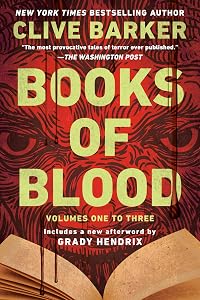
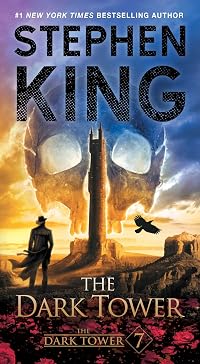
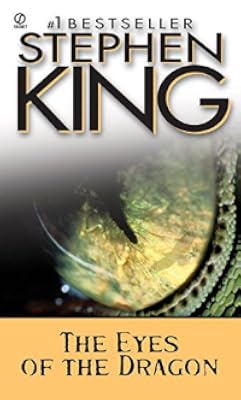
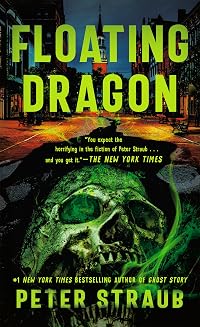





Member Recommendations
jseger9000 In Silent Graves shares many themes in common with Weaveworld. To say much more may act as a spoiler for both books.
20
Member Reviews
"We weren't hiding," said Jerichau. "We just weren't visible."
"There's a difference?" said Cal."
"Oh certainly."
Clive Barker truly is extra-ordinary. I have honestly not encountered anyone like him, and I am pretty sure I never will. That makes it feel even more stupid to try and compare, but it's extra-ordinary in the way of Tolkien or Siken. It's a good read but it's most of all an experience, a story. It happens to you, you know? Weaveworld is just more evidence of Barker's wonders. Try to explain not just a character chasing after a bird for, like, ten pages but how engaging these ten pages are. It's hard. I guess that goes for most books, but I always find myself struggling to describe or summarise Barker's work. There's so much I show more want to mention, but also so much I don't want to explain or describe in my own words when the person could just.... experience it themselves.
That being said, my dad has always told me that while Barker is one of his absolute favourites because he is so fucking good when he is good... he is also pretty bad when he is bad. And I think I know what he means after reading Weaveworld (which is tragic as it is my dad's favourite Barker story) because while much better than most others, I couldn't help but feel slightly disappointed. I'm not entirely sure what it was; because the world was so rich and exciting, and some of the characters truly stood out in ways few characters do... but it still lacked that something that keeps Coldheart Canyon in my thoughts even months after reading it. It was fantastic, but not a masterpiece. But I also have a feeling this is one of those kinds of books that you have to read more than once... and I'm perfectly fine with that. show less
"There's a difference?" said Cal."
"Oh certainly."
Clive Barker truly is extra-ordinary. I have honestly not encountered anyone like him, and I am pretty sure I never will. That makes it feel even more stupid to try and compare, but it's extra-ordinary in the way of Tolkien or Siken. It's a good read but it's most of all an experience, a story. It happens to you, you know? Weaveworld is just more evidence of Barker's wonders. Try to explain not just a character chasing after a bird for, like, ten pages but how engaging these ten pages are. It's hard. I guess that goes for most books, but I always find myself struggling to describe or summarise Barker's work. There's so much I show more want to mention, but also so much I don't want to explain or describe in my own words when the person could just.... experience it themselves.
That being said, my dad has always told me that while Barker is one of his absolute favourites because he is so fucking good when he is good... he is also pretty bad when he is bad. And I think I know what he means after reading Weaveworld (which is tragic as it is my dad's favourite Barker story) because while much better than most others, I couldn't help but feel slightly disappointed. I'm not entirely sure what it was; because the world was so rich and exciting, and some of the characters truly stood out in ways few characters do... but it still lacked that something that keeps Coldheart Canyon in my thoughts even months after reading it. It was fantastic, but not a masterpiece. But I also have a feeling this is one of those kinds of books that you have to read more than once... and I'm perfectly fine with that. show less
There is such a sweet power to this story and the world created here. Barker's storytelling creates such a compelling cast of characters, weaving together the real with what can barely be imagined and yet is brought to life here so beautifully, that this becomes a book to sink into and live with. I read it first in high school, and it stuck with me all these years, but journeying into the experience again over the last few weeks was still so refreshing. Barker manages to bring together elements of horror and fantasy in an epic unweaving and reweaving of another world, and his gorgeous prose is immersive.
I'd recommend this book to readers of any genre who want to be immersed in a world of the fantastic.
I'd recommend this book to readers of any genre who want to be immersed in a world of the fantastic.
An early Barker Novel, Weave-World stands out for many reasons. Barker seems to be writing for a larger audience. The sex, gore, and language are slightly tame compared to much of his other works. The writing in Weave-World is just as effective as what he puts out in later novels. This Novel and Imagica could almost be the same story. Where WW does not have the scope of Imagica its grip is just as tight. WW brings together a non-binary form of imagination that few writers seem to able to grasp. Barker is a master of forming worlds and he always links those worlds together using outside influences. This novel in particular is broken up with MANY chapters and sub chapters: A very ambitious venture for a writer so early in their career. show more The story is good. Good VS Evil. Love VS Hate and of course an element no Barker novel is without. Desire VS Consequence. Weave-World does not feel as if it has to gross you out in order to get your attention. But nonetheless it does so in several places. The novel will make you feel small but integral to your living world and ultimately Barker will remind you that while you (the reader) may be insignificant you are not so in the way you may think you are…..and that makes you integral. This book will bruise your intellect, smash your senses and allow you to walk down a path you might not be able to return on. Returning will be up to you. Barker will give you the tools to do so……but he will make you search for them. Where you find them will depend on what you find in those closed off and locked niches in your heart. Like many Barker stories this novel is a treasure chest. Open it and jump in feet first…….or head first. It matters not. What does matter is how often he will allow you to come up for air and if you are a fan of his then you know you might want to prepare yourself for something unexpected. show less
I first read WEAVEWORLD back in the late '80s just after it came out, and did so while on a boat trip around the Chester area on the Shropshire Union canal, so it was an episodic reading experience, punctuated by working locks, taking in scenery, and visiting a huge number of pubs. It's a surprise any of it stuck with me at all really, but I found on rereading this weekend that large chunks of it were there in my memory, flickering lights, raptures as Barker describes them, seductions and visions of elsewhere to make your heart break.
I got more out of it this time round, reading it in a solid chunk over two days. It's a masterful piece of work, full of Barker's vision, parts of it poetic, other parts showing off his visual imagination show more to the full, and all of it grounded in the character of Cal Mooney, lost in the lights of a vision of something he doesn't understand, but knows that he needs.
The central conceit of a magic carpet, and the wonders it contains is a great one to hang a fantasy on, and this is indeed fantasy, albeit one with a grotesque edge of horror, particularly in the villains, who are among the nastiest in fiction.
It's a big slab of a book, but I didn't notice, as I was lost and away with Cal in Wonderland most of the time, and I was almost sad to finish it.
It reminded me of something I'd forgotten, a need for wonder, something my own recent writings has lacked, and something I'll be trying to rectify. But I can't hope to reach Barker's flickering, glorious, raptures of body horror; that vision is his and his alone.
I was sorely disappointed with Barker's SCARLET GOSPELS, but reading WEAVEWORLD again reminded me that, on his game, he's up there with the best.
And this is one of the best. show less
I got more out of it this time round, reading it in a solid chunk over two days. It's a masterful piece of work, full of Barker's vision, parts of it poetic, other parts showing off his visual imagination show more to the full, and all of it grounded in the character of Cal Mooney, lost in the lights of a vision of something he doesn't understand, but knows that he needs.
The central conceit of a magic carpet, and the wonders it contains is a great one to hang a fantasy on, and this is indeed fantasy, albeit one with a grotesque edge of horror, particularly in the villains, who are among the nastiest in fiction.
It's a big slab of a book, but I didn't notice, as I was lost and away with Cal in Wonderland most of the time, and I was almost sad to finish it.
It reminded me of something I'd forgotten, a need for wonder, something my own recent writings has lacked, and something I'll be trying to rectify. But I can't hope to reach Barker's flickering, glorious, raptures of body horror; that vision is his and his alone.
I was sorely disappointed with Barker's SCARLET GOSPELS, but reading WEAVEWORLD again reminded me that, on his game, he's up there with the best.
And this is one of the best. show less
This book probably deserves a full analysis, going into a full and deep review mode that gives a grand majority of the characters, both good and evil, lots of time to explore ambitions and twists and character growths and failures. I should also go into a twenty-page monologue on how beautiful and strange and wonderful the fantasy elements are, from the sideways-twisted tormenting of christian beliefs, the reimagining of so many mythical elements, the fact that good and evil are never what they seem and they often fly into each other's territories regardless of how the quasi-demons, quasi-fae, quasi-witches, or quasi-humans look or feel on the page.
It's scary. It is a horror. And while so many horrific creatures with truly awesome show more descriptions grace these pages, we're not allowed to go with all our natural assumptions. We're supposed to go off the deep end and humanize everyone, not that they particularly deserve it or that the exercise is especially rewarding. Non-magical humans are Cuckoos. The magical races are Seers. The magical realm is called the Fugue. Do these descriptions raise a LOT more questions than they answer? Yes? That's because things are really MESSED UP and that's what Clive Barker is really good at. :)
We switch between the real world and the magical one many times during this epic tale. It starts as a firm grounding in the real world with the baddies on the way to unweave the Fugue which happens to be a magic carpet that contains a magical universe, and so we've got adventure... but that's such a small part of the whole book. It goes much farther, into epic battles, ambitious salesmen, ages-old revenge, demons from a glass-darkly garden of eden, angels who are scourges, and cthulhu-like entities everywhere, with heads like wounds and stomachs digesting on the outside. This is Clive Barker, after all.
The world-building is truly amazing, and so is the deep reimagining of all magic. Can you get an idea how disturbing it is when the magic is called the Raptures and the Menstruum? Or that an old necromancer could be brought back as boneless assassins even though it is implied that he was the one who created the Cenobites from Hellraiser? I LOVE these kinds of hints and terrors. Not only does it tie so much else together, it just keeps going on and on being inventive and creative and huge!
And on a side note, I kept thinking about playing one of the Desgaea games again, because I'm SOOO sure that they stole the idea of going into items to level them up from the novel. It would make so much sense! But in this case, it's just a carpet with a WHOLE UNIVERSE inside it. :) :)
Everything in here *is* basically based on christian good and evil, but is so nicely subverted and wrenched out of place that it nicely serves the purpose of real horror. You know, looking at the reflection of a thing and recognize it for what it is, and yet it is so sinisterly *off* that it dredges up a whole slew of emotional reverberations that keep us off balance? Yeah, that's Clive Barker for you.
My only real complaint is that I sometimes got lost in a little boredom between all the awesome bits. I can't honestly say that the book could do without them, tho, because when everything is so intense, I'd also lose the thread of letting it settle and get the implications in. It's a long book, and placing this up against ANY modern dark fantasy epic will probably impress just about anyone if they turn a critical eye upon it. Brilliant is an accurate description. Detailed and far-reaching and extremely-deeply thought-out is another.
I love most of the characters, but I didn't love the null spots. Maybe we needed them for just that extra bit of twisting and fleshing for the characters, but lets face it... there were a LOT of characters to get full-dimensionalized. Hats off. I was immensely fascinated for most of the book and creeped out a great deal of the time, too.
It's my own fault, I think, if I didn't care so much during some of the character's crusades. Fortunately, on the whole, this is a truly magical classic. :) show less
It's scary. It is a horror. And while so many horrific creatures with truly awesome show more descriptions grace these pages, we're not allowed to go with all our natural assumptions. We're supposed to go off the deep end and humanize everyone, not that they particularly deserve it or that the exercise is especially rewarding. Non-magical humans are Cuckoos. The magical races are Seers. The magical realm is called the Fugue. Do these descriptions raise a LOT more questions than they answer? Yes? That's because things are really MESSED UP and that's what Clive Barker is really good at. :)
We switch between the real world and the magical one many times during this epic tale. It starts as a firm grounding in the real world with the baddies on the way to unweave the Fugue which happens to be a magic carpet that contains a magical universe, and so we've got adventure... but that's such a small part of the whole book. It goes much farther, into epic battles, ambitious salesmen, ages-old revenge, demons from a glass-darkly garden of eden, angels who are scourges, and cthulhu-like entities everywhere, with heads like wounds and stomachs digesting on the outside. This is Clive Barker, after all.
The world-building is truly amazing, and so is the deep reimagining of all magic. Can you get an idea how disturbing it is when the magic is called the Raptures and the Menstruum? Or that an old necromancer could be brought back as boneless assassins even though it is implied that he was the one who created the Cenobites from Hellraiser? I LOVE these kinds of hints and terrors. Not only does it tie so much else together, it just keeps going on and on being inventive and creative and huge!
And on a side note, I kept thinking about playing one of the Desgaea games again, because I'm SOOO sure that they stole the idea of going into items to level them up from the novel. It would make so much sense! But in this case, it's just a carpet with a WHOLE UNIVERSE inside it. :) :)
Everything in here *is* basically based on christian good and evil, but is so nicely subverted and wrenched out of place that it nicely serves the purpose of real horror. You know, looking at the reflection of a thing and recognize it for what it is, and yet it is so sinisterly *off* that it dredges up a whole slew of emotional reverberations that keep us off balance? Yeah, that's Clive Barker for you.
My only real complaint is that I sometimes got lost in a little boredom between all the awesome bits. I can't honestly say that the book could do without them, tho, because when everything is so intense, I'd also lose the thread of letting it settle and get the implications in. It's a long book, and placing this up against ANY modern dark fantasy epic will probably impress just about anyone if they turn a critical eye upon it. Brilliant is an accurate description. Detailed and far-reaching and extremely-deeply thought-out is another.
I love most of the characters, but I didn't love the null spots. Maybe we needed them for just that extra bit of twisting and fleshing for the characters, but lets face it... there were a LOT of characters to get full-dimensionalized. Hats off. I was immensely fascinated for most of the book and creeped out a great deal of the time, too.
It's my own fault, I think, if I didn't care so much during some of the character's crusades. Fortunately, on the whole, this is a truly magical classic. :) show less
This book has its flaws to be sure, but I love it. I love the mix of adventure, horror, magic, personal stories of love and loss combined with an epic tale of attempted genocide, and all the weird psychosexual aspects that make this book utterly compelling and (so far in my reading) unique. I've re-read it so many times since the first reading (when I was 14 or so), and I don't doubt I'll be reading it again in the near future.
Weaveworld is one of the very few books that I can claim to enjoy from the first page to the last, all 700 pages of it. Even the introduction is great, normally I skim through lengthy intros to get to the story, but Clive Barker puts his heart and soul into this one, including this beautiful passage about the genre fiction:
“I have been, I think, altogether disparaging about the ‘escapist’ elements of the genre, emphasizing its powers to address social, moral and even philosophical issues at the expense of celebrating its dreamier virtues. I took this position out of a genuine desire to defend a fictional form I love from accusations of triviality and triteness, but my zeal led me astray. Yes, fantastic fiction can be intricately show more woven into the texture of our daily lives, addressing important issues in fabulist form. But it also serves to release us for a time from the definitions that confine our daily selves; to unplug us from a world that wounds and disappoints us, allowing us to venture into places of magic and transformation.”
As a lifelong devotee of SF/F/H fiction, I sometimes have the same doubts about preferring this type of fiction above all others but the above passage really puts it in perspective for me.
Weaveworld is about another dimension called “The Fugue” which has been transformed into a carpet in order to hide from an unstoppable creature called “The Scourge”. The residents of the Fugue are called the “Seerkind”, a race with magical abilities who view mankind with disdain and refer to humans as “cuckoos”. The Fugue in carpet form works a little like suspended animation or dehydrated food in which places, animals and most of the Seerkind are woven in as patterns on the carpet; to be reconstituted by an appointed guardian when the world is safe. The storyline concerns two human protagonists who become involved with the Fugue and the Seerkind and their struggle against powerful enemies who are trying to destroy both.
I first read Weaveworld around fifteen years ago and certain elements and scenes have stuck with me through all these years. It is a dark fantasy with several horrifying scenes — definitely not for the faint of heart — and scenes of surreal beauty. The most memorable element of the book for me is the magical jacket worn by Shadwell, the main human antagonist of the book, the lining of the jacket is able to enslave anyone who look at it by showing their heart's desire and allowing them to delve into it and obtain that very thing.
The central characters are very well written and believable, the antagonists are suitably warped, formidable and devious. In spite of its considerable length Weaveworld still manages to move at a fair clip. Something bizarre is always happening on almost every page and boredom never sets in. There is also more artistry in his prose than you would find in most genre books. The best thing about this book is that it is wonderful escapism, this book can sweep you away from a dull rainy day, or a slow day at the office. If you are a fan of Neil Gaiman’s [b: American Gods|4407|American Gods (American Gods, #1)|Neil Gaiman|https://d.gr-assets.com/books/1258417001s/4407.jpg|1970226] this book is likely to be right up your alley, though it is much more horrific, packed to the gills with horrible slimy, sticky, drippy – not to mention horny – monstrosities.
With an average rating of 4.13 Weaveworld is generally very well liked. However, all books have their share of negative reviews and while I respect opinions contrary to my own, I take exception to one review that says this book “is lacking”. The trouble is the reviewer does not say what it is that the book is lacking. Is “lacking” an adjective now? In any case I don’t think it lacks anything and I heartily recommend it.
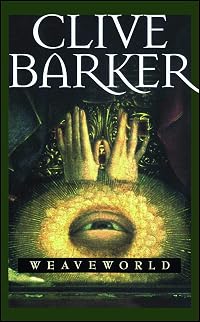
Cover art for the 25th anniversary edition of Weaveworld by Richard A. Kirk (click on image for larger size).
_____________________________________
Note: I have to admit Clive Barker's books are generally very hard to review, they tend to be densely plotted and the settings and storylines are always so goddam outré. This is particularly true of Weaveworld, I really struggled to write this review. I normally make notes when I read a novel so I will have some material ready to put in my review, but with this book I was so engrossed that I hardly paused to make any notes at all; just a sentence or two. show less
“I have been, I think, altogether disparaging about the ‘escapist’ elements of the genre, emphasizing its powers to address social, moral and even philosophical issues at the expense of celebrating its dreamier virtues. I took this position out of a genuine desire to defend a fictional form I love from accusations of triviality and triteness, but my zeal led me astray. Yes, fantastic fiction can be intricately show more woven into the texture of our daily lives, addressing important issues in fabulist form. But it also serves to release us for a time from the definitions that confine our daily selves; to unplug us from a world that wounds and disappoints us, allowing us to venture into places of magic and transformation.”
As a lifelong devotee of SF/F/H fiction, I sometimes have the same doubts about preferring this type of fiction above all others but the above passage really puts it in perspective for me.
Weaveworld is about another dimension called “The Fugue” which has been transformed into a carpet in order to hide from an unstoppable creature called “The Scourge”. The residents of the Fugue are called the “Seerkind”, a race with magical abilities who view mankind with disdain and refer to humans as “cuckoos”. The Fugue in carpet form works a little like suspended animation or dehydrated food in which places, animals and most of the Seerkind are woven in as patterns on the carpet; to be reconstituted by an appointed guardian when the world is safe. The storyline concerns two human protagonists who become involved with the Fugue and the Seerkind and their struggle against powerful enemies who are trying to destroy both.
I first read Weaveworld around fifteen years ago and certain elements and scenes have stuck with me through all these years. It is a dark fantasy with several horrifying scenes — definitely not for the faint of heart — and scenes of surreal beauty. The most memorable element of the book for me is the magical jacket worn by Shadwell, the main human antagonist of the book, the lining of the jacket is able to enslave anyone who look at it by showing their heart's desire and allowing them to delve into it and obtain that very thing.
The central characters are very well written and believable, the antagonists are suitably warped, formidable and devious. In spite of its considerable length Weaveworld still manages to move at a fair clip. Something bizarre is always happening on almost every page and boredom never sets in. There is also more artistry in his prose than you would find in most genre books. The best thing about this book is that it is wonderful escapism, this book can sweep you away from a dull rainy day, or a slow day at the office. If you are a fan of Neil Gaiman’s [b: American Gods|4407|American Gods (American Gods, #1)|Neil Gaiman|https://d.gr-assets.com/books/1258417001s/4407.jpg|1970226] this book is likely to be right up your alley, though it is much more horrific, packed to the gills with horrible slimy, sticky, drippy – not to mention horny – monstrosities.
With an average rating of 4.13 Weaveworld is generally very well liked. However, all books have their share of negative reviews and while I respect opinions contrary to my own, I take exception to one review that says this book “is lacking”. The trouble is the reviewer does not say what it is that the book is lacking. Is “lacking” an adjective now? In any case I don’t think it lacks anything and I heartily recommend it.
Cover art for the 25th anniversary edition of Weaveworld by Richard A. Kirk (click on image for larger size).
_____________________________________
Note: I have to admit Clive Barker's books are generally very hard to review, they tend to be densely plotted and the settings and storylines are always so goddam outré. This is particularly true of Weaveworld, I really struggled to write this review. I normally make notes when I read a novel so I will have some material ready to put in my review, but with this book I was so engrossed that I hardly paused to make any notes at all; just a sentence or two. show less
Members
- Recently Added By
Lists

The Guardian's 1000 Novels Everyone Must Read
1,005 works; 549 members

Best Fantasy Novels
821 works; 361 members

Magic Realism
371 works; 52 members

1980s
356 works; 23 members
Speculative Fiction to Read
706 works; 32 members

To Read - Horror
137 works; 14 members

Novels Published in 1987
81 works; 19 members

KayStJ's to-read list
1,616 works; 11 members

Unread books
1,063 works; 87 members

Art of Reading
188 works; 5 members

Jones & Newman: Best Horror Books Further Recommended Reading
577 works; 4 members

Books Read in 2022
5,226 works; 112 members

Sinister AudioTales
65 works; 1 member

Books I Read Before The Invention Of The Internet.
144 works; 1 member
Book Worlds We'd Like To Visit
322 works; 158 members

BlackDog's Complete Paperbacks From Hell List
639 works; 3 members

Survey of Fantasy Classics
111 works; 23 members
Author Information

Critics of the horror story have frequently called Clive Barker the "British Stephen King". Born in Liverpool in 1952, Barker attended the University of Liverpool but moved to London in 1977, where he worked as a commercial artist and became involved with the avant-garde theatrical community. Primarily a playwright during this period, he also show more produced short fiction that he would eventually publish as part of his six-volume collection titled Books of Blood (1984-85). More than any other author of contemporary horror fiction, Barker has had a major impact on the direction of the genre. He has introduced strong elements of sex and graphic violence into his fiction, but these elements are employed with an artistic objective. Barker underscores his work with complex subtextual metaphors and artistic allusions. Preoccupied with the craft of writing and with its effect on the reader, Barker is an innovator of formula and genre, often parodying the former in order to change the philosophical contour of the latter. Barker has achieved commercial success not only with his short fiction but also with his novels, which tend to be epic in scope and to blend elements of horror with those of high fantasy. Barker is one of the more influential voices in horror cinema, having written and directed a number of films. His printed works include The Candle in the Cloud, Absolute Midnight, The Scarlet Gospels, and Black is the Devil's Rainbow: Tales of a Journeyman. His films include Dread, Tortured Souls: Animae Damanatae, and Hellraiser. (Bowker Author Biography) Clive Barker was born in October, 1952, in Liverpool, England, and graduated from Liverpool University. While a student, the resourceful Barker formed a theater company as an outlet for his career as a budding playwright. After minor success with several plays such as "Frankenstein in Love," Barker vaulted onto the horror fiction scene with the publication of his short stories, "The Books of Blood." Later books such as "The Damnation Game," "Imajica," and "Everville" have further established his reputation as a Master of Horror. Barker gained further popularity with several motion picture projects. Unhappy with previous film versions of his works, he chose to direct the successful movie "Hellraiser," which generated a string of sequels. In addition to writing and directing, Barker has produced several of the movies in both the "Hellraiser" and "Candyman" series. Besides his writing and film activities, the multitalented Barker is an actor and illustrator, with several published volumes of his artwork. Barker is a recipient of British Fantasy awards and a World Fantasy award, and resides in Los Angeles. (Bowker Author Biography) show less
All Editions
Awards and Honors
Awards
Series
Belongs to Publisher Series
Work Relationships
Is contained in
Common Knowledge
- Original title
- Weaveworld
- Original publication date
- 1987
- People/Characters
- Mimi Laschenski; Calhoun "Cal" Mooney; Suzanna Parish; Immacolata; Shadwell; The Hag (show all 17); The Magdalene; Jerichau St. Louis; Hobart; Nimrod; Apolline Dubois; Lilia Pellicia; Frederick Cammell; Lemuel Lo; Balm de Bono; Anthony Virgil Gluck; Uriel
- Important places
- Liverpool, England, UK; The Fugue; Empty Quarter
- Epigraph
- ...the spirit has its
homeland, which is the
realm of the meaning
of things.
—Saint-Exupery,
The Wisdom of the Sands - Dedication
- To D. J. D.
- First words
- Nothing ever begins.
- Quotations
- "Who can call a man dead whose words still hush us and whose sentiments move?"
- Last words
- (Click to show. Warning: May contain spoilers.)And this story, having no beginning, will have no end.
- Original language
- English
- Canonical DDC/MDS
- 823.914
Classifications
Statistics
- Members
- 4,652
- Popularity
- 3,119
- Reviews
- 57
- Rating
- (3.95)
- Languages
- 13 — Czech, Danish, Dutch, English, German, Hungarian, Italian, Polish, Portuguese, Russian, Spanish, Swedish, Turkish
- Media
- Paper, Audiobook, Ebook
- ISBNs
- 49
- ASINs
- 23