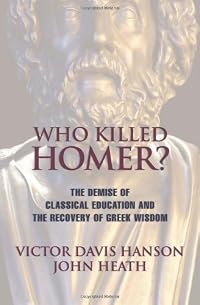
Who Killed Homer: The Demise of Classical Education and the Recovery of Greek Wisdom
by Victor Davis Hanson, John Heath
On This Page
Description
For over two millennia in the West, familiarity with the literature, philosophy, and values of the Classical World has been synonymous with education itself. The traditions of the Greeks explain why Western Culture's unique tenets of democracy, capitalism, civil liberty, and constitutional government are now sweeping the globe. Yet the general public in America knows less about its cultural origins than ever before, as Classical education rapidly disappears from our high school and show more university curricula. Acclaimed classicists Hanson and Heath raise an impassioned call to arms: if we lose our knowledge of the Greeks, we lose our understanding of who we are. With straightforward advice and informative reading lists, the authors present a highly useful primer for anyone who wants more knowledge of Classics, and thus of the beauty and perils of our own culture. show lessTags
Recommendations

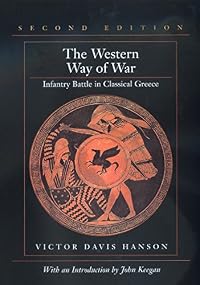
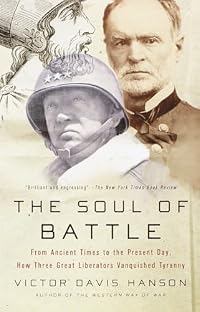
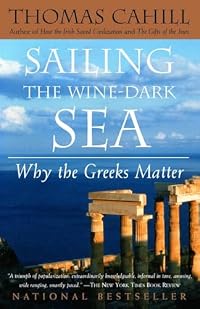
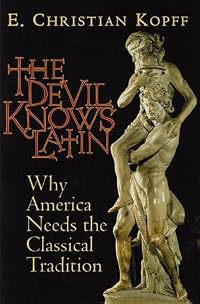

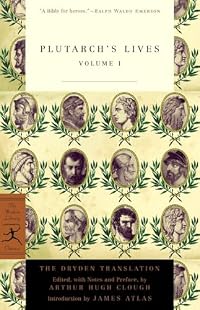
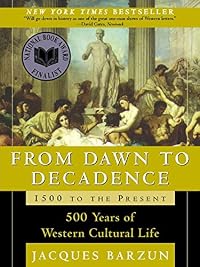
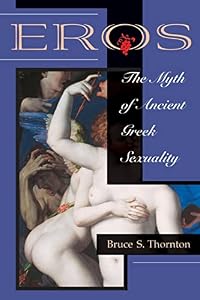
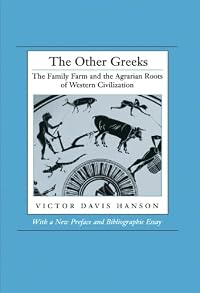
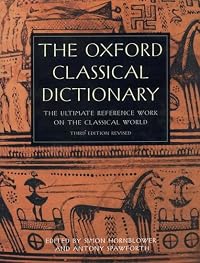

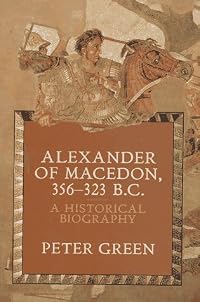
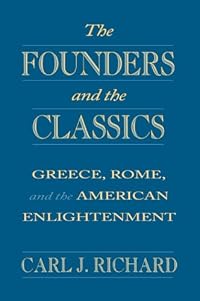
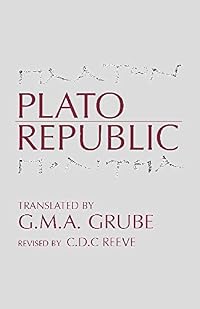
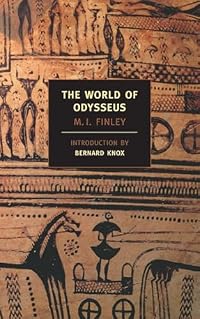

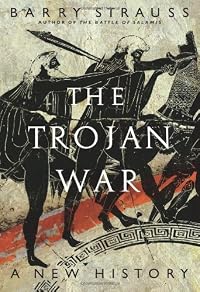

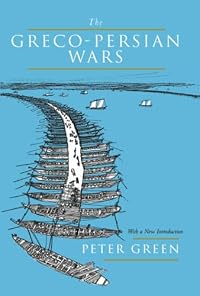
Member Recommendations

Member Reviews
This is dated now, by several decades. But it's also an interesting time capsule of the last shudders of classical education in the US system, and an indictment of the dead rot in academia the battle over which we're still participating in a quarter of a century later.
The book is at its strongest when it's defending the classics themselves, at its worst when it melds conservative US politics with said defense. For anyone outside of the US many of these themes will be familiar, including the watering down of the discipline with increasingly inane cross pollination from other disciplines in a desperate search for relevancy. The last part of the book tries to envision a complete restructuring of the (US) educational system, where the show more classics are not just a required part, but integral in a more holistic and cross-disciplinary education. While entirely utopian in vision it's a fairly interesting vision of alternative education in its own right. show less
The book is at its strongest when it's defending the classics themselves, at its worst when it melds conservative US politics with said defense. For anyone outside of the US many of these themes will be familiar, including the watering down of the discipline with increasingly inane cross pollination from other disciplines in a desperate search for relevancy. The last part of the book tries to envision a complete restructuring of the (US) educational system, where the show more classics are not just a required part, but integral in a more holistic and cross-disciplinary education. While entirely utopian in vision it's a fairly interesting vision of alternative education in its own right. show less
Academic recruitment campaigns today are not about getting middle-aged people to start to gain pride in an academic brand, they are about getting young people to choose an alma mater they will continue to contribute to for years, in endowments and volunteer time. That’s why Stanford, Harvard, Yale, MIT and Columbia have such successful clan marketing – whatever is instrumental in developing a resource base for the next five years, even if ironically anti-rational and anti-intellectual – will be a populist argument in favour of whatever resonates with youth of the day.
Hanson and Heath are correct about the hollowing out of humanities, but the sciences too are riddled with myopic focus on fashionable applicability. The authors come show more across as petulant at times about their perceived denigration of the classics, when academia as a whole needs reshaping as effective institutions. Perceived lack of industrial applicability is not the problem of the humanities alone. Hanson and Heath vaguely acknowledge but sidestep the fact that foundational education such as the classics and basic science are referential by nature, to compare theories, data and current trends of specialized and academic sycophantism. As such classics should be practical degree requirements with foundation classes that become more advanced, instead of being offered as a single prerequisite overview course, if at all.
Classics do need to be held to a standard of value, as any other field of study and research, and the authors are correct that the attempts to mask their value have had the logical outcome of debasing education generally and the academic institution as a whole. I would have preferred less emphasis on education as a means of personal enrichment versus a means to a career. The defense of strength in classics is not human curiosity and lifetime contemplation, but in the immediate applicability of epistemology in daily, critical decision-making. This work is a good contribution to a long-standing but ill-defined debate. Redefinition of academic parameters and the nature of the academic institution are required for progress to be made. show less
Hanson and Heath are correct about the hollowing out of humanities, but the sciences too are riddled with myopic focus on fashionable applicability. The authors come show more across as petulant at times about their perceived denigration of the classics, when academia as a whole needs reshaping as effective institutions. Perceived lack of industrial applicability is not the problem of the humanities alone. Hanson and Heath vaguely acknowledge but sidestep the fact that foundational education such as the classics and basic science are referential by nature, to compare theories, data and current trends of specialized and academic sycophantism. As such classics should be practical degree requirements with foundation classes that become more advanced, instead of being offered as a single prerequisite overview course, if at all.
Classics do need to be held to a standard of value, as any other field of study and research, and the authors are correct that the attempts to mask their value have had the logical outcome of debasing education generally and the academic institution as a whole. I would have preferred less emphasis on education as a means of personal enrichment versus a means to a career. The defense of strength in classics is not human curiosity and lifetime contemplation, but in the immediate applicability of epistemology in daily, critical decision-making. This work is a good contribution to a long-standing but ill-defined debate. Redefinition of academic parameters and the nature of the academic institution are required for progress to be made. show less
The actual field of classics has declined so these reflections should be taken seriously. As the authors demonstrate, the objections against their thesis are only as petty as their critics, feeble.
What the authors uncovered has trickled down to infect higher education, high schools, and finally even elementary schools as the Western tradition has been mocked, ignored, and hidden from recent students who fail to appreciate how crucial the Greeks are to a sound education.
You only need to consider the products of higher education to see the feeblemindedness, the sloganeering, and the lack of critical thought for many college graduates and appreciate what the authors have done in this volume.
What the authors uncovered has trickled down to infect higher education, high schools, and finally even elementary schools as the Western tradition has been mocked, ignored, and hidden from recent students who fail to appreciate how crucial the Greeks are to a sound education.
You only need to consider the products of higher education to see the feeblemindedness, the sloganeering, and the lack of critical thought for many college graduates and appreciate what the authors have done in this volume.
A damning critique of post-modernism and its baleful influence on classical studies in the USA. The lowering of standards and reinterpretation of classic texts by post-modern zealots is roundly condemned by the writers.
Reading this felt like accidentally stepping into an argument begin long ago and will no see no end. It is only interesting if you are already invested in a side regarding the role of Classics in education. Academics argue each other with books; this book is a classical example, pun unintended.
Full of academic wank, some of which is not actually deserved.
Members
- Recently Added By
Author Information

44+ Works 7,773 Members
Victor Davis Hanson is the military historian who is a professor of classics at California State University, Fresno. He has written several popular books on classic warfare, including "The Other Greeks", "Who Killed Homer?", & "The Western Way of War". He lives in Selma, California. (Bowker Author Biography)
5 Works 709 Members
Common Knowledge
- People/Characters
- Homer
Classifications
- Genres
- Nonfiction, Literature Studies and Criticism, History
- DDC/MDS
- 480.071073 — Language Classical Greek and related Hellenic languages Classical Greek and related Hellenic languages modified standard subdivisions of classical languages Education, research, related topics of classical languages Education
- LCC
- PA78 .U6 .H36 — Language and Literature Greek language and literature. Latin language and literature Classical philology
- BISAC
Statistics
- Members
- 448
- Popularity
- 67,993
- Reviews
- 7
- Rating
- (3.94)
- Languages
- English, Greek
- Media
- Paper, Audiobook, Ebook
- ISBNs
- 10
- ASINs
- 5