A Few Green Leaves
by Barbara Pym 
On This Page
Description
'.an incisive and wry portrait of life in an Engish village in Oxfordshire.'Tags
Recommendations
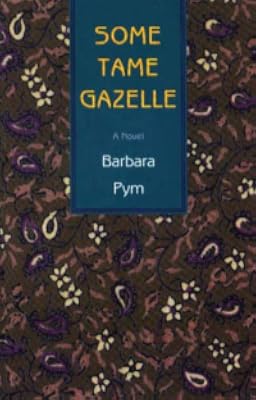


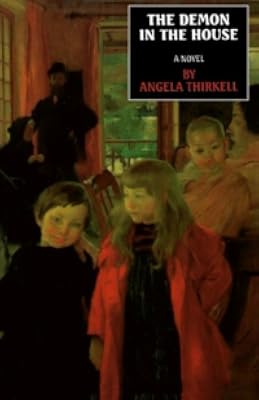


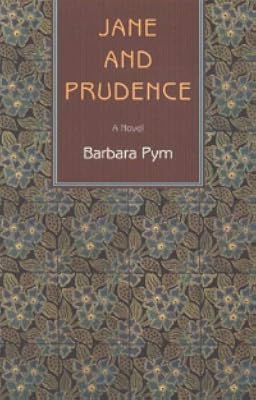


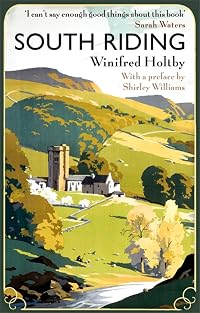














Member Recommendations

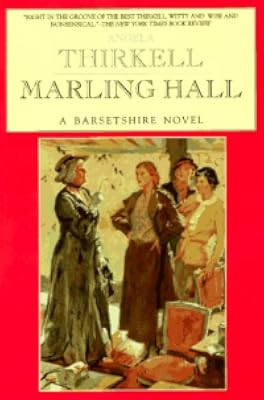
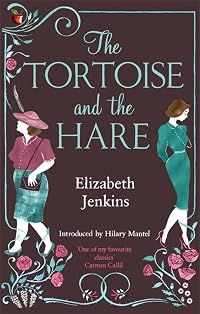
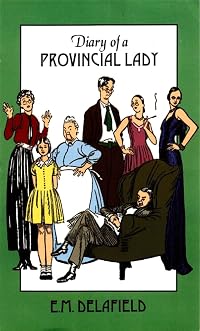
KayCliff Both novels feature an unmarried woman anthropologist's settling to live in an English rural village, and observing all she finds there.
Member Reviews
I'm bumping this to four stars after re-reading the last half of the book...
In 1979, Barbara Pym began working on what would end up being her final novel, A Few Green Leaves. She was at the height of her career, after having been rediscovered by the public only two years earlier, and was for the first time in her life, if not a household name, certainly a minor literary celeb. And then, alas, cancer struck, and Pym died in January 1980, having finished the draft manuscript of the novel. It is a book to be thankful for, for this reason and others.
A Few Green Leaves has its evident strengths. Pym was by now an effortless sketcher of individual characters - drab, grey lives vigorously told, as someone once said - and she captures the show more nuances of small-town life well. It is also interesting to hear the narrative voice of Emma Howick acknowledging that some of these traditions are now outdated in modern Britain, and survive only in villages like these.
At the same time, this book lacks either the comic vibrancy of Pym's early novels - think Crampton Hodnet or Some Tame Gazelle - or the startling bitterness of her late masterpieces The Sweet Dove Died and Quartet in Autumn. What remains is satisfactory but occasionally, especially in the first half, rambling. One feels that Pym has decided not to tax her strength by incorporating a plot. Instead the book feels like a number of short stories scrambled and intertwined to form a novel. It is not fully formed, whether because the author did not get a chance to thoroughly revise it before her death, or because she was trying something new.
On re-reading the second half of the book though, I find a great deal of strengths. The vignettes of village life (especially a late chapter involving a power cut) are pleasant and sometimes wry. The open use of profanity and sexuality (where appropriate) shows how far the world had come since Pym began publishing her novels 30 years previously. This is still an engaging book once one delves into it, but I must admit it's one of the only Pyms where I didn't feel the urge to read chapter after chapter.
But for all that may (ever so slightly) disappoint me, it is also telling how much gentler and perhaps more sombre is village life in Pym's world now. Perhaps she herself felt like an outsider, the way that Emma does. Her ability to look beyond people must have challenged her ability to exist alongside the kinds of narrow-minded traditionalists so often profiled in her work. Emma finds herself, for example, understanding why people are worried for the village rector when his sister moves away - he himself is worried; how will he cook anything beyond fish fingers? - but she also acknowledges that across Britain men are now fending for themselves and there is something simplistic in the former view. Much like the village manor, which is now owned by a newer family who don't need to provide free picnics for the poor children because, well, there's a welfare state now, it's clear that the people here are clinging to a world, and it's a world that the author both misses and yet can't feel that sad about losing. There is warmth found in places, but it is often overwhelmed amongst the rector unsure of whether he is welcome into people's homes, the doctor's wife dissatisfied with her family's small lodgings, and the funeral mourners who only come to church for these sorts of "special events".
Pym was a minor master of the form. I hope her clear-eyed, tart, witty, small stories remain with us for a long time to come. This may not shine as brightly as some of the jewels in her collection, but is still a tribute to the skills that made her such a recognisable voice in 20th century British fiction. show less
In 1979, Barbara Pym began working on what would end up being her final novel, A Few Green Leaves. She was at the height of her career, after having been rediscovered by the public only two years earlier, and was for the first time in her life, if not a household name, certainly a minor literary celeb. And then, alas, cancer struck, and Pym died in January 1980, having finished the draft manuscript of the novel. It is a book to be thankful for, for this reason and others.
A Few Green Leaves has its evident strengths. Pym was by now an effortless sketcher of individual characters - drab, grey lives vigorously told, as someone once said - and she captures the show more nuances of small-town life well. It is also interesting to hear the narrative voice of Emma Howick acknowledging that some of these traditions are now outdated in modern Britain, and survive only in villages like these.
At the same time, this book lacks either the comic vibrancy of Pym's early novels - think Crampton Hodnet or Some Tame Gazelle - or the startling bitterness of her late masterpieces The Sweet Dove Died and Quartet in Autumn. What remains is satisfactory but occasionally, especially in the first half, rambling. One feels that Pym has decided not to tax her strength by incorporating a plot. Instead the book feels like a number of short stories scrambled and intertwined to form a novel. It is not fully formed, whether because the author did not get a chance to thoroughly revise it before her death, or because she was trying something new.
On re-reading the second half of the book though, I find a great deal of strengths. The vignettes of village life (especially a late chapter involving a power cut) are pleasant and sometimes wry. The open use of profanity and sexuality (where appropriate) shows how far the world had come since Pym began publishing her novels 30 years previously. This is still an engaging book once one delves into it, but I must admit it's one of the only Pyms where I didn't feel the urge to read chapter after chapter.
But for all that may (ever so slightly) disappoint me, it is also telling how much gentler and perhaps more sombre is village life in Pym's world now. Perhaps she herself felt like an outsider, the way that Emma does. Her ability to look beyond people must have challenged her ability to exist alongside the kinds of narrow-minded traditionalists so often profiled in her work. Emma finds herself, for example, understanding why people are worried for the village rector when his sister moves away - he himself is worried; how will he cook anything beyond fish fingers? - but she also acknowledges that across Britain men are now fending for themselves and there is something simplistic in the former view. Much like the village manor, which is now owned by a newer family who don't need to provide free picnics for the poor children because, well, there's a welfare state now, it's clear that the people here are clinging to a world, and it's a world that the author both misses and yet can't feel that sad about losing. There is warmth found in places, but it is often overwhelmed amongst the rector unsure of whether he is welcome into people's homes, the doctor's wife dissatisfied with her family's small lodgings, and the funeral mourners who only come to church for these sorts of "special events".
Pym was a minor master of the form. I hope her clear-eyed, tart, witty, small stories remain with us for a long time to come. This may not shine as brightly as some of the jewels in her collection, but is still a tribute to the skills that made her such a recognisable voice in 20th century British fiction. show less
Barbara Pym’s novels are comfort reads. They follow pretty much the same format and have very much the same elements; in fact, some of her characters overlap between novels. This novel is set in an Oxfordshire village in the 1970s and features a typically Pym-esque cast of characters: an academic, a rector, village doctors, spinsters, and possible love interests.
One of the main characters, Emma, is an anthropologist, and her activities reflect the overall purpose of the book, because the story is more or less an anthropological study of the people who live in the village.Some of Pym’s characters are truly funny: the rector who’s so wrapped up in searching for his mythological DMV (deserted medieval village) that he scarcely pays show more attention to the present; the local spinster cat lady; the ex boyfriend who accidentally stumbles back into Emma’s life. Watching her reaction to his reappearance was intriguing, but her end decision was hardly surprising in the end.
As with all of Pym’s novels, she gently pokes fun at the inhabitants of the town and contrasts the present with events of the past. I thought that this last element could have been expanded upon a little bit more; I wanted to find out more about the aristocratic family who lived in the old manor house back in the 1920s. But in all, this is arguably one of Barbara Pym’s strongest novels, primarily because she explores and handles the complexity of human interpersonal relationships so well in her books. show less
One of the main characters, Emma, is an anthropologist, and her activities reflect the overall purpose of the book, because the story is more or less an anthropological study of the people who live in the village.Some of Pym’s characters are truly funny: the rector who’s so wrapped up in searching for his mythological DMV (deserted medieval village) that he scarcely pays show more attention to the present; the local spinster cat lady; the ex boyfriend who accidentally stumbles back into Emma’s life. Watching her reaction to his reappearance was intriguing, but her end decision was hardly surprising in the end.
As with all of Pym’s novels, she gently pokes fun at the inhabitants of the town and contrasts the present with events of the past. I thought that this last element could have been expanded upon a little bit more; I wanted to find out more about the aristocratic family who lived in the old manor house back in the 1920s. But in all, this is arguably one of Barbara Pym’s strongest novels, primarily because she explores and handles the complexity of human interpersonal relationships so well in her books. show less
Barbara Pym earned her reputation satirizing post-war English society. By the time this novel was published in 1980, times had changed and Pym was challenged to keep up with them. She does it quite well in A Few Green Leaves. Emma, a thirty-ish anthropologist, comes to stay in an Oxfordshire village with intent to observe and write about village life. This is a perfect mechanism for Pym to offer her own observations, in her usual gently mocking tone. References to homosexuality and more liberal sexual practices tell the reader they are not in the 1950s anymore. But some things don't change much, as depicted in a brilliant set piece about a coffee morning and bring-and-buy sale. Old ladies served coffee and biscuits, everyone brought show more something, earning them permission to buy another person's cast-off or second-rate offering. There was much jockeying amongst attendees for the best of the bring-and-buy items, and even greater interest in the raffle, all portrayed in a most amusing way.
Meanwhile Emma entertains a gentleman caller from her past, remaining oblivious to another man's attentions for most of the book. Of course you know things will work out in the end, but it's fun to read how it happens. Light, enjoyable fun. show less
Meanwhile Emma entertains a gentleman caller from her past, remaining oblivious to another man's attentions for most of the book. Of course you know things will work out in the end, but it's fun to read how it happens. Light, enjoyable fun. show less
This isn't my favourite of Pym's novels but I do find her views of village society so apt and often hilarious I still enjoyed every minute of reading it.
In this case, the main character, Emma, is a social anthropologist studying the village she resides in, surrounded by well-meaning ex-subjects of the manor house. Emma's mother is a professor of English literature (thus her name) and pops in every once and awhile to gesture with romance options at her daughter, who seems largely uninterested. Odd men wander through the text, all of them with some sort of unusual focus, whether food or antiquities or the need for a good walk (provided, if you are a woman, the doctor says it's okay). They're the sort of exasperating men seen often in show more novels but everyone puts up with their absurdities, just as they put up with the women polishing the church who never attend services. Everyone has a dream, most of them unrealized.
What I love best about Pym's books is that they are filled with women doing what is expected of them (often involving casseroles) while having internal caustic conversations with themselves about why they are even bothering. This is what goes on in my head all the time and thus I am very comfortable here. I also like the fact that people in her books still believe in duty to ones neighbours, no matter how onerous. A Poverty dinner is the scene for much hilarity, as all those invited whine gently for better bread and cheese while contributing a tiny amount to the cause. It's all so lovely and familiar and it even made me want to go back to church, simply for the framework of life that it provides. The efforts to make the world better, even in a smallish way. Heartwarming. While the gossips hang about, viperish, they still contribute a loaf or some sweets, endless cups of tea...
In these times of Sturm und drang, it's nice to leave a novel with a smile on one's face and a feeling of hope. show less
In this case, the main character, Emma, is a social anthropologist studying the village she resides in, surrounded by well-meaning ex-subjects of the manor house. Emma's mother is a professor of English literature (thus her name) and pops in every once and awhile to gesture with romance options at her daughter, who seems largely uninterested. Odd men wander through the text, all of them with some sort of unusual focus, whether food or antiquities or the need for a good walk (provided, if you are a woman, the doctor says it's okay). They're the sort of exasperating men seen often in show more novels but everyone puts up with their absurdities, just as they put up with the women polishing the church who never attend services. Everyone has a dream, most of them unrealized.
What I love best about Pym's books is that they are filled with women doing what is expected of them (often involving casseroles) while having internal caustic conversations with themselves about why they are even bothering. This is what goes on in my head all the time and thus I am very comfortable here. I also like the fact that people in her books still believe in duty to ones neighbours, no matter how onerous. A Poverty dinner is the scene for much hilarity, as all those invited whine gently for better bread and cheese while contributing a tiny amount to the cause. It's all so lovely and familiar and it even made me want to go back to church, simply for the framework of life that it provides. The efforts to make the world better, even in a smallish way. Heartwarming. While the gossips hang about, viperish, they still contribute a loaf or some sweets, endless cups of tea...
In these times of Sturm und drang, it's nice to leave a novel with a smile on one's face and a feeling of hope. show less
I’ve been reading Barbara Pym’s novels, in order of publication, at the rate of one per month, all year. There are many advantages to this method of working through her oeuvre, in addition to seeing her growth as a novelist. In A Few Green Leaves, completed barely two months before her death, she wrote what many consider her masterwork. It’s hard to argue with that, but the thing I liked best about this book was the way things have come full circle in Pym’s world. I have delighted in the way characters I got to know in previous volumes appear briefly in later volumes and now some characters that were introduced several volumes ago (meaning Pym wrote about them 30 years previously) are now being buried as we learn of two deaths.
show more
It’s apparent that Pym was pondering her own mortality when she wrote this book with its emphasis on aging and dying. Emma Howick, a thirty-something, unmarried anthropologist, has moved into her mother’s old cottage in a rural village near Oxford. She is interested in doing a sociological study of village life. Pym surrounds her with pitch-perfect characters, and Emma makes notes: the local rector, Tom Dagnall, widowed and a history buff, whose spinster sister, Daphne, rushed to his side ten years ago when his wife died and has served as such in the rectory ever since; the village’s longtime doctor, Dr. Gellibrand “old and beloved in the village, but not very efficient, reluctant to prescribe new drugs, or any drugs at all---prefers homely remedies” and his wife, Christabel, who shows up at a function where Emma notes, “she made a brief visit, more in nature of royal personage bestowing a favor;” restaurant critic and former Church of England clergyman, Adam Prince; the new, young doctor, Martin Shrubsole “not particularly bright but well-meaning, kind and up-to-date---fashionable interest in geriatrics and wife, former social worker Avice, rather pushing and do-gooding, probably hankers for larger more prestigious house (possibly even the rectory);” and a large number of elderly, spinster gentlewomen including “Miss Lee (Olive), well-established village resident of type which is said to be ‘the backbone of England;’” “Miss Flavia Grundy, rumoured had once written a romantic historical novel, but it was never spoken of, a rather sad character, London high-church goer dumped in the country, pining for incense;” Miss Lickerish, “difficult to classify, tended to be outspoken, a real character.”
These are typical Pymian characters, extremely realistic, the sort of people we come in contact with every day and Pym sets this town that time forgot in direct juxtaposition to the local 18th century manor house that resides at the center of the town. This might be called a book of disappointment because so many of the characters find the need to “get together and compare notes on blighted hopes.” I continue to be dumbfounded to figure out why this sardonic, shrewd depicter of the human psyche is not more widely read. Her wry sense of humor is well-worth the price of admission alone. What a tremendous talent! show less
show more
It’s apparent that Pym was pondering her own mortality when she wrote this book with its emphasis on aging and dying. Emma Howick, a thirty-something, unmarried anthropologist, has moved into her mother’s old cottage in a rural village near Oxford. She is interested in doing a sociological study of village life. Pym surrounds her with pitch-perfect characters, and Emma makes notes: the local rector, Tom Dagnall, widowed and a history buff, whose spinster sister, Daphne, rushed to his side ten years ago when his wife died and has served as such in the rectory ever since; the village’s longtime doctor, Dr. Gellibrand “old and beloved in the village, but not very efficient, reluctant to prescribe new drugs, or any drugs at all---prefers homely remedies” and his wife, Christabel, who shows up at a function where Emma notes, “she made a brief visit, more in nature of royal personage bestowing a favor;” restaurant critic and former Church of England clergyman, Adam Prince; the new, young doctor, Martin Shrubsole “not particularly bright but well-meaning, kind and up-to-date---fashionable interest in geriatrics and wife, former social worker Avice, rather pushing and do-gooding, probably hankers for larger more prestigious house (possibly even the rectory);” and a large number of elderly, spinster gentlewomen including “Miss Lee (Olive), well-established village resident of type which is said to be ‘the backbone of England;’” “Miss Flavia Grundy, rumoured had once written a romantic historical novel, but it was never spoken of, a rather sad character, London high-church goer dumped in the country, pining for incense;” Miss Lickerish, “difficult to classify, tended to be outspoken, a real character.”
These are typical Pymian characters, extremely realistic, the sort of people we come in contact with every day and Pym sets this town that time forgot in direct juxtaposition to the local 18th century manor house that resides at the center of the town. This might be called a book of disappointment because so many of the characters find the need to “get together and compare notes on blighted hopes.” I continue to be dumbfounded to figure out why this sardonic, shrewd depicter of the human psyche is not more widely read. Her wry sense of humor is well-worth the price of admission alone. What a tremendous talent! show less
(7 October 1994)
My re-reading interest in this book was piqued by the Barbara Pym Conference (more of that later in the blog) and luckily I had this one handy at the time, unlike “An Unsuitable Attachment”, which I also want to re-read soon. We’re back into village life with this one, with Emma Howick, perceived to be unsuccessful and the daughter of an academic, moving into her mother’s cottage and deciding to make an anthropological study of village life. She’s not the only one studying the population, with the young doctor interested in geriatrics, not to mention the beady eyes of the other inhabitants. Her notes and observations frame the tensions within the community between new doctor and old doctor, doctor and rector, show more original and newer inhabitants, and there is some of that unsatisfactory romance that BP does so well, too, as well as some marvellous lone men to throw into relief the difference between them and spinsters.
Many mentions of characters from other books – the ex-priest, Adam Prince was at Father Thames’ clergy house with Wilf Bason the adventurous cook, and there is news of Fabian Driver and Esther Clovis, the latter of which provides a plot point allowing us to be updated on the status of Digby Fox, Deirdre, Dr Apfelbaum and Gertrude Lydgate from “Less Than Angels”.
Satisfying, well-written as ever and extremely funny, for example Daphne’s increasingly violent memories of Greece as she contemplates the church flower arranging. show less
My re-reading interest in this book was piqued by the Barbara Pym Conference (more of that later in the blog) and luckily I had this one handy at the time, unlike “An Unsuitable Attachment”, which I also want to re-read soon. We’re back into village life with this one, with Emma Howick, perceived to be unsuccessful and the daughter of an academic, moving into her mother’s cottage and deciding to make an anthropological study of village life. She’s not the only one studying the population, with the young doctor interested in geriatrics, not to mention the beady eyes of the other inhabitants. Her notes and observations frame the tensions within the community between new doctor and old doctor, doctor and rector, show more original and newer inhabitants, and there is some of that unsatisfactory romance that BP does so well, too, as well as some marvellous lone men to throw into relief the difference between them and spinsters.
Many mentions of characters from other books – the ex-priest, Adam Prince was at Father Thames’ clergy house with Wilf Bason the adventurous cook, and there is news of Fabian Driver and Esther Clovis, the latter of which provides a plot point allowing us to be updated on the status of Digby Fox, Deirdre, Dr Apfelbaum and Gertrude Lydgate from “Less Than Angels”.
Satisfying, well-written as ever and extremely funny, for example Daphne’s increasingly violent memories of Greece as she contemplates the church flower arranging. show less
This was the first book I've read by English author Barbara Pym, and I found it very charming and delightful. It was published posthumously, after Pym died in 1980. There was an amusing barbed wit to the writing, and while it was hardly a rambunctious plot, it was still a satisfying read.
In this book, Emma Howick, an anthropologist, moves to a quiet English village to write a book, possibly about the inhabitants of the village. And, well, that's about it for a plot.
But the characters are quite delightful. I particularly liked one older grumpy woman who relishes telling them the tale of a coach tour where one of the older gentlemen on the trip had gone mysteriously quiet.
'And do you know what?' Mrs Dyer waited for an answer.
'He was show more dead?' Emma said brightly. 'Or was it an old woman?'
'No, it was an old gentleman.'
'I thought as much - a woman would have more consideration than to do a thing like that, to die on an outing, with all the inconvenience.'
The dilemma related over whether to return home, or stop, had me giggling.
And I also got to giggle a lot at 70s fashions (especially food fashions). But ew! the descriptions of food! I don't know what a ham mousse is, but it sounds very wrong. And the veal marinated in Pernod and then served with a pineapple and cream sauce! Oh, vomitous. While I should add that the food descriptions were intentionally unpleasant, and part of Pym's snarkiness, the rationing in England and the food fashions in the 1970s both have a lot to answer for. show less
In this book, Emma Howick, an anthropologist, moves to a quiet English village to write a book, possibly about the inhabitants of the village. And, well, that's about it for a plot.
But the characters are quite delightful. I particularly liked one older grumpy woman who relishes telling them the tale of a coach tour where one of the older gentlemen on the trip had gone mysteriously quiet.
'And do you know what?' Mrs Dyer waited for an answer.
'He was show more dead?' Emma said brightly. 'Or was it an old woman?'
'No, it was an old gentleman.'
'I thought as much - a woman would have more consideration than to do a thing like that, to die on an outing, with all the inconvenience.'
The dilemma related over whether to return home, or stop, had me giggling.
And I also got to giggle a lot at 70s fashions (especially food fashions). But ew! the descriptions of food! I don't know what a ham mousse is, but it sounds very wrong. And the veal marinated in Pernod and then served with a pineapple and cream sauce! Oh, vomitous. While I should add that the food descriptions were intentionally unpleasant, and part of Pym's snarkiness, the rationing in England and the food fashions in the 1970s both have a lot to answer for. show less
Members
- Recently Added By
Published Reviews
Clearly something other than plot or even the interaction of character keeps Barbara Pym's novels going and the reader gratified. For nothing much happens, and the author remains a skeptical, almost aloof, observer studying relationships with a discrimination that her anthropologists might envy. But they are relationships that never develop. Closed in their own preoccupied solitudes, these show more people veer away from one another like charges in an electromagnetic field. This is both comic and sad, but the self-sufficient Emmas and Catherines demonstrate that being alone can be an exacting vocation, rather than a pathetic fate, one that calls for dignity, patience, intellectural curiosity, and a sense of humor. show less
added by KayCliff
Talk Discussions
Past Discussions
Barbara Pym Centenary: A Few Green Leaves in Virago Modern Classics (August 2013)
Author Information

27+ Works 14,733 Members
Novelist Barbara Pym was born in Shropshire and educated at Oxford University. An editor of Africa, an anthropological review, for many years, she published her first novel, Some Tame Gazelle, in 1950. Since then, a number of popular works have been published. Often compared with the works of Jane Austen in both manner and subject, Pym's novels show more are apparently guileless evocations of the foibles of aging and isolated characters. She has a sure, if understated, sense of her characters' psychology and of their unintentionally comic revelations about themselves and their futile lives. After the publication of No Fond Return of Love (1961), all her books were out of print until she was cited, coincidentally by both David Cecil and Philip Larkin, as among the most underestimated novelists of the 20th century. She subsequently completed two successful novels, The Sweet Dove Died (1978) and Quartet in Autumn (1978), the latter a comic-pathetic study of two men and two women in their sixties who work in the same office but lead separate, lonely lives outside. Many of her earlier books have since been reprinted, including Excellent Women (1952) and A Glass of Blessings (1958), both perceptive psychological studies of aging women taken advantage of by others. A posthumous novel, A Few Green Leaves (1980), is a superb comedy of provincial village life. (Bowker Author Biography) show less
Barbara Pym has a Legacy Library. Legacy libraries are the personal libraries of famous readers, entered by LibraryThing members from the Legacy Libraries group.
Some Editions
Work Relationships
Is contained in
Is abridged in
Has as a reference guide/companion
Common Knowledge
- Original publication date
- 1980
- People/Characters
- Emma Howick; Tom Dagnall (the rector); Daphne (his sister); Miss Olive Lee
- Important places
- Oxfordshire, England, UK
- Dedication
- For my sister Hilary
and for Robert Liddell
this story of an
imaginary village - First words
- On the Sunday after Easter -- Low Sunday, Emma believed it was called -- the villagers were permitted to walk in the park and woods surrounding the manor.
- Quotations
- Something was wrong with Emma's omelette this evening - the eggs not enough beaten, the tablespoon of water omitted, something not quite as it should be.
"I always love a walk in the woods," said Isobel. "We must remember that,", said Adam gallantly. "Do you see many foxes here?" Isobel asked. "Oh yes - and you can find their traces in the woods," said Daphne eagerly. "Did ... (show all)you know that a fox's dung is grey and pointed at both ends?" Nobody did know and there was a brief silence. It seemed difficult to follow such a stunning piece of information. - Last words
- (Click to show. Warning: May contain spoilers.)She could write a novel and even, as she was beginning to realize, embark on a love affair which need not necessarily be an unhappy one.
Classifications
Statistics
- Members
- 721
- Popularity
- 39,300
- Reviews
- 28
- Rating
- (3.84)
- Languages
- English, French, Italian
- Media
- Paper, Audiobook, Ebook
- ISBNs
- 22
- UPCs
- 1
- ASINs
- 8