
A Glass of Blessings
by Barbara Pym 
On This Page
Description
Barbara Pym's early novel takes us into 1950s England, as seen through the funny, engaging, yearning eyes of a restless housewife Wilmet Forsyth is bored. Bored with the everyday routine of her life. Bored with teatimes filled with local gossip. Bored with her husband, Rodney, a civil servant who dotes on her. But on her thirty-third birthday, Wilmet's conventional life takes a turn when she runs into the handsome brother of her close friend. Attractive and enigmatic, Piers Longridge is a show more mystery Wilmet is determined to solve. Rather than settling down, he lived in Portugal, then returned to England for a series of odd jobs. Driven by a fantasy of romance, the sheltered, naïve Englishwoman sets out to seduce Piers-only to discover that he isn't the man she thinks he is. As cozy as sharing a cup of tea with an old friend, A Glass of Blessings explores timeless themes of sex, marriage, religion, and friendship while exposing our flaws and foibles with wit, compassion, and a generous helping of love. show lessTags
Recommendations
























Member Recommendations


Member Reviews
Wilmet Forsyth is a bored housewife in 1950s England. She and her husband Rodney have no children, and he takes her for granted, like part of the furniture. So Wilmet looks for stimulation elsewhere, and finds it, in a way, in the life of her church. Specifically, she takes a keen interest in the lives of three unmarried priests and their male housekeeper. She also joins her mother-in-law in taking Portuguese lessons from Piers Longridge, the attractive brother of her friend Rowena. This is yet another idle activity: Wilmet has no need to learn the language, but it fills up otherwise empty time. The only real excitement in her life comes when she finds herself the object of Piers' attention, and Rowena's husband Harry begins flirting show more with her. Rodney is oblivious, which gives Wilmet considerable freedom, but dampens her excitement as well.
Readers experience the story through Wilmet's narration, which is rather unfortunate since she is insufferable. Pym makes this clear early on, when Wilmet says, "I was pleased at his compliment for I always take trouble with my clothes, and being tall and dark I usually manage to achieve some kind of distinction." (p. 5) Later, when a church member is seriously ill, she hopes to make herself useful: "I suppose I had imagined myself busy in a practical way -- cooking meals or running errands, even being what people call a tower of strength." (p. 107) Wilmet is completely serious, but this is typical Pym humor. Her characters are always well-drawn, their foibles obvious and amusing. I enjoyed her digs at Wilmet, and her portrayal of certain minor characters, such as the housekeeper Mr. Bason and Piers' flatmate, Keith.
However, it was difficult for me to get over my dislike for WIlmet, and I didn't care much about resolving the conflict that stemmed from her idle flirtations. In the end, this was a respectable read but not my favorite Pym. show less
Readers experience the story through Wilmet's narration, which is rather unfortunate since she is insufferable. Pym makes this clear early on, when Wilmet says, "I was pleased at his compliment for I always take trouble with my clothes, and being tall and dark I usually manage to achieve some kind of distinction." (p. 5) Later, when a church member is seriously ill, she hopes to make herself useful: "I suppose I had imagined myself busy in a practical way -- cooking meals or running errands, even being what people call a tower of strength." (p. 107) Wilmet is completely serious, but this is typical Pym humor. Her characters are always well-drawn, their foibles obvious and amusing. I enjoyed her digs at Wilmet, and her portrayal of certain minor characters, such as the housekeeper Mr. Bason and Piers' flatmate, Keith.
However, it was difficult for me to get over my dislike for WIlmet, and I didn't care much about resolving the conflict that stemmed from her idle flirtations. In the end, this was a respectable read but not my favorite Pym. show less
Wilmet Forsyth is the bored, self-centered, childless wife of a boring, uninspired civil servant. Ten years ago, they were both young and gay in the service of their country, in Italy. Wilmet often finds herself reflecting on those good times as she goes about the occupations of a gentlewoman with which she fills her days. It would be easy to find Wilmet a bit unlikeable at first, but her self-absorption is never heartless, or demanding. I feel rather sorry for her, as it seems she doesn't quite get what it is that's missing in her life while she's out hunting for a romantic interest (rather half-heartedly), and seeking something from the Church (without much passion there, either), and looking for good worthwhile things to do (like any show more excellent woman should). All the spark has gone out of her life, and she needs something to ignite it again; she just has no idea what that something could be. There's her mother-in-law, Sybil, quietly showing by her example the way to live fully, and none of it penetrates. Of course, there's some spiky humor throughout, vividly drawn characters, and a lot of parish monkey business as the story line follows the liturgical year, and naturally, as this is Pym, everything eventually turns out just as it should, and our hapless heroine learns a thing or two about life, and about herself. show less
I don't think A Glass of Blessings is one of my all-time favourite Pyms but it's still positively delightful. Pym is, dare I say it, a little less harsh toward most of her characters here, which I personally think is a shame - but may come as a relief to some readers!
Wilmet the narrator makes this novel, an unusually peaceful one even by Pym's standards, with her self-doubting personality guiding us through her own journey of mild discontentment at a life more predictable than some of her contemporaries, and - in her mind, at least - still superior to others. The joys of the theft of a Faberge egg, mother-in-law Sibyl's refreshingly frank atheism, and a house of priests, all provide great fodder for Pym's scythe-like character work, show more and her sharp, bracing, but always fair assessment of character. I do wonder how Piers' secret would have played out sixty years ago (for a member of my generation, it was rather clear from page one) but Pym is a humanist, less susceptible to the biases of her era than many, which means the comedy of errors between Piers and Wilmet retains its power, rather than feeling outdated. Which is nice.
Another rich and rewarding Pym. show less
Wilmet the narrator makes this novel, an unusually peaceful one even by Pym's standards, with her self-doubting personality guiding us through her own journey of mild discontentment at a life more predictable than some of her contemporaries, and - in her mind, at least - still superior to others. The joys of the theft of a Faberge egg, mother-in-law Sibyl's refreshingly frank atheism, and a house of priests, all provide great fodder for Pym's scythe-like character work, show more and her sharp, bracing, but always fair assessment of character. I do wonder how Piers' secret would have played out sixty years ago (for a member of my generation, it was rather clear from page one) but Pym is a humanist, less susceptible to the biases of her era than many, which means the comedy of errors between Piers and Wilmet retains its power, rather than feeling outdated. Which is nice.
Another rich and rewarding Pym. show less
This was my fourth Barbara Pym novel and I now have given her my Favorite Author designation. Every time I read one of her books I find myself reading with great anticipation because I am waiting to find where she has hidden references to characters I’ve read about in her other books. That is just so much fun to me and very few authors employ this technique which leads me to wonder: Why is that? I so enjoy finding these old familiar characters, sort of like a series but not quite because the familiar characters are only mentioned in passing. As if I need anything like this to pique my interest in one of the Pym novels. As if her lovely prose, dry humor, intricate plots and finely drawn characters were not enough. But she doesn’t show more disappoint me in this novel, once again. I managed to find references to three characters from other books. There may have been more that I missed which brings up the tantalizing idea of rereads.
In this novel, thirtyish Wilmet Forsyth is a housewife in the 1950s with a lot of time on her hands and a husband, Rodney, who seems to pay her little attention. Naturally, Pym has characterized her as a woman helping her church and trying to be a help to others but she seems to be just floundering, a veritable woman without a cause. She spends her time doing a lot of eavesdropping, for research purposes of course, seeing who she can possibly help. And she comes up with a couple of unlikely candidates: the brother of her best friend Rowena, Piers Longridge. He is a single man, a bit of a drifter, unable to keep a good job for very long, and Wilmet finds herself infatuated with him after accepting an invitation for lunch one day. She’s also warding off the advances of Rowena’s husband whom she also has lunch with one day. It seems she prefers to do her charity work with male companions. Obviously, she’s substituting these men for the missing attentions from her husband. At the same time, in true Pym fashion, there is plenty of drama surrounding the church activities, including a controversy as to whether priests should marry.
Pym pulls it all together for a very surprising and satisfying conclusion. What I really love about her books is the fact that I know I will laugh out loud throughout the narrative. Pym’s dry humor makes whichever of her books you happen to be reading, worth the price of admission. When her mother-in-law, fails to get changed for dinner, Wilmet muses:
I am so happy to have discovered Barbara Pym, and happier still to know I still have several of her books to look forward to. As for A Glass of Blessings, I can highly recommend it. show less
In this novel, thirtyish Wilmet Forsyth is a housewife in the 1950s with a lot of time on her hands and a husband, Rodney, who seems to pay her little attention. Naturally, Pym has characterized her as a woman helping her church and trying to be a help to others but she seems to be just floundering, a veritable woman without a cause. She spends her time doing a lot of eavesdropping, for research purposes of course, seeing who she can possibly help. And she comes up with a couple of unlikely candidates: the brother of her best friend Rowena, Piers Longridge. He is a single man, a bit of a drifter, unable to keep a good job for very long, and Wilmet finds herself infatuated with him after accepting an invitation for lunch one day. She’s also warding off the advances of Rowena’s husband whom she also has lunch with one day. It seems she prefers to do her charity work with male companions. Obviously, she’s substituting these men for the missing attentions from her husband. At the same time, in true Pym fashion, there is plenty of drama surrounding the church activities, including a controversy as to whether priests should marry.
Pym pulls it all together for a very surprising and satisfying conclusion. What I really love about her books is the fact that I know I will laugh out loud throughout the narrative. Pym’s dry humor makes whichever of her books you happen to be reading, worth the price of admission. When her mother-in-law, fails to get changed for dinner, Wilmet muses:
”When I came down again the men were in the drawing-room, drinking sherry. Sybil, who had evidently not considered them worthy of a change of dress, was with them. But then her clothes always looked the same---of no particular style or even colour, though quite neat except when she dropped cigarette ash on them.”
I am so happy to have discovered Barbara Pym, and happier still to know I still have several of her books to look forward to. As for A Glass of Blessings, I can highly recommend it. show less
I really enjoyed this Pym novel; I think it would rank up near the top of the five I've read. It's the story of Wilmet, a 30-something childless married woman, who is a bit more worldy and irreverent than the typical main characters in Pym's novels. She has plenty of money and dresses well. She loves her husband but is rather bored. She re-meets the brother of one of her best friends and begins a flirtation with him, meeting him for lunch a few times over a summer. This story is balanced with her involvement with the members of her local church, who all have stories of their own.
I very much enjoyed reading this. Pym's books are quiet and relatively uneventful, but they always have fun characters and a little insight into the lives of show more ordinary people. show less
I very much enjoyed reading this. Pym's books are quiet and relatively uneventful, but they always have fun characters and a little insight into the lives of show more ordinary people. show less
Reading the book was like sitting, listening to a friend who's chatting away, telling you everything, oblivious of what she's revealing. Wilmet would assuredly not be your favorite friend but tolerable. By the end one wonders if anything that happened would make any impact on her at all. Quite possibly not.
I have a print copy of this book that is quite old, and I know I've read it before, but I remembered nothing. What a marvelous book.
This is a brilliant, insightful author writing the story of a shallow but likeable protagonist. It's a fascinating combination. It's a comedy of manners and it is domestic fiction of a sort, in that nothing out of the ordinary happens to our very ordinary cast of characters. But so much that is worth knowing happens to them. And it is so subversive. A homosexual couple treated as essentially ordinary. An older, plain spinster marrying a younger, handsome clergyman without (much) condescension from her friends and acquaintances (and none from the author).
It's a lovely, incisive, sympathetic novel..
This is a brilliant, insightful author writing the story of a shallow but likeable protagonist. It's a fascinating combination. It's a comedy of manners and it is domestic fiction of a sort, in that nothing out of the ordinary happens to our very ordinary cast of characters. But so much that is worth knowing happens to them. And it is so subversive. A homosexual couple treated as essentially ordinary. An older, plain spinster marrying a younger, handsome clergyman without (much) condescension from her friends and acquaintances (and none from the author).
It's a lovely, incisive, sympathetic novel..
Members
- Recently Added By
Lists

Top Five Books of 2013
1,562 works; 715 members

Michael Dirda's 100 Best Comic Novels
100 works; 1 member
Talk Discussions
Past Discussions
Barbara Pym centenary: A Glass of Blessings in Virago Modern Classics (July 2013)
Author Information

27+ Works 14,779 Members
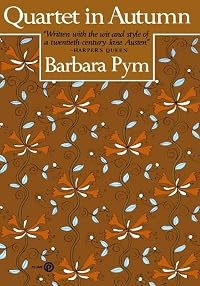
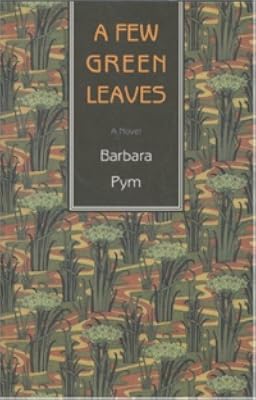
Novelist Barbara Pym was born in Shropshire and educated at Oxford University. An editor of Africa, an anthropological review, for many years, she published her first novel, Some Tame Gazelle, in 1950. Since then, a number of popular works have been published. Often compared with the works of Jane Austen in both manner and subject, Pym's novels show more are apparently guileless evocations of the foibles of aging and isolated characters. She has a sure, if understated, sense of her characters' psychology and of their unintentionally comic revelations about themselves and their futile lives. After the publication of No Fond Return of Love (1961), all her books were out of print until she was cited, coincidentally by both David Cecil and Philip Larkin, as among the most underestimated novelists of the 20th century. She subsequently completed two successful novels, The Sweet Dove Died (1978) and Quartet in Autumn (1978), the latter a comic-pathetic study of two men and two women in their sixties who work in the same office but lead separate, lonely lives outside. Many of her earlier books have since been reprinted, including Excellent Women (1952) and A Glass of Blessings (1958), both perceptive psychological studies of aging women taken advantage of by others. A posthumous novel, A Few Green Leaves (1980), is a superb comedy of provincial village life. (Bowker Author Biography) show less
Barbara Pym has a Legacy Library. Legacy libraries are the personal libraries of famous readers, entered by LibraryThing members from the Legacy Libraries group.
Some Editions
Awards and Honors
Distinctions
Notable Lists
Series
Belongs to Publisher Series
Virago Modern Classics (547)
Work Relationships
Common Knowledge
- Canonical title
- A Glass of Blessings
- Original publication date
- 1958
- People/Characters
- Wilmet Forsyth; Rodney Forsyth; Rowena; Harry; Piers Longridge; Mary Beamish (show all 14); Ella Beamish; Mr. Bason; Father Ransome; Father Thames; Sybil Forsyth; Professor Root; Keith; Julian Malory
- Epigraph
- When God at first made man,
Having a glasse of blessings standing by;
Let us (and he) poure on him all we can
Let the world's riches, which dispersed lie,
Contract into a span.
GEORGE HERBERT: The Pulley - First words
- I suppose it must have been the shock of hearing the telephone ring, apparently in the church, that made me turn my head and see Piers Longridge in one of the side aisles behind me.
When I was a young teacher in the Oxford University English Department I used to visit in the summer holiday - the long vac as it is called - the small public library in the village where my parents were living to see if I co... (show all)uld find something light and entertaining to offset my dutiful daily struggles with Beowulf and Paradise Lost. (Introduction) - Last words
- (Click to show. Warning: May contain spoilers.)It seemed a happy and suitable ending to a good day.
(Click to show. Warning: May contain spoilers.)It has about it the whole breadth and depth of comedy as art. (Introduction) - Blurbers
- Larkin, Philip
Classifications
Statistics
- Members
- 1,003
- Popularity
- 26,132
- Reviews
- 39
- Rating
- (3.92)
- Languages
- 5 — English, French, German, Italian, Spanish
- Media
- Paper, Audiobook, Ebook
- ISBNs
- 36
- UPCs
- 1
- ASINs
- 13