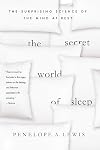
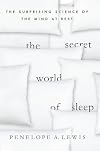
The Secret World of Sleep: The Surprising Science of the Mind at Rest
by Penelope A. Lewis
On This Page
Description
Neuroscientist Penny Lewis explores the latest research into the nighttime brain to understand the real benefits of sleep, showing how, while our body rests, the brain practices tasks it learned during the day, replays traumatic events to mollify them, and forges connections between distant concepts.Tags
Recommendations




















Member Reviews
It is unclear who is the intended audience for this book. It's a short read that at first glance appears to be addressed to the common reader, yet it doesn't provide the type of information that would be sought after at the popular level. Neither is it an academic work. Lewis reworks a collection of research material, presumably to make it more accessible to readers, a device that doesn't work in this case. There are some interesting facts, but nothing much that is really useful to the ordinary person in search of knowledge. It is likely that the reader who picks up this book will have sleep problems and hope to find solutions. They will be disappointed.
If this is the kind of writing you are looking for - or if you want to be bored to sleep - you will probably like this book. show less
"When neurons want to communicate one-on-one, they use something called a synapse,show more
a place where the membranes of two different cells come very close together. The receiving side of the synapse is typically loaded with specialist receptors that can bind molecules that float across the synaptic cleft, while the transmitting side is loaded with little vesicles, or bubbles of membranes that encapsulate special chemicals (called neurotransmitters) that can bind to these receptors. When an electric impulse arrives at the transmitting side of the synapse, it triggers feverish activity in these vesicles - they bind to the cell membrane and release their contents into the fluid-filled void that is the synaptic cleft."
If this is the kind of writing you are looking for - or if you want to be bored to sleep - you will probably like this book. show less
 This review was written for LibraryThing Early Reviewers.
The author, Penelope Lewis, is the director of the Sleep and Memory Laboratory at the University of Manchester, and here gives a fascinating insight into how our brains continue working while we get some well-deserved rest. I as a former nurse found the anatomy and neurophysiology of the brain very interesting, but to someone without a science or medical background this could become boring, even though she explains the facts in a way that can be fairly easily understood and tries to support the terminology with common real-life analogies. We learn how sleep deprivation can be compared to the effects of alcohol on the brain, and how it affects creativity, lateral thinking, mood and learning. My problem with this book is that the author show more focuses heavily (almost to the exclusion of everything else) on the consolidation of memories during sleep (not surprisingly, given her job title), and even then some of the results of studies conducted by sleep scientists appear to contradict other results in the same field. As someone who has struggled with sleep issues for more than a decade, I was hoping that there might be some answers in here to explain what's going on in my head at night (or during the day, when I'm desperate for a nap). Only the very last chapter touches on things people with sleep problems could try to achieve a better night's rest, from avoidance of certain foods and caffeine in the evenings or the ambience of the bedroom, to things like timed air fresheners, blue light sources or wearing orange-tinted goggles for a few hours before going to sleep; but then it's probably fair to say that most of the serious insomniacs among us will have tried a good deal of them already, so there's nothing new to be learned in this respect. For a book entitled The Secret World of Sleep: The Surprising Science of the Mind at Rest I was expecting something a little bit more all-encompassing, including a more thorough exploration of sleep disorders; this isn't the author's fault, but – I presume – the publisher's by giving a very specific book a more generic (and hence misleading) title.
(This review was originally written as part of Amazon's Vine programme.) show less
(This review was originally written as part of Amazon's Vine programme.) show less
Way too much clinical/technical jargon to make this book interesting for the general reader. Author Lewis attempts several times to relate interesting anecdotes but consistently bogs them down with too much neuroscience lingo. It was like trying to read a school text. As a matter of fact, there are summaries at the end of each chapter telling you what you should have learned. I was trying to find test answers at the back of the book but I kept falling asleep. So in summary, I guess I did learn something about sleep after all.
This review was written for LibraryThing Early Reviewers.It should be emphasized that this book is written for the interested layperson—so even though there is significant emphasis on neural processes and intimidating-sounding stuff like "neurotransmitters" and "acetylcholine" and "action potentials", it gets explained within the first few chapters. This means that it's potentially a little boring to people who are more familiar with the brain, but also means it's much more accessible to those who aren't!
Also of note is that this isn't a book on how to improve your sleep, but I think that much should be obvious from the title—it's about the functionality of sleep and what aspects of consciousness it contributes to. So if you're a layperson suffering from insomnia and want to improve your show more sleep habits, you should NOT pick up this book. But if you're the average person who wants to know more about what goes on when you're sleeping, by all means, this is the kind of book you want!
This book is divided roughly into three parts: About the brain, the brain and sleeping/dreaming, and ways to improve your sleep (either overall or to get your sleep to work for you).
The "about the brain" section is extremely basic, but it's also written clearly for the kind of information that the author is trying to get across. I admired the author on this point, since she knew exactly what the uninitiated reader needed to know to understand the rest of the book, and describes only that and nothing else. (This may be disappointing to those who wanted to know a little more about the brain, however.)
The brain and sleep/dreaming section is likely the reason why the book was bought in the first place. Like the author states several times, sleep (and dreaming!) is a rather mysterious beast that we don't know a whole lot about yet, but it seems to be exceedingly important in the functioning of memory and learning. Dreams also have some effect. The author goes into detail about a few particular studies, likely chosen to have a wow factor, since detailing a lot of research would have an unintended soporific effect. Another bonus is that there are a few highly contentious cases that the author details the arguments (and research) for and against a particular research question. It's easy to tell the side that she takes, since she goes into much more detail at that point, but I appreciate that she makes an effort to disclose both sides.
The "improving your sleep" section spans two chapters, the first on how to get your sleep to work for you, and the second on how to improve your sleep in general. I don't think there's anything particularly special in these two chapters; the latter is information that you can get from a rousing Google search, but the former is more interesting.
In the end, this book is tightly written and doesn't have a lot of extraneous material—in fact, it left me a little dissatisfied because I wanted to know more. I would have liked a little more connection between the neurological and psychological findings regarding sleep, since this book focuses mainly on the brain and less on the mind (and I know there are interesting psychological theories of sleep!); however, that may have detracted from the to-the-point quality of the book that I did enjoy. The figures and diagrams weren't the most helpful or clear (or practical, from an academic standpoint), so I eventually just stopped looking at them altogether. The author writes clearly enough that I never felt like I needed a visual explanation. show less
Also of note is that this isn't a book on how to improve your sleep, but I think that much should be obvious from the title—it's about the functionality of sleep and what aspects of consciousness it contributes to. So if you're a layperson suffering from insomnia and want to improve your show more sleep habits, you should NOT pick up this book. But if you're the average person who wants to know more about what goes on when you're sleeping, by all means, this is the kind of book you want!
This book is divided roughly into three parts: About the brain, the brain and sleeping/dreaming, and ways to improve your sleep (either overall or to get your sleep to work for you).
The "about the brain" section is extremely basic, but it's also written clearly for the kind of information that the author is trying to get across. I admired the author on this point, since she knew exactly what the uninitiated reader needed to know to understand the rest of the book, and describes only that and nothing else. (This may be disappointing to those who wanted to know a little more about the brain, however.)
The brain and sleep/dreaming section is likely the reason why the book was bought in the first place. Like the author states several times, sleep (and dreaming!) is a rather mysterious beast that we don't know a whole lot about yet, but it seems to be exceedingly important in the functioning of memory and learning. Dreams also have some effect. The author goes into detail about a few particular studies, likely chosen to have a wow factor, since detailing a lot of research would have an unintended soporific effect. Another bonus is that there are a few highly contentious cases that the author details the arguments (and research) for and against a particular research question. It's easy to tell the side that she takes, since she goes into much more detail at that point, but I appreciate that she makes an effort to disclose both sides.
The "improving your sleep" section spans two chapters, the first on how to get your sleep to work for you, and the second on how to improve your sleep in general. I don't think there's anything particularly special in these two chapters; the latter is information that you can get from a rousing Google search, but the former is more interesting.
In the end, this book is tightly written and doesn't have a lot of extraneous material—in fact, it left me a little dissatisfied because I wanted to know more. I would have liked a little more connection between the neurological and psychological findings regarding sleep, since this book focuses mainly on the brain and less on the mind (and I know there are interesting psychological theories of sleep!); however, that may have detracted from the to-the-point quality of the book that I did enjoy. The figures and diagrams weren't the most helpful or clear (or practical, from an academic standpoint), so I eventually just stopped looking at them altogether. The author writes clearly enough that I never felt like I needed a visual explanation. show less
This review was written for LibraryThing Early Reviewers.What is the purpose of sleep? What goes on in our brains while we sleep? These are the questions explored in this book. I found it fascinating. The author explains different types of sleep and possible purposes behind sleep, including consolidation of learning and memories or dealing with disturbing experiences. She explores links between sleep and different brain disorderers. She includes suggestions for improving sleep, and sleeping more "strategically".
The author explained various scientific studies in a clear way for the general reader. Her book has left me wanting to explore more about the world of sleep.
The author explained various scientific studies in a clear way for the general reader. Her book has left me wanting to explore more about the world of sleep.
This review was written for LibraryThing Early Reviewers.I enjoyed the mix of science and practicality and despite having done lots of reading on sleep and brain development, did learn some new tidbits. The information on memory formation was fairly new to me. Some sections would be hard going for anyone who doesn't enjoy more technical reading.
This review was written for LibraryThing Early Reviewers.I was looking forward to reading this book but found it to be a frustrating and ultimately disappointing read. I just couldn’t figure out author Stephanie Lewis’ purpose in writing it. Too technical for a lay audience and not technical enough for a scholarly work, it reads like an introductory textbook on cognitive science---complete with chapter summaries---for students. And while there are a few interesting facts to be found, you have to slog through an awful lot of jargon-laden prose; needless charts, graphs and diagrams; and more detail than you would ever want or need to know about laboratory experiments and brain topography to get there.
This review was written for LibraryThing Early Reviewers.Members
- Recently Added By
Lists

Books reviewed in Nature
11 works; 1 member

In Our Time books
4,934 works; 2 members
Author Information
2 Works 109 Members
Penelope A. Lewis is a neuroscientist at the University of Manchester, where she runs the Sleep and Memory Lab. She has written for a number of popular-science publications, including New Scientist, Scientific American, and BBC Focus and was interviewed on NPR's Fresh Air. She's received funding from top institutes, including the Wellcome Trust, show more Biotechnology and Biosciences Research Council, Medical Research Council, Engineering and Physical Sciences Research Council, and Unilever. She lives in Manchester, United Kingdom. show less
Common Knowledge
- Canonical title
- The Secret World of Sleep: The Surprising Science of the Mind at Rest
- Original title
- The Secret World of Sleep: The Surprising Science of the Mind at Rest
- Original publication date
- 2013-08-27
- First words
- Do amobebas sleep?
- Last words
- (Click to show. Warning: May contain spoilers.)Some of these symptoms can be relieved by aggressive weight loss programs, but in many instances it would be prudent to have them checked out by your doctor, or to request a referral to a sleep clinic.
- Original language
- English US
Classifications
Statistics
- Members
- 101
- Popularity
- 320,038
- Reviews
- 14
- Rating
- (3.00)
- Languages
- English
- Media
- Paper, Ebook
- ISBNs
- 3
- ASINs
- 1