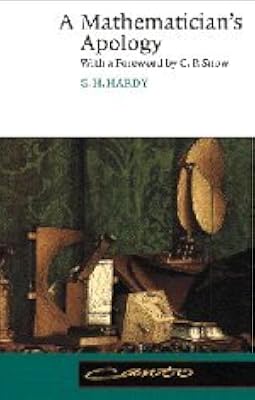
A Mathematician's Apology
by G. H. Hardy
On This Page
Description
G. H. Hardy was one of this century's finest mathematical thinkers, renowned among his contemporaries as a 'real mathematician ... the purest of the pure'. He was also, as C. P. Snow recounts in his Foreword, 'unorthodox, eccentric, radical, ready to talk about anything'. This 'apology', written in 1940, offers a brilliant and engaging account of mathematics as very much more than a science; when it was first published, Graham Greene hailed it alongside Henry James's notebooks as 'the best show more account of what it was like to be a creative artist'. C. P. Snow's Foreword gives sympathetic and witty insights into Hardy's life, with its rich store of anecdotes concerning his collaboration with the brilliant Indian mathematician Ramanujan, his idiosyncrasies and his passion for cricket. This is a unique account of the fascination of mathematics and of one of its most compelling exponents in modern times. show lessTags
Recommendations
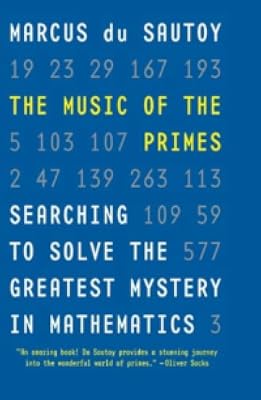
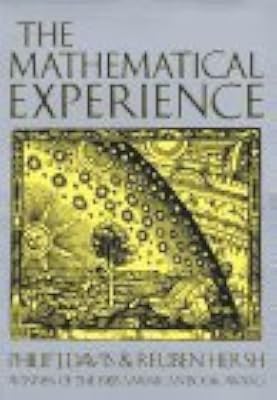
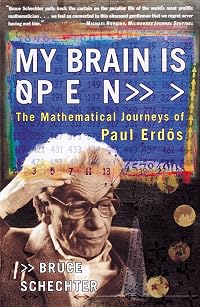
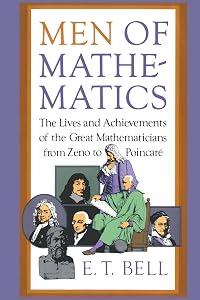
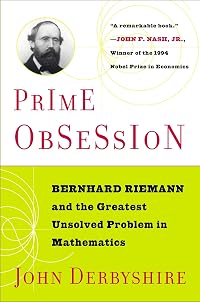
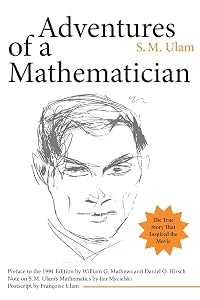
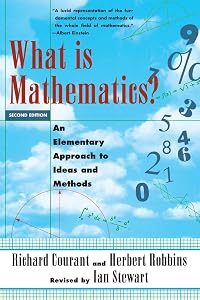
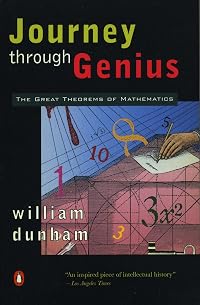

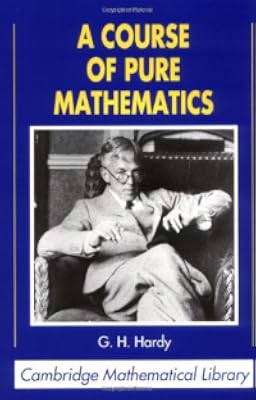




Member Recommendations
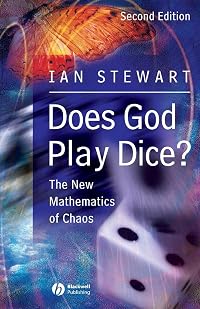
kalashnikov Ian Stewart has been quoted as saying that 'Letters to a Young Mathematician' is intended to be an update and an expansion to 'A Mathematician's Apology'.
Member Reviews
An ageing mathematician, not particularly famous but well respected in his dwindling professional community, gives a lecture to justify the life he led and his devotion to pure mathematics. While some of his thoughts and their exposition deserve attention, I would like to focus on one point that is fundamentally wrong. The author claims that mathematics in its high form is inherently useless and therefore absolutely harmless. One might be willing to agree to some extent when thinking about Poincaré's conjecture or Ferma's great theorem. Yet the author labels Einstein a mathematician and gives quantum mechanics as an example of useless mathematics. It took only 5 years from the time of the lecture for a byproduct of this 'useless show more mathematics' to wipe out populations of Hiroshima and Nagasaki. A hundred years later will anyone survive the side effects of this harmless math as we approach the Great Filter moment? show less
Hardy's own story is required reading for anyone seriously undertaking a life in hard creative fields: maths, science or arts. It is a cautionary tale against overt competitiveness, as he is a shining example of a person so insecure that his entire life is devoted to proving he is better than others.
From a young age, Hardy admits that even being good at school was to show that he was better than the other boys. Snow paints him as a bore who requires sycophants, with a lifelong fascination of literally ranking people.
Hardy himself implies his predicament:
`I still say to myself when I am depressed and find myself forced to listen to pompous and tiresome people, ``Well, I have done one thing you could never have done, and that is to have show more collaborated with Littlewood and Ramanujan on something like equal terms."'
Why does Hardy need to reinforce his superiority over pitiable interlocutors? If he is the self-proclaimed fifth best pure mathematician in the world (few would be qualified to deny him this), how could he be so insecure?
It is puzzling how such a genius never came to terms with his one-upmanship as the source of his own depression, especially since he was so honest about himself. To answer in part, we must accept that Hardy's younger days, his inner life as a mathematician was incredible. However, as he measured his own life against others he was destined for a sorry end. Perhaps he never saw the afflictions of old age coming, or believed that the sacrifice was somehow worth it.
Hardy's ideas on mathematical aesthetics, although genuine, are ingrained with his competitive affliction. He viewed mathematics as completely useless to the real world. His view that it is rarely genuine if one justifies his work to do good for others is refreshing, and a thought I'll always carry around with me whenever I meet anyone in a creative field. However, the definitiveness of this attitude now seems quaint, as clearly mathematics, even his abstract speciality of number theory, is now an integral part of modern day communications and cryptography.
As others have said, read Snow's forward second as it is completely inappropriate to be read before Hardy's own treatise.
Also note that the word `apology' is probably used in the title in its anachronistic meaning as a formally written justification, not necessarily as a statement of regret.
Although I have been scathing of Hardy, I am still immensely grateful to this character for having live such a unique life on the fringes of humanity. Few have gone so far in the inner-life and been so honest to themselves and the rest of us. show less
From a young age, Hardy admits that even being good at school was to show that he was better than the other boys. Snow paints him as a bore who requires sycophants, with a lifelong fascination of literally ranking people.
Hardy himself implies his predicament:
`I still say to myself when I am depressed and find myself forced to listen to pompous and tiresome people, ``Well, I have done one thing you could never have done, and that is to have show more collaborated with Littlewood and Ramanujan on something like equal terms."'
Why does Hardy need to reinforce his superiority over pitiable interlocutors? If he is the self-proclaimed fifth best pure mathematician in the world (few would be qualified to deny him this), how could he be so insecure?
It is puzzling how such a genius never came to terms with his one-upmanship as the source of his own depression, especially since he was so honest about himself. To answer in part, we must accept that Hardy's younger days, his inner life as a mathematician was incredible. However, as he measured his own life against others he was destined for a sorry end. Perhaps he never saw the afflictions of old age coming, or believed that the sacrifice was somehow worth it.
Hardy's ideas on mathematical aesthetics, although genuine, are ingrained with his competitive affliction. He viewed mathematics as completely useless to the real world. His view that it is rarely genuine if one justifies his work to do good for others is refreshing, and a thought I'll always carry around with me whenever I meet anyone in a creative field. However, the definitiveness of this attitude now seems quaint, as clearly mathematics, even his abstract speciality of number theory, is now an integral part of modern day communications and cryptography.
As others have said, read Snow's forward second as it is completely inappropriate to be read before Hardy's own treatise.
Also note that the word `apology' is probably used in the title in its anachronistic meaning as a formally written justification, not necessarily as a statement of regret.
Although I have been scathing of Hardy, I am still immensely grateful to this character for having live such a unique life on the fringes of humanity. Few have gone so far in the inner-life and been so honest to themselves and the rest of us. show less
A Mathematician's Apology has been on my mental reading list for a long time and, like many titles on that mental list, I cannot understand how I didn't read it before. The edition contains a 50 page Foreword by C.P. Snow followed by the 90 page book by Hardy (actually, adjusting for different font sizes, the two parts are probably about equal in length). I read the book first so that I could think about it on its own terms and the Foreword afterwords. Both of them are outstanding and I would recommend reading them in that same reverse order.
Hardy wrote A Mathematician's Apology in the twilight of his career when he no longer was a creative, productive mathematician--and one of the many apologies in the book is the very notion of show more writing about what mathematics rather than actually doing mathematics. He conveys an enormous love and wonder for the discipline, illustrates it with sketches of some proofs, reflects back on his own work and his partnerships with Ramanujan and Littlewood, and discusses the purpose or lack thereof for mathematics. The book itself beautifully conveys the creativity and beauty of mathematics and the process and drive that leads people to do it.
C.P. Snow's Foreword is a mini-biography of Hardy, the almost novelistic story of Snow's friendship with Hardy (which begins and ends with discussions of cricket, starting when they met in the dining hall at Cambridge and ending on Hardy's deathbed), and a critical appreciation of A Mathematician's Apology. show less
Hardy wrote A Mathematician's Apology in the twilight of his career when he no longer was a creative, productive mathematician--and one of the many apologies in the book is the very notion of show more writing about what mathematics rather than actually doing mathematics. He conveys an enormous love and wonder for the discipline, illustrates it with sketches of some proofs, reflects back on his own work and his partnerships with Ramanujan and Littlewood, and discusses the purpose or lack thereof for mathematics. The book itself beautifully conveys the creativity and beauty of mathematics and the process and drive that leads people to do it.
C.P. Snow's Foreword is a mini-biography of Hardy, the almost novelistic story of Snow's friendship with Hardy (which begins and ends with discussions of cricket, starting when they met in the dining hall at Cambridge and ending on Hardy's deathbed), and a critical appreciation of A Mathematician's Apology. show less
It is a lovely little book, articulate, reasoned and opinionated. It is somewhat dated, since number theory is now central to the operation of the Web, whereas in Hardy’s time it was an area of mathematics he denotes as “real” mathematics and thus not useful. It is now “trivial” mathematics, in Hardy’s harsh division of the field. However, as an explanation of why one has a life in mathematics and what it might be like to be a mathematician, this book is remarkably effective.
It is not overtly autobiographical until the last section where with mathematical terseness he lays out his life in a few pages, but rather seeks to recreate the mathematical approach to work. He defends the world of mathematics that exists far beyond show more the applied mathematics that most people, even engineers and hard scientists, learn as a tool to practice their profession. This mathematics is more art than much painting or sculpture, since it is entirely a construct of the mind. It is beautiful to the trained eye and incomprehensible to anyone else.
There is a sorrowful tone that hangs over the entire book. This is especially true if the reader is wise enough to obtain a copy with the forward by CP Snow, who gives us a bit more detail on the man Hardy. Mathematicians, in general, do all their work when they are young and their minds are pliable and their egos intact. Hardy, when he writes the book, can no longer do math, and he grieves the loss as one would one’s manhood, since his solitary life had left him with little that he could identify as himself other than the creation of original work in mathematics. His anguish is apparent and he is inconsolable. show less
It is not overtly autobiographical until the last section where with mathematical terseness he lays out his life in a few pages, but rather seeks to recreate the mathematical approach to work. He defends the world of mathematics that exists far beyond show more the applied mathematics that most people, even engineers and hard scientists, learn as a tool to practice their profession. This mathematics is more art than much painting or sculpture, since it is entirely a construct of the mind. It is beautiful to the trained eye and incomprehensible to anyone else.
There is a sorrowful tone that hangs over the entire book. This is especially true if the reader is wise enough to obtain a copy with the forward by CP Snow, who gives us a bit more detail on the man Hardy. Mathematicians, in general, do all their work when they are young and their minds are pliable and their egos intact. Hardy, when he writes the book, can no longer do math, and he grieves the loss as one would one’s manhood, since his solitary life had left him with little that he could identify as himself other than the creation of original work in mathematics. His anguish is apparent and he is inconsolable. show less
Life-changing. No, seriously. Hardy's brief monograph puts forth a spirited argument that mathematics is beautiful precisely because it is useless. (An argument that miraculously survives the subsequent utility of number theory, Hardy's own bailiwick, in computer encryption.) The abstraction away from personal human expression and basic human practicality gives math an Olympian clarity that makes a mathematical vocation–a career choice essentially guaranteed to be arduous and unrewarding–worth it for those lucky few who can manage to do it for real. Hardy was one, and his insider's description of the pursuit of a particularly austere variety of beauty is compelling. And beneath the heady ideas is the poignant subtext of a man past show more his prime, writing with passion about a life's work he no longer has the ability to pursue. C.P. Snow's extended biographical introduction (which is as much about Hardy's protégé Ramanujan, himself an intriguingly tragic figure) brings this personal angle to the forefront and makes it moving.
Mathematicians, scientists, and computer programmers are likely to find in Hardy's description of mathematical beauty a crisp expression of some of the deep motivations for their own work. Non-mathematicians will get a taste of why such a seemingly dry pursuit can be so compelling. And anyone interested in general questions of aesthetics will benefit from an encounter with a idea of beauty that does not automatically center itself around the Romantic notion of personal emotional expression. show less
Mathematicians, scientists, and computer programmers are likely to find in Hardy's description of mathematical beauty a crisp expression of some of the deep motivations for their own work. Non-mathematicians will get a taste of why such a seemingly dry pursuit can be so compelling. And anyone interested in general questions of aesthetics will benefit from an encounter with a idea of beauty that does not automatically center itself around the Romantic notion of personal emotional expression. show less
A good "justification" of pure mathematics. Practicing mathematics satisfies an intellectual curiosity, it can be seen as making observations of a "mathematical reality", and mathematical theorems are "eternal". I agree with Hardy that pure math is like creative art with its aesthetics and so on, and I found the characterizations of applied mathematics and mathematical physics very good.
This book can be uplifting, or depressing, depending on the reader's state of mind. It encourages one to build up one's talents, but on the other hand it sends a message that only the most gifted can really make it. Hardy seems satisfied with his own life and proud of his profession, and he doesn't hide it. I didn't take it as arrogance.
About losing show more one's creativity: Is it really best to do mathematics in an early age, or is it just a myth? Perhaps it's true that the most revolutionary ideas are conceived by young mathematicians, but some of this claim is probably due to young people (without families) have more time to do math, and doing math should be intense, in order to achieve results.
Snow's foreword was a great, fun (in an old English way) introduction to Hardy as a person. The Apology was easier to appreciate after reading that. The Finnish translation wasn't so great. It was sloppy language, perhaps done in a hurry or without any professional ethics. show less
This book can be uplifting, or depressing, depending on the reader's state of mind. It encourages one to build up one's talents, but on the other hand it sends a message that only the most gifted can really make it. Hardy seems satisfied with his own life and proud of his profession, and he doesn't hide it. I didn't take it as arrogance.
About losing show more one's creativity: Is it really best to do mathematics in an early age, or is it just a myth? Perhaps it's true that the most revolutionary ideas are conceived by young mathematicians, but some of this claim is probably due to young people (without families) have more time to do math, and doing math should be intense, in order to achieve results.
Snow's foreword was a great, fun (in an old English way) introduction to Hardy as a person. The Apology was easier to appreciate after reading that. The Finnish translation wasn't so great. It was sloppy language, perhaps done in a hurry or without any professional ethics. show less
Why is the mathematician apologizing? Because although he became an Oxford don and left something permanent in the field of pure mathematics, he did nothing to improve the life of others. It was a selfish life because he loved the creative process and was fortunate enough that it brought him the other measures of success. The book was worth reading again to get another glimpse of his logical mind at work in what is more a justification than an apology.
Although he uses some "simple" math examples to illustrate a point, it is not necessary to understand them precisely (nor need you apologize for skipping them).
Although he uses some "simple" math examples to illustrate a point, it is not necessary to understand them precisely (nor need you apologize for skipping them).
Members
- Recently Added By
Published Reviews
ThingScore 75
added by Jacme
Lists

Modern Library 100 Best Nonfiction Books
100 works; 8 members

HS Mathematics class library
79 works; 6 members

Books referenced in Jim Holt's Why Does the World Exist?
119 works; 1 member

Trinity College Booklist (1951): Class One, Natural Science
98 works; 2 members
Author Information

16+ Works 2,469 Members
Some Editions
Awards and Honors
Notable Lists
Series
Belongs to Publisher Series
Work Relationships
Is abridged in
Is a reply to
Inspired
Has as a student's study guide
Common Knowledge
- Canonical title
- A Mathematician's Apology
- Original title
- A Mathematician's Apology
- Original publication date
- 1940
- People/Characters
- G. H. Hardy
- Dedication
- To
JOHN LOMAS
who asked me to write it - First words
- It is a melancholy experience for a professional mathematician to find himself writing about mathematics.
- Quotations*
- Un uomo che si chieda continuamente se val la pena di fare quello che fa, e se è la persona giusta per farlo, non concluderà mai nulla di buono e scoraggerà anche gli altri. Bisogna chiudere un po' gli occhi e sopravvaluta... (show all)re leggermente se stessi e la propria materia. Non è una cosa tanto difficile: è molto più difficile evitare di rendere ridicoli se stessi e la propria materia tenendo gli occhi troppo chiusi.
Noi scegliamo i nostri amici non perché incarnano tutte le virtù dell'umanità, ma perché sono quello che sono. È la stessa cosa in matematica; una proprietà comune a troppi oggetti difficilmente suscita l'entusiasmo, e... (show all) le stesse idee diventano indistinte se non possiedono una grande individualità. - Last words
- (Click to show. Warning: May contain spoilers.)If I had a statue on a column in London, would I prefer the columns to be so high that the statue was invisible, or low enough for the features to be recognizable? I would choose the first alternative, Dr Snow, presumably, the second.
- Original language
- English
- Disambiguation notice*
- This edition contains an additional text by John von Neumann.
*Some information comes from Common Knowledge in other languages. Click "Edit" for more information.
Classifications
Statistics
- Members
- 1,574
- Popularity
- 14,573
- Reviews
- 29
- Rating
- (3.77)
- Languages
- 18 — Basque, Catalan, Chinese, Czech, Dutch, English, Finnish, French, German, Greek, Icelandic, Italian, Polish, Portuguese, Russian, Spanish, Swedish, Turkish
- Media
- Paper, Ebook
- ISBNs
- 43
- UPCs
- 1
- ASINs
- 19