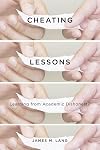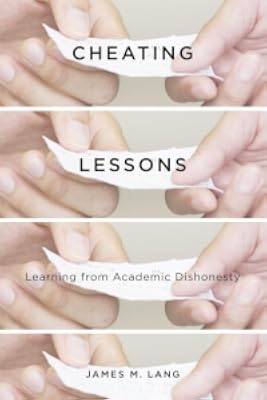
Cheating Lessons: Learning from Academic Dishonesty
by James M. Lang
On This Page
Description
Nearly three-quarters of college students cheat during their undergraduate careers, a startling number attributed variously to the laziness of today ?s students, their lack of a moral compass, or the demands of a hypercompetitive society. For James Lang, cultural or sociological explanations like these are red herrings. His provocative new research indicates that students often cheat because their learning environments give them ample incentives to try - and that strategies which make show more cheating less worthwhile also improve student learning. Cheating Lessons is a practical guide to tackling academic dishonesty at its roots. Drawing on an array of findings from cognitive theory, Lang analyzes the specific, often hidden features of course design and daily classroom practice that create opportunities for cheating. Courses that set the stakes of performance very high, that rely on single assessment mechanisms like multiple-choice tests, that have arbitrary grading criteria: these are the kinds of conditions that breed cheating. Lang seeks to empower teachers to create more effective learning environments that foster intrinsic motivation, promote mastery, and instill the sense of self-efficacy that students need for deep learning. Although cheating is a persistent problem, the prognosis is not dire. The good news is that strategies which reduce cheating also improve student performance overall. Instructors who learn to curb academic dishonesty will have done more than solve a course management problem - they will have become better educators all around. show lessTags
Recommendations


Member Reviews
Cheating is pervasive in schooling. Nearly two-thirds of college students admit to cheating at some point while an undergraduate student. It appears that most students who cheat claim that the learning environment invited cheating. This book explores aspects of course design that help an instructor eliminate incentives to cheat. Strategies that reduce cheating also increase learning. This book will help you think more clearly about how you can adjust your course structure to lessen the likelihood of cheating.
Ratings
Members
- Recently Added By
Lists

Top Five Books of 2013
1,562 works; 721 members

Non-Fiction Worth Reading
1,016 works; 262 members

Books for Educators
164 works; 6 members

One Book, Many Authors
441 works; 40 members
Author Information
13 Works 1,032 Members
James M. Lang is Associate Professor of English at Assumption College and former assistant director of the Searle Center for Teaching Excellence at Northwestern University. He is the author of Life on the Tenure Track: Lessons From the First Year.
Common Knowledge
- Dedication
- For my father.
- First words
- When I first approached the research literature on cheating in higher education, I came to it without any particular idea of what I wanted to say.
- Blurbers
- Diver, Colin S.; Hager, Christopher
Classifications
Statistics
- Members
- 101
- Popularity
- 320,131
- Reviews
- 1
- Rating
- (4.00)
- Languages
- English
- Media
- Paper, Ebook
- ISBNs
- 3
- ASINs
- 2