A Nation in Waiting: Indonesia in the 1990s
by Adam Schwarz
On This Page
Description
"In A Nation in Waiting, Adam Schwarz spans a wide variety of issues of concern in today's Indonesia, providing a detailed view of one of the world's most populous, yet least-understood, nation's. He chronicles the major economic and political changes recorded during former President Suharto's thirty-one-year tenure, and the present economic and political crisis. In this fully updated second edition, Schwarz analyzes the impact of Suharto's resignation on the political, economic, and social show more life of Indonesia."--Provided by publisher. show lessTags
Recommendations


























Member Recommendations

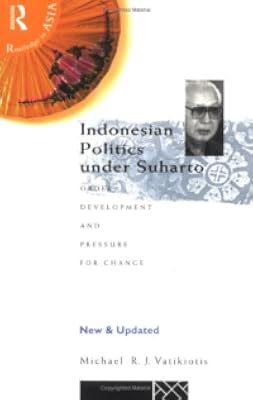
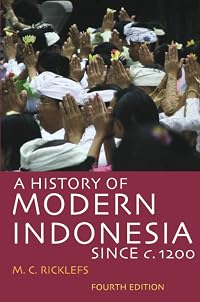
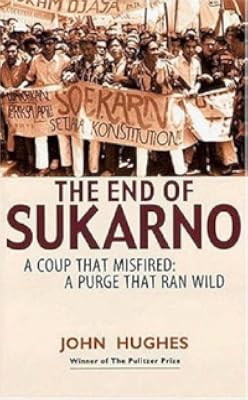
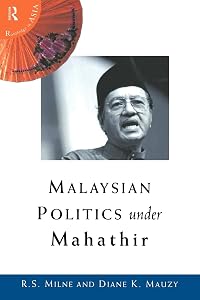
mercure Both books are written by journalists covering Indonesia, and look at the latter years of Soeharto's Orde Baru from a slightly different perspective, therefore enhancing each other.

mercure "No more corruption, collusion, and nepotism" (KKN) was the battle cry in the final days of the Soeharto regime. But KKN is a common feature of most of Southeast Asia. Guns, Girls, Gambling, Ganja tells you how corruption and collusion worked in Thailand.
Member Reviews
I have another copy in Bali.
"When I arrived in Indonesia in 1987," writes journalist Adam Schwarz, "the last thing on my mind was to write a book about the place." A correspondent for the Far Eastern Economic Review for five years, Schwarz found himself seduced by Indonesia's beauty while acutely aware of its behind-the-scenes political and economic intensity.
Indonesia, with its thousands of islands, hundreds of languages and cultural groups, and a population of over 180 million remains a stranger to the international community. Even in Asia, the country is little understood. Why? Indonesia didn't achieve its independence from centuries of colonial rule until after World War II. And General Soeharto, who governed since 1966 (and still show more did at the time of this book's writing), was a conservative leader, fiercely anticommunist and inward-looking, whose politics were "... repressive, highly stylized and formulaic." This is a book mainly about Soeharto and his style of leadership. Convinced that party politics led inevitably to national instability, he focused instead on economic development. Schwarz examines this in the full light of Soeharto's nepotism, his children's abuse of privilege, and the drain on the Indonesian economy at the hands of crony businessmen.
Only 30 years ago, Indonesia was an impoverished, agrarian nation. Schwarz explores the impact of economic development on the culture itself; the transition, for example, of a population from rural to urban; the exposure, thus, of a broader population to outside information and ideas. Progress would continue to hit the wall of Soeharto's rigid political system.
With an insider's knowledge, Schwarz articulates the major challenges to an Indonesia still under Soeharto's rule--economic reform; creating a consensus of economic policy; racial tensions; corruption and nepotism; and the East Timor problem, among others. His introductory words hang somewhere between prescience and hindsight when he writes: "There are many roads Indonesia could take through the 1990s. Some would lead to a smooth transition of power, others would not. Soeharto may choose to recognize the pressures for a change in governance ... or he may continue to avert his eyes."
Written and published before the Asian economic crisis and the fall of the Soeharto government in May of 1998, A Nation in Waiting will be read more as an explanation of how things came to be instead of for its current political and economic assessment. Prophetic statements--"The nation's political edifice, which by the early 1990s had become precariously dependent on one man, is beginning to show its age. More and more educated Indonesians see Soeharto's brand of leadership ... as now outdated, excessively paternalistic and a hindrance to national development"--now function ironically as a backward glance shedding light on the bloodless May revolution. --Hollis Giammatteo show less
"When I arrived in Indonesia in 1987," writes journalist Adam Schwarz, "the last thing on my mind was to write a book about the place." A correspondent for the Far Eastern Economic Review for five years, Schwarz found himself seduced by Indonesia's beauty while acutely aware of its behind-the-scenes political and economic intensity.
Indonesia, with its thousands of islands, hundreds of languages and cultural groups, and a population of over 180 million remains a stranger to the international community. Even in Asia, the country is little understood. Why? Indonesia didn't achieve its independence from centuries of colonial rule until after World War II. And General Soeharto, who governed since 1966 (and still show more did at the time of this book's writing), was a conservative leader, fiercely anticommunist and inward-looking, whose politics were "... repressive, highly stylized and formulaic." This is a book mainly about Soeharto and his style of leadership. Convinced that party politics led inevitably to national instability, he focused instead on economic development. Schwarz examines this in the full light of Soeharto's nepotism, his children's abuse of privilege, and the drain on the Indonesian economy at the hands of crony businessmen.
Only 30 years ago, Indonesia was an impoverished, agrarian nation. Schwarz explores the impact of economic development on the culture itself; the transition, for example, of a population from rural to urban; the exposure, thus, of a broader population to outside information and ideas. Progress would continue to hit the wall of Soeharto's rigid political system.
With an insider's knowledge, Schwarz articulates the major challenges to an Indonesia still under Soeharto's rule--economic reform; creating a consensus of economic policy; racial tensions; corruption and nepotism; and the East Timor problem, among others. His introductory words hang somewhere between prescience and hindsight when he writes: "There are many roads Indonesia could take through the 1990s. Some would lead to a smooth transition of power, others would not. Soeharto may choose to recognize the pressures for a change in governance ... or he may continue to avert his eyes."
Written and published before the Asian economic crisis and the fall of the Soeharto government in May of 1998, A Nation in Waiting will be read more as an explanation of how things came to be instead of for its current political and economic assessment. Prophetic statements--"The nation's political edifice, which by the early 1990s had become precariously dependent on one man, is beginning to show its age. More and more educated Indonesians see Soeharto's brand of leadership ... as now outdated, excessively paternalistic and a hindrance to national development"--now function ironically as a backward glance shedding light on the bloodless May revolution. --Hollis Giammatteo show less
If you only read one book about 20th century Indonesia, make sure it is A Nation in Waiting. The political landscape has suffered an earthquake since the book was written (even since it was updated) but this remains the most authoritative work on the Suharto years. Earthquake or no, his legacy will continue to shape the country for decades to come.
Disclosure: friend of the author's. But also former journalistic competitor, so praise given grudgingly!
Disclosure: friend of the author's. But also former journalistic competitor, so praise given grudgingly!
This book has been the primary cause of all intervention to NU leadership by Suharto as K.H. Abdurrahman Wahid called him as stupid leader. Reading this book simply just like having compilation of Far Eastern Economic Review (FEER) articles of Indonesia written by Adam Schwarz.
Ratings
Members
- Recently Added By
Author Information

3 Works 96 Members
Common Knowledge
Classifications
- Genres
- Nonfiction, General Nonfiction, Politics and Government, History
- DDC/MDS
- 320.9598 — Society, government, & culture Political science Types of Government Political situation and conditions Asia Southeast Asia Indonesia; East Timor
- LCC
- DS644.4 .S38 — History of Europe, Asia, Africa and Oceania Asia History of Asia Indonesia (Dutch East Indies) History
- BISAC
Statistics
- Members
- 82
- Popularity
- 387,022
- Reviews
- 3
- Rating
- (4.13)
- Languages
- English
- Media
- Paper, Ebook
- ISBNs
- 14
- ASINs
- 1