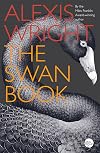
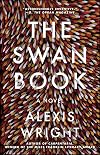
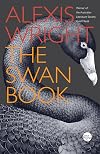
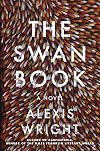
The Swan Book
by Alexis Wright
On This Page
Description
This book is set in the future, with Aboriginals still living under the Intervention in the north, in an environment fundamentally altered by climate change. It follows the life of a mute teenager called Oblivia, the victim of gang-rape by petrol-sniffing youths, from the displaced community where she lives in a hulk, in a swamp filled with rusting boats, and thousands of black swans driven from other parts of the country, to her marriage to Warren Finch, the first Aboriginal president of show more Australia, and her elevation to the position of First Lady, confined to a tower in a flooded and lawless southern city. The Swan Book has all the qualities which made Wright's previous novel, Carpentaria, a prize-winning best-seller. It offers an intimate awareness of the realities facing Aboriginal people; the wild energy and humour in her writing finds hope in the bleakest situations; and the remarkable combination of storytelling elements, drawn from myth and legend and fairy tale. show lessTags
Recommendations












Member Reviews
‘The Swan Book’ is a lengthy prose poem about Australian colonialism and climate change. It certainly read like poetry to me, despite being presented as a novel. A representative paragraph:
Given this poetic, magical realist, and/or metaphorical style, it took me a little while to get into. Once I show more stopped searching for a plot and let myself enjoy the imagery and atmosphere, I appreciated 'The Swan Book'. The blurb is rather misleading, though. It isn’t really the story of Oblivia, ostensibly the main character. Rather, it is a rather beautiful word-portrait of Australia ruined by climate change. The actual main characters are swans and various other creatures. I felt like I would have got more from it had I known more about Australian history and culture. Nonetheless, it was a pleasantly strange experience once I’d embraced it. show less
The light that came from the sky at night was relentless. It was the Army swinging around the searchlights. Where was the joy in this? Ungovernable thoughts unfurled into the atmosphere from the heads of people hiding beneath folded wings that might have belonged to the black swans that had died in the swamp. Yes, those grand old birds flying high into the greatness of life without paying a dollar for the flight could just be angels.
Given this poetic, magical realist, and/or metaphorical style, it took me a little while to get into. Once I show more stopped searching for a plot and let myself enjoy the imagery and atmosphere, I appreciated 'The Swan Book'. The blurb is rather misleading, though. It isn’t really the story of Oblivia, ostensibly the main character. Rather, it is a rather beautiful word-portrait of Australia ruined by climate change. The actual main characters are swans and various other creatures. I felt like I would have got more from it had I known more about Australian history and culture. Nonetheless, it was a pleasantly strange experience once I’d embraced it. show less
An extraordinary story, a tour-de-force of language and literary techniques. I think Wright's contribution to the corpus of cli-fi books is timely: it shows how the 'climate apocalypse' might have already arrived to those most vulnerable and how all ideological illusions of universality shatter in its face. The Swan Book is as enchanting as it is depressing.
I'm not sure I can really review this book fairly as I'm pretty sure that a lot of what is going on here passed me by. There's some glorious language, some snippets of blistering satire and the bones of a richly allegorical novel here, but it's swamped by cultural references that I mostly missed, shifts in tone that left me baffled rather than engaged and a kind of stream of conscious approach that overwhelmed me. I got a lot out of Wright's previous book (Carpenteria), but here I think she's kicked it up a notch and left me floundering in her wake.
I think I’m an outlier in my opinion of this book, so I won’t say much. I will say the writing is incredibly sloppy in parts: “etching out a living”, “stuck in a grove”, “a slitter of bone” and “Ghandi” are among the pearlers I found in this. Unless it’s done intentionally - and it clearly isn’t - I find this unacceptable in a major work from an award-winning novelist. Apart from that, bugger-all happens in almost 400 pp apart from a great deal of musing about the main character’s relationship with swans. The little that does happen goes unexplained for the most part. I like my magic realism and dystopian novels, and the idea of a dystopian society resulting from the Howard-era Aboriginal Intervention is a show more promising one, but this book is pointless, poorly-written drivel. show less
I actually only got about 50 pages in, but it never captured me. way too much stream of consciousness combined with cultural references that I just couldn't pick up.
Het verhaal gaat over de aboriginals en over het wegdrukken van aboriginals. Het is wat ze noemen "beeldend" beschreven, maar op mij kwam het wat chaotisch over. Soms worden er beelden opgeroepen waar ik helemaal niets mee kan omdat ze niet passend zijn in de context van het verhaal. Ook zit er geen logica in het verhaal. Dat de vrouw met de toekomstige president trouwt wordt niet erg uitgediept. je zou toch een zekere relatie of verwantschap verwachten. Ook blijft de aboriginal president nogal zwart/wit in mijn ogen. Kortom, ik was enigszins teleurgesteld door dit boek, ondanks dat de problematiek interessant is.
Dec 21, 2023Dutch
Members
- Recently Added By
Lists

This is the Canon: Decolonize Your Bookshelf in 50 Books
51 works; 5 members

Grist Magazine's Definitive Climate Fiction Reading List
22 works; 2 members

Best Australian Books of the 21st Century
88 works; 2 members
Author Information

11+ Works 1,245 Members
Alexis Wright is the author of Carpentaria which won a Northern Territory Literary Award in the Essay category 2015. She also won a 2015 Sidney Myer Creative Fellowship worth $160,000 over two years for this same title. She made the finalist for the Melbourne Prize for Literature 2015. Her title The Swan Book made the shortlist for the 2016 show more Adelaide Festival Awards for Literature in the fiction category. Her collective memoir, Tracker (2017), won the 2018 Stella Prize and 2018 Magarey Medal. (Bowker Author Biography) show less
Awards and Honors
Awards
Common Knowledge
- Important places
- Australia
- First words
- Upstairs in my brain, there lives this kind of cut snake virus in its doll's house.
Classifications
Statistics
- Members
- 269
- Popularity
- 120,147
- Reviews
- 8
- Rating
- (2.93)
- Languages
- Dutch, English, French
- Media
- Paper, Audiobook, Ebook
- ISBNs
- 20
- ASINs
- 3