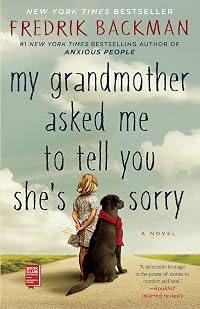
My Grandmother Asked Me to Tell You She's Sorry
by Fredrik Backman
On This Page
Description
Elsa is seven years old and different. Her grandmother is seventy-seven years old and crazy, standing-on-the-balcony-firing-paintball-guns-at-men-who-want-to-talk-about-Jesus-crazy. She is also Elsa's best, and only, friend. At night Elsa takes refuge in her grandmother's stories, in the Land of Almost-Awake and the Kingdom of Miamas where everybody is different and nobody needs to be normal. When Elsa's grandmother dies and leaves behind a series of letters apologizing to people she has show more hurt, Elsa's greatest adventure begins. Her grandmother's letters lead her to an apartment building full of drunks, monsters, attack dogs, and totally ordinary old crones, but also to the truth about fairytales and kingdoms and a grandmother like no other. My Grandmother Asked Me to Tell You She's Sorry is told with the same comic accuracy and beating heart as Fredrik Backman's internationally bestselling debut novel, A Man Called Ove. It is a story about life and death and an ode to one of the most important human rights: the right to be different. show lessTags
Recommendations

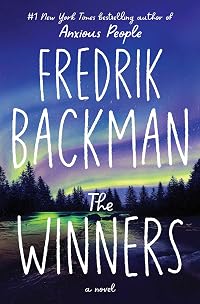
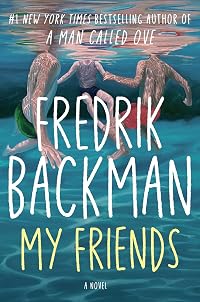
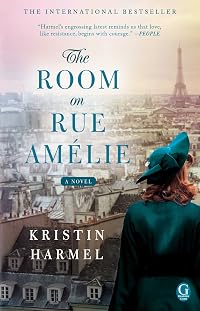
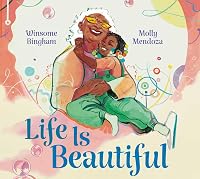
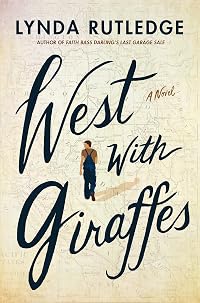
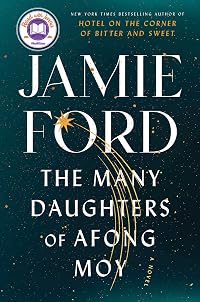

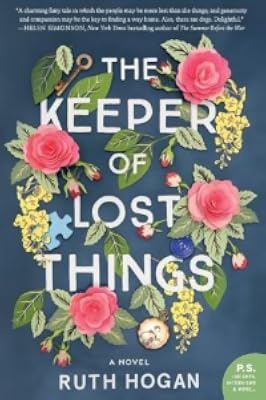

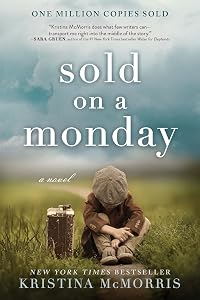
Member Recommendations
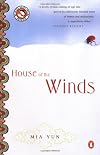
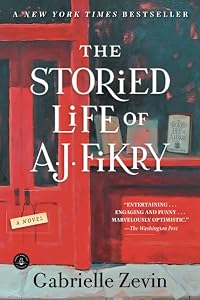
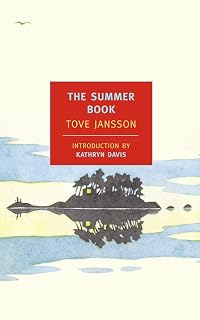
BookshelfMonstrosity Though the settings differ, both captivating, character-centered novels portray girls who learn of the world through eccentric older women's traditional tales of peaceful realms.
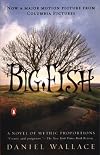
BookshelfMonstrosity In these moving, whimsical tales, imaginative storytellers mix the fantastical with the mundane, leaving it to a now-adult man in Big Fish and a small girl in My Grandmother Asked Me to sort between the two as they process their grief.
11
Member Reviews
I bought “My Grandmother Asked Me To Tell You She’s Sorry” because the title intrigued me and anyway, who could resist the little girl and the scarf-wearing dog on the cover?
At the start of the novel Elsa is seven and her grandmother, Elsa’s personal super-hero, is seventy-seven. The two of them are in league with one another against a world too stupid to see that being different is a gift.
In other hands, this might have degenerated into a Hallmark movie, good enough to get you through a rainy afternoon, but soon gone from your memory. In Fredrik Backman’s hands it became something truly remarkable: a new fairy tale that delivers old truths so that they taste as fresh as newly baked biscuits.
“My Grandmother Asked Me To Tell show more You She’s Sorry” is so good, it’s hard to know where to start when explaining just how good it is.
Should I start with the unique voice the story is told in? The beautiful simplicity of the language? The deft interweaving of the myth and fairy tale and reality?
Or perhaps I should speak about the bravery of an almost eight-year old girl in confronting grief and loss, knowing that they can’t be defeated but must not be surrendered to?
Or the way the book unearths adult truths through the eyes of a child who is smart enough to understand the importance of reading “quality literature” like “Harry Potter” and the “X-Men” to gain an understanding not only of how the world works but how it should work?
Maybe I should comment on the fact that I never once felt as if I was reading a translation (except perhaps from the writer’s imagination to mine) or that the narration was so perfect it made the words spark and flash in my mind?
In fact, none of these are the right place to start. They walk around the book rather than live in it.
I’m sure that the right place to start is how this book made me feel.
It made me want to be better than I am. It gave me hope that I can be better than I am. It gave me permission to forgive myself when I fail to be better. It reminded me that imagination is the birth-place of hope and love and bravery. Most of all, it made me want to defend the castle and take care of those I love (you’ll know what this means when you read the book).
This is one of those wonderful, perfectly formed, books that goes beyond being a beautifully crafted piece of writing to become something that has a soul of its own.
For such books there is nothing to be done except say, “Please read this”.
To tempt you to do that, here are some of my favourite quotes
“The mightiest power of death is not that it can make people die, but that it can make the people left behind want to stop living.”
“When it comes to terror, reality’s got nothing on the power of the imagination[.]”
“Only different people change the world,” Granny used to say. “No one normal has ever changed a crapping thing.”
“Having a grandmother is like having an army. This is a grandchild’s ultimate privilege: knowing that someone is on your side, always, whatever the details. Even when you are wrong. Especially then, in fact. A grandmother is both a sword and a shield.”
“Granny was the sort of person you brought with you when you went to war, and that was what Elsa loved about her.”
“People who have never been hunted always seem to think there’s a reason for it. ‘They wouldn’t do it without a cause, would they? You must have done something to provoke them.’ As if that was how oppression works.” show less
At the start of the novel Elsa is seven and her grandmother, Elsa’s personal super-hero, is seventy-seven. The two of them are in league with one another against a world too stupid to see that being different is a gift.
In other hands, this might have degenerated into a Hallmark movie, good enough to get you through a rainy afternoon, but soon gone from your memory. In Fredrik Backman’s hands it became something truly remarkable: a new fairy tale that delivers old truths so that they taste as fresh as newly baked biscuits.
“My Grandmother Asked Me To Tell show more You She’s Sorry” is so good, it’s hard to know where to start when explaining just how good it is.
Should I start with the unique voice the story is told in? The beautiful simplicity of the language? The deft interweaving of the myth and fairy tale and reality?
Or perhaps I should speak about the bravery of an almost eight-year old girl in confronting grief and loss, knowing that they can’t be defeated but must not be surrendered to?
Or the way the book unearths adult truths through the eyes of a child who is smart enough to understand the importance of reading “quality literature” like “Harry Potter” and the “X-Men” to gain an understanding not only of how the world works but how it should work?
Maybe I should comment on the fact that I never once felt as if I was reading a translation (except perhaps from the writer’s imagination to mine) or that the narration was so perfect it made the words spark and flash in my mind?
In fact, none of these are the right place to start. They walk around the book rather than live in it.
I’m sure that the right place to start is how this book made me feel.
It made me want to be better than I am. It gave me hope that I can be better than I am. It gave me permission to forgive myself when I fail to be better. It reminded me that imagination is the birth-place of hope and love and bravery. Most of all, it made me want to defend the castle and take care of those I love (you’ll know what this means when you read the book).
This is one of those wonderful, perfectly formed, books that goes beyond being a beautifully crafted piece of writing to become something that has a soul of its own.
For such books there is nothing to be done except say, “Please read this”.
To tempt you to do that, here are some of my favourite quotes
“The mightiest power of death is not that it can make people die, but that it can make the people left behind want to stop living.”
“When it comes to terror, reality’s got nothing on the power of the imagination[.]”
“Only different people change the world,” Granny used to say. “No one normal has ever changed a crapping thing.”
“Having a grandmother is like having an army. This is a grandchild’s ultimate privilege: knowing that someone is on your side, always, whatever the details. Even when you are wrong. Especially then, in fact. A grandmother is both a sword and a shield.”
“Granny was the sort of person you brought with you when you went to war, and that was what Elsa loved about her.”
“People who have never been hunted always seem to think there’s a reason for it. ‘They wouldn’t do it without a cause, would they? You must have done something to provoke them.’ As if that was how oppression works.” show less
Christ this is a good book. I teared up on a train and I'm a dude that doesn't even understand what emotions is.
Granny and Elsa are two of the most compelling and original characters, in any medium, that I've come across. Through the eyes of this little girl who's a little different, and a lot wise beyond her years, the mundane and tragic world she inhabits is transformed into this fantastic place filled with mystique and wonder. A place where all misery has meaning, dogs can eat chocolate, and everyone you know has superpowers.
Through this new take on the unreliable narrator, I wasn't doubting the voracity of what I was being told and trying to bend the account around in my head to figure out what was actually happening - but rather I show more believed what Elsa was experiencing all the more for it's unreality. What could have been an insipid character study of broken people reckoning with the ruins of their lives, was transformed through its telling into this incredible hero's journey.
This is written so well, that even though most of these people are unbearable shitheads, I still wish I knew them. The plot is lousy with MacGuffins, but because it's kind of a fairy tale they're not?? I don't know how to review books in a way that makes coherent sense, but this book leaves your soul a little lighter, your optimism fuller, and just generally better off for having read it. It's unique without being especially unique, which makes it more unique. Read it if you want to feel better about things. show less
Granny and Elsa are two of the most compelling and original characters, in any medium, that I've come across. Through the eyes of this little girl who's a little different, and a lot wise beyond her years, the mundane and tragic world she inhabits is transformed into this fantastic place filled with mystique and wonder. A place where all misery has meaning, dogs can eat chocolate, and everyone you know has superpowers.
Through this new take on the unreliable narrator, I wasn't doubting the voracity of what I was being told and trying to bend the account around in my head to figure out what was actually happening - but rather I show more believed what Elsa was experiencing all the more for it's unreality. What could have been an insipid character study of broken people reckoning with the ruins of their lives, was transformed through its telling into this incredible hero's journey.
This is written so well, that even though most of these people are unbearable shitheads, I still wish I knew them. The plot is lousy with MacGuffins, but because it's kind of a fairy tale they're not?? I don't know how to review books in a way that makes coherent sense, but this book leaves your soul a little lighter, your optimism fuller, and just generally better off for having read it. It's unique without being especially unique, which makes it more unique. Read it if you want to feel better about things. show less
“She stands her ground, armed with nothing but the indifference of an almost-eight-year-old to her own physical shortcomings. Which goes a long way.”
In “My Grandmother…”, we meet the almost 8 years old Elsa. She’s book-and-life smart, precocious, fierce, warm hearted, and occasionally manipulative especially with her mom. Her granny is her superhero and her best friend, protecting her against the bullies in school, railing against the school administrators, and telling her fairy tales about Miamas with its six kingdoms. Early in the book, Granny, despite her superpowers, succumbs to cancer, leaving Elsa a lonely little girl. On top of that, Mom is pregnant with her half-sibling, dubbed ‘Halfie’; Elsa couldn’t possibly show more feel more vulnerable. As her last wish, Granny gives Elsa the task/adventure of delivering letters to a group of people, bounded by a backstory that Elsa will discover in her journey.
This book has a very good premise. Granny was larger than life; she was a surgeon, traveling the world saving lives, and leaving her impactful footprints everywhere. The book wisely addresses the positives light-handedly while more deeply addresses the consequences of life. Elsa was exposed early to the darkness and lightness of life through Granny’s custom-made fairy tales, which are shared to the reader via Elsa’s recollections, sometimes repeated as each letter and each new character are deeply explored. It’s both a strength and a weakness that the reader can easily guess the characters in the story will mirror the real people. The repeated inclusions of the fairy tales were confusing at times; I almost wanted to assemble a spreadsheet or a flowchart to map the characters and the kingdoms. Instead, I eagerly skimmed ahead to get the story going. The ending was satisfying and wrapped-up as warm-hearted as one would expect from Backman.
Some Quotes:
On animal instincts:
“And in an apartment block on the other side of town, everyone wakes up with a start when the hound in the first-floor flat, without any warning, starts howling. Louder and more heartrendingly than anything they have ever heard coming out of the primal depths of any animal. As if it is singing with the sorrow and yearning of an eternity of ten thousand fairy tales. It howls for hours, all through the night, until dawn.”
On idiots – why does this remind me of the current political landscape:
“Idiots can’t understand that non-idiots are done with a thought and already moving on to the next before they themselves have. That’s why idiots are always so scared and aggressive. Because nothing scares idiots more than a smart girl.”
On oppression – while this was written regarding bullies, it is certainly true for totalitarianism, authoritarianism:
“People who have never been hunted always seem to think there’s a reason for it. ‘They wouldn’t do it without a cause, would they? You must have done something to provoke them.’ As if that’s how oppression works.”
On being a change agent – simplistic view but there’s some truth to it:
“Only different people change the world… No one normal has ever changed a crapping thing.”
On monstrosity:
“…not all monsters are monsters in the beginning, and not all monsters look like monsters. Some carry their monstrosity inside.”
On truth – this was an argument about physical books vs. reading off an iPad; made me smile:
“Soup is soup whatever bowl it’s in.”
On disappointment:
“Maybe she was disappointed in you because you’re so disappointed in yourself.”
On seeking help – a rather valid point:
“’It’s hard to help those who don’t want to help themselves.’
‘Someone who wants to help himself is possibly not the one who most needs help from others,’ Elsa objects.’”
On missing someone, especially a grandparent:
“’Your granny was old.’
‘Not to me. I only knew her for seven years. Almost eight.’”
On death:
“The mightiest power of death is not that it can make people die, but that it can make the people left behind want to stop living.”
On fears – I have to admit I had not thought of it like this before:
“Fears are like cigarettes, said Granny: the hard thing isn’t stopping, it’s not starting.”
On living – a quote from “Doctor Glas" by Hjalmar SöDerberg:
“‘We want to be loved,’ quotes Britt-Marie, ‘Failing that, admired; failing that, feared; failing that, hated and despised. At all costs we want stir up some sort of feeling in others. The soul abhors a vacuum. At all costs it longs for contact.’” show less
In “My Grandmother…”, we meet the almost 8 years old Elsa. She’s book-and-life smart, precocious, fierce, warm hearted, and occasionally manipulative especially with her mom. Her granny is her superhero and her best friend, protecting her against the bullies in school, railing against the school administrators, and telling her fairy tales about Miamas with its six kingdoms. Early in the book, Granny, despite her superpowers, succumbs to cancer, leaving Elsa a lonely little girl. On top of that, Mom is pregnant with her half-sibling, dubbed ‘Halfie’; Elsa couldn’t possibly show more feel more vulnerable. As her last wish, Granny gives Elsa the task/adventure of delivering letters to a group of people, bounded by a backstory that Elsa will discover in her journey.
This book has a very good premise. Granny was larger than life; she was a surgeon, traveling the world saving lives, and leaving her impactful footprints everywhere. The book wisely addresses the positives light-handedly while more deeply addresses the consequences of life. Elsa was exposed early to the darkness and lightness of life through Granny’s custom-made fairy tales, which are shared to the reader via Elsa’s recollections, sometimes repeated as each letter and each new character are deeply explored. It’s both a strength and a weakness that the reader can easily guess the characters in the story will mirror the real people. The repeated inclusions of the fairy tales were confusing at times; I almost wanted to assemble a spreadsheet or a flowchart to map the characters and the kingdoms. Instead, I eagerly skimmed ahead to get the story going. The ending was satisfying and wrapped-up as warm-hearted as one would expect from Backman.
Some Quotes:
On animal instincts:
“And in an apartment block on the other side of town, everyone wakes up with a start when the hound in the first-floor flat, without any warning, starts howling. Louder and more heartrendingly than anything they have ever heard coming out of the primal depths of any animal. As if it is singing with the sorrow and yearning of an eternity of ten thousand fairy tales. It howls for hours, all through the night, until dawn.”
On idiots – why does this remind me of the current political landscape:
“Idiots can’t understand that non-idiots are done with a thought and already moving on to the next before they themselves have. That’s why idiots are always so scared and aggressive. Because nothing scares idiots more than a smart girl.”
On oppression – while this was written regarding bullies, it is certainly true for totalitarianism, authoritarianism:
“People who have never been hunted always seem to think there’s a reason for it. ‘They wouldn’t do it without a cause, would they? You must have done something to provoke them.’ As if that’s how oppression works.”
On being a change agent – simplistic view but there’s some truth to it:
“Only different people change the world… No one normal has ever changed a crapping thing.”
On monstrosity:
“…not all monsters are monsters in the beginning, and not all monsters look like monsters. Some carry their monstrosity inside.”
On truth – this was an argument about physical books vs. reading off an iPad; made me smile:
“Soup is soup whatever bowl it’s in.”
On disappointment:
“Maybe she was disappointed in you because you’re so disappointed in yourself.”
On seeking help – a rather valid point:
“’It’s hard to help those who don’t want to help themselves.’
‘Someone who wants to help himself is possibly not the one who most needs help from others,’ Elsa objects.’”
On missing someone, especially a grandparent:
“’Your granny was old.’
‘Not to me. I only knew her for seven years. Almost eight.’”
On death:
“The mightiest power of death is not that it can make people die, but that it can make the people left behind want to stop living.”
On fears – I have to admit I had not thought of it like this before:
“Fears are like cigarettes, said Granny: the hard thing isn’t stopping, it’s not starting.”
On living – a quote from “Doctor Glas" by Hjalmar SöDerberg:
“‘We want to be loved,’ quotes Britt-Marie, ‘Failing that, admired; failing that, feared; failing that, hated and despised. At all costs we want stir up some sort of feeling in others. The soul abhors a vacuum. At all costs it longs for contact.’” show less
When Elsa's grandmother passes away suddenly, she is devastated. Granny, who lived just next door, had been her best friend and one of the few people who understood her, and Elsa is angry with her for not being honest with her about her fatal illness. True to her eccentric character, Granny has left behind a series of apologetic letters which Elsa must deliver to various interesting characters in their lives, leading her on an educational, amusing adventure.
I enjoyed nearly everything about this charming book, which made me reminisce about the year I lived in Sweden. Elsa was amazing and Granny was quite a character, and I would love to live in their building with all of its diverse personalities. That said, magical realism and I just show more don't get on, and unfortunately it played a pretty significant role in the plot. show less
I enjoyed nearly everything about this charming book, which made me reminisce about the year I lived in Sweden. Elsa was amazing and Granny was quite a character, and I would love to live in their building with all of its diverse personalities. That said, magical realism and I just show more don't get on, and unfortunately it played a pretty significant role in the plot. show less
Road trip audiobook!
I actually bought this on CD for another road trip over five years ago, but never got around to listening to it because on that road trip my daughter had finally gotten me to listen to digital audiobooks through the Libby app on my phone. I've been meaning to revisit Fredrik Backman since I enjoyed A Man Called Ove so much and even enjoyed the Tom Hanks adaptation earlier this year. So let's wrangle those disks!
This is very reminiscent of A Man Called Ove as a precocious little girl discovers the community around her as she grieves the death of her beloved grandmother. The other residents of her apartment building turn out to be colorful characters with their own complex baggage in regards to her grandmother.
I could show more have done without the story-within-a-story in. the form of grandmother's home-made epic fantasy that reflects all the people in her life in one way or another. The book felt bloated with all the time devoted to it.
It's too fluffy and the plot ties itself up far too neatly and predictably, but it still had a pleasing air that helped the miles zip by and made me want to try the companion book, Britt-Marie Was Here, so I borrowed that on Libby for the return trip. (I won't miss fumbling with those darn disks.) show less
I actually bought this on CD for another road trip over five years ago, but never got around to listening to it because on that road trip my daughter had finally gotten me to listen to digital audiobooks through the Libby app on my phone. I've been meaning to revisit Fredrik Backman since I enjoyed A Man Called Ove so much and even enjoyed the Tom Hanks adaptation earlier this year. So let's wrangle those disks!
This is very reminiscent of A Man Called Ove as a precocious little girl discovers the community around her as she grieves the death of her beloved grandmother. The other residents of her apartment building turn out to be colorful characters with their own complex baggage in regards to her grandmother.
I could show more have done without the story-within-a-story in. the form of grandmother's home-made epic fantasy that reflects all the people in her life in one way or another. The book felt bloated with all the time devoted to it.
It's too fluffy and the plot ties itself up far too neatly and predictably, but it still had a pleasing air that helped the miles zip by and made me want to try the companion book, Britt-Marie Was Here, so I borrowed that on Libby for the return trip. (I won't miss fumbling with those darn disks.) show less
4.5
My Grandmother Asked Me to Tell You She's Sorry
It's snowing again, and Elsa decides that even if people that she likes have been real shits on earlier occasions, she has to carry on liking them. You'd quickly run out of people if you had to disqualify all those who have at some point been real shits.
Elsa, almost 8, p315.
My Grandmother Asked Me to Tell You She's Sorry is the story of the relationship between Elsa, almost 8, a precocious child with comic yet compassionate insight into the adult world, and her feisty, cantankerous grandmother, a retired surgeon who adores her. However, Elsa's perceptiveness and intelligence make her different, and she becomes the target of bullying in school. Her grandmother, her only friend, protects show more her by fuelling her imagination with fantastical tales of imaginary kingdoms.
When her grandmother dies of cancer, at Christmas time before her 8th birthday, Elsa responds with grief and anger. Her grandmother has left her with a "mission" of delivering letters of apology to people she feels she has wronged or offended in their apartment building. The " mission, " framed as a treasure hunt, is understood by Elsa through the lens of the fantasy world her grandmother created. She tackles it as an adventure. However, these letters allow Elsa to fully appreciate her grandmother's life and connect more deeply with her parents and the community's quirky yet loveable tenants.
This novel is my fourth by Backman. Although I found it hard to get into at first, it has become my favorite thus far. Perhaps this is because of its whimsical nature. It is almost like Roald Dahl for adults. I enjoyed the inventive interplay of the fantasy world with everyday life. In addition, Backman's humanity, his ability to portray characters who at times live on the margins with deep compassion and humor, provides an added dimension to the story. show less
My Grandmother Asked Me to Tell You She's Sorry
It's snowing again, and Elsa decides that even if people that she likes have been real shits on earlier occasions, she has to carry on liking them. You'd quickly run out of people if you had to disqualify all those who have at some point been real shits.
Elsa, almost 8, p315.
My Grandmother Asked Me to Tell You She's Sorry is the story of the relationship between Elsa, almost 8, a precocious child with comic yet compassionate insight into the adult world, and her feisty, cantankerous grandmother, a retired surgeon who adores her. However, Elsa's perceptiveness and intelligence make her different, and she becomes the target of bullying in school. Her grandmother, her only friend, protects show more her by fuelling her imagination with fantastical tales of imaginary kingdoms.
When her grandmother dies of cancer, at Christmas time before her 8th birthday, Elsa responds with grief and anger. Her grandmother has left her with a "mission" of delivering letters of apology to people she feels she has wronged or offended in their apartment building. The " mission, " framed as a treasure hunt, is understood by Elsa through the lens of the fantasy world her grandmother created. She tackles it as an adventure. However, these letters allow Elsa to fully appreciate her grandmother's life and connect more deeply with her parents and the community's quirky yet loveable tenants.
This novel is my fourth by Backman. Although I found it hard to get into at first, it has become my favorite thus far. Perhaps this is because of its whimsical nature. It is almost like Roald Dahl for adults. I enjoyed the inventive interplay of the fantasy world with everyday life. In addition, Backman's humanity, his ability to portray characters who at times live on the margins with deep compassion and humor, provides an added dimension to the story. show less
It took me a couple of chapters to get in tune with the cutesiness of Fredrik Backman's “My Grandmother Asked Me to Tell You She's Sorry” (2013), but once I did I loved it.
Elsa is a precocious almost-eight-year-old girl under the influence of her grandmother's fanciful stories, her own Harry Potter books and the Spider-Man comics she considers great literature. She believes she's living a fairy tale. When Granny dies she leaves Elsa a challenge — to find and deliver a series of letters to various people living in the same apartment building. Each letter is an apology for something Granny herself couldn't bring herself to apologize for while she was alive.
Granny was a difficult woman, to say the least. A surgeon, she had devoted show more her life to going to disaster areas around the world and helping wounded people, while all but ignoring her own daughter, Elsa's mother. She had a good heart, yet was always argumentative and insulting. Elsa was the only person who could get close to her and the person who loved her best.
Elsa's quest takes her into the lives of her neighbors, all of whom had some unexpected connection with Granny and many of whom were the models for characters in her fairy tales. And some of these people have also been given a challenge by Granny — to protect Elsa.
The little girl's life is as much a mess as that of any of the adults. Her parents have divorced and remarried. Her mother is pregnant, and Elsa fears her mother's love will be devoted only to her little brother or sister. Because she is so different from everyone else, she is bullied in school and always on the run, usually returning home with bruises.
Fairy tales have happy endings, and Backman doesn't disappoint. Read this with dry eyes. I dare you. show less
Elsa is a precocious almost-eight-year-old girl under the influence of her grandmother's fanciful stories, her own Harry Potter books and the Spider-Man comics she considers great literature. She believes she's living a fairy tale. When Granny dies she leaves Elsa a challenge — to find and deliver a series of letters to various people living in the same apartment building. Each letter is an apology for something Granny herself couldn't bring herself to apologize for while she was alive.
Granny was a difficult woman, to say the least. A surgeon, she had devoted show more her life to going to disaster areas around the world and helping wounded people, while all but ignoring her own daughter, Elsa's mother. She had a good heart, yet was always argumentative and insulting. Elsa was the only person who could get close to her and the person who loved her best.
Elsa's quest takes her into the lives of her neighbors, all of whom had some unexpected connection with Granny and many of whom were the models for characters in her fairy tales. And some of these people have also been given a challenge by Granny — to protect Elsa.
The little girl's life is as much a mess as that of any of the adults. Her parents have divorced and remarried. Her mother is pregnant, and Elsa fears her mother's love will be devoted only to her little brother or sister. Because she is so different from everyone else, she is bullied in school and always on the run, usually returning home with bruises.
Fairy tales have happy endings, and Backman doesn't disappoint. Read this with dry eyes. I dare you. show less
Members
- Recently Added By
Published Reviews
A contemporary fairy tale from the whimsical author of A Man Called Ove (2014)...This is a more complex tale than Backman’s debut, and it is intricately, if not impeccably, woven. The third-person narrative voice, when aligned with Elsa’s perspective, reveals heartfelt, innocent observations, but when moving toward omniscience, it can read as too clever by half. Given a choice, Backman show more seems more likely to choose poignancy over logic; luckily, the choice is not often necessary. As in A Man Called Ove, there are clear themes here, nominally: the importance of stories; the honesty of children; and the obtuseness of most adults, putting him firmly in league with the likes of Roald Dahl and Neil Gaiman.
A touching, sometimes-funny, often wise portrait of grief. show less
A touching, sometimes-funny, often wise portrait of grief. show less
added by vancouverdeb
Lists

Pleasant Surprises: Books That Exceeded Our Expectations
418 works; 142 members

Top Five Books of 2020
982 works; 348 members

EU Fiction: 1950-2022
223 works; 70 members

Top Five Books of 2016
795 works; 229 members

Top Five Books of 2022
736 works; 272 members

Top Five Books of 2017
757 works; 231 members

Which Books Made You Laugh Out Loud (Literally)
23 works; 2 members

Books Read in 2017
4,249 works; 130 members

Carole's List
445 works; 13 members

Overdue Podcast
808 works; 9 members

My TBR list
38 works; 1 member

International Dublin Literary Award Longlist 2017
147 works; 3 members

Dublin Literary Award Longlist 2017
147 works; 2 members

READ in 2023
244 works; 1 member

Reading List - Scandinavian Fiction
134 works; 3 members

Books With Complete Sentence Titles
502 works; 17 members

Recommended Literary Books
111 works; 1 member

Everand 2023
53 works; 1 member

Books We Want To Read Again For The First Time
384 works; 160 members

Books Read in 2021
5,361 works; 114 members
Author Information

50 Works 46,676 Members
Carl Fredrik Backman is a Swedish columnist who grew up in Helsingborg. He has been writing for Helsingborgs Dagblad and Moore Magazine. He debuted in 2012 with the novel A Man Called Ove. He is also the author of My grandmother Asked Me to Tell You She's Sorry. Both were number one bestsellers in his native Sweden and have been published around show more the world in more than twenty-five languages. His title's, Beartown and Us Against You, made The New York Times Best Seller List. (Bowker Author Biography) show less
Some Editions
Awards and Honors
Awards
Series
Belongs to Publisher Series
Work Relationships
Common Knowledge
- Canonical title
- My Grandmother Asked Me to Tell You She's Sorry
- Original title
- Min mormor hälsar och säger förlåt
- Alternate titles
- My Grandmother Sends Her Regards and Apologises
- Original publication date
- 2013
- People/Characters
- Elsa; Granny; Britt-Marie (wife of Kent); Wolfheart ("the monster"); Wurse ("Our Friend"); Alf (taxi driver) (show all 16); Kent (husband of Britt-Marie); Sam; Ulrika (mother of Elsa); Maud (wife of Leonard); Lennart (husband of Maud); George (husband of Ulrika, stepfather of Elsa); the woman with a black skirt (psychotherapist); the boy with the syndrome; the boy with the syndrome's mother; Elsa's father
- Important places
- Land of almost-awake; Sweden
- Dedication
- To the monkey and the frog. For an eternity of ten thousand tales.
- First words
- Every seven-year-old deserves a superhero.
- Last words
- (Click to show. Warning: May contain spoilers.)And whoever disagrees with that needs their head examined.
- Original language
- Swedish
- Canonical DDC/MDS
- 839.738
- Canonical LCC
- PT9877.12.A32
Classifications
- Genres
- General Fiction, Fiction and Literature
- DDC/MDS
- 839.738 — Literature & rhetoric German & related literatures Other Germanic literatures Swedish literature Swedish fiction 2000-
- LCC
- PT9877.12 .A32 — Language and Literature German, Dutch and Scandinavian literatures Swedish literature Individual authors or works 2001-
- BISAC
Statistics
- Members
- 5,899
- Popularity
- 2,196
- Reviews
- 252
- Rating
- (3.98)
- Languages
- 25 — Bulgarian, Chinese, Czech, Danish, Dutch, English, Estonian, Finnish, French, German, Greek, Hungarian, Italian, Korean, Latvian, Norwegian (Bokmål), Norwegian, Polish, Romanian, Russian, Serbian, Slovenian, Swedish, Vietnamese, Portuguese (Portugal)
- Media
- Paper, Audiobook, Ebook
- ISBNs
- 78
- ASINs
- 22