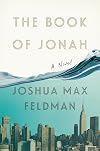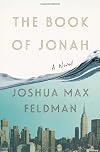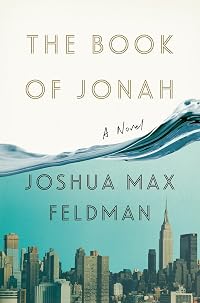
The Book of Jonah
by Joshua Max Feldman
On This Page
Description
Jonah Jacobstein is a lucky man: young, healthy and handsome, he has two beautiful women ready to spend the rest of their lives with him, and an enormously successful legal career that gets more promising by the minute. A bizarre, unexpected biblical vision at a party one night will change that forever. Hard as he tries to forget it, this upsetting sign is only the first of many Jonah will see, and before long his life is unrecognizable. Though this perhaps divine intervention will be show more responsible for more than one irreversible loss in Jonah's life, it will also cross his path with that of Judith Bulbrook, an intense, breathtakingly intelligent woman who's no stranger to loss herself. In this brilliantly conceived retelling of The Book of Jonah, Feldman examines the way we live now, and the unexpected places and people we look to for salvation and the chance to start anew -- show lessTags
Recommendations














Member Reviews
I know, I know: a one-star review can't be trusted/balanced/objective, etc., as it's obviously just a screed (or something like that). Believe it or not, though, I've put a lot of thought into this rating; despite my personal dislike of this book (all the more disappointing because I was rather excited to read it), I am reluctant to be harsh in rating and reviewing it. (Perhaps I'm getting soft in my old age.) But the thing is, I think this book is a pretty big failure in its current form (which is an ARC, so the text may be subject to change), and to give it two stars would imply that it is successful in some small aspect. And, after reflection, I just don't think it is.
On the back cover, this book calls itself a "brilliantly show more conceived retelling of the Bible's book of Jonah". And here is the big problem: this novel does not have the scope or depth or wisdom of an epic, biblical tale. Neither does it have the craft, character, or insight of a successful work of literary fiction. And it certainly doesn't have the compelling plot or pace of popular fiction. So, really, where can it land? How can I give it a second star?
This review was a bit long, so here's a link to the full text
So, er, this was a frustrating book. I found it aimless and poorly paced, insubstantial and incomplete. The prose was mediocre, in general, and below par for literary fiction (my gosh, the adverbs!). Jonah Jacobstein was unlikeable; Judith was wasted; the villain is a copy-paste job seemingly thrown in as an afterthought. A semi-serious subplot was left entirely unresolved (and not in the good way). The main part of the novel ends with 17 rhetorical questions. 17!
For a story claiming to be a retelling of a biblical epic, I'm afraid The Book of Jonah is a pretty facile affair. show less
On the back cover, this book calls itself a "brilliantly show more conceived retelling of the Bible's book of Jonah". And here is the big problem: this novel does not have the scope or depth or wisdom of an epic, biblical tale. Neither does it have the craft, character, or insight of a successful work of literary fiction. And it certainly doesn't have the compelling plot or pace of popular fiction. So, really, where can it land? How can I give it a second star?
This review was a bit long, so here's a link to the full text
So, er, this was a frustrating book. I found it aimless and poorly paced, insubstantial and incomplete. The prose was mediocre, in general, and below par for literary fiction (my gosh, the adverbs!). Jonah Jacobstein was unlikeable; Judith was wasted; the villain is a copy-paste job seemingly thrown in as an afterthought. A semi-serious subplot was left entirely unresolved (and not in the good way). The main part of the novel ends with 17 rhetorical questions. 17!
For a story claiming to be a retelling of a biblical epic, I'm afraid The Book of Jonah is a pretty facile affair. show less
 This review was written for LibraryThing Early Reviewers.
The Book of Jonah puts into sharp focus fundamental questions that I believe most people struggle with -- the impermanence and seeming meaninglessness of life -- is it all a sham, a rat race, with no ultimate purpose? What is it that connects us all, if anything, to each other and/or something greater than ourselves?
In the character of Jonah, Feldman portrays one man's fight to perceive and then later acknowledge God's role in his life. In doing so, Feldman encapsulates the unfulfilled longing most experience at one time in their lives, that underneath a facade of normality, success even, something is missing. At the same time, Jonah, who is no saint, wages a fight against God's apparent plan for his life, and Feldman does a wonderful show more job mirroring what those who have struggled with their faith encounter.
Judith, the woman Jonah believes he is called to help, has her own issues. Will she be able to believe after the brutal loss she has experienced, or will she adhere to her idea that Jonah's perception of God is something made up to convince himself that life is not merely a random sequence of events? You have to read the book to find out...
I enjoyed the book very much, primarily because despite its heavy issues, it never got overly philosophical or weighed down by its seriousness. I particularly liked the way the author chose to end it. I will be recommending this one to fellow readers looking for an interesting, thought provoking story. show less
In the character of Jonah, Feldman portrays one man's fight to perceive and then later acknowledge God's role in his life. In doing so, Feldman encapsulates the unfulfilled longing most experience at one time in their lives, that underneath a facade of normality, success even, something is missing. At the same time, Jonah, who is no saint, wages a fight against God's apparent plan for his life, and Feldman does a wonderful show more job mirroring what those who have struggled with their faith encounter.
Judith, the woman Jonah believes he is called to help, has her own issues. Will she be able to believe after the brutal loss she has experienced, or will she adhere to her idea that Jonah's perception of God is something made up to convince himself that life is not merely a random sequence of events? You have to read the book to find out...
I enjoyed the book very much, primarily because despite its heavy issues, it never got overly philosophical or weighed down by its seriousness. I particularly liked the way the author chose to end it. I will be recommending this one to fellow readers looking for an interesting, thought provoking story. show less
This review was written for LibraryThing Early Reviewers.The Book of Jonah, the debut novel by Joshua Max Feldman, is a richly provocative story about the disassembling of one’s life security and agenda, its accumulation of success in various forms, and the inevitable question and role of morality, and the power of faith and change when the two, polar beliefs collide, conflict, and agitate until life itself almost dissolves.
Those who are familiar with the original book of Jonah in the Bible will recognize not only its title, but the thematic similarities between Jonah Jacobstein’s predicament and resistance in this modern, contemporary version and the original text.
The book is wonderfully character-driven filled with fully realized characters that engage the reader in visualizing their show more superficial and/or naive sensibilities, the magnitude of their personal failings, even their loss.
And because Feldman writes with intelligence and articulate precision, the voice of his characters, especially that of its main character, Jonah Jacobstein, is clear, realistic, and very male in his ambition, rhetoric, denial, and self-doubt.
While Jonah’s life as he recognizes it dissolves into a series of unexplainable visions and bouts of harried panic, Jonah faces the inadequacy of his relationship with the brisk snobbery and self-entitled coldness of his tycoon girlfriend, Sylvia, and the emotionally unstable drama of his long-time love and mistress, Zoey. While both women differ as much as polar opposites do, their extremities pull Jonah in a dishonest and destructive duality, one that is inevitably immoral, exhausting, and unhealthy.
To read the rest of this review, you're more than welcome to visit my blog, The Bibliotaphe Closet at: http://zaraalexis.wordpress.com
- Zara show less
Those who are familiar with the original book of Jonah in the Bible will recognize not only its title, but the thematic similarities between Jonah Jacobstein’s predicament and resistance in this modern, contemporary version and the original text.
The book is wonderfully character-driven filled with fully realized characters that engage the reader in visualizing their show more superficial and/or naive sensibilities, the magnitude of their personal failings, even their loss.
And because Feldman writes with intelligence and articulate precision, the voice of his characters, especially that of its main character, Jonah Jacobstein, is clear, realistic, and very male in his ambition, rhetoric, denial, and self-doubt.
While Jonah’s life as he recognizes it dissolves into a series of unexplainable visions and bouts of harried panic, Jonah faces the inadequacy of his relationship with the brisk snobbery and self-entitled coldness of his tycoon girlfriend, Sylvia, and the emotionally unstable drama of his long-time love and mistress, Zoey. While both women differ as much as polar opposites do, their extremities pull Jonah in a dishonest and destructive duality, one that is inevitably immoral, exhausting, and unhealthy.
To read the rest of this review, you're more than welcome to visit my blog, The Bibliotaphe Closet at: http://zaraalexis.wordpress.com
- Zara show less
I received The Book of Jonah as a review copy through LibraryThing.
The first half of this book I thought was fantastic. So often when a novel is set in New York City, I feel like the author is just name-dropping, trying to seem cool by showing off-hand knowledge of street names and neighborhood spots. Feldman writes about New York City in a much more pleasant and realistic way. It's a real, three-dimensional place in The Book of Jonah. I've only spent a few days in New York City several years before the main character moved there, but through Feldman's writing, I felt I could really see both the good and the bad of the city. Jonah's love for and ambivalence about New York came through in Feldman's descriptions.
Feldman also did an show more incredible job setting up Jonah as an unlikely prophet. Jonah's visions are as believable as his efforts to evade them, and I found myself being sucked into the story of his continual missteps. Jonah comes through by the skin of his teeth so many times just to screw everything up again; I spent a fair amount of the first half cringing on Jonah's behalf. Poor Jonah's suffering is definitely biblical in its proportions. He's a man hanging on by a thread, and I was never 100% sure whether I wanted to root for him to succeed at what he was trying to do or to fail and perhaps become a better person for it.
I always worry that I give glowing reviews to too many of the review copies I read. I worry the appearance that I like almost everything might damage my credibility as a reviewer (not that I work very hard to be professional in my reviews anyway, I guess, but I like being credible). So I felt reassured when I started feeling a little less enthusiastic about the book at the end of Part I.
It was at this point that I began noticing more---and being more annoyed by---Feldman's writerly idiosyncrasies. Like his enthusiastic use of em-dashes. I myself am partial to em-dashes, but I found myself wishing he'd vary the punctuation a little, trade out some of the em-dashes for commas, or semi-colons; even a colon would have been welcome. I don't think this distracted me from the writing, but rather I think I noticed the punctuation because the writing became less rich and engaging in the second half of the book.
In the second half, Feldman started using a lot more internal dialogue. Characters asked themselves rhetorical questions and mused about their situations in the first half, but they seemed to do it more in the second half. I felt like Feldman was just writing out the interpretation he wanted readers to have of the book up to that point, rather than letting it be ambiguous and letting us figure it out for ourselves.
I also found the few days of journal entries at the beginning of Part II a little strange. So Judith presumably never kept a journal, or at least there was no mention of a journal before this point, but she buys a Moleskine and journals in great detail for several days then just stops? I didn't quite buy it. Maybe if it had been a device used throughout the book (she's always stopping and staring journals or she's always journaled and we're just seeing journal from select periods), or if the journal entries had a more distinctive "Judith" voice to them, it would have worked better for me.
In general, though, I found Judith's storyline to be weaker than Jonah's. Without giving away spoiler details, while the buildup to the turning point in her life was masterful, I found the direction Judith's life took after that a little implausible. She met with some pretty intriguing characters that just didn't seem realistic to me. And the intermeshing of Jonah's and Judith's lives felt a little contrived. I can accept the similarities in their young lives, but I don't know...the arrangement that they each end up with enough disposable income to do pretty much whatever they want didn't ring true to me. If they were the only ones, I might accept it as coincidence, but there are also minor characters who are in the same situation. Maybe I've not spent enough time with wealthy people, but does this sort of thing happen often? People having money to fly anywhere in the world for no particular reason? Or maybe it doesn't happen often, but people with money just find each other wherever they go, like how I meet Ohioans at parties in California, in restaurants in Florida, and even under Delicate Arch in Utah?
Overall, I enjoyed the book, but the first half was stronger than the second half. I kind of wish it had continued to be a little more vague, more biblical in the second half. But maybe moving into doubt and into the mundane was the point. What does the prophet do when God stops speaking to him? Life goes on.
While I was left wanting at the end of this novel, I would definitely read more of Feldman's writing. The first half of this novel was excellent, and I would read another novel of his based on the promise of writing like that. show less
The first half of this book I thought was fantastic. So often when a novel is set in New York City, I feel like the author is just name-dropping, trying to seem cool by showing off-hand knowledge of street names and neighborhood spots. Feldman writes about New York City in a much more pleasant and realistic way. It's a real, three-dimensional place in The Book of Jonah. I've only spent a few days in New York City several years before the main character moved there, but through Feldman's writing, I felt I could really see both the good and the bad of the city. Jonah's love for and ambivalence about New York came through in Feldman's descriptions.
Feldman also did an show more incredible job setting up Jonah as an unlikely prophet. Jonah's visions are as believable as his efforts to evade them, and I found myself being sucked into the story of his continual missteps. Jonah comes through by the skin of his teeth so many times just to screw everything up again; I spent a fair amount of the first half cringing on Jonah's behalf. Poor Jonah's suffering is definitely biblical in its proportions. He's a man hanging on by a thread, and I was never 100% sure whether I wanted to root for him to succeed at what he was trying to do or to fail and perhaps become a better person for it.
I always worry that I give glowing reviews to too many of the review copies I read. I worry the appearance that I like almost everything might damage my credibility as a reviewer (not that I work very hard to be professional in my reviews anyway, I guess, but I like being credible). So I felt reassured when I started feeling a little less enthusiastic about the book at the end of Part I.
It was at this point that I began noticing more---and being more annoyed by---Feldman's writerly idiosyncrasies. Like his enthusiastic use of em-dashes. I myself am partial to em-dashes, but I found myself wishing he'd vary the punctuation a little, trade out some of the em-dashes for commas, or semi-colons; even a colon would have been welcome. I don't think this distracted me from the writing, but rather I think I noticed the punctuation because the writing became less rich and engaging in the second half of the book.
In the second half, Feldman started using a lot more internal dialogue. Characters asked themselves rhetorical questions and mused about their situations in the first half, but they seemed to do it more in the second half. I felt like Feldman was just writing out the interpretation he wanted readers to have of the book up to that point, rather than letting it be ambiguous and letting us figure it out for ourselves.
I also found the few days of journal entries at the beginning of Part II a little strange. So Judith presumably never kept a journal, or at least there was no mention of a journal before this point, but she buys a Moleskine and journals in great detail for several days then just stops? I didn't quite buy it. Maybe if it had been a device used throughout the book (she's always stopping and staring journals or she's always journaled and we're just seeing journal from select periods), or if the journal entries had a more distinctive "Judith" voice to them, it would have worked better for me.
In general, though, I found Judith's storyline to be weaker than Jonah's. Without giving away spoiler details, while the buildup to the turning point in her life was masterful, I found the direction Judith's life took after that a little implausible. She met with some pretty intriguing characters that just didn't seem realistic to me. And the intermeshing of Jonah's and Judith's lives felt a little contrived. I can accept the similarities in their young lives, but I don't know...the arrangement that they each end up with enough disposable income to do pretty much whatever they want didn't ring true to me. If they were the only ones, I might accept it as coincidence, but there are also minor characters who are in the same situation. Maybe I've not spent enough time with wealthy people, but does this sort of thing happen often? People having money to fly anywhere in the world for no particular reason? Or maybe it doesn't happen often, but people with money just find each other wherever they go, like how I meet Ohioans at parties in California, in restaurants in Florida, and even under Delicate Arch in Utah?
Overall, I enjoyed the book, but the first half was stronger than the second half. I kind of wish it had continued to be a little more vague, more biblical in the second half. But maybe moving into doubt and into the mundane was the point. What does the prophet do when God stops speaking to him? Life goes on.
While I was left wanting at the end of this novel, I would definitely read more of Feldman's writing. The first half of this novel was excellent, and I would read another novel of his based on the promise of writing like that. show less
This review was written for LibraryThing Early Reviewers.“The Book of Jonah,” by debut author Joshua Max Feldman, is not a religious novel. This is a smart, splendid, literary novel that can be appreciated and enjoyed by anyone, of any faith, or without faith. The novel is an odd hybrid: part dark romantic comedy, part subtle satire, and part modern-day gloss on an ancient Biblical morality tale. I thoroughly enjoyed the book. It was very clever and intellectually satisfying…definitely unique and in a class of its own.
In the Biblical “Book of Jonah,” God is angry at the sins of the people of Nineveh. He appears to Jonah in a vision and directs him to go to Nineveh and tell the people that they must repent or He will destroy the city. Jonah’s first reaction is to flee from the show more responsibility that God has demanded of him. He flees to the sea. This leads to a huge storm and a whale…and, well, if you don’t know the rest of the details, it’s best if you refresh your memory or look up a summary of the details online before you begin reading this version.
Don’t expect the novel to adhere closely to the ancient text. This is wholly and delightfully different, but the scaffolding of the Biblical tale is there and easy to discern. For example, in the Biblical version Jonah spends three days inside the belly of a whale repenting his sin of fleeing from God’s will; in the modern version, Jonah spends a month living on a houseboat in Amsterdam…and he does this after his entire life falls apart in a few days through a rapid-fire series of ruinous events (akin to the storm at sea). And how do we know for sure that this part of the book coincides with the belly of the whale days? Easy. It’s because the modern version has chapter headings that correspond to that part of the Biblical text. You don’t have to be a deconstruction genius to figure it out. But part of the intellectual joy comes from figuring out what is not obvious…what’s in the small details.
There’s no doubt that Feldman has written a novel blatantly critical of today’s big-city world culture. New York and its inhabitants are the equivalent of ancient Nineveh. He leaves readers with a lot to think about. Has our global, contemporary world of high finance, law, and real estate development become reprehensible and morally bankrupt? Are some of our brightest young minds—those promising elite hypereducated overachievers starting up the ladders of top-notch careers in high finance, banking, law, and real-estate development—being seduced by greed and a narcissistic, self-indulgent culture to accept this morally flawed civilization as status quo? As morally acceptable? As the necessary price we must pay to reap the rewards of an every more complex civilization?
The book contains a great deal that lovingly focuses on the American Jewish culture experience. I found the two main characters—Jonah Daniel Jacobstein and Judith Klein Bulbrook—humorous, warmheartedly stereotypical, but wholly believable. I was fascinated to find out what was happening to them and curious to understand the odd choices they made in their lives. If I have one significant criticism about the book and these characters, it is that I felt like a spectator. I witnessed and intellectually understood the character’s emotional pain but I did not feel it. There was an odd, intellectual detachment from the characters and the plot.
Feldman’s modern-day “Book of Jonah” succeeds first and foremost because it is a delightful story. But it also succeeds because it engages questions worth asking, in particular: what does it mean to be good and how are we to achieve it?
This book will probably not have a wide appeal, but to those of you who may be intrigued by what I’ve said in this review, please do not hesitate to read it. You will probably enjoy it a great deal, as I did. show less
In the Biblical “Book of Jonah,” God is angry at the sins of the people of Nineveh. He appears to Jonah in a vision and directs him to go to Nineveh and tell the people that they must repent or He will destroy the city. Jonah’s first reaction is to flee from the show more responsibility that God has demanded of him. He flees to the sea. This leads to a huge storm and a whale…and, well, if you don’t know the rest of the details, it’s best if you refresh your memory or look up a summary of the details online before you begin reading this version.
Don’t expect the novel to adhere closely to the ancient text. This is wholly and delightfully different, but the scaffolding of the Biblical tale is there and easy to discern. For example, in the Biblical version Jonah spends three days inside the belly of a whale repenting his sin of fleeing from God’s will; in the modern version, Jonah spends a month living on a houseboat in Amsterdam…and he does this after his entire life falls apart in a few days through a rapid-fire series of ruinous events (akin to the storm at sea). And how do we know for sure that this part of the book coincides with the belly of the whale days? Easy. It’s because the modern version has chapter headings that correspond to that part of the Biblical text. You don’t have to be a deconstruction genius to figure it out. But part of the intellectual joy comes from figuring out what is not obvious…what’s in the small details.
There’s no doubt that Feldman has written a novel blatantly critical of today’s big-city world culture. New York and its inhabitants are the equivalent of ancient Nineveh. He leaves readers with a lot to think about. Has our global, contemporary world of high finance, law, and real estate development become reprehensible and morally bankrupt? Are some of our brightest young minds—those promising elite hypereducated overachievers starting up the ladders of top-notch careers in high finance, banking, law, and real-estate development—being seduced by greed and a narcissistic, self-indulgent culture to accept this morally flawed civilization as status quo? As morally acceptable? As the necessary price we must pay to reap the rewards of an every more complex civilization?
The book contains a great deal that lovingly focuses on the American Jewish culture experience. I found the two main characters—Jonah Daniel Jacobstein and Judith Klein Bulbrook—humorous, warmheartedly stereotypical, but wholly believable. I was fascinated to find out what was happening to them and curious to understand the odd choices they made in their lives. If I have one significant criticism about the book and these characters, it is that I felt like a spectator. I witnessed and intellectually understood the character’s emotional pain but I did not feel it. There was an odd, intellectual detachment from the characters and the plot.
Feldman’s modern-day “Book of Jonah” succeeds first and foremost because it is a delightful story. But it also succeeds because it engages questions worth asking, in particular: what does it mean to be good and how are we to achieve it?
This book will probably not have a wide appeal, but to those of you who may be intrigued by what I’ve said in this review, please do not hesitate to read it. You will probably enjoy it a great deal, as I did. show less
Feldman borrows the plot from the biblical story of Jonah to tell us about two contemporary American Jews. Jonah, the title character, begins the novel as a corporate lawyer with sketchy morals and a complicated love life, living in NYC. His life falls apart when he hears the voice of G-d. Judith, an academic, turned art dealer, turned Las Vegas real estate business woman is numbed by tragedy and unable to move forward in her life.
The book is well-written, and the minor characters are well written and fun. Judith’s story was interesting, and emotionally compelling. Jonah, however, is a very passive character, and it’s hard to understand what drives him. I think that I was turned off, because I have a strong sense of the personality show more of the biblical Jonah, and it’s very different (and more interesting) than this Jonah. Maybe that’s the difference between life in biblical times, when you could get annoyed at the Divine and go off and sulk under a tree, and life in the 21st century USA, where we fall apart if our i-phones are taken away. show less
The book is well-written, and the minor characters are well written and fun. Judith’s story was interesting, and emotionally compelling. Jonah, however, is a very passive character, and it’s hard to understand what drives him. I think that I was turned off, because I have a strong sense of the personality show more of the biblical Jonah, and it’s very different (and more interesting) than this Jonah. Maybe that’s the difference between life in biblical times, when you could get annoyed at the Divine and go off and sulk under a tree, and life in the 21st century USA, where we fall apart if our i-phones are taken away. show less
This review was written for LibraryThing Early Reviewers.Joshua Max Feldman was brave to attempt a modern retelling of Jonah's story from the Bible. It could have gone very wrong but he manages to put it off with heart, intelligence, and some good characters. He creates Jonah as a very flawed man, an ambitious Manhattan lawyer who starts to have visions and eventually loses absolutely everything in his life. On a quest that eventually takes him to Amsterdam and Las Vegas, Jonah meets a brilliant woman who has also sustained a very great loss from 9/11.
To the author's credit, I cared about this two people and enjoyed reading about their journey to find more meaningful lives. There's some good messages in the end: Hey! Life is about more than attaining wealth and beauty and power! One can show more actually survive with very little. Have a mission! Look outside your own life and help others! And especially, remember that everything can change in the blink of an eye. show less
To the author's credit, I cared about this two people and enjoyed reading about their journey to find more meaningful lives. There's some good messages in the end: Hey! Life is about more than attaining wealth and beauty and power! One can show more actually survive with very little. Have a mission! Look outside your own life and help others! And especially, remember that everything can change in the blink of an eye. show less
This review was written for LibraryThing Early Reviewers.Members
- Recently Added By
Lists

to get
244 works; 2 members
Author Information
5 Works 234 Members
Awards and Honors
Distinctions
Common Knowledge
- Canonical title
- The Book of Jonah
- People/Characters
- Jonah Jacobstein; Judith Bulbrook; Zoey Rosen; Sylvia
- Important places
- Manhattan, New York, New York, USA; Amsterdam, North Holland, Netherlands; Las Vegas, Nevada, USA
- Dedication
- To Mom & Dad, with love
- First words
- Jonah knew the 59th Street subway station well enough that he did not have to look up from his iPhone as he made his way among its corridors and commuters to the track.
- Last words
- (Click to show. Warning: May contain spoilers.)And Jonah rejoined our vast and mysterious world.
Classifications
Statistics
- Members
- 148
- Popularity
- 221,743
- Reviews
- 26
- Rating
- (3.41)
- Languages
- English, Spanish
- Media
- Paper, Audiobook, Ebook
- ISBNs
- 13
- ASINs
- 1