On This Page
Description
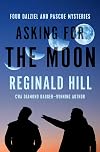
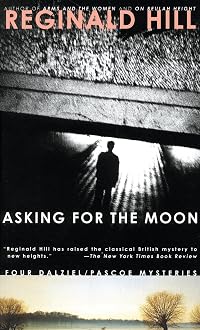
'Hill is an instinctive and complete novelist who is blessed with a spontaneous storytelling gift' Frances Fyfield, Mail on Sunday If you've already met Dalziel and Pascoe, you're in for a treat. If you haven't yet had the pleasure, you're in for a revelation! Here in four stories we track their partnership from curtain-up to last act; from the mean streets of Mid-Yorkshire to the mountains of the moon. The Last National Service Man reveals the truth, hitherto buried in police files, of show more their momentous first encounter, while Pascoe's Ghost is a chilling tale taking us deep into Poe country. Dalziel's Ghost, meanwhile, finds the man who normally wouldn't be seen dead in a graveyard expressing a surprising interest in the 'other side'. And finally, One Small Step takes a giant leap forward to the first murder on the moon. show lessTags
Recommendations









Member Reviews
I did not realize that this book was a collection of short stories when I first picked it up. But this is not your usual collection of short stories. These four stories are wonderful snapshots of the Dalziel and Pascoe partnership through their years working together. Dalziel is still at his sharpest here, even in the fanciful story "One Small Step" where Pascoe brings him out of retirement to solve the first murder on the moon. Yes, that's right, I said moon. As I said these stories are totally unique, and each one is a wonderful mystery in its own right. Now I will get back to reding the series, but I am glad that I took this little side trip to delve into Dalziel and Pascoe's world.
The publishers bizarrely insist on calling this book "A Dalziel and Pascoe Novel" (on the cover and on the title page), which does rather beg the question: do publishers actually read the books they publish? Or have they changed the definition of "novel" without telling us? Very strange.
For those still living in the real world where people read books, this is a collection of four shorter pieces: novellas, long short stories, whatever. "The last national serviceman" is the gem of the collection, a relatively short virtuoso piece in which Hill retrospectively describes the first meeting of D & P. It's written more like a stage play than a short story, with our two being held at gunpoint by a crazed ex-soldier and exploring in an extended show more dialogue the nature of the roles they have to play to each other and to the gunman (and implicitly also to the invisible audience).
"Pascoe's Ghost" is a longer story - it would probably have been enough to be called a novel in the old days - with a satisfyingly tight structure and some interesting characters. Essentially, it's a variant on the old-established village/country house formula. Shades of Lord Peter and The Nine Tailors. As the title implies, Pascoe is more-or-less on his own, with Dalziel only there in an advisory capacity.
The other two pieces, "Dalziel's ghost" and "One small step", are rather more lightweight efforts with little to offer apart from a few classic Dalziel lines. "One small step" in particular is a bit of silliness we could easily have done without. The idea of the Fat Man in space sounds good, but Hill doesn't really manage to do anything interesting with it. And of course, he has got himself into a bind by projecting his characters into the future, but not quite far enough... show less
For those still living in the real world where people read books, this is a collection of four shorter pieces: novellas, long short stories, whatever. "The last national serviceman" is the gem of the collection, a relatively short virtuoso piece in which Hill retrospectively describes the first meeting of D & P. It's written more like a stage play than a short story, with our two being held at gunpoint by a crazed ex-soldier and exploring in an extended show more dialogue the nature of the roles they have to play to each other and to the gunman (and implicitly also to the invisible audience).
"Pascoe's Ghost" is a longer story - it would probably have been enough to be called a novel in the old days - with a satisfyingly tight structure and some interesting characters. Essentially, it's a variant on the old-established village/country house formula. Shades of Lord Peter and The Nine Tailors. As the title implies, Pascoe is more-or-less on his own, with Dalziel only there in an advisory capacity.
The other two pieces, "Dalziel's ghost" and "One small step", are rather more lightweight efforts with little to offer apart from a few classic Dalziel lines. "One small step" in particular is a bit of silliness we could easily have done without. The idea of the Fat Man in space sounds good, but Hill doesn't really manage to do anything interesting with it. And of course, he has got himself into a bind by projecting his characters into the future, but not quite far enough... show less
Fans of Dalziel and Pascoe who might wonder how this unlikely pair ever got together will have their curiosity satisfied by reading “The Last National Service Man” in this collection of four stories. Dalziel is the fat detective who can “consume malt whiskey at a rate which had caused the waiter to summon his work-mates to view the spectacle,” and Pascoe his more intellectual and skeptical colleague. They make an odd couple that consistently amuse while solving crimes.
Dalziel reminds one of the wonderful Inspector Dover of Joyce Porter. They are both uncouth, fat, and lazy except that Dalziel is truly bright and manipulative. He actually solves crimes, unlike Dover, who stumbles on to the correct solution. Pascoe, his love/hate show more relationship Oxfordeducated subordinate, who uses words like hydriotaphic and philopolemic.
My favorite story, if one can have favorites, is Ghost." There are three main causes of ghosts, relates Dalziel, our expert, at a dinner party: “One: bad cooking. Two: bad ventilation. Three: bad conscience." Since the air conditioning was just recently installed and the housewife is known for her good cooking, only one option was left and Dalziel, to Pascoe’s consternation, agrees to check out the ghost. Dalziel, as usual, has something else up his sleeve, which he has to hide from Pascoe, whom he sends on a wild cat chase.
Another story, uncharacteristically, takes place in the year 2010. An astronaut, stepping off his lunar module, falls to the surface uttering the unfinished phrase, Oh mer… There is rampant speculation in the press as to what he meant to say, the religious insisting it had to
be Oh mère de Dieu. A surprising exclamation for a lifetime member of the Société Athéiste et Humaniste de France. The French newspapers realized, of course, that he was merely exclaiming what any civilized frog would under the circumstances: Oh merde. The murder was accomplished in a shocking fashion.
“
His TEC (Total Environment Costume) had been tampered with. “The mìcrocircuitry of the residual products unit of his TEC had been deliberately cross-linked with both the main and the reserve power systems in such a manner that it needed only the addition of a conductive element, in this case Iiquescent, to complete the circuit with unfortunate, that is, fatal, consequences." Heh, heh. show less
Dalziel reminds one of the wonderful Inspector Dover of Joyce Porter. They are both uncouth, fat, and lazy except that Dalziel is truly bright and manipulative. He actually solves crimes, unlike Dover, who stumbles on to the correct solution. Pascoe, his love/hate show more relationship Oxfordeducated subordinate, who uses words like hydriotaphic and philopolemic.
My favorite story, if one can have favorites, is Ghost." There are three main causes of ghosts, relates Dalziel, our expert, at a dinner party: “One: bad cooking. Two: bad ventilation. Three: bad conscience." Since the air conditioning was just recently installed and the housewife is known for her good cooking, only one option was left and Dalziel, to Pascoe’s consternation, agrees to check out the ghost. Dalziel, as usual, has something else up his sleeve, which he has to hide from Pascoe, whom he sends on a wild cat chase.
Another story, uncharacteristically, takes place in the year 2010. An astronaut, stepping off his lunar module, falls to the surface uttering the unfinished phrase, Oh mer… There is rampant speculation in the press as to what he meant to say, the religious insisting it had to
be Oh mère de Dieu. A surprising exclamation for a lifetime member of the Société Athéiste et Humaniste de France. The French newspapers realized, of course, that he was merely exclaiming what any civilized frog would under the circumstances: Oh merde. The murder was accomplished in a shocking fashion.
“
His TEC (Total Environment Costume) had been tampered with. “The mìcrocircuitry of the residual products unit of his TEC had been deliberately cross-linked with both the main and the reserve power systems in such a manner that it needed only the addition of a conductive element, in this case Iiquescent, to complete the circuit with unfortunate, that is, fatal, consequences." Heh, heh. show less
This is not really a collection of short stories, it is rather a novelette, 'Pascoe's Ghost', and three short pieces.
The aforementioned, at 112 pages looks to me like the guts of a novel that refused to proceed to its desired ending. In this pared down version, it however makes an excellent read.
Coming on to the smaller offerings, we are treated to the first meeting of Dalziel and Pascoe and a 'ghost story' from Mr. Dalziel: both proving Mr. Hill to be one of those rare writers that can really do short stories as well as they can the novel. The last piece is more questionable. It was produced in 1990, to celebrate twenty years of our crime fighting duo and, as Mr hill admits in his introduction, is a flight of fantasy. The story is set show more in 2010 (now alarmingly close!) on a European moon base. Dalziel has retired and Pascoe is Chief of Security. The story is really that of the people involved and, as such, is up to the author's usual high standard: where I am less sure of its merit, is in the fact that it very much reminds us that these are not real people. Of course, we know that but, in the course of so many novels, they become, in some sense, friends and it is almost like being forced to see that a good friend is false.
Dispite this small gripe, I enjoyed this book and must hope that my friends continue to keep Wetherton safe for many years to come. show less
The aforementioned, at 112 pages looks to me like the guts of a novel that refused to proceed to its desired ending. In this pared down version, it however makes an excellent read.
Coming on to the smaller offerings, we are treated to the first meeting of Dalziel and Pascoe and a 'ghost story' from Mr. Dalziel: both proving Mr. Hill to be one of those rare writers that can really do short stories as well as they can the novel. The last piece is more questionable. It was produced in 1990, to celebrate twenty years of our crime fighting duo and, as Mr hill admits in his introduction, is a flight of fantasy. The story is set show more in 2010 (now alarmingly close!) on a European moon base. Dalziel has retired and Pascoe is Chief of Security. The story is really that of the people involved and, as such, is up to the author's usual high standard: where I am less sure of its merit, is in the fact that it very much reminds us that these are not real people. Of course, we know that but, in the course of so many novels, they become, in some sense, friends and it is almost like being forced to see that a good friend is false.
Dispite this small gripe, I enjoyed this book and must hope that my friends continue to keep Wetherton safe for many years to come. show less
So lovely to be reading Reginald Hill again. It's sad to be revisiting his works in the knowledge that there will be no more to come, but at the same time an absolute joy. I'm sure that makes sense somehow or other.
This collection of Dalziel & Pascoe short stories is reproduced in order of when the events in them take place rather than by publication date. Following the seemingly ill-matched partners from their first, discordant meeting to their reunion (again discordant) investigating the first murder on the moon, I was reminded once more of the intelligence, charm and humour of Reginald Hill's writing.
Rest in peace, Mr Hill.
This collection of Dalziel & Pascoe short stories is reproduced in order of when the events in them take place rather than by publication date. Following the seemingly ill-matched partners from their first, discordant meeting to their reunion (again discordant) investigating the first murder on the moon, I was reminded once more of the intelligence, charm and humour of Reginald Hill's writing.
Rest in peace, Mr Hill.
This is a 1994 collection of four shorter works featuring Dalziel and Pascoe, three of which had previously appeared in print. The new story, which opens the collection, is "The Last National Service Man." It tells of Pascoe's first encounter, as a very green, newly-transferred DC, with the formidable Dalziel. The plotline is perhaps not very believable, but it's fun to see the beginnings of a great, if never easy, partnership.
"Pascoe's Ghost" and "Dalziel's Ghost" originally date from 1979 and focus, as their titles suggest, on apparent hauntings. "Pascoe's Ghost" is by far the stronger story. At novella-length, it has a full cast of well-developed secondary characters and a touch of the bleakness that characterizes some of Hill's show more best later work. "Dalziel's Ghost" is a fairly trivial comic tale, but interesting for a glimpse of Dalziel as a young man.
The final story, "One Small Step," which Hill wrote in 1990 to celebrate twenty years of Dalziel and Pascoe, is a disappointment. The future setting (2010) doesn't work well, especially now that it's 2007. Science fiction is not Hill's strength. More importantly, the characters are not their usual selves. In the case of Dalziel, retired, ill, and bored, that's plausible, and he returns to the Dalziel we know as the story develops. But the story's Pascoe--now a commissioner in the European Federal Police--is cynical, callous, and all too willing to bow to government pressure. It's impossible to reconcile this corrupted man with the Pascoe of the novels, with his tender conscience and his need to see justice done.
Asking for the Moon is of interest to Dalziel and Pascoe completists (like me), but for casual readers, any of the novels is a better choice. show less
"Pascoe's Ghost" and "Dalziel's Ghost" originally date from 1979 and focus, as their titles suggest, on apparent hauntings. "Pascoe's Ghost" is by far the stronger story. At novella-length, it has a full cast of well-developed secondary characters and a touch of the bleakness that characterizes some of Hill's show more best later work. "Dalziel's Ghost" is a fairly trivial comic tale, but interesting for a glimpse of Dalziel as a young man.
The final story, "One Small Step," which Hill wrote in 1990 to celebrate twenty years of Dalziel and Pascoe, is a disappointment. The future setting (2010) doesn't work well, especially now that it's 2007. Science fiction is not Hill's strength. More importantly, the characters are not their usual selves. In the case of Dalziel, retired, ill, and bored, that's plausible, and he returns to the Dalziel we know as the story develops. But the story's Pascoe--now a commissioner in the European Federal Police--is cynical, callous, and all too willing to bow to government pressure. It's impossible to reconcile this corrupted man with the Pascoe of the novels, with his tender conscience and his need to see justice done.
Asking for the Moon is of interest to Dalziel and Pascoe completists (like me), but for casual readers, any of the novels is a better choice. show less
"Asking for the Moon" is a collection of four short stories/novellas from Reginald Hill, featuring Pascoe and Dalziel. These include “The Last National Service Man,” wherein the two meet each other for the first time; “Pascoe’s Ghost,” “Dalziel’s Ghost,” and “One Small Step,” set in the distant “future” of 2010 and featuring a murder on the Moon! Not really necessary with respect to the series as a whole, but tons of fun nevertheless.
Members
- Recently Added By
Lists

Books Read in 2018
4,360 works; 110 members
Author Information

84+ Works 18,501 Members
Reginald Hill has received Britain's most coveted mystery writers award, the Cartier Diamond Dagger Award, as well as the Golden Dagger, for his Dalziel/Pascoe series. (Publisher Provided) Reginald Hill was born in Hartlepool, England on April 3, 1936. He received an English degree from St. Catherine's College, Oxford University and worked as a show more teacher until 1980, when he retired to become a full-time writer. His first novel, A Clubbable Woman, was published in 1970. During his lifetime, he wrote over 50 books that range from historical novels to science fiction including Fell of Dark, No Man's Land, The Spy's Wife, and The Woodcutter. He was best known for the Dalziel and Pascoe series and the Joe Sixsmith series. He also wrote under the pseudonyms of Patrick Ruell, Dick Morland, and Charles Underhill. He received the 1990 Golden Dagger Award for Best Crime Novel of the Year for Bones and Silence and the 1995 Cartier Diamond Dagger Award for lifetime achievement. He died from a brain tumor on January 12, 2012 at the age of 75. (Bowker Author Biography) show less
Series

Work Relationships
Common Knowledge
- Canonical title
- Asking for the Moon
- Original publication date
- 1994
- People/Characters
- Andrew Dalziel; Peter Pascoe
- Dedication
- TO YOU DEAR READERS without whom the writing would be in vain and TO YOU STILL DEARER PURCHASERS without whom the eating would be infrequent THIS BOOK IS DEDICATED in appreciation of your loyalty in anticipation of your longe... (show all)vty in admiration of your taste NON SCRIBIT, CUIUS CARMINA NEMO LEGIT
Classifications
Statistics
- Members
- 390
- Popularity
- 79,890
- Reviews
- 11
- Rating
- (3.40)
- Languages
- English
- Media
- Paper, Audiobook, Ebook
- ISBNs
- 10
- ASINs
- 8