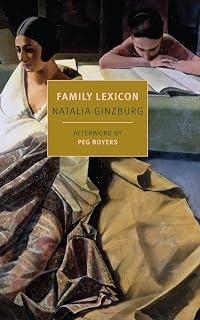
Family Lexicon
by Natalia Ginzburg
On This Page
Description
An Italian family, sizable, with its routines and rituals, crazes, pet phrases, and stories, doubtful, comical, indispensable, comes to life in the pages of Natalia Ginzburg's Family Lexicon. Giuseppe Levi, the father, is a scientist, consumed by his work and a mania for hiking-when he isn't provoked into angry remonstration by someone misspeaking or misbehaving or wearing the wrong thing. Giuseppe is Jewish, married to Lidia, a Catholic, though neither is religious; they live in the show more industrial city of Turin where, as the years pass, their children find ways of their own to medicine, marriage, literature, politics. It is all very ordinary, except that the background to the story is Mussolini's Italy in its steady downward descent to race law and world war. The Levis are, among other things, unshakeable anti-fascists. That will complicate their lives. Family Lexicon is about a family and language-and about storytelling not only as a form of survival but also as an instrument of deception and domination. The book takes the shape of a novel, yet everything is true. "Every time that I have found myself inventing something in accordance with my old habits as a novelist, I have felt impelled at once to destroy [it]," Ginzburg tells us at the start. "The places, events, and people are all real.". show lessTags
Recommendations















Member Reviews
"Somos cinco irmãos. Vivemos em cidades diferentes, alguns de nós no estrangeiro, e não nos escrevemos muitas vezes. Quando nos encontramos, podemos ser, uns para os outros, indiferentes ou distraídos. Mas basta, entre nós, uma palavra. Basta uma palavra, uma frase: uma dessas frases antigas, ouvidas e repetidas infinitas vezes, no tempo da nossa infância. Basta dizermos: "Não viemos a Bérgamo para passear" ou "a que é que fede o ácido sulfídrico", para redescobrirmos no mesmo instante as nossas relações de outrora, e a nossa infância e a nossa juventude, indissoluvelmente ligadas a essas frases, a essas palavras. Uma dessas frases ou palavras faria que nos reconhecêssemos mutuamente, como os irmãos que somos, na show more escuridão de uma gruta, entre milhões de pessoas. Essas frases são o nosso latim, o vocabulário dos nossos dias idos, são, como os hieróglifos dos egípcios ou dos assírio-babilónios, o testemunho de um núcleo vital que deixou de existir, mas que sobrevive nos seus textos, salvos da fúria das águas, da corrosão do tempo. Essas frases são o fundamento da nossa unidade familiar, que subsistirá enquanto estivermos no mundo, recriando-se e ressuscitando nos pontos mais diversos da terra, quando um de nós disser "Ilustre signor Lipmann", e ressoar então nos ouvidos a voz impaciente do meu pai: - Deixa lá essa história! Quantas vezes não a ouvi já!" show less
Family Sayings is Ginzburg’s memoir of growing up in a large, quirky family in the pre-WWII years and the family’s experiences during and after the war. Most of the time, the focus is not on her, the narrator, but her parents, siblings, their friends, and their partners. It’s very detailed, intimate, and amusing, with the inside jokes and references frequently popping up to provide a good characterization of all the friends and relatives who people the book. When the war starts, everything becomes more difficult, but even with some close calls, the family mainly stays the same – her father grumbles, the siblings fight and marry and complain. However, when serious things do happen, there’s a kind of distance in Ginzburg’s show more descriptions – she’ll matter-of-factly state that someone’s parents were transported off, never to return, and never elaborates on her husband’s death – the only in-depth descriptions are a couple of her experiences before and after. It’s very effective at bringing attention to these incidents with the contrast in narrative style, as well as showing how even large losses give way to the rhythm of daily life.
Her father looms large over the first half of the book. He is amusing to read about, but would likely be difficult to live with – a constantly complaining, constantly criticizing man who is sure that there is only one right way to do things. He loves mountain climbing and makes everyone else participate, but it has to be done his way. He likes and dislikes people for random reasons, plays favorites with his children, and has various obsessions. The narrator’s mother is more conciliatory and, like everyone else, she has her sayings and memories that have become part of the family lore – the opera that she started when she was a girl, the few memories of a brother who committed suicide, how every previous house was better than the one they live in now. All the narrator’s siblings are introduced – Gino, the golden boy who is the favorite due to his intelligence and love of mountaineering, Paola and Mario, both romantic, emotional, and addicted to literature and poetry (and constantly engaging in a silent war with their father), and Alberto, the sports-obsessed son who also manages to incur the disapproval of his father and mother. While her father and mother differ in personality, both are committed to socialism and various leftist politicians visit during the narrator’s childhood. Friends and romantic partners are also described in detail.
Even though all the sons get into trouble early on in the war years – arrests or exile – nothing seems serious at first. Natalia’s mother sighs when the excitement is over and her father still does the same complaining and laughing. But the situation gradually becomes worse as people they know are executed and the racial campaigns start. Still, the narrator continues with her depictions of the relationships and daily life of the family. Alberto becomes a serious married man and doctor, Mario loses his interest in art and romance, Paola marries and divorces. Natalia also marries, but even the descriptions about her early married life give way to stories about her friends. Even with the losses of the war, life goes on, new characters are introduced, her parents summer and mountain climb with the grandchildren now, and the family references and jokes continue on. show less
Her father looms large over the first half of the book. He is amusing to read about, but would likely be difficult to live with – a constantly complaining, constantly criticizing man who is sure that there is only one right way to do things. He loves mountain climbing and makes everyone else participate, but it has to be done his way. He likes and dislikes people for random reasons, plays favorites with his children, and has various obsessions. The narrator’s mother is more conciliatory and, like everyone else, she has her sayings and memories that have become part of the family lore – the opera that she started when she was a girl, the few memories of a brother who committed suicide, how every previous house was better than the one they live in now. All the narrator’s siblings are introduced – Gino, the golden boy who is the favorite due to his intelligence and love of mountaineering, Paola and Mario, both romantic, emotional, and addicted to literature and poetry (and constantly engaging in a silent war with their father), and Alberto, the sports-obsessed son who also manages to incur the disapproval of his father and mother. While her father and mother differ in personality, both are committed to socialism and various leftist politicians visit during the narrator’s childhood. Friends and romantic partners are also described in detail.
Even though all the sons get into trouble early on in the war years – arrests or exile – nothing seems serious at first. Natalia’s mother sighs when the excitement is over and her father still does the same complaining and laughing. But the situation gradually becomes worse as people they know are executed and the racial campaigns start. Still, the narrator continues with her depictions of the relationships and daily life of the family. Alberto becomes a serious married man and doctor, Mario loses his interest in art and romance, Paola marries and divorces. Natalia also marries, but even the descriptions about her early married life give way to stories about her friends. Even with the losses of the war, life goes on, new characters are introduced, her parents summer and mountain climb with the grandchildren now, and the family references and jokes continue on. show less
An unusually structured autobiography, as author Ginzburg recalls her life in Turin through the medium of 'family sayings' - the often-repeated jokes, rhymes, anecdotes and expostulations by her irrascible father, plaintive mother and her siblings, friends and relatives. Against these personalities, brought so vividly to life through their comments and conversations, we experience the threat of life as Fascists rise to power - imprisonments of the decidedly Left-leaning family and the death of the author's first husband.
Very very good read.
' "What's Terni got to whisper about with Mario and Paola?" my father asked my mother. "They are always there whispering in a corner. What is all this rigmarole?"
In my father's terms this meant show more secrets and he could not bear to see people absorbed in conversation and not know what it was all about.
"They are probably talking about Proust," my mother told him.
She had read Proust, and she too, like Terni and Paola, liked his work very much. She told my father that this Proust was someone who was very fond of his mother and his grandmother, he had asthma, and could never sleep and as he could not stand noise he had had the walls of his room lined with cork.
"He must have been a cad," said my father." show less
Very very good read.
' "What's Terni got to whisper about with Mario and Paola?" my father asked my mother. "They are always there whispering in a corner. What is all this rigmarole?"
In my father's terms this meant show more secrets and he could not bear to see people absorbed in conversation and not know what it was all about.
"They are probably talking about Proust," my mother told him.
She had read Proust, and she too, like Terni and Paola, liked his work very much. She told my father that this Proust was someone who was very fond of his mother and his grandmother, he had asthma, and could never sleep and as he could not stand noise he had had the walls of his room lined with cork.
"He must have been a cad," said my father." show less
Thanks for this Jim. It was not only a delightful read but a lovely edition with its clear print and end folds. Plenty to laugh out-loud at too in this wonderfully rich evocation of a family through a generation. Natalia Ginzburg writes so well that the book just rolls along in its various rhythms and cadences. Moments of profound reflection suddenly pulled me up - such as
show more
The post-war period, then, was very sad and full of dejection after the joyful harvest of its early days. Many pulled away and isolated themselves again either in their dream worlds, or in whatever random job they'd taken in a hurry in order to earn a living, jobs that seemed insignificant and dreary after so much hullaballoo. In any case, everyone soon forgot that
brief, illusory moment of shared existence. p.217show less
Un libro molto bello che è una storia vera ma che l'autrice vorrebbe fosse letto come fosse un romanzo. La famiglia dell'autrice, la famiglia Levi, è davvero variegata e interessante, così come tutti i loro amici e conoscenti. Siamo in un periodo storico molto importante che ha lasciato il segno nel futuro e che resterà per sempre indimenticabile. Ho trovato molto originale l'espediente del lessico famigliare per raccontare la vita della sua famiglia. Molte famiglie hanno questo lessico a volte ripetuto fino alla noia, un qualcosa che è solo loro e che gli altri non possono capire. Il romanzo mi ha messo la curiosità di conoscere i personaggi citati. Ho trovato Natalia Ginzburg molto ironica e con una capacità d'osservazione show more davvero impressionante! Lei piccola piccola registrava tutto. Aveva anche una grande fiducia e ammirazione dei propri genitori, nonostante non fossero certo perfetti. Bello, consigliato e forse anche da rileggere! show less
La Natalia Levi in Ginzburg racconta in chiave a volte ironica e anche divertente sopratutto in riferimento ai comportamenti della madre e dell'irascibile padre la sua vita, rimanendo molto alla finestra e facendoci incontrare con la cultura torinese sia industriale che letteraria collegata all'antifascismo ma senza disquisire di politica ma essenzialmente di vita in famiglia ricca di amici e visite importanti.
A cavallo fra un' autobiografia , un libro di memorie e il ritratto di una societa' di inizio 900 che e' stata protagonista di molta della nostra storia contemporanea. Il merito di questo libro e' di evidenziare quali sono le radici dei nostri ricordi : ognuno di noi ha il suo “lessico familiare“, costruito dalle nostre memorie ; i nostri genitori, i nostri fratelli, gli amici sono gli unici testimoni di quello che siamo stati e di quello che ora non siamo piu'.
Members
- Recently Added By
Lists

Books Set in Italy
167 works; 19 members

Italian Literature
558 works; 42 members

Best Family Stories
241 works; 22 members

Female Author
1,234 works; 67 members

Best family sagas
244 works; 34 members
EU Fiction: 1950-2022
223 works; 68 members

Jewish Books
367 works; 24 members

Top Five Books of 2021
604 works; 181 members

Elena Ferrante's 40 favourite books by female authors
40 works; 10 members

Best Domestic Fiction
77 works; 6 members

Libros que todos deberíamos leer al menos una vez en la vida (Librotea)
14 works; 1 member

Books Read in 2022
5,226 works; 112 members

Kirkus Starred Fiction Reviews of Books Published in 2017
412 works; 7 members

Bibliografia essenziale
86 works; 2 members

Not the NYT list of top 100 21st century books
100 works; 6 members
Lista dei 100 migliori libri italiani degli ultimi 200 anni
100 works; 1 member
Author Information

71+ Works 5,906 Members
Some Editions
Awards and Honors
Awards
Series
Belongs to Publisher Series
Work Relationships
Is contained in
Common Knowledge
- Canonical title
- Family Lexicon
- Original title
- Lessico famigliare
- Alternate titles
- Family Sayings; The Things We Used to Say
- Original publication date
- 1963
- People/Characters
- Natalia Ginzburg; Leone Ginzburg
- Important places
- Turin, Piedmont, Italy; Italy; Turín, Piamonte, Italia
- Important events
- Finales II Guerra Mundial
- First words
- Nella mia casa paterna, quand'ero ragazzina, a tavola, se io o i miei fratelli rovesciavamo il bicchiere sulla tovaglia, o lasciavamo cadere un coltello, la voce di mio padre tuonava: - Non fate malagrazie!
The places, events, and people in this book are real. I haven't invented a thing, and each time I found myself slippping into my long-held habits as a novelist and made something up, I was quickly compelled to destroy the inv... (show all)ention. (Author's Preface)
At the dinner table in my father's home when I was a girl if I, or one of my siblings, knocked a glass over on the tablecloth or dropped a knife, my father's voice would thunder, "Watch your manners!"
Lexicon: a dictionary, or more precisely, an assemblage of words meaningful only to initiates, or a collection of phrases, any one of which, when uttered, no matter when or where, will at once identify the speaker as a member... (show all) of a particular tribe. (Afterword)
Me llamo Natalia Ginzburg - Last words
- (Click to show. Warning: May contain spoilers.)- Tutte le domeniche, - disse, - andavo dal Barbison. Le sorelle del Barbison le chiamavano le Beate, perchè erano molto bigotte. Il Barbison, il suo vero nome era Perego. I suoi amici gli avevano fatto questa poesia:
Bello è veder di sera e di mattina Del Perego la cà e la cantina.
-Ah non cominciamo adesso col Barbison! - disse mio padre. - Quante volte l'ho sentita contare questa storia!
(Click to show. Warning: May contain spoilers.)"How many times have I heard her tell that story!"
(Click to show. Warning: May contain spoilers.)"¡La de veces que he oido contar esa historia!". - Blurbers
- Wolitzer, Hilma; Lopate, Phillip
- Original language
- Italian
- Canonical DDC/MDS
- 853.912
- Canonical LCC
- PQ4817. I5 L413
Classifications
- Genres
- Biography & Memoir, General Fiction, Fiction and Literature
- DDC/MDS
- 853.912 — Literature & rhetoric Italian, Romanian & related literatures Italian fiction 1900- 20th Century 1900-1945
- LCC
- PQ4817 — Language and Literature French, Italian, Spanish and Portuguese literatures Italian literature Individual authors, 1900-1960
- BISAC
Statistics
- Members
- 1,612
- Popularity
- 14,074
- Reviews
- 35
- Rating
- (3.71)
- Languages
- 16 — Basque, Catalan, Danish, Dutch, English, Finnish, French, German, Hebrew, Italian, Polish, Russian, Slovenian, Spanish, Swedish, Portuguese (Portugal)
- Media
- Paper, Audiobook, Ebook
- ISBNs
- 70
- ASINs
- 24