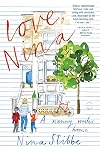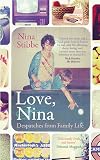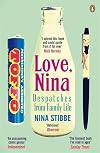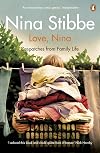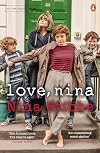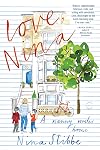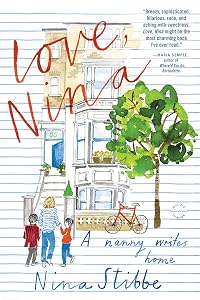
Love, Nina: Despatches from Family Life
by Nina Stibbe
On This Page
Description
"Breezy, sophisticated, hilarious, rude and aching with sweetness: LOVE, NINA might be the most charming book I've ever read." —Maria Semple, author of Where'd You Go, BernadetteIn 1982, 20-year-old Nina Stibbe moved to London to work as a nanny to two opinionated and lively young boys. In frequent letters home to her sister, Nina described her trials and triumphs: there's a cat nobody likes, suppertime visits from a famous local playwright, a mysteriously unpaid milk bill, and repeated show more misadventures parking the family car. Dinner table discussions cover the gamut, from the greats of English literature, to swearing in German, to sexually transmitted diseases. There's no end to what Nina can learn from these boys (rude words) and their broad-minded mother (the who's who of literary London).
A charming, hilarious, sweetly inspiring celebration of bad food and good company, Love, Nina makes a young woman's adventures in a new world come alive.
. show less
Tags
Recommendations

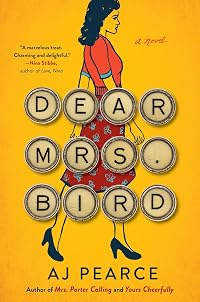

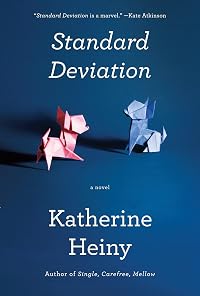
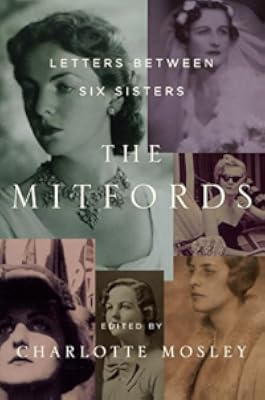
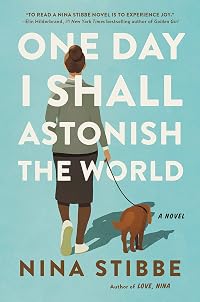





Member Reviews
[This is a review I wrote in 2016]
I’ve not long finished reading Love, Nina and although I have a couple of other books in my waiting-to-review stack, I want to share this one first; not least because of the recent TV mini-series adapted by Nick Hornby which, although good, I didn’t enjoy half as much as the book.
Reading the book very close to watching the TV adaptation was a coincidence and it wasn’t until I was already half-way through the book – and half-way in love with this delightful family and eccentric nanny that I saw the series was about to start on BBC1. In hindsight I wish I hadn’t watched them so close together as Nick Hornby takes a bit of artistic license with the anecdotes, names are changed and the feeling of show more the series is quite different to the book.
Nina Stibbe was aged 20 in 1982, when she left her home in Leicestershire and went to work as a nanny to two young boys in central London. Nina had no idea how to do nanny things; how to cook, clean or how to look after children! She was so appalling at housework her employer had to employ a cleaner while she was there as well! She had no idea who the eccentrics were who called round at the house, or who this Alan Bennett was who invited himself round for dinner nearly every day… but she had a good sense of humour and a matter-of-fact nature which seem to be all the essentials she needed. Most importantly Nina was very happy in her job and loved spending time with the boys, oft-times treating them to lots of fun like an older sister might.
Nina’s employer was Mary-Kay Wilmers and her two sons, Nina’s two charges, were Sam Frears (aged 10) and Will Frears (aged 9). Various other characters that crop up in the book include Jonathan Miller, Claire Tomalin and her son, Tom, Michael Frayn, Stephen Frears (the boys’ father), Ursula Vaughan Williams, and others.
Here’s a quote of Nina’s about her nannying style, taken from her blog, The Good Nanny by Nina Stibbe
" “Then there was my child-minding style. I put Sam (aged ten and with some disabilities) into a builder’s skip for a laugh and struggled to lift him out again. I pushed him into a swimming pool because he didn’t fancy a swim and read Thomas Hardy to him pretending it was Enid Blyton. I did other things too awful to write here (things that are explained in detail in the book).
I completed nine-year-old Will’s homework for him to get it out of the way so that he could get on with a novel he was writing and taught him to draw a fake tattoo on his arm in ink and took both boys on grafitti-hunting expeditions. I pranged the car and made the boys promise on their mother’s deathbed not to tell her about it. I walked around barefoot and took them to the pub to play snooker. I smoked and swore like a trooper.” "
The book takes the form of a collection of letters Nina wrote home to her younger sister, Vic which the two sisters apparently discovered some years later in Vic’s attic, to their absolute hilarity! There’s an honesty and warmth about them, such as you will only find between two people close to each other. Nina is quite frank about what goes on in Gloucester Crescent and passes on the odd snippet of wisdom to her sister as well as exchanging recipe ideas and other tips:
“Thanks for recipe. I didn’t do it exact – too many ingredients. I’ve not done anything with more than five/six things in it so far. Plus we don’t have the right attachments or a pestle. So I did my own version: Cooked chicken, almond flakes, curry powder and parsley, plus two packs Bachelor’s savoury rice.”
This is by far and away one of my favourite books that I’ve read so far this year and it’s one I will definitely re-read when I need some light humour, a good laugh, or even a bit of a pick-me-up. I’ve already recommended it to customers and it’s had a good response. It’s warm, endearing, refreshingly candid and hilariously naive and I can’t imagine anyone not enjoying it as a light-hearted read. In fact, if you haven’t got your beach reads for the summer sorted yet then add this one to your stack. show less
I’ve not long finished reading Love, Nina and although I have a couple of other books in my waiting-to-review stack, I want to share this one first; not least because of the recent TV mini-series adapted by Nick Hornby which, although good, I didn’t enjoy half as much as the book.
Reading the book very close to watching the TV adaptation was a coincidence and it wasn’t until I was already half-way through the book – and half-way in love with this delightful family and eccentric nanny that I saw the series was about to start on BBC1. In hindsight I wish I hadn’t watched them so close together as Nick Hornby takes a bit of artistic license with the anecdotes, names are changed and the feeling of show more the series is quite different to the book.
Nina Stibbe was aged 20 in 1982, when she left her home in Leicestershire and went to work as a nanny to two young boys in central London. Nina had no idea how to do nanny things; how to cook, clean or how to look after children! She was so appalling at housework her employer had to employ a cleaner while she was there as well! She had no idea who the eccentrics were who called round at the house, or who this Alan Bennett was who invited himself round for dinner nearly every day… but she had a good sense of humour and a matter-of-fact nature which seem to be all the essentials she needed. Most importantly Nina was very happy in her job and loved spending time with the boys, oft-times treating them to lots of fun like an older sister might.
Nina’s employer was Mary-Kay Wilmers and her two sons, Nina’s two charges, were Sam Frears (aged 10) and Will Frears (aged 9). Various other characters that crop up in the book include Jonathan Miller, Claire Tomalin and her son, Tom, Michael Frayn, Stephen Frears (the boys’ father), Ursula Vaughan Williams, and others.
Here’s a quote of Nina’s about her nannying style, taken from her blog, The Good Nanny by Nina Stibbe
" “Then there was my child-minding style. I put Sam (aged ten and with some disabilities) into a builder’s skip for a laugh and struggled to lift him out again. I pushed him into a swimming pool because he didn’t fancy a swim and read Thomas Hardy to him pretending it was Enid Blyton. I did other things too awful to write here (things that are explained in detail in the book).
I completed nine-year-old Will’s homework for him to get it out of the way so that he could get on with a novel he was writing and taught him to draw a fake tattoo on his arm in ink and took both boys on grafitti-hunting expeditions. I pranged the car and made the boys promise on their mother’s deathbed not to tell her about it. I walked around barefoot and took them to the pub to play snooker. I smoked and swore like a trooper.” "
The book takes the form of a collection of letters Nina wrote home to her younger sister, Vic which the two sisters apparently discovered some years later in Vic’s attic, to their absolute hilarity! There’s an honesty and warmth about them, such as you will only find between two people close to each other. Nina is quite frank about what goes on in Gloucester Crescent and passes on the odd snippet of wisdom to her sister as well as exchanging recipe ideas and other tips:
“Thanks for recipe. I didn’t do it exact – too many ingredients. I’ve not done anything with more than five/six things in it so far. Plus we don’t have the right attachments or a pestle. So I did my own version: Cooked chicken, almond flakes, curry powder and parsley, plus two packs Bachelor’s savoury rice.”
This is by far and away one of my favourite books that I’ve read so far this year and it’s one I will definitely re-read when I need some light humour, a good laugh, or even a bit of a pick-me-up. I’ve already recommended it to customers and it’s had a good response. It’s warm, endearing, refreshingly candid and hilariously naive and I can’t imagine anyone not enjoying it as a light-hearted read. In fact, if you haven’t got your beach reads for the summer sorted yet then add this one to your stack. show less
I feel duped. How did this book end up on "Best Books of the Year" lists? From far away (e.g. the USA) this may seem like a quaint story about a nanny in '80s London: Mary Poppins meets Bridget Jones. But once you peel away the layer of "kids will say the darndest things", a picture emerges of a privileged stuck-up, judgmental caste. The name-dropping is inane (although probably the only reason this book ever got published), and the "quirkiness" of its protagonists is just poorly disguised snobbery. One could fill a PhD dissertation with all the self-validating codes and indirect slights to people outside the Bloomsbury bubble that are contained in this vapid excuse for a book.
This collection of letters proved to be the perfect cure for my reader's block. Now a novelist, in 1982 20-year-old Nina Stibbe had just moved to London from her native Leicester to work as a nanny to the children of Mary-Kay Wilmers (and the film director Stephen Frears), editor of the London Review of Books. Though bright and funny (and a touch eccentric), Stibbe had been patchily educated and her immersion in the world of literary and intellectual North London marks the beginning of a burgeoning relationship with literature.
Spanning five years, from 1982 to 1987, these letters are all addressed to Stibbe's sister, Victoria, and, as such, are chatty, frank (except as regards her relationship with 'Nunney', another show more family-help-turned-student, for which we must read between the lines a little) and prone to flit between all manner of subjects. She frequently inserts comical snippets of conversation that have taken place in the Wilmers household, to which Alan Bennett is a regular visitor. We never see Victoria's responses, but it is easy to imagine that, living a very different life back in Leicester, she may not always have been that enthralled by the minutiae of her sister's existence; we can tell that she neither visits nor calls Nina as often as the latter would like. However, for the reader, these idiosyncratic letters are a true delight.
I've seen some lukewarm reviews for this book on LT and I think it would probably appeal more to a British audience, for whom the references will be more familiar. If you like the sound of it though, I'm pretty sure you'll enjoy it! show less
Spanning five years, from 1982 to 1987, these letters are all addressed to Stibbe's sister, Victoria, and, as such, are chatty, frank (except as regards her relationship with 'Nunney', another show more family-help-turned-student, for which we must read between the lines a little) and prone to flit between all manner of subjects. She frequently inserts comical snippets of conversation that have taken place in the Wilmers household, to which Alan Bennett is a regular visitor. We never see Victoria's responses, but it is easy to imagine that, living a very different life back in Leicester, she may not always have been that enthralled by the minutiae of her sister's existence; we can tell that she neither visits nor calls Nina as often as the latter would like. However, for the reader, these idiosyncratic letters are a true delight.
I've seen some lukewarm reviews for this book on LT and I think it would probably appeal more to a British audience, for whom the references will be more familiar. If you like the sound of it though, I'm pretty sure you'll enjoy it! show less
This collection of letters from Nina Stibbe to her sister Victoria spans five years (1982 – 1987), and begins when 20 year old Nina moves from Leicestershire to London to become the live-in nanny to Sam and Will, the two young sons of editor/journalist Mary-Kay Wilmers.
Reading like a cross between Adrian Mole and Bridget Jones (as the letters do form a diary of sorts), this book is extremely funny (frequently) and frank. I particularly loved how almost every letter contained snippets of information between Nina, Mary-Kay, Sam, Will and other people (including, frequently, Alan Bennett who was not only a neighbour, but also a very regular visitor to the house).
I did start to make notes of some of the funniest parts, to quote in this show more review, but when I realised that there were parts I wanted to quote on every couple of pages, I had to stop otherwise I would have been making notes as much as I was reading the book.
As well as liking Nina very much, I also loved Mary-Kay, Sam and Will, who were all clearly intelligent and quick thinking. Nina was – by her own admission – not brilliant at cooking or cleaning, but clearly the family felt that she fitted in with them perfectly, so much so that even after she stopped being nanny to the boys and left to pursue a Literature degree, she subsequently moved back in to live with them.
It’s true that the letters contain a lot of the minutiae of family life, and often not much at all happens, and some reviews have been critical of this, but for me part of the attraction of the book was precisely that, and the fact that Nina could make such humdrum events so amusing.
I would highly recommend this book, and already know that I will be buying some copies of it for Christmas presents. show less
Reading like a cross between Adrian Mole and Bridget Jones (as the letters do form a diary of sorts), this book is extremely funny (frequently) and frank. I particularly loved how almost every letter contained snippets of information between Nina, Mary-Kay, Sam, Will and other people (including, frequently, Alan Bennett who was not only a neighbour, but also a very regular visitor to the house).
I did start to make notes of some of the funniest parts, to quote in this show more review, but when I realised that there were parts I wanted to quote on every couple of pages, I had to stop otherwise I would have been making notes as much as I was reading the book.
As well as liking Nina very much, I also loved Mary-Kay, Sam and Will, who were all clearly intelligent and quick thinking. Nina was – by her own admission – not brilliant at cooking or cleaning, but clearly the family felt that she fitted in with them perfectly, so much so that even after she stopped being nanny to the boys and left to pursue a Literature degree, she subsequently moved back in to live with them.
It’s true that the letters contain a lot of the minutiae of family life, and often not much at all happens, and some reviews have been critical of this, but for me part of the attraction of the book was precisely that, and the fact that Nina could make such humdrum events so amusing.
I would highly recommend this book, and already know that I will be buying some copies of it for Christmas presents. show less
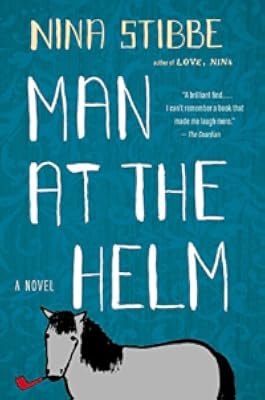
Nina Stibbe left her rural home to take a job in London as a nanny. Her employer was Mary-Kay Wilmers, an editor with the London Review of Books who had two children, one of whom was slightly disabled. This is a collection of letters sent to her sister during that time. Following the job, but while still living with the family, she went to college, majoring in English literature. An undertaking that may have been inspired by living in a literary household (Alan Bennett regularly drops by at suppertime). Instead of going into long descriptions of conversation, Stibbe records them as script dialogue that moves the book along at a brisk pace. Her writing is fresh and easy-going, describing an ordinary job with a unique twist. I enjoyed show more every page of this book that I picked up on impulse and immediately ordered Man at the Helm by the same author.
Note: Being Sam Frears: A Life Less Ordinary is a book about the disabled child, with an excellent review by LT member kidzdoc. show less
Note: Being Sam Frears: A Life Less Ordinary is a book about the disabled child, with an excellent review by LT member kidzdoc. show less
This is a collection of letters from Nina back to her sister Vic written in the 1980's when she was a nanny in London. She was looking after Sam and Will, sons of Mary-Kay Wilmers who at the time was deputy editor of The London Review of Books. In the same street was [a:Claire Tomalin|18514|Claire Tomalin|https://d.gr-assets.com/authors/1361044853p2/18514.jpg] and [a:Alan Bennett|11781|Alan Bennett|https://d.gr-assets.com/authors/1234747177p2/11781.jpg], so Nina was surrounded by literary influences.
The letters are a raw and lightly edited collection of her thoughts, feelings and experiences that happened when she was nanny, from the absurd, Alan Bennet assisting with fixing household object to the surreal conversations that she has show more with the broad minded Mary-Kay Wilmers (MK in the book). As she settles in the area she begins to find her feet, and the letters detail the silly mistakes and life lessons that she learns and tells her sister about.
Half way through her stay she stars a degree at Thames Polytechnic and stops being a nanny. The letters still continue as she settles in to a different routine. In the letters home she describes her triumphs and her anxieties and the new friends that she has made. After a while she moves back in with the family and commutes to polytechnic.
Really a 2.5 star book. This both charmed and irritated in equal measure. I am not a huge fan of the epistolary style, i think that it can be used to enhance a book, but when it is the entire text then it gets a bit much. There were some very funny bits in the book, but I didn't like the conversations that were included in the letters. Whilst they filled in the gaps in the story, they grated after a while. That said, this book is worth reading; for a series of letters Stibble shows her raw potential as a writer with acute observations and wry humour, and a honesty and innocence that is fresh and startling. show less
The letters are a raw and lightly edited collection of her thoughts, feelings and experiences that happened when she was nanny, from the absurd, Alan Bennet assisting with fixing household object to the surreal conversations that she has show more with the broad minded Mary-Kay Wilmers (MK in the book). As she settles in the area she begins to find her feet, and the letters detail the silly mistakes and life lessons that she learns and tells her sister about.
Half way through her stay she stars a degree at Thames Polytechnic and stops being a nanny. The letters still continue as she settles in to a different routine. In the letters home she describes her triumphs and her anxieties and the new friends that she has made. After a while she moves back in with the family and commutes to polytechnic.
Really a 2.5 star book. This both charmed and irritated in equal measure. I am not a huge fan of the epistolary style, i think that it can be used to enhance a book, but when it is the entire text then it gets a bit much. There were some very funny bits in the book, but I didn't like the conversations that were included in the letters. Whilst they filled in the gaps in the story, they grated after a while. That said, this book is worth reading; for a series of letters Stibble shows her raw potential as a writer with acute observations and wry humour, and a honesty and innocence that is fresh and startling. show less
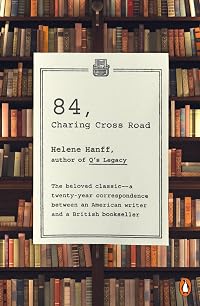
At first, this seemed so nothing but the more I read, the more I liked. Stibbe is incredibly funny but with a very dry wit that only benefits from cumulative reading. I loved the transition from nanny to student - there was something very exciting to read about her return to school as a 'mature student' and her poetic ode to Seamus Heaney was worth the price of the book. All in all, a sweet and lovely book that has a place on the shelf next to 84 Charing Cross Road and Laurie Colwin.
Members
- Recently Added By
Lists

Books Read in 2014
2,343 works; 89 members

Favorite Epistolary Fiction
143 works; 144 members

Espistolary
20 works; 1 member
Author Information

8 Works 1,412 Members
Nina Stibbe is the author of Love, Nina: A Nanny Writes Home and Man at the Helm. (Bowker Author Biography)
Awards and Honors
Common Knowledge
- Canonical title
- Love, Nina: Despatches from Family Life
- Alternate titles
- Love, Nina: A Nanny Writes Home
- Original publication date
- 2013
- People/Characters
- Alan Bennett; Sam Frears
Classifications
- Genres
- Biography & Memoir, Nonfiction, General Nonfiction
- DDC/MDS
- 649.092 — Applied science & technology Home economics & family management Child rearing; home care of people with illnesses and disabilities by family and friends
- LCC
- HQ778.7 .G7 .S75 — Social sciences The family. Marriage, Women and Sexuality The Family. Marriage. Women The family. Marriage. Home
- BISAC
Statistics
- Members
- 512
- Popularity
- 58,618
- Reviews
- 27
- Rating
- (3.60)
- Languages
- English, Hungarian
- Media
- Paper, Audiobook, Ebook
- ISBNs
- 13
- ASINs
- 10