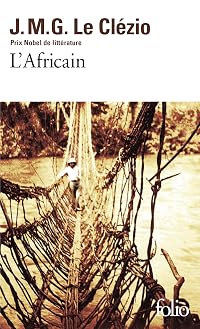
The African
by J.M.G. Le Clézio
On This Page
Description
African is a short autobiographical account of a pivotal moment in Nobel-Prize-winning author J. M. G. Le Clezio's childhood. In 1948, young Le Clezio, with his mother and brother, left behind a still-devastated Europe to join his father, a military doctor in Nigeria, from whom he'd been separated by the war. In Le Clezio's characteristically intimate, poetic voice, the narrative relates both the dazzled enthusiasm the child feels at discovering newfound freedom in the African savannah and show more his torment at discovering the rigid authoritarian nature of his father. The power and beauty of the book reside in the fact that both discoveries occur simultaneously. While primarily a memoir of the author's boyhood, The African is also Le Clezio's attempt to pay a belated homage to the man he met for the first time in Africa at age eight and was never quite able to love or accept. His reflections on the nature of his relationship to his father become a chapeau bas to the adventurous military doctor who devoted his entire life to others. Though the author palpably renders the child's disappointment at discovering the nature of his estranged father, he communicates deep admiration for the man who tirelessly trekked through dangerous regions in an attempt to heal remote village populations. The major preoccupations of Le Clezio's life and work can be traced back to these early years in Africa. The question of colonialism, so central to the author, was a primary source of contention for his father: "Twenty-two years in Africa had inspired him with a deep hatred of all forms of colonialism." Le Clezio suggests that however estranged we may be from our parents, however foreign they may appear, they still leave an indelible mark on us. His father's anti-colonialism becomes The African's legacy to his son who would later become a world-famous champion of endangered peoples and cultures. show lessTags
Recommendations












Member Reviews
This book is an autobiographical sketch that is more than a sketch and it goes beyond an autobiography in a strict sense. The narration crosses over the starting point of the author's life and focuses on the story of another protagonist - the author's father, The African of the title. Then it is not really a biography of the father either, it is rather an attempt to understand this alien figure, almost an enemy, that was abruptly brought into the author's life at the endpoint of his childhood, at the point when memories are no longer lost but are amplified by life lying ahead.
The book starts with these vivid memories of a new place, arrival to Africa of plenty from Europe close to starvation, reunion of the family separated by the long show more years of war. The smells, the colors, the brightness and liberty of the open land are described in a lyrical tone of someone, whose life really started there and then and who later understood and cherished the significance of this moment. Yet, there is darkness and fear present at the same time - the father figure - an angry, pessimistic, irrationally restrictive and brutal person.
The story is transformed into an attempt to understand and explain this person, The African, whose ancestry was European, who was born on Mauritius and who hated colonialism with a passion that defined his life choices, that made him into who he was and led him to a breaking point, from which he was not able to recover.
After receiving his medical degree, The African flees the conformist and stifling society of England to set his foot in Africa for the first time. He detests the colonial culture on the coast of Nigeria and departs inland. He becomes the only doctor in a vast territory of Banso in the mountains of Cameroon. There, together with his wife, he spends the happiest years of his life, filled with meaning and challenge, offering help to those who could not have been helped before.
The birth of children in Europe leads to a presumably short separation that is extended indefinitely by the war. The bitterness takes place of happiness and with it comes the realisation that he himself, an open critic and hater of the colonial policies, is one of those who propagate these policies with his work, who serves on the humanitarian frontlines only to reinforce the inevitable arrival of subjugators and profiteers. From this breaking point, from this loss of meaning he cannot recover, what survives is only a shell of a human being. show less
The book starts with these vivid memories of a new place, arrival to Africa of plenty from Europe close to starvation, reunion of the family separated by the long show more years of war. The smells, the colors, the brightness and liberty of the open land are described in a lyrical tone of someone, whose life really started there and then and who later understood and cherished the significance of this moment. Yet, there is darkness and fear present at the same time - the father figure - an angry, pessimistic, irrationally restrictive and brutal person.
The story is transformed into an attempt to understand and explain this person, The African, whose ancestry was European, who was born on Mauritius and who hated colonialism with a passion that defined his life choices, that made him into who he was and led him to a breaking point, from which he was not able to recover.
After receiving his medical degree, The African flees the conformist and stifling society of England to set his foot in Africa for the first time. He detests the colonial culture on the coast of Nigeria and departs inland. He becomes the only doctor in a vast territory of Banso in the mountains of Cameroon. There, together with his wife, he spends the happiest years of his life, filled with meaning and challenge, offering help to those who could not have been helped before.
The birth of children in Europe leads to a presumably short separation that is extended indefinitely by the war. The bitterness takes place of happiness and with it comes the realisation that he himself, an open critic and hater of the colonial policies, is one of those who propagate these policies with his work, who serves on the humanitarian frontlines only to reinforce the inevitable arrival of subjugators and profiteers. From this breaking point, from this loss of meaning he cannot recover, what survives is only a shell of a human being. show less
In the aftermath of WWII, eight year old J.M.G. Le Clezio left Europe with his mother and brother to join his father in Nigeria. This slim, beautiful volume begins as a memoir of these events, but transforms into a tribute of sorts to Le Clezio’s father, a man whose true nature he came to understand only in writing this remembrance.
Le Clezio’s childhood was divided between the anxiety and deprivations of war-time Europe and the physical freedom of life on the African savannah. Spoiled as a young child by the leniency of his mother and grandmother, he and his brother met their father’s strict authoritativeness with both fear and rebellion. Acting out their rage in childish escapades, they senselessly destroyed termite mounds, show more captured and released cockroaches near their parents’ room, and taunted scorpions.
Le Clezio’s father served as a British army doctor in West Africa for twenty-two years, responsible for providing care throughout a large region. His early years in Africa were full of passion for his wife, medicine, adventure and travel, and an ever-deepening connection with the land and its people. However, his life took on a distressing trajectory when his pregnant wife returned to Europe to give birth and his efforts to join his young family there were blocked by the onset of the war. By the time of his reunification with his family in 1948, he had been profoundly impacted by the years he had lost with them and the stress of practicing medicine in remote areas without needed medicines and supplies. His rigid personal habits and approach to parenting were shaped by his immersion in the African culture and environment, and an aversion to the colonialism which he himself represented.
The narrative begins with Le Clezio’s youthful impressions of Africa, sensations of the immodesty of bodies, the violence of nature, and his resistance to a difficult father who was a stranger to him. But he shifts his primary focus to his parents’ story, delving into their past with respect and sensitivity. As an understanding of his father emerges gradually within the narrative, so does Le Clezio’s acceptance of him as a part of his identity.
Le Clezio’s writing is concise yet densely descriptive, introspective and often poetic. I have loved everything that I have read by this author and this was no exception. show less
Le Clezio’s childhood was divided between the anxiety and deprivations of war-time Europe and the physical freedom of life on the African savannah. Spoiled as a young child by the leniency of his mother and grandmother, he and his brother met their father’s strict authoritativeness with both fear and rebellion. Acting out their rage in childish escapades, they senselessly destroyed termite mounds, show more captured and released cockroaches near their parents’ room, and taunted scorpions.
Le Clezio’s father served as a British army doctor in West Africa for twenty-two years, responsible for providing care throughout a large region. His early years in Africa were full of passion for his wife, medicine, adventure and travel, and an ever-deepening connection with the land and its people. However, his life took on a distressing trajectory when his pregnant wife returned to Europe to give birth and his efforts to join his young family there were blocked by the onset of the war. By the time of his reunification with his family in 1948, he had been profoundly impacted by the years he had lost with them and the stress of practicing medicine in remote areas without needed medicines and supplies. His rigid personal habits and approach to parenting were shaped by his immersion in the African culture and environment, and an aversion to the colonialism which he himself represented.
The narrative begins with Le Clezio’s youthful impressions of Africa, sensations of the immodesty of bodies, the violence of nature, and his resistance to a difficult father who was a stranger to him. But he shifts his primary focus to his parents’ story, delving into their past with respect and sensitivity. As an understanding of his father emerges gradually within the narrative, so does Le Clezio’s acceptance of him as a part of his identity.
It is in writing it down that I now understand. That memory is not mine alone. It is also the memory of the time that preceded my birth, when my mother and father walked together on the highland trails, in the kingdoms of western Cameroon. The memory of my father’s hopes and fears, his loneliness, his distress in Ogoja. The memory of moments of happiness, when my mother and father are united in love that they believe to be eternal.
Le Clezio’s writing is concise yet densely descriptive, introspective and often poetic. I have loved everything that I have read by this author and this was no exception. show less
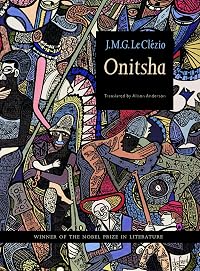
In this brief, haunting, perceptive, and needless to say beautifully written memoir, Le Clézio searches for a way to understand his father's life, and the sharp dividing line World War II created in it. Like the young boy in Onitsha, Le Clézio was born in France at the beginning of the war, while his father was in Africa, and didn't meet him until years later when he, with his mother and slightly older brother (not a character in the novel), rejoined his father in Africa. Unlike the father in the novel, Le Clézio's was French (although born in Mauritius, which at the time was a British colony but had originally been a French one; when he was a boy, the family was evicted from their house and had leave Mauritius) and a doctor.
In the show more first two chapters, Le Clézio describes his own introduction to Africa as an 8-year-old, and it was interesting to read about experiences that were then included, in a transmuted way, in Onitsha.
"So the days in Ogoja had become my treasure, the luminous past that I could not lose. I recalled the blaze of light on the red earth, the sun that cracked the roads, the barefoot race through the savannah all the way to the termite fortresses, the thunderstorms rising in the evening, the nights filled with sounds, with cries, our female cat making love with the tigrillos on the sheet metal roof, the torpor that set in after fever, the cold coming in under the mosquito nets at dawn. All that heat, that burning, that tingling." p. 16
But most of the book is about his father. Offended by the class-conscious rigidity of the British medical establishment, after receiving his medical degree in England he went first to what was then British Guiana and then in 1928 to Africa, to remote regions in Cameroon and Nigeria where he was the only white man and where he was far from colonial outposts and attitudes. Later, after he married Le Clézio's mother, she joined him there, and they would travel by foot and on horseback for days at time. The descriptions of the country and the people are beautiful and fascinating. It was a world as little touched by colonialism as life in a colonized country could be, so Le Clézio's parents experienced the people and their culture as they had more or less always lived. Hating colonialism, they were open to the world they found themselves in.
What Le Clézio explores is how the man who could be so engaged with this "treasure of humanity" could turn into the rigid disciplinarian that Le Clézio experienced when he came to Africa and met his father for the first time. He attributes this first of all to the war. Le Clézio's mother returned to France to give birth to her children and they were stranded there by the war; although his father made a superhuman effort to get to France and bring them back to safety in Africa, he was unable to reach them or communicate with hem and must have lived in an agony of worry. Le Clézio also looks at the position his father was assigned to after the war, closer to colonial centers, not in the remote, freer regions. "Then my father discovered -- after all those years of feeling close to the Africans, like a relative, a friend -- that the doctor was just another instrument of colonial power, no different from the policeman, the judge, or the soldier." And he looks at what it meant, both for him and his father, not to have had those eight years together.
"Things would undoubtedly have been different if there hadn't been the fracture caused by the war, if my father, instead of being faced with children who had become strangers to him, had learned to live in the same house with a baby, if he had been part of the slow process that leads from childhood to the age of reason. That African land in which he had known the happiness of sharing his adventurous life with a woman, in Banso, in Bamenda, was the very same land that had robbed him of a family life and the love of his children." p. 92
Finally, Le Clézio looks briefly at some postcolonial struggles, including the horrors of the Biafran war, which took place in areas he was familiar with, and then examines how his own experiences in Africa as a young boy formed his personality and interests.
"I am forever yearning to go back to Africa, to my childhood memory. To the source of my feelings, to that which molded my character. The world changes, it's true, and the boy who is standing over there on the plain amidst the tall grasses in the hot breath of wind bearing the odors of the savannah, the shrill sound of the forest, the boy feeling the dampness of the sky and the clouds upon his lips, that boy is so far from me that no story, no journey will ever make it possible for me to reach him again. p. 102
This book is enhanced by wonderful old photographs taken by Le Clézio's parents and is printed on much heavier paper than is common these days; it is a lovely example of thoughtful printing. And so I was shocked and disappointed at one error that leaped out at me, when the publisher failed to notice that at one point the text reads "Port Harbor" when it means "Port Harcourt." show less
In the show more first two chapters, Le Clézio describes his own introduction to Africa as an 8-year-old, and it was interesting to read about experiences that were then included, in a transmuted way, in Onitsha.
"So the days in Ogoja had become my treasure, the luminous past that I could not lose. I recalled the blaze of light on the red earth, the sun that cracked the roads, the barefoot race through the savannah all the way to the termite fortresses, the thunderstorms rising in the evening, the nights filled with sounds, with cries, our female cat making love with the tigrillos on the sheet metal roof, the torpor that set in after fever, the cold coming in under the mosquito nets at dawn. All that heat, that burning, that tingling." p. 16
But most of the book is about his father. Offended by the class-conscious rigidity of the British medical establishment, after receiving his medical degree in England he went first to what was then British Guiana and then in 1928 to Africa, to remote regions in Cameroon and Nigeria where he was the only white man and where he was far from colonial outposts and attitudes. Later, after he married Le Clézio's mother, she joined him there, and they would travel by foot and on horseback for days at time. The descriptions of the country and the people are beautiful and fascinating. It was a world as little touched by colonialism as life in a colonized country could be, so Le Clézio's parents experienced the people and their culture as they had more or less always lived. Hating colonialism, they were open to the world they found themselves in.
What Le Clézio explores is how the man who could be so engaged with this "treasure of humanity" could turn into the rigid disciplinarian that Le Clézio experienced when he came to Africa and met his father for the first time. He attributes this first of all to the war. Le Clézio's mother returned to France to give birth to her children and they were stranded there by the war; although his father made a superhuman effort to get to France and bring them back to safety in Africa, he was unable to reach them or communicate with hem and must have lived in an agony of worry. Le Clézio also looks at the position his father was assigned to after the war, closer to colonial centers, not in the remote, freer regions. "Then my father discovered -- after all those years of feeling close to the Africans, like a relative, a friend -- that the doctor was just another instrument of colonial power, no different from the policeman, the judge, or the soldier." And he looks at what it meant, both for him and his father, not to have had those eight years together.
"Things would undoubtedly have been different if there hadn't been the fracture caused by the war, if my father, instead of being faced with children who had become strangers to him, had learned to live in the same house with a baby, if he had been part of the slow process that leads from childhood to the age of reason. That African land in which he had known the happiness of sharing his adventurous life with a woman, in Banso, in Bamenda, was the very same land that had robbed him of a family life and the love of his children." p. 92
Finally, Le Clézio looks briefly at some postcolonial struggles, including the horrors of the Biafran war, which took place in areas he was familiar with, and then examines how his own experiences in Africa as a young boy formed his personality and interests.
"I am forever yearning to go back to Africa, to my childhood memory. To the source of my feelings, to that which molded my character. The world changes, it's true, and the boy who is standing over there on the plain amidst the tall grasses in the hot breath of wind bearing the odors of the savannah, the shrill sound of the forest, the boy feeling the dampness of the sky and the clouds upon his lips, that boy is so far from me that no story, no journey will ever make it possible for me to reach him again. p. 102
This book is enhanced by wonderful old photographs taken by Le Clézio's parents and is printed on much heavier paper than is common these days; it is a lovely example of thoughtful printing. And so I was shocked and disappointed at one error that leaped out at me, when the publisher failed to notice that at one point the text reads "Port Harbor" when it means "Port Harcourt." show less
Ensaio auto-biográfico sobre a infância de Le Clézio, em Nice e depois na Nigéria, e da vida de seu pai. Enquanto procura entender como seu pai se tornou um homem tão rígido após anos como médico, primeiro na Guiana, depois em várias regiões da África, Le Clézio rejeita os clichês da literatura colonialista e fala de sua infância selvagem com a nostalgia dos que viveram em países que deixaram de existir, como Sándor Márai falava de Budapeste ou Nabokov da casa paterna.
Le père de J-M G Le Clézio dans sa vie africaine
Searching for one's father's image.
2015
https://www.librarything.com/topic/191940#5250844
(link goes to an LT page with my positive, but brief comments)
https://www.librarything.com/topic/191940#5250844
(link goes to an LT page with my positive, but brief comments)
Members
- Recently Added By
Lists

Top Five Books of 2015
811 works; 241 members

Best African Books
126 works; 46 members

2000s (the decade, not the century)
184 works; 11 members

Best Contemporary Literary Fiction (Around the Last 30 Years)
388 works; 124 members

Best 21st Century Books (So Far)
670 works; 86 members
Author Information

122+ Works 6,320 Members
Jean-Marie Gustave Le Clézio, who was born in Nice, France on April 13, 1940, is usually identified as J. M. G. Le Clézio. After studying at the University of Bristol in England from 1958 to 1959, he finished his undergraduate degree at Institut d'etudes Litteraires in Nice. In 1964, he received a master's degree from the University of show more Aix-en-Provence with a thesis on Henri Michaux and wrote a doctoral thesis in 1983 on Mexico's early history for the University of Perpignan. He has taught at numerous universities throughout the world and has written around 30 books including novels, essays, and short stories. He received the Prix Renaudot Prize for his novel Le Procès-Verbal in 1963 and the Nobel Prize for Literature in 2008. (Bowker Author Biography) show less
Some Editions
Awards and Honors
Awards
Series
Belongs to Publisher Series
Gallimard, Folio (4250)
Common Knowledge
- Canonical title
- The African
- Original title
- L'Africain
- Alternate titles
- The African
- Original publication date
- 2004-05-04
- People/Characters
- J. M. G. Le Clézio; Raoul Le Clézio; Simone Le Clézio
- Important places
- Nigeria
- Original language*
- Français
*Some information comes from Common Knowledge in other languages. Click "Edit" for more information.
Classifications
Statistics
- Members
- 405
- Popularity
- 76,804
- Reviews
- 19
- Rating
- (3.56)
- Languages
- 14 — Catalan, Danish, Dutch, English, French, German, Hungarian, Italian, Japanese, Norwegian (Bokmål), Norwegian, Portuguese, Spanish, Swedish
- Media
- Paper, Audiobook, Ebook
- ISBNs
- 30
- ASINs
- 9