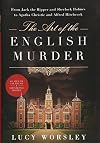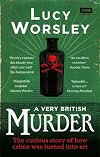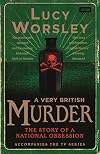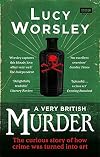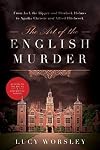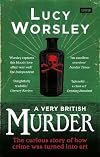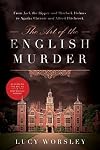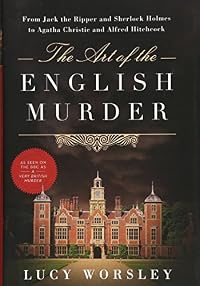
The Art of the English Murder: From Jack the Ripper and Sherlock Holmes to Agatha Christie and Alfred Hitchcock
by Lucy Worsley
On This Page
Description
Murder: a dark, shameful deed, the last resort of the desperate or a vile tool of the greedy-and a very strange, very English obsession. But where did this fixation develop? And what does it tell us about ourselves? In The Art of the English Murder, Lucy Worsley explores this phenomenon in forensic detail, revisiting notorious crimes like the Ratcliff Highway Murders, which caused a nationwide panic in the early nineteenth century, and the case of Frederick and Maria Manning, the suburban show more couple who were hanged after killing Maria's lover and burying him under their kitchen floor. Our fascination with crimes like these became a form of national entertainment, inspiring novels and plays, prose and paintings, poetry and true-crime journalism. The Art of the English Murder is a unique exploration of the art of crime-and a riveting investigation into the English criminal soul. show lessTags
Recommendations

Member Recommendations
Member Reviews
Lucy Worsley is a treat: a historian who gets across actual bits of history whilst being damned entertaining. This is a tour through British history from the 1700s to the mid-1900s that dually talks about how the populace processed actual murder and how it became entertainment, the actual press reports and the fictional variant. Detective fiction arose out of this, and she spends a lot of time on that. Holmes is a big bit, so is Christie, but she brings in lots of less-read and forgotten detective fiction writers. Even Morse gets a passing mention (p. 160). All-in-all, an enjoyable and intellectual romp through our fascination with murder.
This book is a tour of the evolution of detective fiction in Britain, letting the reader catch glimpses of the evolution of society and attitudes towards criminals, literary history and true crime.
We start of in a rather sarcastic manner, as the author introduces “the business of enjoying a murder. And a large-scale, profitable and commercial business it was, too.” This business and the “art” of murder are reflections of society’s darkness, of course.
There were lots of facts and details that I enjoyed learning about very much (despite the horrific true crime stuff). In the 19th century, you could tour the places where (in)famous crimes had been committed and buy rather gruesome souvenirs. I had heard of “Penny show more Dreadfuls”, but not their predecessors, “Penny Bloods”. Apparently, Edward Bulwer-Lyton of the “it was a dark and stormy night” fame began his career by writing those. Etc, etc, etc…
Female detectives in fiction appeared much earlier than I thought. 1841! Can you imagine!? There were also several books published in 1860’s that featured female detectives (and some lovely moments of emancipation). So cool!
It was also very enjoyable to read about the “Golden Age” of detective stories, about its appeal and the stories’ flaws. It reminded me of authors I used to enjoy (G.K. Chesterton) and authors that did not impress, yet I wondered if I should give them another chance (Dorothy L. Sayers).
The detractors of detective fiction have a point, of course, in satirising “the business of enjoying a murder”. Yet what is a detective story, really? It is seeing the order being restored in the world; seeing the triumph of good over evil. Isn’t this the most comforting genre imaginable? show less
We start of in a rather sarcastic manner, as the author introduces “the business of enjoying a murder. And a large-scale, profitable and commercial business it was, too.” This business and the “art” of murder are reflections of society’s darkness, of course.
There were lots of facts and details that I enjoyed learning about very much (despite the horrific true crime stuff). In the 19th century, you could tour the places where (in)famous crimes had been committed and buy rather gruesome souvenirs. I had heard of “Penny show more Dreadfuls”, but not their predecessors, “Penny Bloods”. Apparently, Edward Bulwer-Lyton of the “it was a dark and stormy night” fame began his career by writing those. Etc, etc, etc…
Female detectives in fiction appeared much earlier than I thought. 1841! Can you imagine!? There were also several books published in 1860’s that featured female detectives (and some lovely moments of emancipation). So cool!
It was also very enjoyable to read about the “Golden Age” of detective stories, about its appeal and the stories’ flaws. It reminded me of authors I used to enjoy (G.K. Chesterton) and authors that did not impress, yet I wondered if I should give them another chance (Dorothy L. Sayers).
The detractors of detective fiction have a point, of course, in satirising “the business of enjoying a murder”. Yet what is a detective story, really? It is seeing the order being restored in the world; seeing the triumph of good over evil. Isn’t this the most comforting genre imaginable? show less
As Ms. Worsley sets out to explain, the modern-day fascination with murder mysteries and sensational headlines is nothing new. In fact, it has a long history of popularity among newspaper headlines and popular literature. In The Art of the English Murder, Ms. Worsley explores how changes in English society created a larger interest in such gruesome crimes and how the attraction found its way into literature.
Divided into various eras, The Art of the English Murder starts with a discussion of the Ratcliff Highway Murders and Thomas de Quincey’s tongue-in-cheek admiration of it and ends with Alfred Hitchcock and the thriller novel. Along the way, in addition to exploring other popular murderers and their crimes, Ms. Worsley explains this show more fascination as a direct result of other outside forces. For the Ratcliff Highway murders, they captured people’s interest not because it was a novel crime but because a shift away from an agrarian society caused greater numbers of people inhabiting the cities. A larger number of strangers congregating in one area meant that it was easy for a criminal to slip in among them unnoticed. In other words, it was one of the first examples where the murderer could have been anyone and caused a sensation of fear and panic among citizens. Similarly, the creation of police departments and especially detectives gave rise to the detective novel, while post-war mysteries became popular because they were neat little puzzles properly solved by the end of the novel and as far removed from the brutalities of war as one could get. As English society shifted from isolated villages to a connectedness previously unimaginable, so too did the murder mystery.
Along with highlighting famous murders that were frequently used by writers as inspiration, Ms. Worsley also highlights those authors who so influenced the genre. Everyone from Charles Dickens, Wilkie Collins, and Sir Arthur Conan Doyle to Dorothy Sayers and Agatha Christie get a nod as they each changed the face of murder literature for their generation. Ms. Worsley makes her connections between fact and fiction eruditely, drawing on detailed research, historical documentation, and other interviews and biographies needed to expound upon her subject matter. Into it all, Ms. Worsley introduces a breezy writing style that is enjoyable in spite of the gloomy topic.
The Art of the English Murder is a great way to sit down and reflect on the ever-changing novel and society’s influence on those changes. Modern readers may find it completely unimaginable that everyday citizens not only flocked to crime scenes but were also permitted free access to them, with the ability to even view the corpse. At the same time, life without a police force or detective department is a foreign concept indeed. Yet, these situations did exist, and the murder mystery novel had to adjust to each change in attitude and crime scene detection. Ms. Worsley brings the evolution of this popular genre into greater focus through her sometimes amusing jaunts into history. show less
Divided into various eras, The Art of the English Murder starts with a discussion of the Ratcliff Highway Murders and Thomas de Quincey’s tongue-in-cheek admiration of it and ends with Alfred Hitchcock and the thriller novel. Along the way, in addition to exploring other popular murderers and their crimes, Ms. Worsley explains this show more fascination as a direct result of other outside forces. For the Ratcliff Highway murders, they captured people’s interest not because it was a novel crime but because a shift away from an agrarian society caused greater numbers of people inhabiting the cities. A larger number of strangers congregating in one area meant that it was easy for a criminal to slip in among them unnoticed. In other words, it was one of the first examples where the murderer could have been anyone and caused a sensation of fear and panic among citizens. Similarly, the creation of police departments and especially detectives gave rise to the detective novel, while post-war mysteries became popular because they were neat little puzzles properly solved by the end of the novel and as far removed from the brutalities of war as one could get. As English society shifted from isolated villages to a connectedness previously unimaginable, so too did the murder mystery.
Along with highlighting famous murders that were frequently used by writers as inspiration, Ms. Worsley also highlights those authors who so influenced the genre. Everyone from Charles Dickens, Wilkie Collins, and Sir Arthur Conan Doyle to Dorothy Sayers and Agatha Christie get a nod as they each changed the face of murder literature for their generation. Ms. Worsley makes her connections between fact and fiction eruditely, drawing on detailed research, historical documentation, and other interviews and biographies needed to expound upon her subject matter. Into it all, Ms. Worsley introduces a breezy writing style that is enjoyable in spite of the gloomy topic.
The Art of the English Murder is a great way to sit down and reflect on the ever-changing novel and society’s influence on those changes. Modern readers may find it completely unimaginable that everyday citizens not only flocked to crime scenes but were also permitted free access to them, with the ability to even view the corpse. At the same time, life without a police force or detective department is a foreign concept indeed. Yet, these situations did exist, and the murder mystery novel had to adjust to each change in attitude and crime scene detection. Ms. Worsley brings the evolution of this popular genre into greater focus through her sometimes amusing jaunts into history. show less
How did we come to a place where crime is entertainment? It's a really good question. Short answer: as the odds of certain risks (murder) go down, fascination with it goes up. Well, Worsley wrote a whole book explaining it better that that, and a very entertaining book it is, tracing the rise of newspapers, fictional detectives, the golden age of crime writing. I particularly enjoy the history of policing and detection, but it's all good.
Library copy
Library copy
Lucy Worsley looks at murder as entertainment through true crime and fiction from Thomas De Quincey's 1827 essay on the public reaction to the Ratcliffe Highway Murders in 1811 to the shift from the puzzles of Golden Age fiction to the more noir-ish post WWII scene.
Fascinating, though I wish she'd carried on up to the present and there were some parts where it was a little too obvious this was the book of the TV series rather than something that stood on its own merits. So, I may well watch the series, which appears to be available on YouTube.
Fascinating, though I wish she'd carried on up to the present and there were some parts where it was a little too obvious this was the book of the TV series rather than something that stood on its own merits. So, I may well watch the series, which appears to be available on YouTube.
The subtitle on my book says "The curious story of how crime was turned into art", while LT's subtitle is "The story of a national obsession". Either fits, as this is historian Worsley's study of infamous British murders that caught the public attention, making both victim and murderer famous.
Worsley discusses famous cases such as the Red Barn Murder and the Madeleine Smith poisoning, and the formation of the Metropolitan Police and rise of crime detectives such as Mr. Wicher. And she discusses how death or murder became a form of entertainment, whether it was the real public executions or detective novels.
Worsley discusses famous cases such as the Red Barn Murder and the Madeleine Smith poisoning, and the formation of the Metropolitan Police and rise of crime detectives such as Mr. Wicher. And she discusses how death or murder became a form of entertainment, whether it was the real public executions or detective novels.
This is the second of this author's works I have read. She has an easy to read style with a slight quirkiness, reminiscent of her presentation style on TV. I haven't seen the TV programme/series on which this book was based, but can envisage it from the structure of this book and the general style in which it comes across.
I was surprised initially by the fact that the first few chapters were about real life murders a couple of centuries ago and the reporting of such in the news sheets of the day, rather than the literary treatment of the subject. But that soon started to interweave with the factual material in the narrative. The author's theme is that the British came to 'consume' the subject of murder for entertainment, initially in show more cheap broadsheets, and later on in Penny Bloods and Penny Dreadfuls, cheap forerunners of the paperback of the 20th century. The growth of literacy in the 19th century led to a pulpish, sensational style of literature for the working masses. Initially there was also a theatrical style of entertainment - the melodrama - with its overacting and dramatic makeup, intended to make the actor's facial expressions visible to packed audiences in large auditoriums. Such plays often took for their subject matter the celebrated murders of the day, such as the Murder in the Red Barn, but this style of drama gradually gave way to a more highbrow theatre clientele, as the book explains, leading the less well off to attend the music halls instead. These were venues for light entertainment, so literature, in the form of Penny Bloods/Dreadfuls and the 'sensation' novel were left to provide people with their murder 'entertainment'.
An interesting point made by the author was that the unsolved 'Jack the Ripper' murders followed close on the opening of a stage adaptation of Robert Louis Stephenson's Doctor Jekyll and Mister Hyde. She suggests that the subsequent theories about the crimes, which focus on privileged members of society, such as the Duke of Clarence, instead of considering that the perpretrator was a working class man native to the area, stem from perceptions originating from this drama which caused a huge sensation at the time.
I had previously read about some of the celebrated cases covered - the murders on the Ratcliffe Highway and the Red Barn and the one which formed the subject of 'The Suspicions of Mr Whicher' - but the author also draws upon cases now less known, and describes the development of the police force and crime investigation. After discussion of Arthur Conan Doyle's, Charles Dickens' and Wilkie Collins' contributions to the fictional portrayal of detectives, the book considers the Four Queens of Crime of the interwar period, which has become known as the Golden Age of crime fiction. Of those, I have read only Agatha Christie, as the upper class sleuths in the works of Dorothy L Sayers, for instance, have never appealed. Detective fiction at this time championed the type of story which has now become known as 'cosy crime', although the author never calls it this, investigated by private and/or amateur sleuths. The book concludes with the decline of this type of crime fiction and its replacement by hard boiled stories by the likes of Raymond Chandler in the USA, and thriller writers such as Ian Fleming.
I enjoyed the book though there are some odd omissions, such as there being no mention of Edgar Alan Poe's 'The Murders in the Rue Morge', during the discussion of what constituted the earliest detective fictional work. First published in 1841, that story preceded the portrayals in Dickens' and Collins' works by over ten years, and is generally considered to be the first modern detective story. Similarly, when dealing with techonological progress in crime fighting, the development of telegraphy is not mentioned, even though it was responsible for the capture of the notorious Dr Crippen, who again is not mentioned. Also, the writer does unfortunately include 'spoilers' about certain fictional works - luckily, I had already read some of those but that wasn't always the case.
There are some useful sources mentioned for further reading and the author does acknowledge her debt to earlier writers about crime fiction. I would certainly like to follow up some of these references. But given the slightly uneven treatment of the subject, I would rate the book as an enjoyable 3 star read. show less
I was surprised initially by the fact that the first few chapters were about real life murders a couple of centuries ago and the reporting of such in the news sheets of the day, rather than the literary treatment of the subject. But that soon started to interweave with the factual material in the narrative. The author's theme is that the British came to 'consume' the subject of murder for entertainment, initially in show more cheap broadsheets, and later on in Penny Bloods and Penny Dreadfuls, cheap forerunners of the paperback of the 20th century. The growth of literacy in the 19th century led to a pulpish, sensational style of literature for the working masses. Initially there was also a theatrical style of entertainment - the melodrama - with its overacting and dramatic makeup, intended to make the actor's facial expressions visible to packed audiences in large auditoriums. Such plays often took for their subject matter the celebrated murders of the day, such as the Murder in the Red Barn, but this style of drama gradually gave way to a more highbrow theatre clientele, as the book explains, leading the less well off to attend the music halls instead. These were venues for light entertainment, so literature, in the form of Penny Bloods/Dreadfuls and the 'sensation' novel were left to provide people with their murder 'entertainment'.
An interesting point made by the author was that the unsolved 'Jack the Ripper' murders followed close on the opening of a stage adaptation of Robert Louis Stephenson's Doctor Jekyll and Mister Hyde. She suggests that the subsequent theories about the crimes, which focus on privileged members of society, such as the Duke of Clarence, instead of considering that the perpretrator was a working class man native to the area, stem from perceptions originating from this drama which caused a huge sensation at the time.
I had previously read about some of the celebrated cases covered - the murders on the Ratcliffe Highway and the Red Barn and the one which formed the subject of 'The Suspicions of Mr Whicher' - but the author also draws upon cases now less known, and describes the development of the police force and crime investigation. After discussion of Arthur Conan Doyle's, Charles Dickens' and Wilkie Collins' contributions to the fictional portrayal of detectives, the book considers the Four Queens of Crime of the interwar period, which has become known as the Golden Age of crime fiction. Of those, I have read only Agatha Christie, as the upper class sleuths in the works of Dorothy L Sayers, for instance, have never appealed. Detective fiction at this time championed the type of story which has now become known as 'cosy crime', although the author never calls it this, investigated by private and/or amateur sleuths. The book concludes with the decline of this type of crime fiction and its replacement by hard boiled stories by the likes of Raymond Chandler in the USA, and thriller writers such as Ian Fleming.
I enjoyed the book though there are some odd omissions, such as there being no mention of Edgar Alan Poe's 'The Murders in the Rue Morge', during the discussion of what constituted the earliest detective fictional work. First published in 1841, that story preceded the portrayals in Dickens' and Collins' works by over ten years, and is generally considered to be the first modern detective story. Similarly, when dealing with techonological progress in crime fighting, the development of telegraphy is not mentioned, even though it was responsible for the capture of the notorious Dr Crippen, who again is not mentioned. Also, the writer does unfortunately include 'spoilers' about certain fictional works - luckily, I had already read some of those but that wasn't always the case.
There are some useful sources mentioned for further reading and the author does acknowledge her debt to earlier writers about crime fiction. I would certainly like to follow up some of these references. But given the slightly uneven treatment of the subject, I would rate the book as an enjoyable 3 star read. show less
Members
- Recently Added By
Author Information

40+ Works 4,164 Members
Lucy Worsley, Ph.D., is Chief Curator at Historic Royal Palaces, the charity that manages the Tower of London, Hampton Court Palace, Kensington Palace, the Banqueting House in Whitehall, and Kew Palace in England. Please visit www.lucyworsley.com.
Some Editions
Awards and Honors
Common Knowledge
- Original title
- A Very British Murder: The Story of a National Obsession
- Alternate titles
- A Very British Murder: The Curious Story of How Crime Was Turned Into Art
- Original publication date
- 2013-09-12
- Important places
- United Kingdom
- Related movies
- A Very British Murder with Lucy Worsley (2013 | IMDb)
- Epigraph
- "There's a scarlet thread of murder running through the colourless skein of life, and our duty is to unravel it, and isolate, and expose every inch of it."
Sherlock Holmes - Dedication
- I dedicate this book with love to Mark Hines, who will be glad when we no longer share our house with a horde of murderers. (from the Acknowledgements)
- First words
- In his essay 'Decline of the English Murder', George Orwell describes for us the most satisfying kind of killer.
- Last words
- (Click to show. Warning: May contain spoilers.)As the mystery novelist C. H. B. Kitchin presciently put it in 1939:
If he wishes to study the manners of our age ... a historian of the future will probably turn, not to blue books and statistics, but to detective stories. - Blurbers
- Dent, Grace; Fraser, Anonia
Classifications
- Genres
- Nonfiction, Literature Studies and Criticism, History, General Nonfiction
- DDC/MDS
- 364.15230942 — Society, Government, and Culture Social problems and social services Crime Criminal offenses Offenses against the person Homicide Murder History, geographic treatment, biography Europe England & Wales
- LCC
- HV6535 .G4 .W67 — Social sciences Social pathology. Social and public welfare. Criminology Social pathology. Social and public welfare. Criminology Crimes and offenses
- BISAC
Statistics
- Members
- 485
- Popularity
- 62,210
- Reviews
- 29
- Rating
- (3.76)
- Languages
- English
- Media
- Paper, Audiobook, Ebook
- ISBNs
- 11
- ASINs
- 3