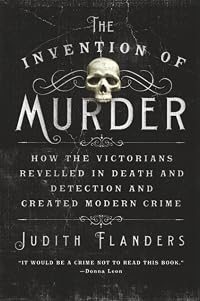
The Invention of Murder: How the Victorians Revelled in Death and Detection and Created Modern Crime
by Judith Flanders 
On This Page
Description
In this fascinating exploration of murder in nineteenth century England, Judith Flanders examines some of the most gripping cases that captivated the Victorians and gave rise to the first detective fiction. Murder in the nineteenth century was rare. But murder as sensation and entertainment became ubiquitous, with cold-blooded killings transformed into novels, broadsides, ballads, opera, and melodrama-even into puppet shows and performing dog-acts. Detective fiction and the new police force show more developed in parallel, each imitating the other-the founders of Scotland Yard gave rise to Dickens's Inspector Bucket, the first fictional police detective, who in turn influenced Sherlock Holmes and, ultimately, even P. D. James and Patricia Cornwell. In this meticulously researched and engrossing book, Judith Flanders retells the gruesome stories of many different types of murder in Great Britain, both famous and obscure: from Greenacre, who transported his dismembered fiancée around town by omnibus, to Burke and Hare's bodysnatching business in Edinburgh; from the crimes (and myths) of Sweeney Todd and Jack the Ripper, to the tragedy of the murdered Marr family in London's East End. Through these stories of murder-from the brutal to the pathetic-Flanders builds a rich and multi-faceted portrait of Victorian society in Great Britain. show lessTags
Recommendations
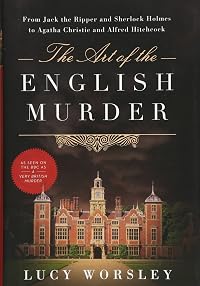
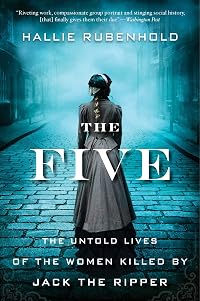
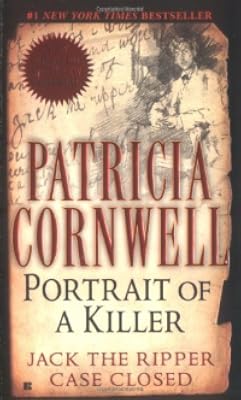
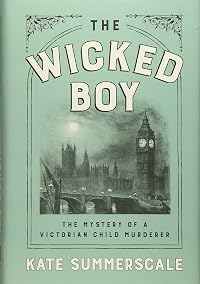




Member Recommendations
Member Reviews
"Perhaps things change less than one thinks," writes Judith Flanders in The Invention of Murder (page 430 fn). Although the footnote refers to just one similarity between the Victorian press and the modern BBC, this footnote is the hallmark of the book. Flanders in no way belabors the similarities between Victorian sensation-seeking and the modern journalism, but the similarities are there to see throughout this book. (Note, references throughout are to pages of the first hardcover edition.)
The "Cold Bath Field riot" of 1833, when newly formed police brigades moved in with brutal force to disperse a London crowd of protesting workers calling themselves the "National Political Union" (page 79). How much does this resemble modern-day show more police crowd "control" at political conventions and throughout the Occupy Movement?
For a hanging in November 1849, "estimates of the numbers present ranged widely, from 30,000 to 50,000"; and for a public execution in 1859, a Liberal paper saw "several hundred" in attendance while a Tory chronicle estimated 12,000 t0 15,000 (page 170 and 170 fn). Crowd estimates are no more accurate today, with police reports minimizing the size and organizers' claims maximizing the estimates.
The Victorian police were no strangers to entrapment and the use of provocateurs (page 428), just as today's FBI seemingly invents "terrorist" prosecutions; and the Victorian press was as quick to complain of being "shut out" of investigations as is any modern-day police-beat reporter (id).
Flanders barely ever takes note of these similarities between the Victorian and modern eras, but the resemblances are all the more fascinatingly obvious for her not belaboring the point.
This book will be particularly interesting to a reader with an interest in the Victorian novel. Dickens, Wilkie Collins, and Mary Elizabeth Braddon make frequent appearances along with cameos from Elizabeth Gaskell and George Eliot, Margaret Oliphant and Charlotte Yonge. The comprehensive index will make The Invention of Murder a valuable tool of literary research, especially as to Dickens (and note that one fascinating Dickens reference, page 25 fn, involving the phrase "postponed pork" in Our Mutual Friend, seems to have been inadvertently omitted from the index).
In addition to the comprehensive index, the book also includes forty-seven pages of endnotes of supporting references (the occasional textual footnote being for parenthetical comments) along with an extensive bibliography
My only complaint is that there are numerous names of criminals, victims, and other characters who will not necessarily be familiar to a modern reader. Although the index is comprehensive, Flanders might have been well-advised to have also included a glossary of the criminal cases. show less
The "Cold Bath Field riot" of 1833, when newly formed police brigades moved in with brutal force to disperse a London crowd of protesting workers calling themselves the "National Political Union" (page 79). How much does this resemble modern-day show more police crowd "control" at political conventions and throughout the Occupy Movement?
For a hanging in November 1849, "estimates of the numbers present ranged widely, from 30,000 to 50,000"; and for a public execution in 1859, a Liberal paper saw "several hundred" in attendance while a Tory chronicle estimated 12,000 t0 15,000 (page 170 and 170 fn). Crowd estimates are no more accurate today, with police reports minimizing the size and organizers' claims maximizing the estimates.
The Victorian police were no strangers to entrapment and the use of provocateurs (page 428), just as today's FBI seemingly invents "terrorist" prosecutions; and the Victorian press was as quick to complain of being "shut out" of investigations as is any modern-day police-beat reporter (id).
Flanders barely ever takes note of these similarities between the Victorian and modern eras, but the resemblances are all the more fascinatingly obvious for her not belaboring the point.
This book will be particularly interesting to a reader with an interest in the Victorian novel. Dickens, Wilkie Collins, and Mary Elizabeth Braddon make frequent appearances along with cameos from Elizabeth Gaskell and George Eliot, Margaret Oliphant and Charlotte Yonge. The comprehensive index will make The Invention of Murder a valuable tool of literary research, especially as to Dickens (and note that one fascinating Dickens reference, page 25 fn, involving the phrase "postponed pork" in Our Mutual Friend, seems to have been inadvertently omitted from the index).
In addition to the comprehensive index, the book also includes forty-seven pages of endnotes of supporting references (the occasional textual footnote being for parenthetical comments) along with an extensive bibliography
My only complaint is that there are numerous names of criminals, victims, and other characters who will not necessarily be familiar to a modern reader. Although the index is comprehensive, Flanders might have been well-advised to have also included a glossary of the criminal cases. show less
This is a solid work of history that looks at how crimes were interpreted in popular culture and then used in literature to create our modern fascination with violence and detection in the era between the Ratcliffe Highway Murders (1811) and the Jack the Ripper phenomenon at century's end.
Flanders adopts a somewhat pedestrian approach in which the crime is summarised, the popular response to the crime outlined and reference made to its influence on literature, with side comments on contemporary policing and changes in cultural attitudes to perpetrator and victim.
As a compendium, it is very useful, almost encyclopedic, but as analysis, it is frustrating - partly because the amount of interpretation is actually quite limited. We are left show more with a great deal of data over 466 pages with voluminous foot notes but it comes across as something closer to a catalogue.
If the message is a simple one that the crime fiction that emerged in the twentieth century had a history in the nineteenth century, then it does its job well. This collection of crimes and socio-cultural responses to crime is not more than that in itself but this does not make it less useful.
Tribute has be paid to Flanders' very diligent engagement with the archives and with the detail of what she describes. She is a very fine researcher and historian. You find yourself trusting her judgements accordingly. As such, this is a valuable addition to the cultural history of the Victorians.
However, because of the way it is written, we have to draw our own conclusions on what we can learn from the book. What I learned most of all was that Victorian society was not so very different from ours in its taste for quick judgements, outrage and celebrity culture.
It also reminded me that the law is not justice and that senior figures in any establishment cannot be presumed to be capable of critical thinking or to be remarkably intelligent in their own right. It confirms my picture of society blundering forwards, improved by technology rather than nature.
There are one or two heartbreaking tales of injustice but also some corrective to the idea that Victorian society was intrinsically brutal. What does come across is a callousness at times but, honestly, not much different from that in our own times if we look hard enough.
Indeed, the very low murder rates at the beginning of the period are quite surprising and not (in my opinion) to be put down simply to the death penalty. This is where we could do with more analysis about why the criminological situation in the Victorian period was as it was.
But that is not this book. This book is probably more useful to literary and cultural types wanting background to works they know and love and insights into a lost popular culture, much of which was not recorded as ephemeral. Flanders' detective work here is exemplary.
It is not as if the emergence of television has created 'shows' about 'reality' out of the blue. The world before these media had a range of outlets for working class tastes based on the technology of the day - printed ephemera, street singers, instant playlets in sheds, touring shows and so forth.
These too had their standard formats (much as popular TV does today) expressed in such cultural inventions as the 'last confession' (often invented) or the entire melodramatic style of theatre which we may laugh at now but which had its rules no less than Kabuki or No drama.
Melodrama's form may be predictable and unrelated to reality but its performances could take real events in the world, notably heinous crimes, and interpret them as uncomplicated moral dramas where the skill lay in the application of the melodramatic style to reinterpreted facts.
This is not really so far from a lot of apparently more sophisticated BBC Drama today which may not be melodramatic but is not afraid of giving the population what they want (or what the BBC thinks they should want) in terms of moral and cultural outcomes within fixed forms.
What really strikes the reader perhaps is just how much ostensible 'fact' about criminal activity was invented. To the extent that one soon realises that the facts in legal and police responses to a crime often seemed to be less important than imputing some meaning or resolution to them.
The book is about the sustained invention of narrative not only in popular culture but in the news industry as it transformed itself from instant broadside pamphlets in the early part of the century to be sold at mass attendances of hangings through to the era of Harmsworth and W T Stead.
The sheer amount of lies and invention in the latter in order to drive circulation figures and the concentration on false and shifting narratives would be shocking if were not living through (as I write this) the 2019 UK General Election where much the same still goes on.
Of course, broadcast journalists cannot quite get away with the lies they did then and there are legally enforceable rules in court cases now but the drive for a narrative regardless of reality and a lack of interest in the complexity of any situation means that journalists are still just story tellers.
Just as law should not be confused with justice but only as a clumsy attempt to do the best to approximate one with the other, so news organisation should not be confused with truth telling even if there is the same clumsy attempt to approximate the two.
Lawyers and journalists are sincere enough in their drive to maintain the law and tell the truth as they see it but the structures of their 'industries' prioritise things in such a way that it will always be an approximation - the law can be an ass and a story is not always the truth.
Flanders' book (though she does not state this) is probably most useful in giving us some of the early history of a process by which middle class professionals emerge with aproximations of the 'good' which are still flawed because of the structures required to maintain status and income.
The usual (and not stupid) response of many Victorian intellectuals and artists - such as, say, the Pre-Raphaelites - was to ask the middle classes to be 'more Christian'. Dickens' art was to falsify into some sort of truth in terms of moral good. But all this is still story telling.
A similar tale might be told of doctors. More might be said about law enforcers or politicians or civil servants. What we have is the slow paradoxical dialectic in which the professionalisation of society simultaneously improves 'approximation' yet makes a detachment from the 'good' structural.
Perhaps this book confirms us in the view that the more things change (and they do change considerably over the period), the more some things stay the same, notably the wider public hunger for sensation regardless of reality and the inability of the middle classes ever to be truly good.
Anyone interested in Victorian literature should definitely read this book because it is there that it is probably most consistently creative and informative. Above all, Flanders gives us useful sourcing for some themes in major works of the period and neatly weakens many claims of being 'firsts'.
'Nothing can come out of nothing' and some of our most significant works of literature related to crime and detection have precursors and influencers that are best acknowledged without in any way diminishing the achievements of such great writers as Wilkie Collins and Conan Doyle.
Flanders also raises many doubts about the reliability of accounts of real crimes. Law enforcers themselves are unreliable witnesses. Legal counsel could often be less than competent. Newspapers, as we have noted, never feared to invents facts or make accusatory claims if it sold copies.
The whole period looks like a fantastic miasma of myth-making and half-truths, rarely designed to provide justice for the individuals involved in the crime, whether alleged perpetrator or undoubted victims and their dependants, and much more a form of social performance art.
One of the more 'shocking' aspects of the period is the competition to buy up the possessions of the murdered and the murderer so that often the person who uncovered a crime went unrewarded and the acquitted but villainous perpetrator could do quite nicely, thank you.
Flanders also points out, without trying to make political points, that class was a significant element in how crimes were treated although the bias appears to be cultural and unconscious rather than 'ancien regime'.
Saddest are the cases of the poor not being able to afford defence counsel and being sentenced to hang on weak circumstantial evidence that a middle class counsel would easily have deal with although the point is also made that there was a gender bias against men when it came to hanging.
The attitude to infants also appears callous although can we say it is worse in the age of wide acceptance of abortion. A dead baby was often overlooked and the mid-Victorian baby farm scandal shocks us today as we should be shocked by systematic institutional child abuse today.
Has anything changed much? We have already suggested not. The circus around Prince Andrew at the moment is simply a variant of the earlier circus around Princess Diana in the context of a Netflix TV series about the Royal Family. Our media still engages in a game of shock and outrage.
As to law enforcement's inability to see the wood for the trees in order to meet the needs of popular sentiment, I suggest the superb Netflix documentary on the 'confession killer' where the famed Texas Rangers found themselves stuck in a narrative that made them look like fools in the end.
Narrative as prior to truth - story as prior to reality - is embedded evolutionarily into ourselves as a species and is merely magnified by communications technology. We should be under no illusions that our ramshackle professional structures are still doing no more than holding things together.
And that is why we owe some debt of gratitude to Flanders. She has laboured mightily to provide the data. It is for us to continue the job of interpretation. show less
Flanders adopts a somewhat pedestrian approach in which the crime is summarised, the popular response to the crime outlined and reference made to its influence on literature, with side comments on contemporary policing and changes in cultural attitudes to perpetrator and victim.
As a compendium, it is very useful, almost encyclopedic, but as analysis, it is frustrating - partly because the amount of interpretation is actually quite limited. We are left show more with a great deal of data over 466 pages with voluminous foot notes but it comes across as something closer to a catalogue.
If the message is a simple one that the crime fiction that emerged in the twentieth century had a history in the nineteenth century, then it does its job well. This collection of crimes and socio-cultural responses to crime is not more than that in itself but this does not make it less useful.
Tribute has be paid to Flanders' very diligent engagement with the archives and with the detail of what she describes. She is a very fine researcher and historian. You find yourself trusting her judgements accordingly. As such, this is a valuable addition to the cultural history of the Victorians.
However, because of the way it is written, we have to draw our own conclusions on what we can learn from the book. What I learned most of all was that Victorian society was not so very different from ours in its taste for quick judgements, outrage and celebrity culture.
It also reminded me that the law is not justice and that senior figures in any establishment cannot be presumed to be capable of critical thinking or to be remarkably intelligent in their own right. It confirms my picture of society blundering forwards, improved by technology rather than nature.
There are one or two heartbreaking tales of injustice but also some corrective to the idea that Victorian society was intrinsically brutal. What does come across is a callousness at times but, honestly, not much different from that in our own times if we look hard enough.
Indeed, the very low murder rates at the beginning of the period are quite surprising and not (in my opinion) to be put down simply to the death penalty. This is where we could do with more analysis about why the criminological situation in the Victorian period was as it was.
But that is not this book. This book is probably more useful to literary and cultural types wanting background to works they know and love and insights into a lost popular culture, much of which was not recorded as ephemeral. Flanders' detective work here is exemplary.
It is not as if the emergence of television has created 'shows' about 'reality' out of the blue. The world before these media had a range of outlets for working class tastes based on the technology of the day - printed ephemera, street singers, instant playlets in sheds, touring shows and so forth.
These too had their standard formats (much as popular TV does today) expressed in such cultural inventions as the 'last confession' (often invented) or the entire melodramatic style of theatre which we may laugh at now but which had its rules no less than Kabuki or No drama.
Melodrama's form may be predictable and unrelated to reality but its performances could take real events in the world, notably heinous crimes, and interpret them as uncomplicated moral dramas where the skill lay in the application of the melodramatic style to reinterpreted facts.
This is not really so far from a lot of apparently more sophisticated BBC Drama today which may not be melodramatic but is not afraid of giving the population what they want (or what the BBC thinks they should want) in terms of moral and cultural outcomes within fixed forms.
What really strikes the reader perhaps is just how much ostensible 'fact' about criminal activity was invented. To the extent that one soon realises that the facts in legal and police responses to a crime often seemed to be less important than imputing some meaning or resolution to them.
The book is about the sustained invention of narrative not only in popular culture but in the news industry as it transformed itself from instant broadside pamphlets in the early part of the century to be sold at mass attendances of hangings through to the era of Harmsworth and W T Stead.
The sheer amount of lies and invention in the latter in order to drive circulation figures and the concentration on false and shifting narratives would be shocking if were not living through (as I write this) the 2019 UK General Election where much the same still goes on.
Of course, broadcast journalists cannot quite get away with the lies they did then and there are legally enforceable rules in court cases now but the drive for a narrative regardless of reality and a lack of interest in the complexity of any situation means that journalists are still just story tellers.
Just as law should not be confused with justice but only as a clumsy attempt to do the best to approximate one with the other, so news organisation should not be confused with truth telling even if there is the same clumsy attempt to approximate the two.
Lawyers and journalists are sincere enough in their drive to maintain the law and tell the truth as they see it but the structures of their 'industries' prioritise things in such a way that it will always be an approximation - the law can be an ass and a story is not always the truth.
Flanders' book (though she does not state this) is probably most useful in giving us some of the early history of a process by which middle class professionals emerge with aproximations of the 'good' which are still flawed because of the structures required to maintain status and income.
The usual (and not stupid) response of many Victorian intellectuals and artists - such as, say, the Pre-Raphaelites - was to ask the middle classes to be 'more Christian'. Dickens' art was to falsify into some sort of truth in terms of moral good. But all this is still story telling.
A similar tale might be told of doctors. More might be said about law enforcers or politicians or civil servants. What we have is the slow paradoxical dialectic in which the professionalisation of society simultaneously improves 'approximation' yet makes a detachment from the 'good' structural.
Perhaps this book confirms us in the view that the more things change (and they do change considerably over the period), the more some things stay the same, notably the wider public hunger for sensation regardless of reality and the inability of the middle classes ever to be truly good.
Anyone interested in Victorian literature should definitely read this book because it is there that it is probably most consistently creative and informative. Above all, Flanders gives us useful sourcing for some themes in major works of the period and neatly weakens many claims of being 'firsts'.
'Nothing can come out of nothing' and some of our most significant works of literature related to crime and detection have precursors and influencers that are best acknowledged without in any way diminishing the achievements of such great writers as Wilkie Collins and Conan Doyle.
Flanders also raises many doubts about the reliability of accounts of real crimes. Law enforcers themselves are unreliable witnesses. Legal counsel could often be less than competent. Newspapers, as we have noted, never feared to invents facts or make accusatory claims if it sold copies.
The whole period looks like a fantastic miasma of myth-making and half-truths, rarely designed to provide justice for the individuals involved in the crime, whether alleged perpetrator or undoubted victims and their dependants, and much more a form of social performance art.
One of the more 'shocking' aspects of the period is the competition to buy up the possessions of the murdered and the murderer so that often the person who uncovered a crime went unrewarded and the acquitted but villainous perpetrator could do quite nicely, thank you.
Flanders also points out, without trying to make political points, that class was a significant element in how crimes were treated although the bias appears to be cultural and unconscious rather than 'ancien regime'.
Saddest are the cases of the poor not being able to afford defence counsel and being sentenced to hang on weak circumstantial evidence that a middle class counsel would easily have deal with although the point is also made that there was a gender bias against men when it came to hanging.
The attitude to infants also appears callous although can we say it is worse in the age of wide acceptance of abortion. A dead baby was often overlooked and the mid-Victorian baby farm scandal shocks us today as we should be shocked by systematic institutional child abuse today.
Has anything changed much? We have already suggested not. The circus around Prince Andrew at the moment is simply a variant of the earlier circus around Princess Diana in the context of a Netflix TV series about the Royal Family. Our media still engages in a game of shock and outrage.
As to law enforcement's inability to see the wood for the trees in order to meet the needs of popular sentiment, I suggest the superb Netflix documentary on the 'confession killer' where the famed Texas Rangers found themselves stuck in a narrative that made them look like fools in the end.
Narrative as prior to truth - story as prior to reality - is embedded evolutionarily into ourselves as a species and is merely magnified by communications technology. We should be under no illusions that our ramshackle professional structures are still doing no more than holding things together.
And that is why we owe some debt of gratitude to Flanders. She has laboured mightily to provide the data. It is for us to continue the job of interpretation. show less
This is one of the best written nonfiction books I have ever read. This could have been dry or too scholarly but instead it is a fantastic read. It is scholarly but not over-overwhelmingly so. The footnotes are interesting and at times funny. The notes in the back are just for additional reading if that is something you want to do. Flanders takes the reader from the beginnings of the justice system in England and talks about how it changed and why. This leads the reader to how policing, crime, and justice have changed and why. Flanders gives us a very insightful and interesting read about one of the most popular genres in writing. She talks about the beginnings of the detective story and how far we have come in 100 years. This book is show more not for the faint of heart. Flanders does not spare details about how the criminals were treated or about the murders themselves. After reading this the next time I hear someone complaining about more better things were in the past I have a few new choice things to tell them about the good old days and one of them including a human scalp wallet.
I give this book a Five stars out of Five. I get nothing for my review and I borrowed this book from my local library. show less
I give this book a Five stars out of Five. I get nothing for my review and I borrowed this book from my local library. show less
It is surprising how few murders there were in the Victorian Age. We have a picture in our minds of a violent, largely uncaring society. Of course, our views are driven by exposure to the sensationalists of the times - Dickens, Conan Doyle and many others - all of whom had an interest in portraying the seamiest side of life. Victorians were just like us; they had a prurient interest in murders, especially where class and money were involved.
As technology became more efficient, more widespread and more affordable through the 19th century the reporting of murder and the interests of the public became more sophisticated. We see the birth and early steps of the forensic sciences as tools to assist in the prosecution of murder. We see the show more growth of detection as a specific set of scientific skills in tracking down murderers.
Judith Flanders describes and tracks all this with wit and with a strong grasp of the historical detail. She is a social historian of the first order, widely read and knowledgeable across a wide and surprising spectrum of cultural tropes. ‘The Invention of Murder’ uses the most widely known and discussed crimes of their day to show how the whole of society moved from a parochial, local view without much interest beyond the village to a more worldly, wider understanding of how different people from different places and classes interacted.
This is a wonderful book full of insights and interesting tidbits of long forgotten people, places and times. I highly recommend it. show less
As technology became more efficient, more widespread and more affordable through the 19th century the reporting of murder and the interests of the public became more sophisticated. We see the birth and early steps of the forensic sciences as tools to assist in the prosecution of murder. We see the show more growth of detection as a specific set of scientific skills in tracking down murderers.
Judith Flanders describes and tracks all this with wit and with a strong grasp of the historical detail. She is a social historian of the first order, widely read and knowledgeable across a wide and surprising spectrum of cultural tropes. ‘The Invention of Murder’ uses the most widely known and discussed crimes of their day to show how the whole of society moved from a parochial, local view without much interest beyond the village to a more worldly, wider understanding of how different people from different places and classes interacted.
This is a wonderful book full of insights and interesting tidbits of long forgotten people, places and times. I highly recommend it. show less
I see someone has described this as 'dry'. It is an examination of what makes people enjoy reading about murder, rather than a fictionalisation of a real-life murder for the enjoyment of readers as The Suspicions of Mr Whicher is, so if you are looking for titillation and find actual facts disagreeable then this is not the book for you. But how can a book that starts:
'"Pleasant it is, no doubt, to drink tea with your sweetheart, but most disagreeable to find her bubbling in the tea-urn.” So wrote the essayist Thomas De Quincey ...'
ever be described as 'dry'?!
'"Pleasant it is, no doubt, to drink tea with your sweetheart, but most disagreeable to find her bubbling in the tea-urn.” So wrote the essayist Thomas De Quincey ...'
ever be described as 'dry'?!
Last night I finished reading "The Invention of Murder--How the Victorians Revelled in Death and Detection and Created Modern Crime" by Judith Flanders.
I enjoyed it, though it wasn't what I thought it was when I first picked it up. It's really a scholarly review of various murders which took place during the Victorian age and how those were reflected in books, newspapers, plays and music. It was a bit dry in places, but very well researched and for the most part, incredibly interesting. It runs around 500 pages and since it reads like a research paper, unless you have a deep interest in the topic, it might not be for you.
I had initially picked the book up as research material for my own novel which is set during this time period. show more Toward this end, it was helpful. Although she concentrated on crime in Europe and my novel is set in the US, I still learned quite a bit from it and was also given ideas about how to approach certain aspects as well as additions to my reading list.
My biggest beef with it was that the author jumped around throughout the period within the different sections of the book as it was organized by types of crime instead of chronologically. That made for some disorientation while reading because in a single page, she could jump from 1814 (which wasn't really part of the Victorian age since that didn't begin until 1837, so I was confused as to why it was included in the book) to 1888 and back again.
Despite that though, there were a lot of interesting bits that I didn't know. For example, the letters that Jack the Ripper supposedly sent to the police are thought to have been written by journalists and not the murderer. I had no idea. It was also interesting to me to see the parallels between Victorian news coverage and our own time. Overall, it was really a fascinating read. show less
I enjoyed it, though it wasn't what I thought it was when I first picked it up. It's really a scholarly review of various murders which took place during the Victorian age and how those were reflected in books, newspapers, plays and music. It was a bit dry in places, but very well researched and for the most part, incredibly interesting. It runs around 500 pages and since it reads like a research paper, unless you have a deep interest in the topic, it might not be for you.
I had initially picked the book up as research material for my own novel which is set during this time period. show more Toward this end, it was helpful. Although she concentrated on crime in Europe and my novel is set in the US, I still learned quite a bit from it and was also given ideas about how to approach certain aspects as well as additions to my reading list.
My biggest beef with it was that the author jumped around throughout the period within the different sections of the book as it was organized by types of crime instead of chronologically. That made for some disorientation while reading because in a single page, she could jump from 1814 (which wasn't really part of the Victorian age since that didn't begin until 1837, so I was confused as to why it was included in the book) to 1888 and back again.
Despite that though, there were a lot of interesting bits that I didn't know. For example, the letters that Jack the Ripper supposedly sent to the police are thought to have been written by journalists and not the murderer. I had no idea. It was also interesting to me to see the parallels between Victorian news coverage and our own time. Overall, it was really a fascinating read. show less
I loved reading about how the Victorians reacted to murder. It seems the true crime obsession truly has been a part of culture for a while now. This book is well put together, and just truly fascinating to read.
Members
- Recently Added By
Published Reviews
ThingScore 75
Scratch John Bull and you find the ancient Briton who revels in blood, who loves to dip deep into a murder, and devours the details of a hanging." So said the Pall Mall Gazette in 1887. Its immediate justification was the success of Robert Louis Stevenson's Strange Case of Dr Jekyll and Mr Hyde, which had been published the previous year and had already sold 40,000 copies. But it would be just show more as easy to prove the same point at any time during the last couple of centuries. And in our own time as well, as every bestseller list and TV schedule reminds us. Murder is as much a British preoccupation as football or the weather. show less
added by andrewv128
Lists

Books Read in 2014
2,343 works; 89 members

Club Read's Recommended Nonfiction Written by Women
618 works; 30 members

TBR of Books I Don't Own
132 works; 1 member

Weirdo Nonfiction
138 works; 3 members
Author Information

15+ Works 5,566 Members
Judith Flanders is a social historian. Her works include the best-selling The Invention of Murder, and Inside the Victorian Home. She is senior research fellow at the University of Buckingham.
Judith Flanders is a LibraryThing Author, an author who lists their personal library on LibraryThing.
Awards and Honors
Distinctions
Common Knowledge
- Canonical title
- The Invention of Murder: How the Victorians Revelled in Death and Detection and Created Modern Crime
- Original publication date
- 2011
- People/Characters
- Charles Nicholls; John Thurtell; Joseph Hunt; William Weare; John Peacock Wood; William Popay (show all 86); Thomas Ashton; William Garside; Joseph Moseley; William Moseley; Hannah Brown; James Greenacre; Sarah Gale; Jack Sheppard; Jack Turpin; Mr Hayes; Jonathan Bradford; Dion Boucicault; Ellen Hanley; John Scanlan; Daniel O'Connell; Daniel Good; William Burke; William Hare; Robert Knox (doctor); Timothy Marr; John Turner; John Williamson; Elizabeth Williamson; John Clarke (Bow Street Runner); Joseph Fouche; Catherine Hayes; Maria Marten; William Corder; James Wilson ('Daft Jamie'); Richard Mayne; Charles Rowan; Daniel Clark; Eugene Aram; Richard Houseman; Thomas Hood; Susan Butcher; James Blomfield Rush; Thomas Jermy; John Larner; Emily Sandford; Isaac Jermy; Maria Manning; Frederick Manning; Patrick O'Connor; Charles Dickens; Eliza Fenning; Orlibar Turner; Roger Godsdell; John Watkins; Lord William Russell; Benjamin-Francois Courvoisier; William Calcraft; William Bousfield; Elizabeth Jeffries; Sarah Thomas; Henry Wainwright; Alfred Stokes; Harriet Lane; Miss Wilmore; William Wainwright; Harriet Richardson; Mrs Butterfield; Patrick Staunton; Elizabeth Ann Staunton; Clara Brown; Alice Rhodes; William Terriss; Richard Archer ('Prince'); Harriet Parker; Elizabeth Martha Brown; Mary Davies; Francis Savile Kent; Elizabeth Gough; Samuel Savile Kent; Mary Pratt; Constance Kent; Jonathan Whicher (Inspector); Alfred Swaine Taylor; Joseph Bell; Penny Blood (first published, 1836)
- Important places
- London, England, UK; Gill's Hill, Radlett, Hertfordshire, England, UK; Norfolk, England, UK; Horsemonger Lane Gaol, Southwark, London, England, UK; Wrestlingworth, Bedfordshire, England, UK; Shapwick, Somerset, England, UK (show all 16); Clavering, Essex, England, UK; Lewes, East Sussex, England, UK; Rugeley, Staffordshire, England, UK; Whitechapel, London, England, UK; Berkhamsted, Hertfordshire, England, UK; Brighton, East Sussex, England, UK; Bristol, England, UK; Dartmoor Prison, Devon, England, UK; Adelphi Theatre, The Strand, London, England, UK; Broadmoor Hospital, Crowthorne, Berkshire, England, UK
- Important events
- Licensing Act (1737); Riot Act (1715); Cold Bath Field Riot (May 1833); Prisoner's Counsel Act (1836); Police Act (1839); Constabulary Act (1839) (show all 13); Cholera Epidemic (1848-1849); Arsenic Panic (1840s); Sale of Arsenic Act (1851); Crimean War (1853-1856); Medical Registration Act (1858); Palmer's Act (1856); Prevention of Crimes Act (1871)
- Epigraph
- 'We are a trading community - a commercial people. Murder is, doubtless, a very shocking offence; nevertheless, as what is done is not to be undone, let us make our money out of it.'
'Blood', Punch, 1842 - Dedication
- For Susan and Ellen
without whom... - First words
- 'Pleasant it is, no doubt, to drink tea with you sweetheart, but most disagreeable to find her bubbling in the tea-urn.'
- Quotations
- Up close and doun the stair, / But and ben wi' Burke and Hare. / Burke's the butcher, Hare's the thief, / Knox the boy that buys the beef.
...So the Clerk and the wife, they each took a knife, / And the nippers that nipp'd the loaf sugar for tea; / With the edges and points they severed the joints / At the clavicle, elbow, hip, ankle, and knee. / Thus, limb from... (show all) limb they dismember'd him / So entirely, that e'en when they came to his wrists, / With those great sugar nippers they nipp'd off his 'flippers' / As the Clerk, very flippantly, termed his fists. / ...They determined to throw it where no one could know it, / Down the well, - and the limbs in some different place. / ...They contrived to pack up the trunk in a sack, / Which they hid in an osier-bed outside the town, / The Clerk bearing arms, legs, and all on his back, / As that vile Mr. Greenacre served Mrs. Brown...
What a specimen would it be for some future historian of English civilization, of English humanity...a girl of 20, driven nearly to insanity by the appalling prospect of a violent death to one so young and so weak...shrieking... (show all) and desperate...while the representative of civilized justice and the minister of a Christian creed looked on at the legal murder... - Daily News, 1849
When the sun rose brightly...it gilded thousands upon thousands of upturned faces, so inexpressibly odious in their brutal mirth or callousness, that a man had cause to feel ashamed of the shape he wore, and to shrink from hi... (show all)mself, as fashioned in the image of the Devil. When the two miserable creatures who attracted all this ghastly sight about them were turned quivering into the air, there was no more emotion, no more pity, no more thought that two immortal souls had gone to judgment, no more restraint in any of the previous obscenities, than if the name of Christ had never been heard in this world, and there was no belief among men but that they perished like the beasts. - Charles Dickins - Last words
- (Click to show. Warning: May contain spoilers.)Murder was, finally, a fine art.
- Blurbers
- Leon, Donna; Hardyment, Christina; Wilson, A.N.
- Original language
- English
Classifications
- Genres
- General Nonfiction, History, Nonfiction
- DDC/MDS
- 364.152 — Society, government, & culture Social problems and social services Crime Criminal offenses Offenses against the person Homicide
- LCC
- HV6535 .G4 .F43 — Social sciences Social pathology. Social and public welfare. Criminology Social pathology. Social and public welfare. Criminology Crimes and offenses
- BISAC
Statistics
- Members
- 1,366
- Popularity
- 17,458
- Reviews
- 22
- Rating
- (3.57)
- Languages
- English, Italian
- Media
- Paper, Audiobook, Ebook
- ISBNs
- 12
- ASINs
- 8