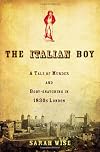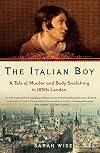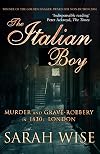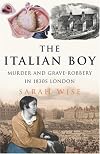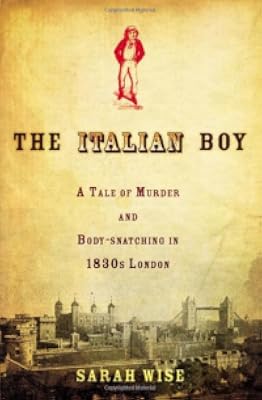
The Italian Boy: A Tale of Murder and Body Snatching in 1830s London
by Sarah Wise
On This Page
Description
A thrilling history of England's great metropolis at a point of great change, told through the story of a young vagrant murdered by "resurrection men"Before his murder in 1831, the "Italian boy" was one of thousands of orphans on the streets of London, moving among the livestock, hawkers, and con men, begging for pennies. When his body was sold to a London medical college, the suppliers were arrested for murder. Their high-profile trial would unveil London's furtive trade in human corpses show more carried out by body-snatchers--or "resurrection men"--who killed to satisfy the first rule of the cadaver market: the fresher the body, the higher the price.Historian Sarah Wise reconstructs not only the boy's murder but the chaos and squalor of London that swallowed the fourteen-year-old vagrant long before his corpse appeared on the slab. In 1831, the city's poor were desperate and the wealthy were petrified, the population swelling so fast that old class borders could not possibly hold. All the while, early humanitarians were pushing legislation to protect the disenfranchised, the courts were establishing norms of punishment and execution, and doctors were pioneering the science of human anatomy.Vivid and intricate, The Italian Boy restores to history the lives of the very poorest Londoners and offers an unparalleled account of the sights, sounds, and smells of a city at the brink of a major transformation. show lessTags
Recommendations

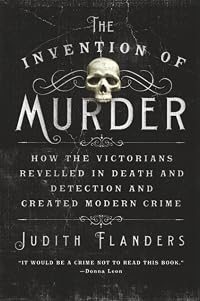
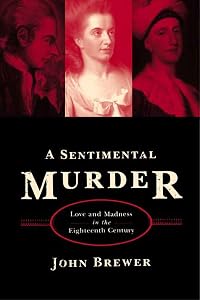

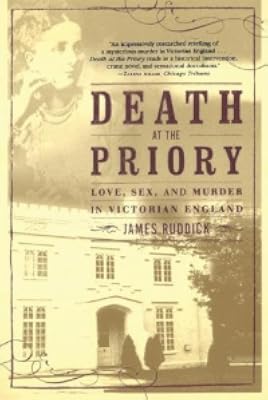

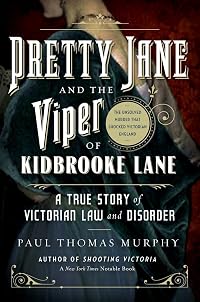




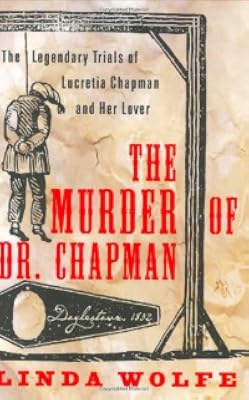

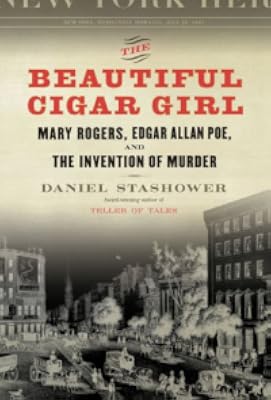
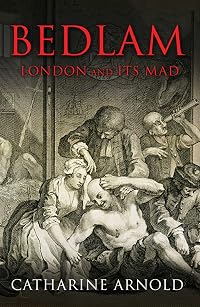
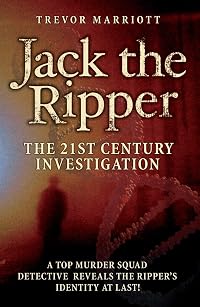






Member Recommendations


Member Reviews
Taking place only 3 years after the exploits of Burke and Hare in Edinburgh...John Bishop, James May and Thomas Williams are arrested for the murder of Carlo Ferrari for the purpose of selling his body for dissection. The worst of the lot, John Bishop, was a veteran resurrectionist of 12 years! The bodies he and May had been selling were barely fresh enough, so they preyed on London's most vulnerable for higher gain. They only got caught because the anatomist thought Carlo's body was TOO fresh...
Wise takes you down to the criminal underbelly of London. Wise examines how a unforgiving civil government allowed the poor and desperate to be taken advantage of. You learn about the underground tunnels and passages connecting various pubs that show more acted as guild halls. How resurrectionist wives would pretend to be a relative of a dying pauper to obtain their body for their husbands. How a body could go to an anatomist, but the teeth and scalp might go to a dentist or wigmaker. Through the subsequent trial, Wise then demonstrates just how elaborate this system was and every notable surgeon was in on it. Sir Astley Cooper, King's College, Guy's Hospital, all of them.
I'm glad Wise decided to focus on Carlo, because he was also a victim of rampant child-trafficking in Italy at that time, and it's a rare thing for historians to dive into that. The "padroni" would buy children from peasants in northern Italy and use the child to beg for them. And thankfully, the result of this trial led to legislation dictating the rights of a corpse and the eventual downfall of the resurrectionist trade. show less
Wise takes you down to the criminal underbelly of London. Wise examines how a unforgiving civil government allowed the poor and desperate to be taken advantage of. You learn about the underground tunnels and passages connecting various pubs that show more acted as guild halls. How resurrectionist wives would pretend to be a relative of a dying pauper to obtain their body for their husbands. How a body could go to an anatomist, but the teeth and scalp might go to a dentist or wigmaker. Through the subsequent trial, Wise then demonstrates just how elaborate this system was and every notable surgeon was in on it. Sir Astley Cooper, King's College, Guy's Hospital, all of them.
I'm glad Wise decided to focus on Carlo, because he was also a victim of rampant child-trafficking in Italy at that time, and it's a rare thing for historians to dive into that. The "padroni" would buy children from peasants in northern Italy and use the child to beg for them. And thankfully, the result of this trial led to legislation dictating the rights of a corpse and the eventual downfall of the resurrectionist trade. show less
Awesome book! Here's my caveat: this is NOT just a true crime story ... the story is centered in the history of early Victorian London, so if you're not a history reader, stay away! However, if you, like myself, are fascinated with all things Victorian, you will absolutely LOVE this book. You get a really good insight into the city of London, the people of London, the socioeconomic side of things, and the system of courts and punishments of the time. The photographs and the drawings are exquisite, and the story of what happened at No. 2 Nova Scotia Gardens will keep you reading.
brief peek:
It wasn't uncommon for colleges of Anatomy to buy dead bodies; what was uncommon in this case is that when the body of a young boy was delivered, it show more was still warm even though the body's purveyor swore he got it out of a grave. Set in 1831, The Italian Boy examines the details of this one case from the time the body was delivered through the fate of those who sold it. An amazing history, it not only tells this story, but gives a very keen look into the London of the time. Grave robbing wasn't an abnormal thing in those days; according to law, criminals' bodies could be dug up and used for autopsy purposes. However, the country had just been rocked by the sensational story of Burke & Hare, two criminals who murdered people to sell their bodies for profit (see the story here ), and so the details of the crime involving The Italian Boy were highly sensational at the time. A wonderful history of the time that should not be missed. I recommend this book most definitely! show less
brief peek:
It wasn't uncommon for colleges of Anatomy to buy dead bodies; what was uncommon in this case is that when the body of a young boy was delivered, it show more was still warm even though the body's purveyor swore he got it out of a grave. Set in 1831, The Italian Boy examines the details of this one case from the time the body was delivered through the fate of those who sold it. An amazing history, it not only tells this story, but gives a very keen look into the London of the time. Grave robbing wasn't an abnormal thing in those days; according to law, criminals' bodies could be dug up and used for autopsy purposes. However, the country had just been rocked by the sensational story of Burke & Hare, two criminals who murdered people to sell their bodies for profit (see the story here ), and so the details of the crime involving The Italian Boy were highly sensational at the time. A wonderful history of the time that should not be missed. I recommend this book most definitely! show less
What a cracker of a book. This is a detailed exposition of the phenomenon of body snatching in 19th century London. It uses a real case of a young boy, who disappeared and three notorious body snatchers were subsequently charged with his murder.
There is an underlying examination of anatomy and the medical history and context, as well as the legal position, where the law was reformed to prevent people digging up dead bodies. There is a good question as to the line to be drawn between 'dead' and 'dying' which body snatchers sometimes crossed. Hence the murder charge.
There is an underlying examination of anatomy and the medical history and context, as well as the legal position, where the law was reformed to prevent people digging up dead bodies. There is a good question as to the line to be drawn between 'dead' and 'dying' which body snatchers sometimes crossed. Hence the murder charge.
The Italian Boy is the story of a little-known 19th century murder. The story begins in 1832 with the delivery of the body of an "Italian boy" to one of London's many private medical schools. In the 19th century, medical schools acquired subjects to practice on from London's many pauper's graves; the body of the body was fresher than one might expect, and lacked burial marks.
What followed was an investigation into the murder of an Italian boy, never fully identified by contemporaries. The search for the boy's murderers led to the infamous trial of his suppliers--John Bishop, James May, and Thomas Williams. The murders echoed those of Burke and Hare, two famous resurrectionists after whom the term "burking" was coined.
I liked this show more book, sort of. Although the author goes off on tangents (she talks in general about poverty in the early 19th century, Italian politics, and the Smithfield meat market, which seemed to me to be "filler" for the book, almost like a newspaper article extended to a 300-page book), she presents to her reader a compelling murder story with a bit of a mystery--who was the Italian boy that Bishp, May and Williams supplied to Kings College? On the other hand, I felt as though the author failed to draw any conclusions about the murder, murderers, or to connect various pieces of the puzzle. The book is accompanied by nice engraving reproductions. show less
What followed was an investigation into the murder of an Italian boy, never fully identified by contemporaries. The search for the boy's murderers led to the infamous trial of his suppliers--John Bishop, James May, and Thomas Williams. The murders echoed those of Burke and Hare, two famous resurrectionists after whom the term "burking" was coined.
I liked this show more book, sort of. Although the author goes off on tangents (she talks in general about poverty in the early 19th century, Italian politics, and the Smithfield meat market, which seemed to me to be "filler" for the book, almost like a newspaper article extended to a 300-page book), she presents to her reader a compelling murder story with a bit of a mystery--who was the Italian boy that Bishp, May and Williams supplied to Kings College? On the other hand, I felt as though the author failed to draw any conclusions about the murder, murderers, or to connect various pieces of the puzzle. The book is accompanied by nice engraving reproductions. show less
This book is a sensational piece of history which acts as a window into the 1800s, and the often dismal lives of the London underclass. It's a perfect blend of details from the lives of the body-snatchers, and a broad overview of corpse-snatching in general. I highly recommend.
(UPDATE: My good friend the Headsman wrote an excellent blog entry about this case, including an interview with The Italian Boy's author.)
(UPDATE: My good friend the Headsman wrote an excellent blog entry about this case, including an interview with The Italian Boy's author.)
Story of the murder of a boy in London to sell his body to the anatomy schools. Wonderful research & writing. Anecdotal history at its best.
Read Aug 2006
Read Aug 2006
True story of bodysnatching and murder in and around Spitalfields in the early 19th century. Manages to make the time seem both real and impossobly distant from today. Brings to life a sense of what London's east end was like in those days.
Members
- Recently Added By
Lists

True Crime
216 works; 16 members
Author Information

7 Works 849 Members
Sarah Wise studied at Birkbeck College at the University of London. Her most recent book, The Blackest Streets was shortlisted for the Ondaatje Prize (2009), and her first book, The Italian Boy: Murder and Grave Robbery in London, was shortlisted for the 2005 Samuel Johnson Prize and won the Crime Writer's Gold Dagger for nonfiction.
Awards and Honors
Common Knowledge
- Original title
- The Italian Boy : Murder and Grave-Robbery in 1830s London
- Alternate titles
- The Italian Boy : A Tale of Murder and Body Snatching in 1830s London
- Original publication date
- 2004
- People/Characters
- George Beaman; Herbert Mayo; Richard Partridge; John Bishop; James May; Thomas Williams (show all 39); Henry Mann; James Seagrave; George Gissing; Thomas Trader; Ann Cannell; John Chapman; James Davis; Joseph Sadler Thomas; James Corder; Margaret King; Rosina Carpenter; Samuel Taunton; George Rowland Minshull; Edward Pelham Brenton; Augustine Brun; Carlo Ferrari; Charles Henoge; Samuel Horsey; William Woodcock; Sarah Trueby; John King; Martha King; Michael Shields; William St. Julien Arabin; Fanny Pigburn; George Pilcher; Henry Bodkin; Robert Mortimer; Andrew Colla; John Randall; Charlotte Berry; Reverend Whitworth Russell; William Clift
- Important places
- Nova Scotia Gardens, Bethnal Green, London, England, UK; Old Bailey, London, England, UK; Covent Garden, West End, London, England, UK; The Fortune of War Pub, Smithfield, London, England, UK; Smithfield, London, England, UK; Guy's Hospital, Southwark, London, England, UK (show all 8); Spitalfields, East End, London, England, UK; Newgate Prison, London, England, UK
- Important events
- The Metropolitan Police Act (1829); The Vagrancy Act (1824); The Act of Settlement (1662); The Swing Riots (1830); Martin's Act (1822); The Factory Act (1833) (show all 7); The Second Anatomy Act (1832)
- Epigraph
- Of the common folk that is merely bundled up in turf and brambles, the less said, the better. A poor lot, soon forgot. - Stony Durdles, funerary stonemason, in Charles Dickens' The Mystery of Edwin Drood (1870)
- Dedication
- For Peter
- First words
- George Beaman, surgeon to the parish of St. Paul's, Covent Garden, turned back the scalp of the corpse lying before him.
- Quotations
- I neither know, nor care. It is quite indifferent what he died of, for here he is, stiff enough. - John Bishop
- Last words
- (Click to show. Warning: May contain spoilers.)But by then, the moves to sweep away the rottenness of previous ages had gathered unstoppable momentum, and the recent past was feeling as ancient as biblical times.
- Blurbers
- Faber, Michael; Sinclair, Ian; Robbins, Bruce
Classifications
- Genres
- Nonfiction, History, General Nonfiction
- DDC/MDS
- 364.152309421 — Society, government, & culture Social problems and social services Crime Criminal offenses Offenses against the person Homicide Murder History, geographic treatment, biography Europe England & Wales London
- LCC
- HV6535 .G6 .L6595 — Social sciences Social pathology. Social and public welfare. Criminology Social pathology. Social and public welfare. Criminology Crimes and offenses
- BISAC
Statistics
- Members
- 440
- Popularity
- 69,951
- Reviews
- 11
- Rating
- (3.79)
- Languages
- English
- Media
- Paper, Ebook
- ISBNs
- 8
- ASINs
- 2