
Daniel Stashower
Author of The Beautiful Cigar Girl: Mary Rogers, Edgar Allan Poe, and the Invention of Murder
About the Author
Daniel Stashower is the author of four mystery novels and a winner of the Raymond Chandler Fulbright Fellowship in Detective and Crime Fiction Writing. He lives in Bethesda, MD. (Bowker Author Biography)
Image credit: www.stashower.com/
Series
Works by Daniel Stashower
The Beautiful Cigar Girl: Mary Rogers, Edgar Allan Poe, and the Invention of Murder (2006) 724 copies, 26 reviews
The Hour of Peril: The Secret Plot to Murder Lincoln Before the Civil War (2013) 448 copies, 12 reviews
Murder in Baker Street: New Tales of Sherlock Holmes (2001) — Editor & Introduction — 321 copies, 7 reviews
Associated Works
Complete Stories and Poems of Edgar Allan Poe (1938) — Introduction, some editions — 13,532 copies, 82 reviews
The New Adventures of Sherlock Holmes: Original Stories by Eminent Mystery Writers (1976) — Contributor — 391 copies, 4 reviews
Malice Domestic 07: An Anthology of Original Traditional Mystery Stories (1998) — Contributor — 46 copies, 2 reviews
Tagged
Common Knowledge
- Legal name
- Stashower, Daniel Meyer
- Birthdate
- 1960-09-21
- Gender
- male
- Occupations
- freelance journalist
- Nationality
- USA
- Birthplace
- Cleveland, Ohio, USA
- Places of residence
- Maryland, USA
- Associated Place (for map)
- USA
Members
Discussions
History; Nonfiction; True Crime; Erik Larson; Daniel Stashower in If You Like Then You Will Love (July 2013)
Conan Doyle letters in Baker Street and Beyond (September 2007)
Reviews
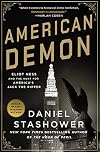
If you watch NCIS, you know that it is a spin off of the 90s show Jag. One of the stars of Jag was David James Elliot who was one of the actors in the short lived Untouchables series that aired on Fox (I believe). No, he didn’t play Elliott Ness.
That series didn’t get a mention in this book, which is the only disappointing thing about this excellent book.
The Robert Stack series, the one that the newer series was in part rebooting, does get a mention as does the famous movie with Kevin show more Coster. Stashower, however, does not focus on the constantly retread history of Capone vs Ness as it were, but instead on what Ness did after Chicago when he went to work in Cleveland, land of the burning river and the burning mayoral hair, and was confronted by not only having to clear corruption out of a police force but also a serial killer who liked cutting up bodies after he killed them. Later people, usually children, would find a seagull chowing down on a body.
Ness was Cleveland’s director of public safety at the time and as such, people wanted and expected to handle the case. But Ness also found himself in a slightly unfamiliar place, having to play politics as well as simple detective work, and it would be fair, that Ness was more interested in, rightly or wrongly, police corruption.
Stashower not only focuses on Ness’ quest to solve the murders and the at times polarizing actions that he took, but also on the area and people who were the victims of the serial killer as well as the work of the less famous detectives who were tasked with the case, and who in some ways may have been hampered by Ness, who found himself in a situation where his ethics and what needs to be done may be at odds in ways that he is not prepared to deal with.
Stashower also focuses on how the detectives were driven to solve a case even as they sometimes acted on prejudices that most people at the time had. For instance, there was a belief that the killer was a sexual deviant, which definition at the time included homosexuality. Stashower points out this homophobia but also highlights the fact that some of the detectives were educating themselves on the topic of deviancy as the case played out.
Stashower’s writing is clear and concise. Why it is clear that he admires the Ness and the others, he is not blind to their faults. The book is far from a hagiography of Ness in term of his work ethic and style, and Stashower is sympathetic to the women in Ness’ life who had to deal with his late nights and constant on the go and never at home work style.
If you like historic true crime, this a very good read. show less
That series didn’t get a mention in this book, which is the only disappointing thing about this excellent book.
The Robert Stack series, the one that the newer series was in part rebooting, does get a mention as does the famous movie with Kevin show more Coster. Stashower, however, does not focus on the constantly retread history of Capone vs Ness as it were, but instead on what Ness did after Chicago when he went to work in Cleveland, land of the burning river and the burning mayoral hair, and was confronted by not only having to clear corruption out of a police force but also a serial killer who liked cutting up bodies after he killed them. Later people, usually children, would find a seagull chowing down on a body.
Ness was Cleveland’s director of public safety at the time and as such, people wanted and expected to handle the case. But Ness also found himself in a slightly unfamiliar place, having to play politics as well as simple detective work, and it would be fair, that Ness was more interested in, rightly or wrongly, police corruption.
Stashower not only focuses on Ness’ quest to solve the murders and the at times polarizing actions that he took, but also on the area and people who were the victims of the serial killer as well as the work of the less famous detectives who were tasked with the case, and who in some ways may have been hampered by Ness, who found himself in a situation where his ethics and what needs to be done may be at odds in ways that he is not prepared to deal with.
Stashower also focuses on how the detectives were driven to solve a case even as they sometimes acted on prejudices that most people at the time had. For instance, there was a belief that the killer was a sexual deviant, which definition at the time included homosexuality. Stashower points out this homophobia but also highlights the fact that some of the detectives were educating themselves on the topic of deviancy as the case played out.
Stashower’s writing is clear and concise. Why it is clear that he admires the Ness and the others, he is not blind to their faults. The book is far from a hagiography of Ness in term of his work ethic and style, and Stashower is sympathetic to the women in Ness’ life who had to deal with his late nights and constant on the go and never at home work style.
If you like historic true crime, this a very good read. show less
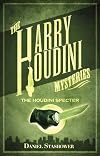
When a friend of a friend’s recently widowed mother falls prey to a spiritualist medium, Dash Hardeen and his brother Harry Houdini step in to try to expose the deception. This fictional mystery is consistent with the real-life Houdini’s interest in exposing spiritualist fakery. The locked room mystery, the brothers’ attempts to replicate the supernatural effects, and the eventual solution kept me hooked. I wasn’t as thrilled with the depiction of Houdini. His younger brother, Dash, show more is the first-person narrator, and he comes across as the brains of the pair, with Houdini as the brawn. Houdini also seems full of himself at a time in his life when he hadn’t yet achieved name recognition. I’m left wondering if this is an accurate portrayal of the real man. show less

An interesting book about a fascinating and enigmatic man. Enigmatic because it is difficult to understand how a mind that could create Sherlock Holmes, the ultra-clinical, ultra-sceptical detective, could also believe in fairies, table-tapping, "voices from beyond," and pretty much any other mystical twaddle that came his way. This book, however, goes some way to reconciling these polar opposites, explaining how Scottish good sense prevented Doyle from using Holmes as a mouthpiece for his show more Spiritualist agenda, while placing that agenda in the context of Doyle's personal grief at losing his son in the Great War.
As it was the author's intention to emphasise the period in which Doyle's Spiritualist beliefs came to dominate his life, this biography may not be for those looking for a personification of the Great Detective. For balance, The Secret Life of Houdini by William Kalush and Larry Sloman is a cracking read, telling the story of how the escapologist and Doyle became first close friends, and then bitter enemies as Houdini carried out his crusade to expose fake (aren't they all?) Spiritualist mediums. show less
As it was the author's intention to emphasise the period in which Doyle's Spiritualist beliefs came to dominate his life, this biography may not be for those looking for a personification of the Great Detective. For balance, The Secret Life of Houdini by William Kalush and Larry Sloman is a cracking read, telling the story of how the escapologist and Doyle became first close friends, and then bitter enemies as Houdini carried out his crusade to expose fake (aren't they all?) Spiritualist mediums. show less

Two books about notorious New York murder cases: Daniel Stashower’s about Mary Rogers’ (The Beautiful Cigar Girl) and Paula Uruburu’s about Stanford White (American Eve: Evelyn Nesbit, Stanford White, The Birth of the “It” Girl, and the Crime of the Century).
Mary Rogers’ death was a mystery; in fact, protoconspiracy-theorists claimed that despite identification by her mother and one of her suitors the body found floating in the Hudson on July 28 1841 wasn’t Mary Rogers at all. show more It was a hot day in New York City and several young men seeking temperature relief by strolling along the Jersey side spotted the object, borrowed a boat, lassoed it around the neck, towed it to shore, and, being unwilling to touch the thing, tethered it to a handy rock. A floating corpse was a novelty, and the curious showed up to poke it with sticks and comment on its appearance. Someone worked up enough courage to wade into the river and drag it ashore, and someone else peered between the legs and made rude comments to his friends. Albert Crommelin had been searching for his missing romantic interest for several days and feared the worst when he spotted the tangle of bystanders; sure enough, he identified the thing as Mary Rogers.
------------------------------------------------------------------------------------------------------------
Stanford White’s death was no mystery at all. It was a hot night in New York City and with many others he was seeking temperature relief attending the opening night of a musical comedy presented in the rooftop theater at Madison Square Garden (which he had designed). Millionaire and major loon Harry Thaw, attending the same performance, left his table, walked up behind White, and shot him three times in the back of the head. There were hundreds of witnesses, including actresses and chorus girls, theater patrons, and Thaw’s wife Evelyn. Unlike Ms. Rogers, there was no doubt who the victim was – although his face was no longer recognizable.
------------------------------------------------------------------------------------------------------------
Author Daniel Stashower turns Mary Rogers’ story into a history of 1840s NYC police practices, the newspaper business, and an excellent biography of Edgar Allan Poe. Those of us used to CSI will find 1840 police procedure a little disconcerting; the police were abysmally corrupt and most murder investigation was in the hands of judges and coroners. The Mary Rogers case was a godsend to the newspaper business; editorials lambasted the police, the mayor, the governor, the coroner, and each other. (William Gordon Bennett enthusiastically drubbed his competitors in the editorial pages of the New York Herald; New York Sun editor Moses Beach “had no more brains than an oyster and the New York Tribune’s Horace Greeley was less effective than “a large New England squash”). In the absence of any sort of police force, the newspapers took on the investigator role themselves and cheerfully accused just about everybody in the city, plus a good fraction of New Jersey. Poe comes into the picture because in his usual financial desperation he adapted the Mary Rogers story for the second of his C. Auguste Dupin detective mysteries, The Mystery of Marie Rogêt.
------------------------------------------------------------------------------------------------------------
Paula Uruburu concentrates on the title heroine, and Ms Uruburu is unhesitant in sympathizing with Ms. Nesbit (well, although I’m just a little suspicious of her veracity, I’m pretty sympathetic with Evelyn, too). Evelyn Nesbit lost her comfortable middle-class life when her father died, and quickly found herself supporting her family as an underage chorus girl and artist’s model (her mother was concerned, but took the money). Her Gibson-girl beauty attracted the attention of Stanford White, who had a reputation for this sort of thing (White is supposed to have coined the expression “Would you like to come up and see my etchings?” and invented the concept of having a girl jump out of a cake at a party (well, it was actually a pie, which in addition to four-and-twenty blackbirds contained a 14-year-old girl dressed in a blackbird hat and feathered toe rings)).
After some beating around the bush the 40ish White drugged and raped the 16-year-old Evelyn (there’s some question of how naïve Evelyn was. Uruburu glosses over it, but even in more innocent times you might expect that a girl from a theater background would realize that invitations to a much older man’s apartment to pose for lingerie art would eventually end badly). She acquiesced to the arrangement; Mom kept taking the money.
------------------------------------------------------------------------------------------------------------
Mary Rogers’ case was never solved. The evidence was hopelessly muddled; however, the best guess is that rather than being gang-raped and beaten to death as originally supposed, she died during a failed abortion and was beaten up and dumped in the Hudson post-mortem. The abortion theory caused major problems for Poe; he had promised that he would reveal the murderer in Marie Rogêt and had published two of three serializations when evidence for an abortion emerged. He had to quickly rewrite the final chapter.
------------------------------------------------------------------------------------------------------------
Stanford White eventually grew tired of Evelyn and moved on to other chorus girls. By now, however, Evelyn had attracted the attention of Harry Thaw, a Pittsburgh steel millionaire (or more correctly, the spoiled son of the widow of a Pittsburgh steel millionaire). Stanford White was a statutory rapist, but Thaw was a real piece of work. Already notorious for hiring ladies of the evening for whipping sessions (he did the whipping), he persuaded Evelyn and her mother to go on a European tour (interrupted briefly when Thaw whipped a bellboy in a London hotel). Mrs. Nesbit left her daughter in the middle of the trip and Evelyn found herself alone with Harry in (nope, not kidding, really this Gothic) a deserted German castle Harry had rented for a week. Harry persuaded Evelyn to tell her the story of her affair with White, and latter that evening forced open the door of her room, naked and carrying a riding crop. He spent several hours of admonishing Evelyn for her misbehavior, which left her so covered with lash marks that she couldn’t lie down for fear of the bedclothes sticking to the bloody cuts. Rather surprisingly, when the couple returned to the US Evelyn agreed to marry Thaw.
Thaw, however, couldn’t get over the fact that White had Evelyn first – he took Evelyn to his dentist and had all the dental work White had paid for removed and replaced. That wasn’t quite enough to satisfy him – hence the Madison Square Garden shooting. Thaw was utterly convinced that he would be found innocent – and was outraged when his family bought him a not-guilty-by-reason-of-insanity verdict. Once she had testified – pretty convincingly – that Thaw really was a nutcase, the Thaws immediately dumped Evelyn without a cent. (After getting out of the asylum the first time, Harry Thaw was picked up and committed again for another bellboy whipping incident; in fact, he spent more time in custody for whipping bellboys then did for shooting Stanford White).s She spent the rest of her life in a series of increasingly dreary nightclub and cabaret shows (although briefly regaining some notoriety as a consultant for The Girl in the Red Velvet Swing, where she’s played by Joan Collins, and, of course, posthumous recognition in Ragtime, this time played by Elizabeth McGovern).
I liked both of these – Stashower’s evocation of 1840s New York is compelling, as is the biographical material on Poe. I confess when I first picked it up I had Mary Rogers confused with Helen Jewett, another New York cause célèbre murder victim. Miss Jewett didn’t sell cigars, however). As far as Evelyn Nesbit goes, perhaps Uruburu takes a little too much of Nesbit’s testimony at face value. But it’s pretty clear that even if Evelyn stretched the truth a little what demonstrably happened to her was pretty grim. Besides, I’ve always had a weakness for Gibson girls. show less
Mary Rogers’ death was a mystery; in fact, protoconspiracy-theorists claimed that despite identification by her mother and one of her suitors the body found floating in the Hudson on July 28 1841 wasn’t Mary Rogers at all. show more It was a hot day in New York City and several young men seeking temperature relief by strolling along the Jersey side spotted the object, borrowed a boat, lassoed it around the neck, towed it to shore, and, being unwilling to touch the thing, tethered it to a handy rock. A floating corpse was a novelty, and the curious showed up to poke it with sticks and comment on its appearance. Someone worked up enough courage to wade into the river and drag it ashore, and someone else peered between the legs and made rude comments to his friends. Albert Crommelin had been searching for his missing romantic interest for several days and feared the worst when he spotted the tangle of bystanders; sure enough, he identified the thing as Mary Rogers.
------------------------------------------------------------------------------------------------------------
Stanford White’s death was no mystery at all. It was a hot night in New York City and with many others he was seeking temperature relief attending the opening night of a musical comedy presented in the rooftop theater at Madison Square Garden (which he had designed). Millionaire and major loon Harry Thaw, attending the same performance, left his table, walked up behind White, and shot him three times in the back of the head. There were hundreds of witnesses, including actresses and chorus girls, theater patrons, and Thaw’s wife Evelyn. Unlike Ms. Rogers, there was no doubt who the victim was – although his face was no longer recognizable.
------------------------------------------------------------------------------------------------------------
Author Daniel Stashower turns Mary Rogers’ story into a history of 1840s NYC police practices, the newspaper business, and an excellent biography of Edgar Allan Poe. Those of us used to CSI will find 1840 police procedure a little disconcerting; the police were abysmally corrupt and most murder investigation was in the hands of judges and coroners. The Mary Rogers case was a godsend to the newspaper business; editorials lambasted the police, the mayor, the governor, the coroner, and each other. (William Gordon Bennett enthusiastically drubbed his competitors in the editorial pages of the New York Herald; New York Sun editor Moses Beach “had no more brains than an oyster and the New York Tribune’s Horace Greeley was less effective than “a large New England squash”). In the absence of any sort of police force, the newspapers took on the investigator role themselves and cheerfully accused just about everybody in the city, plus a good fraction of New Jersey. Poe comes into the picture because in his usual financial desperation he adapted the Mary Rogers story for the second of his C. Auguste Dupin detective mysteries, The Mystery of Marie Rogêt.
------------------------------------------------------------------------------------------------------------
Paula Uruburu concentrates on the title heroine, and Ms Uruburu is unhesitant in sympathizing with Ms. Nesbit (well, although I’m just a little suspicious of her veracity, I’m pretty sympathetic with Evelyn, too). Evelyn Nesbit lost her comfortable middle-class life when her father died, and quickly found herself supporting her family as an underage chorus girl and artist’s model (her mother was concerned, but took the money). Her Gibson-girl beauty attracted the attention of Stanford White, who had a reputation for this sort of thing (White is supposed to have coined the expression “Would you like to come up and see my etchings?” and invented the concept of having a girl jump out of a cake at a party (well, it was actually a pie, which in addition to four-and-twenty blackbirds contained a 14-year-old girl dressed in a blackbird hat and feathered toe rings)).
After some beating around the bush the 40ish White drugged and raped the 16-year-old Evelyn (there’s some question of how naïve Evelyn was. Uruburu glosses over it, but even in more innocent times you might expect that a girl from a theater background would realize that invitations to a much older man’s apartment to pose for lingerie art would eventually end badly). She acquiesced to the arrangement; Mom kept taking the money.
------------------------------------------------------------------------------------------------------------
Mary Rogers’ case was never solved. The evidence was hopelessly muddled; however, the best guess is that rather than being gang-raped and beaten to death as originally supposed, she died during a failed abortion and was beaten up and dumped in the Hudson post-mortem. The abortion theory caused major problems for Poe; he had promised that he would reveal the murderer in Marie Rogêt and had published two of three serializations when evidence for an abortion emerged. He had to quickly rewrite the final chapter.
------------------------------------------------------------------------------------------------------------
Stanford White eventually grew tired of Evelyn and moved on to other chorus girls. By now, however, Evelyn had attracted the attention of Harry Thaw, a Pittsburgh steel millionaire (or more correctly, the spoiled son of the widow of a Pittsburgh steel millionaire). Stanford White was a statutory rapist, but Thaw was a real piece of work. Already notorious for hiring ladies of the evening for whipping sessions (he did the whipping), he persuaded Evelyn and her mother to go on a European tour (interrupted briefly when Thaw whipped a bellboy in a London hotel). Mrs. Nesbit left her daughter in the middle of the trip and Evelyn found herself alone with Harry in (nope, not kidding, really this Gothic) a deserted German castle Harry had rented for a week. Harry persuaded Evelyn to tell her the story of her affair with White, and latter that evening forced open the door of her room, naked and carrying a riding crop. He spent several hours of admonishing Evelyn for her misbehavior, which left her so covered with lash marks that she couldn’t lie down for fear of the bedclothes sticking to the bloody cuts. Rather surprisingly, when the couple returned to the US Evelyn agreed to marry Thaw.
Thaw, however, couldn’t get over the fact that White had Evelyn first – he took Evelyn to his dentist and had all the dental work White had paid for removed and replaced. That wasn’t quite enough to satisfy him – hence the Madison Square Garden shooting. Thaw was utterly convinced that he would be found innocent – and was outraged when his family bought him a not-guilty-by-reason-of-insanity verdict. Once she had testified – pretty convincingly – that Thaw really was a nutcase, the Thaws immediately dumped Evelyn without a cent. (After getting out of the asylum the first time, Harry Thaw was picked up and committed again for another bellboy whipping incident; in fact, he spent more time in custody for whipping bellboys then did for shooting Stanford White).s She spent the rest of her life in a series of increasingly dreary nightclub and cabaret shows (although briefly regaining some notoriety as a consultant for The Girl in the Red Velvet Swing, where she’s played by Joan Collins, and, of course, posthumous recognition in Ragtime, this time played by Elizabeth McGovern).
I liked both of these – Stashower’s evocation of 1840s New York is compelling, as is the biographical material on Poe. I confess when I first picked it up I had Mary Rogers confused with Helen Jewett, another New York cause célèbre murder victim. Miss Jewett didn’t sell cigars, however). As far as Evelyn Nesbit goes, perhaps Uruburu takes a little too much of Nesbit’s testimony at face value. But it’s pretty clear that even if Evelyn stretched the truth a little what demonstrably happened to her was pretty grim. Besides, I’ve always had a weakness for Gibson girls. show less
Lists
Awards


The Hour of Peril: The Secret Plot to Murder Lincoln Before the Civil War (Winner – Critical / Non-Fiction – 2014)
The Beautiful Cigar Girl: Mary Rogers, Edgar Allan Poe, and the Invention of Murder (Nominee – Non-Fiction – 2007)


You May Also Like


Associated Authors
Statistics
- Works
- 31
- Also by
- 13
- Members
- 3,469
- Popularity
- #7,331
- Rating
- 4.3
- Reviews
- 83
- ISBNs
- 87
- Languages
- 4
- Favorited
- 1