
Phoebe Atwood Taylor (1909–1976)
Author of The Cape Cod Mystery
About the Author
Phoebe Atwood Taylor (1909-1976) was an American mystery author who wrote mystery novels under her own name, and as Freeman Dana and Alice Tilton. Her first novel, The Cape Cod Mystery, introduced the "Codfish Sherlock", Asey Mayo, who became a series character appearing in 24 novels. (Bowker show more Author Biography) show less
Image credit: s9.com
Series
Works by Phoebe Atwood Taylor
Associated Works
American Murders: 11 Rediscovered Short Novels from the American Magazine, 1934-1954 (1986) — Contributor — 5 copies
Tagged
Common Knowledge
- Other names
- Dana, Freeman
Tilton, Alice - Birthdate
- 1909-05-18
- Date of death
- 1976-01-09
- Gender
- female
- Education
- Barnard College
- Occupations
- mystery writer
detective novelist - Short biography
- Phoebe Atwood Taylor was born in Boston, Massachusetts. Her parents were natives of Cape Cod and descended from Pilgrims. She graduated from Barnard College in New York City in 1930, and returned to Boston. She married a surgeon also named Taylor and lived in the Boston suburbs of Newton Highlands and Weston. The couple also had a summer home in Wellfleet on Cape Cod. Boston and Cape Cod served as the locales for many of her mystery novels. She published under her own name as well as under the pen names Freeman Dana and Alice Tilton. Her first novel, The Cape Cod Mystery (1931), introduced Asey Mayo, the "Codfish Sherlock," a handyman and amateur sleuth who appeared in 24 novels. These novels were full of humor and the local culture of Cape Cod in the 1930s and 1940s. Another series featured Leonidas Witherall, a teacher, and author of detective novels.
- Nationality
- USA
- Birthplace
- Boston, Massachusetts, USA
- Places of residence
- Boston, Massachusetts, USA
Wellfleet, Massachusetts, USA - Place of death
- Boston, Massachusetts, USA
- Associated Place (for map)
- Massachusetts, USA
Members
Reviews
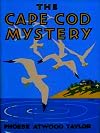
This is the first in a series of mysteries by Phoebe Atwood Taylor. Taylor's Cape Cod of the 1930s is a place where quirky vacationers come and interact with even more quirky locals, who are becoming very aware of the importance of the tourist trade. This scenario is already ripe for murder mysteries, but it is enhanced by making the "detective" the quirkiest character of them all, Asey Mayo. Taylor describes him of indeterminate age, between 35 and 70, and as "the kind of man everybody show more expects to find on Cape Cod and never does." His charm comes from his bon mots, his aphorisms, his knowledge of a wide variety of trades, and his range of acquaintances.
In this novel, Taylor surrounds him with a gaggle of supporting characters who are believable in their own oddies. She includes social realism that points to the upcoming Depression and the increase in poverty and homelessness. The murder victim appears only briefly alive, and stories of his hatefulness toward those he encounters are meted out over the investigation. The solution of the mystery is plausible. I see moments of the greatness of Holmes, Poirot, and Marple in Mayo. In fact, like Marple, he believes in village parallels: "Most folks, Miss Prue, is like other folks. I don't mean that they're all alike in everything, because they ain't. But from all the people I seen one place an' another, it seems to me that every one's got some little trick or that's the same as some one else. Don't some of your friends remind you of other people?" Mayo uses this philosophy to perfection in the novel's denouement. I am intrigued to see what Taylor does in developing Mayo's character. show less
In this novel, Taylor surrounds him with a gaggle of supporting characters who are believable in their own oddies. She includes social realism that points to the upcoming Depression and the increase in poverty and homelessness. The murder victim appears only briefly alive, and stories of his hatefulness toward those he encounters are meted out over the investigation. The solution of the mystery is plausible. I see moments of the greatness of Holmes, Poirot, and Marple in Mayo. In fact, like Marple, he believes in village parallels: "Most folks, Miss Prue, is like other folks. I don't mean that they're all alike in everything, because they ain't. But from all the people I seen one place an' another, it seems to me that every one's got some little trick or that's the same as some one else. Don't some of your friends remind you of other people?" Mayo uses this philosophy to perfection in the novel's denouement. I am intrigued to see what Taylor does in developing Mayo's character. show less
'The Cape Cod Mystery' was a pleasant surprise. Published in 1931, it's an American Golden Age Mystery that couldn't be more different from its English Detective Club contemporaries. I read it because it was selected as a side-read by the GoodReads Appointment With Agatha group and I has no idea what to expect.
'The Cape Cod Mystery' launched a series of books featuring amateur sleuth Asey Mayo, a Cape Cod native who, after travelling the world as a Merchant Seaman, now works for the powerful show more Porter family. Asey is dragged into his first case when his millionaire boss is arrested for the murder of a well-known and much-detested novelist. Asey has one weekend to find the real killer and stop his boss from becoming so entangled with the legal system that even his great wealth might not be enough to set him free.
The book got off to an exhaustingly fast start with dialogue so brisk and brittle it made 'The Gilmore Girls' look slow and naturalistic. To me, everything sounded brash until I hooked into the taken-for-granted privilege of the characters and realised that their chatter was all performative - the 1930s equivalent of cool.
Surprisingly, the pace increased about a quarter of the way through, when I first met Asey Mayo. Wow, what a whirlwind he was. And what a wonderfully refreshing contrast he was to Poirot or Wimsy. And how quintessentially late 19th Century Yankee he was. A man of broad experience, slim education, high intelligence and low cunning. He comes across as all practicality and common sense and no pretensions at all but he uses his 'I'm just a plain-speaking Cape Cod fisherman using my common sense to muddle through' personal as a weapon to ambush, beguile, and bully his way to the truth.
Part of what makes the story work is that it is told not through the eyes of Asey Mayo but through the eyes of Miss Wtsby, a well-respected Bostonian woman of means in her fifties. She has all the education and social graces that Asey lacks. She's also connected to just about everyone of importance in the plot. She is calm, rational, open-minded and prone to gentle humour. She makes an excellent foil for the folksy man-of-the-people amateur detective.
It took me a while to work out the social status of Miss Witsby and her niece. This made me realise that when I read Sayers or Christie, I'm always aware of the social class that the people come from and that sets my expectations of them. With the Cape Code summer people, I found myself class-blind. It was like suddenly losing my sense of smell. I couldn't figure out the class Miss Witsby came from or where the young people fit in the social strata. I finally figured out they must be from money because, when the maid had the evening off and the women had a 'pick up supper' they helped themselves to food, ate and then stacked the plates and left them for the maid to clean. Who does that? Four people at table and they make no effort to clean up after themselves and they treat that as normal. Nothing says money like taking that kind of thing for granted.
Asey and Miss Witsby work at a frenetic pace to track down what turns out to be at least half a dozen people who had both the motive and opportunity to kill the deservedly detested novelist. The investigation was heavier on humour than method but they got the job done.
To me, it felt that the author was setting out to debunk more traditional murder mystery stories by showing that diligently following clues was much less helpful than being able to read people and know when and why they were lying.
The humour mostly worked, although it was occasionally a little heavy-handed, especially when the Sheriff was involved, but it was always entertaining.
By the end of the book, I was beginning to find Asey a little wearing - there's only so much folk-wisdom I can enjoy - then the author came up with an ending that was clever and touching (and a little improbable) which put Asey in a much better light.
This was a high-energy piece of entertainment that rollicked along with more pace than grace but which made me smile and kept me interested.
Phoebe Atwood Taylor was born in Boston, Massachusetts. Her parents were natives of Cape Cod and descended from Pilgrims. She graduated from Barnard College in New York City in 1930, and returned to Boston. She married a surgeon also named Taylor and lived in the Boston suburbs of Newton Highlands and Weston. The couple also had a summer home in Wellfleet on Cape Cod. Boston and Cape Cod served as the locales for many of her mystery novels.
She published under her own name as well as under the pen names Freeman Dana and Alice Tilton. Her first novel, The Cape Cod Mystery (1931), introduced Asey Mayo, the "Codfish Sherlock," a handyman and amateur sleuth who appeared in 24 novels. These novels were full of humor and the local culture of Cape Cod in the 1930s and 1940s.
Another series featured Leonidas Witherall, a teacher, and author of detective novels. show less
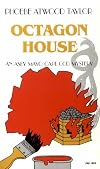
Quanomet has been a sleepy little town for a number of years, but their new post office has jettisoned it to the top of the news. Not only is it huge in size but the exterior is red brick, chromium columns, cement elements and pink granite steps. “Early Colonial Modified” is the defined style.
The frosting on this strange cake is the mural that is on the walls of the interior. Titled “The History and Customs of Cape Cod,” it portrays various historical figures in a variety of show more activities. The cherry was the faces were of citizens of Quanomet — and they weren’t complimentary images.
When the artist’s wife turns up murdered, things take a serious turn. The woman is the daughter of the Octagon House owner, and doesn’t have the nicest reputation. There is also the matter of a large piece of ambergris, worth fifty thousand dollars, that has gone missing.
After a two month absence, Asey Mayo finds this mystery to be his welcome home. Is one of the people who has an unflattering portrait in the mural the murderer? Is the victim somehow involved in the missing ambergris? Who and why and are these two events related?
Looks like the “Cape Cod Sherlock” has another mystery to solve. show less
The frosting on this strange cake is the mural that is on the walls of the interior. Titled “The History and Customs of Cape Cod,” it portrays various historical figures in a variety of show more activities. The cherry was the faces were of citizens of Quanomet — and they weren’t complimentary images.
When the artist’s wife turns up murdered, things take a serious turn. The woman is the daughter of the Octagon House owner, and doesn’t have the nicest reputation. There is also the matter of a large piece of ambergris, worth fifty thousand dollars, that has gone missing.
After a two month absence, Asey Mayo finds this mystery to be his welcome home. Is one of the people who has an unflattering portrait in the mural the murderer? Is the victim somehow involved in the missing ambergris? Who and why and are these two events related?
Looks like the “Cape Cod Sherlock” has another mystery to solve. show less
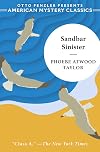
This is the title you take with you to the beach (ideally when you will be summering on Cape Cod). There are sand dunes, abandoned dories, and laconic sea fishermen. There are also the perhaps less-trustworthy, fly-by-night types who come out to escape the city.
Written before the area was completely taken over by a wealthy elite, Sandbar Sinister takes place in 1934. Prohibition has only just been repealed. At the same time, banks are failing. Everyone cuts expenses where they can. Things show more feel unsettled.
Pen Coulton has been invited to Sandbar, a large rambling construction (awkwardly made up of two different houses that have been connected and extended with servants quarters, kitchen and garage.) Victim of a recent bank failure, Pen is really there to be a “useful” guest by running the house with a minimum degree of participation by an incompetent hostess. With little notice suddenly, the house is asked to absorb eight or more unexpected guests. Our first dead body shows up in Chapter One; the second shows up before the reader is a full hundred pages in. There are secrets, such a best-sellng author of thrillers operating under a pseudonym. There are the usual tensions between family members.
Fortunately, Asey Mayo is around to check on everyone’s alibis and to iron out all of the puzzling complexities. A nice light read, this entry in a series by Phoebe Atwood Taylor offers some amusing twists as well as a good deal of humor throughout. show less
Written before the area was completely taken over by a wealthy elite, Sandbar Sinister takes place in 1934. Prohibition has only just been repealed. At the same time, banks are failing. Everyone cuts expenses where they can. Things show more feel unsettled.
Pen Coulton has been invited to Sandbar, a large rambling construction (awkwardly made up of two different houses that have been connected and extended with servants quarters, kitchen and garage.) Victim of a recent bank failure, Pen is really there to be a “useful” guest by running the house with a minimum degree of participation by an incompetent hostess. With little notice suddenly, the house is asked to absorb eight or more unexpected guests. Our first dead body shows up in Chapter One; the second shows up before the reader is a full hundred pages in. There are secrets, such a best-sellng author of thrillers operating under a pseudonym. There are the usual tensions between family members.
Fortunately, Asey Mayo is around to check on everyone’s alibis and to iron out all of the puzzling complexities. A nice light read, this entry in a series by Phoebe Atwood Taylor offers some amusing twists as well as a good deal of humor throughout. show less
Lists
Awards


You May Also Like


Associated Authors
Statistics
- Works
- 35
- Also by
- 4
- Members
- 2,819
- Popularity
- #9,097
- Rating
- 3.9
- Reviews
- 71
- ISBNs
- 129
- Languages
- 1
- Favorited
- 8