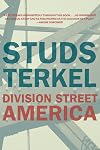
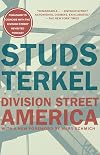
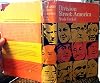
Division Street: America
by Studs Terkel
On This Page
Description
A landmark reissue of Studs Terkel's classic microcosm of America, with a new foreword by the Pulitzer Prize-winning journalist and co-creator of the Division Street Revisited podcast "Remarkable. . . . Division Street astonishes, dismays, exhilarates." --The New York Times When New Press founder André Schiffrin first published Division Street in 1967, Studs Terkel's reputation as America's foremost oral historian was established overnight. Approaching Chicagoans as emblematic of the show more nation at large, Terkel set out with his tape recorder and spent a year talking to over seventy people about race, family, education, work, prospects for the future--all topics that remain deeply contentious today. Subjects included a Black woman who attended the 1963 March on Washington, a tool-and-die maker, a baker from Budapest, a closeted gay actor, and a successful but cynical ad man. As Tom Wolfe wrote, Studs was "one of those rare thinkers who is actually willing to go out and talk to the incredible people of this country." Most interviewees shared the hope for a good life for their children and the wish for a less divided and more just America, but the real Chicago street referenced in the title takes on a metaphorical meaning as a symbol of the acute social divides of the 1960s--and highlights the continued relevance of Terkel's work in our polarized times. Now, over fifty years later, Melissa Harris and Pulitzer Prize-winning journalist Mary Schmich have created the remarkable Division Street Revisited podcast, coming in January 2025, in which they have found and interviewed descendants of Terkel's original subjects in seven rich episodes. Schmich's foreword to the reissue and the extraordinary podcast--along with the new edition of Division Street--together demonstrate Studs Terkel's prescience and the enduring importance of his work. show lessTags
Recommendations






















Member Reviews
Division Street: America, was Terkel’s first collection of oral histories, composed of 70 voices collected in random interviews in and around Chicago. First published in 1967, it was re-issued in 1993 and 2006 prior to this 2024 incarnation, each time because, according to 2006 edition editor Alex Kotlowitz, the work continues to “ponder what holds us together and what keeps us apart.”
Interview subjects included elderly residents of Chicago, newcomers to the city, young people, a closeted gay man, blue-collar workers, executives, teachers, small-time grifters, community activists, and welfare moms. Not surprisingly, the areas of concern voiced by each of these groups tended to be homogeneous within that group.
Many of the topics of show more concern to Terkel’s subjects are still circling in the public mind, some of them wearing different clothing, others essentially unchanged over the years. We hear discomfort over the nuclear threat of the Cold War (returned today as worries about domestic terrorism); over American involvement in Vietnam (just as we hear it now about the Middle East conflicts); discomfort with changing race relations and civil rights (which have come around 60 years later transformed into gay rights, trans issues, and the conflict over abortion); resentment over new ethnic groups moving into old neighborhoods (little change there, though the targeted ethnicity has changed); laments over the loss of city neighborhoods to urban renewal (now to gentrification); and a general notion that the fix is always in and the little guy is always going to get shafted – a complaint probably as old as civilization itself.
These recurrent themes, particularly in the sections dedicated to voices of blue-collar workers, tend to become a bit tedious after a while. So do the interviews with disaffected teens whose aimlessness and vague aspirations for a better future seem to come without any understanding (let alone acknowledgement) of the dedication needed to achieve those goals. Things pick up toward the end of the book, when white-collar workers and middle-management executive types are interviewed, and when college students come into the mix with their enthusiasm and desire to organize for political change. (It might be cynical to mention this, but it should be noted that less than a year after these hopeful interviews were printed, many of those very same young activists turned the 1968 Democratic National Convention in Chicago into a slugfest.)
As a snapshot of what has become known as “middle America”, Division Street: America remains an important document. As a reflection of who and where we are as a nation today, it holds the seeds of much of our current discontent. Not every reader will find it totally satisfying, but it is worth the investment of time, as a study in perspective if nothing else. show less
Interview subjects included elderly residents of Chicago, newcomers to the city, young people, a closeted gay man, blue-collar workers, executives, teachers, small-time grifters, community activists, and welfare moms. Not surprisingly, the areas of concern voiced by each of these groups tended to be homogeneous within that group.
Many of the topics of show more concern to Terkel’s subjects are still circling in the public mind, some of them wearing different clothing, others essentially unchanged over the years. We hear discomfort over the nuclear threat of the Cold War (returned today as worries about domestic terrorism); over American involvement in Vietnam (just as we hear it now about the Middle East conflicts); discomfort with changing race relations and civil rights (which have come around 60 years later transformed into gay rights, trans issues, and the conflict over abortion); resentment over new ethnic groups moving into old neighborhoods (little change there, though the targeted ethnicity has changed); laments over the loss of city neighborhoods to urban renewal (now to gentrification); and a general notion that the fix is always in and the little guy is always going to get shafted – a complaint probably as old as civilization itself.
These recurrent themes, particularly in the sections dedicated to voices of blue-collar workers, tend to become a bit tedious after a while. So do the interviews with disaffected teens whose aimlessness and vague aspirations for a better future seem to come without any understanding (let alone acknowledgement) of the dedication needed to achieve those goals. Things pick up toward the end of the book, when white-collar workers and middle-management executive types are interviewed, and when college students come into the mix with their enthusiasm and desire to organize for political change. (It might be cynical to mention this, but it should be noted that less than a year after these hopeful interviews were printed, many of those very same young activists turned the 1968 Democratic National Convention in Chicago into a slugfest.)
As a snapshot of what has become known as “middle America”, Division Street: America remains an important document. As a reflection of who and where we are as a nation today, it holds the seeds of much of our current discontent. Not every reader will find it totally satisfying, but it is worth the investment of time, as a study in perspective if nothing else. show less
 This review was written for LibraryThing Early Reviewers.
Here are two contradictory quotes about the past: “The past is a foreign country; they do things differently there,” L. P. Hartley; and “The past is never dead. It’s not even past,” William Faulkner. Studs Terkel’s study, “Division Street, America,” illustrates the truth of both of these quotes; the book consists of a large number of interviews with a broad swath of inhabitants of Chicago, Illinois, in 1965. I am reading it in 2025, 60 years later, and it is indeed both a “foreign country” and just the same as today. The immediate personal concerns of the interviewees are the same - love, family, work, illness, money, education; the broader concerns - race relations, sex roles, the war (in Vietnam), the Bomb (atomic show more or nuclear) - are also just as contemporary if you speak to people in 2025 (albeit different wars and bombs). Differences also abound, notably racial issues which are somewhat better now than tney were then (although not as much changed as one might have hoped after 60 years); in addition, the racist people in 1965 are far more likely to be explicit in their racism than they likely would be now. Attitudes toward women have changed also, in the sense that there is more agreement that women can and should be educated and in the workforce (at least generally speaking, there are exceptions), but the ongoing work of women in the household is just the same and the idea of a female President was just as unthinkable then as now (witness 2016 and 2024). The book is being reissued now because a podcast based on it is planned; the reason doesn’t matter as much as the fact that it is available, and is well worth reading. I find it best to read in chunks rather than straight through, but either way the interviewees are varied and interesting and, indeed, just like you and me. Recommended. I received an ARC of this book through LibraryThing’s Early Reviewer program. show less
This review was written for LibraryThing Early Reviewers.I must admit that when I first read “Division Street” many years ago, it didn’t make as much of an impression as “Hard Times” and “Working.” Given the present-day sociopolitical divisions, though, this book is all too relevant.
Not having heard the original interviews, I can’t speak as to whether the dozens of conversations in the book actually played out how they are presented here, but Terkel’s framing, and the occasional question, essentially allows his subjects to present their unvarnished views in their own voices. I do agree with a previous reviewer that there is a fair amount of repetition; the book’s theme of division means that certain topics — race, class, Vietnam, the Bomb — come up over and over. show more There are some clear and enraging examples of racism and bigotry, but also other examples of people stepping outside their comfort zones to push for change, despite the financial and social costs.
Though I’m intrigued by the podcast following up on seven of Terkel’s subjects, what I really appreciate about Mary Schmich’s foreword to the new edition is her description of each interview as a song. I love the idea of Terkel putting together a collection of all these different songs he gathered, and passing it along to us. show less
Not having heard the original interviews, I can’t speak as to whether the dozens of conversations in the book actually played out how they are presented here, but Terkel’s framing, and the occasional question, essentially allows his subjects to present their unvarnished views in their own voices. I do agree with a previous reviewer that there is a fair amount of repetition; the book’s theme of division means that certain topics — race, class, Vietnam, the Bomb — come up over and over. show more There are some clear and enraging examples of racism and bigotry, but also other examples of people stepping outside their comfort zones to push for change, despite the financial and social costs.
Though I’m intrigued by the podcast following up on seven of Terkel’s subjects, what I really appreciate about Mary Schmich’s foreword to the new edition is her description of each interview as a song. I love the idea of Terkel putting together a collection of all these different songs he gathered, and passing it along to us. show less
This review was written for LibraryThing Early Reviewers.As a fan of Studs Terkel, I relished the thought of reading interviews of Chicagoans 60 years past. Their thoughts on race, wars and religion etc. were just as pertinent today as they were then. Different in some ways but still pertinent. I read Terkel's "Working" in the 1970's and was enthralled with the opinions of people working different professions. "Division Street America" is another great, eye-opening read.
This review was written for LibraryThing Early Reviewers.I think that when a lot of people hear "oral history of the '60s" they think California, Vietnam, hippies, the South, civil rights activists, Dr. Martin Luther King Jr., LBJ, Nixon, war protestors, maybe Hunter S. Thompson in San Francisco. Unless they're from around Chicago I doubt they'd say Studs Terkel, but that's what this is - a reissue of a classic collection of Chicagoan opinions about life and events in the '60s. This is definitely one of the ones I'll have to reread in greater detail, and talk about with my mother, who grew up around there around that time.
There's a huge collection of lives and voices in here that defy honestly easy description, and I'd suggest it to anyone who wonders what people who lived in Chicago at the show more time (some were from abroad, or the Deep South, or Appalachia, and had relocated) thought about life. show less
There's a huge collection of lives and voices in here that defy honestly easy description, and I'd suggest it to anyone who wonders what people who lived in Chicago at the show more time (some were from abroad, or the Deep South, or Appalachia, and had relocated) thought about life. show less
This review was written for LibraryThing Early Reviewers.I received this as a gift from a LibraryThing giveaway. Studs Terkel is a remarkable author and I'm delighted that this will be available again. Unfortunately the copy I received was incomplete and very challenging to read. The introductory material was very informative about how he went about this project. I'd love to know more about what happened to these folks. The few that I was able to read were fascinating.
This review was written for LibraryThing Early Reviewers.I didn't think much of Studs Terkel's writing in the introduction, but as a listener--damn. His ear was his biggest strength as a journalist (as far as I can tell), and what makes this collection of horse's mouth stories so compelling.
Members
- Recently Added By
Lists

Used books to buy next
565 works; 1 member
Talk Discussions
Past Discussions
Division Street: America, by Studs Terkel, NOV 2024 LTER in Reviews of Early Reviewers Books (December 2024)
Author Information

32+ Works 10,569 Members
Studs Terkel was an actor, writer, and radio host. He was born Louis Terkel on May 16, 1912 in New York City. He took his name from the James T. Farrell novel, Studs Lonigan. Terkel attended the University of Chicago and graduated with a law degree in 1934. Terkel acted in local stage productions and on radio dramas until he began one of the first show more television programs, an unscripted show called Studs Place in the early 1950s. In 1952, Terkel began Studs Terkel's Almanac on radio station WFMT in Chicago. Terkel compiled a series of books based on oral histories that defined America in the 20th Century. Working: People Talk About What They Do All Day and How They Feel About What They Do received a National Book Award nomination in 1975. The Good War: An Oral History of World War II won the Pulitzer Prize in nonfiction in 1985. Working was turned into a hit musical in 1978. Terkel was named the Communicator of the Year by the University of Chicago in 1969. He also won a Peabody Award for excellence in journalism in 1980 and the National Book Foundation Medal for contributions to American letters in 1997. He died on October 31, 2008 at the age of 96. (Bowker Author Biography) show less
Some Editions
Awards and Honors
Distinctions
Series
Belongs to Publisher Series
Work Relationships
Is abridged in
Common Knowledge
- Canonical title
- Division Street: America
- Original title
- Division Street: America
- Original publication date
- 1967
- Important places
- Chicago, Illinois, USA; Illinois, USA
- Dedication
- To the Memory of Ring Lardner, Louis Sullivan, and Jane Addams
- First words
- I was born in Chicago, and I've always loved the city.
- Last words
- (Click to show. Warning: May contain spoilers.)She was buried in Marshalltown, Iowa.
- Original language
- English
Classifications
Statistics
- Members
- 351
- Popularity
- 89,701
- Reviews
- 9
- Rating
- (3.93)
- Languages
- 7 — Czech, Dutch, English, French, German, Norwegian (Bokmål), Swedish
- Media
- Paper, Ebook
- ISBNs
- 13
- ASINs
- 19