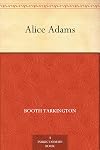
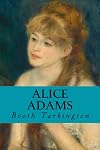
Alice Adams
by Booth Tarkington
On This Page
Description
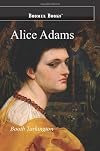
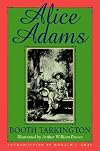
The winner of the 1922 Pulitzer Prize in literature and the subject of several well-received film adaptations, Alice Adams is regarded as one of Booth Tarkington's most accomplished novels. The tale follows the exploits of the plucky young protagonist, who disregards her family's low social standing and pursues love with the well-heeled young man of her dreams..
Tags
Recommendations

















Member Reviews
This is a book that is very much "of its time" as one might expect. It is also teaching me something about the Pulitzer prize in the 1920s. The book is rather innocuous from a 1920s standpoint, but certainly the racism doesn't land well for modern readers. The story isn't one that would hold a lot of interest in modern times, perhaps, but therein also lies its value. Alice Adams is an interesting character--caught between daughterly loyalty, youthful vanity and social aspirations, and the various slings and arrows of her circumstances as both a woman and a member of the Adams family. The book is as much about the family (and its dynamics) as it is Alice herself, and while she seems dated and petty in some instances, she's remarkably show more plucky and resilient. The same cannot be said of either of her parents, and her brother is definitely the most colorful character of the book.
The book itself is rather humorous, something I didn't particularly expect, and Tarkington writes rather dryly of his characters, seeming to stand back with a smirk at their various foibles. The style (and book in general) reminded me very much of Theodore Dreiser's Sister Carrie, published two decades prior, although Alice is ultimately far more like-able and much more a "heroine."
Alice's courtship with Arthur Russell was one of the more entertaining aspects of the novel, and cheers to Tarkington for writing her as a woman of wit, whose repartee with Russell shows her true stuff. The book is a slow read, and some of the details bordered on tedium (particularly in the early chapters), but it is fascinating to see the book as a reflection of social mores of the time as well as how family dynamics can balance between love and social obligations. show less
The book itself is rather humorous, something I didn't particularly expect, and Tarkington writes rather dryly of his characters, seeming to stand back with a smirk at their various foibles. The style (and book in general) reminded me very much of Theodore Dreiser's Sister Carrie, published two decades prior, although Alice is ultimately far more like-able and much more a "heroine."
Alice's courtship with Arthur Russell was one of the more entertaining aspects of the novel, and cheers to Tarkington for writing her as a woman of wit, whose repartee with Russell shows her true stuff. The book is a slow read, and some of the details bordered on tedium (particularly in the early chapters), but it is fascinating to see the book as a reflection of social mores of the time as well as how family dynamics can balance between love and social obligations. show less
This novel put me in mind of Edith Wharton and her tales of class mobility, or the lack thereof, in the society of the 1920s. Tarkington has addressed a similar situation here, a young girl who is just enough below the status of her peers to have a hard time keeping up and fitting in. Her mother is a disagreeable creature and her father doesn’t seem to understand the ramifications or difficulties of the position Alice is in. For him, she is his lovely daughter, why would anyone mistreat her; wouldn’t everyone love her?
I felt quite sorry for the father, Virgil Adams. He is a consummately decent man, who is forced into a questionable position by a nagging wife who wants status for her children and his love for a daughter, who no doubt show more is worthy of more than she is getting. The thing that struck me most about Alice was that she might have been perfectly happy if someone had simply given her to permission to be herself and belong to the upper middle class life that she is born into.
At times, she recognizes the false face she finds herself putting forward and despises it.
Almost everything she had said to him was upon spontaneous impulse, springing to her lips on the instant; yet it all seemed to have been founded upon a careful design, as if some hidden self kept such designs in stock and handed them up to her, ready-made, to be used for its own purpose. What appeared to be the desired result was a false-coloured image in Russell’s mind; but if he liked that image he wouldn’t be like Alice Adams; nor would anything he thought about the image be a thought about her.
The story is well-written and left me with a lot to think about regarding what really matters in life and how easily people actually do misunderstand one another. Not all of the very wealthy are painted as inhumane, although they are often clueless, and the divide between Alice and the other girls is understandable, since we tend to gravitate to those who share our lives and experiences.
By this time most of “the other girls,” her contemporaries, were away at school or college, and when they came home to stay, they “came out”--that feeble revival of an ancient custom offering the maiden to the ceremonial inspection of the tribe. Alice neither went away nor “came out”, and, in contrast with those who did, she may have seemed to lack freshness of lustre--jewels are richest when revealed all new in a white velvet box.
Like in any real tragedy, this train is headed for disaster, destiny is the engineer, and everytime the train stops and those who want to avoid being involved in the crash might disembark, they refuse to.
Sadly, this novel has a glaring drawback and one that I cannot help but acknowledge. There is, threaded throughout the book, a use of racial slurs and stereotypes that make the reader wince. I am fairly deft at placing a book within its historical context and allowing for the differences in that time and this, but this book went beyond the pale for me. I think what made it so egregious was that these people and their attitudes had nothing to do with the story being told, they added nothing to the understanding of the events, and they could have been left out without ever being missed. Race was not at issue here, nor was a single black character an actual mover of plot or meaning. Having just recently read Strange Fruit, it was simply impossible to gloss over these passages as if they were not there, and this alone kept me from giving this book a 5-star rating. I would encourage anyone who reads it to be prepared for some discomfort in this regard. show less
I felt quite sorry for the father, Virgil Adams. He is a consummately decent man, who is forced into a questionable position by a nagging wife who wants status for her children and his love for a daughter, who no doubt show more is worthy of more than she is getting. The thing that struck me most about Alice was that she might have been perfectly happy if someone had simply given her to permission to be herself and belong to the upper middle class life that she is born into.
At times, she recognizes the false face she finds herself putting forward and despises it.
Almost everything she had said to him was upon spontaneous impulse, springing to her lips on the instant; yet it all seemed to have been founded upon a careful design, as if some hidden self kept such designs in stock and handed them up to her, ready-made, to be used for its own purpose. What appeared to be the desired result was a false-coloured image in Russell’s mind; but if he liked that image he wouldn’t be like Alice Adams; nor would anything he thought about the image be a thought about her.
The story is well-written and left me with a lot to think about regarding what really matters in life and how easily people actually do misunderstand one another. Not all of the very wealthy are painted as inhumane, although they are often clueless, and the divide between Alice and the other girls is understandable, since we tend to gravitate to those who share our lives and experiences.
By this time most of “the other girls,” her contemporaries, were away at school or college, and when they came home to stay, they “came out”--that feeble revival of an ancient custom offering the maiden to the ceremonial inspection of the tribe. Alice neither went away nor “came out”, and, in contrast with those who did, she may have seemed to lack freshness of lustre--jewels are richest when revealed all new in a white velvet box.
Like in any real tragedy, this train is headed for disaster, destiny is the engineer, and everytime the train stops and those who want to avoid being involved in the crash might disembark, they refuse to.
Sadly, this novel has a glaring drawback and one that I cannot help but acknowledge. There is, threaded throughout the book, a use of racial slurs and stereotypes that make the reader wince. I am fairly deft at placing a book within its historical context and allowing for the differences in that time and this, but this book went beyond the pale for me. I think what made it so egregious was that these people and their attitudes had nothing to do with the story being told, they added nothing to the understanding of the events, and they could have been left out without ever being missed. Race was not at issue here, nor was a single black character an actual mover of plot or meaning. Having just recently read Strange Fruit, it was simply impossible to gloss over these passages as if they were not there, and this alone kept me from giving this book a 5-star rating. I would encourage anyone who reads it to be prepared for some discomfort in this regard. show less
I found myself alternately amused by, disgusted at and sorry for Alice Adams. Part of the aspects that bothered me about her character were due to the time and culture in which she lived (the book was published in 1921 so it was just after WW1). Alice is a romantic and somewhat silly 22-year-old girl whose whole goal in life (egged on by her snobbish and pushing mother) is to marry well - in her mind, in some romantic way swept off her feet by a handsome and rich man.
The Adams are a middle class family uneasily teetering on the edge of a changing world; the mother continues to believe in the values and social mores of the 19th century in which she had been raised while the son Walter is a devotee of the Jazz Age just beginning. Between show more these two extremes are the father, who while more aware than his wife of the realities of their situation financially is ill and unaware of the social struggle the mother is so concerned with, and Alice who lives mostly in a fantasy world (based upon novels or movies is my guess although that is never even hinted at).
I perhaps have more sympathy for Alice's shifts to maintain a "position in society" than other contemporary readers because she reminded me so much of certain Regency and Victorian heroines. Her efforts are quite pathetic but her belief in them is child-like. At times, this childish behaviour is endearing and at others annoying. Her mother's insistence on keeping up appearances seems to have created in Alice a feeling that appearance is all that is necessary to capture the right man.Sadly, by the time she realizes that a misleading appearance is bound to be discovered by an interested suitor, it is too late.
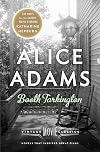
I have seen the film based upon this book (starring a young Katherine Hepburn as Alice) so I was surprised by some of the events at the end of the book. Overall, while the film is a good adaptation, the book gives more complexity. show less
The Adams are a middle class family uneasily teetering on the edge of a changing world; the mother continues to believe in the values and social mores of the 19th century in which she had been raised while the son Walter is a devotee of the Jazz Age just beginning. Between show more these two extremes are the father, who while more aware than his wife of the realities of their situation financially is ill and unaware of the social struggle the mother is so concerned with, and Alice who lives mostly in a fantasy world (based upon novels or movies is my guess although that is never even hinted at).
I perhaps have more sympathy for Alice's shifts to maintain a "position in society" than other contemporary readers because she reminded me so much of certain Regency and Victorian heroines. Her efforts are quite pathetic but her belief in them is child-like. At times, this childish behaviour is endearing and at others annoying. Her mother's insistence on keeping up appearances seems to have created in Alice a feeling that appearance is all that is necessary to capture the right man.
I have seen the film based upon this book (starring a young Katherine Hepburn as Alice) so I was surprised by some of the events at the end of the book. Overall, while the film is a good adaptation, the book gives more complexity. show less
Grounded in outmoded attitudes about class and distractingly highlighted by outmoded attitudes about race, Alice Adams has not aged well. In his 1922 Pulitzer winner, Booth Tarkington presents a heroine striving to climb the short social ladder of her Midwestern city using only her charms and well-rehearsed mannerisms.
Watching Alice struggle is painful. She has self-awareness sufficient to know she is doing things wrong, but lacks the tools to do them right. And it never seems that the game is worth the candle.
Finally, after watching Alice dither for most of the book, circumstances force her to face reality and make some difficult but intelligent decisions. The book ends on a gloriously hopeful note, which is the most redeeming feature show more of the story.
Also posted on Rose City Reader. show less
Watching Alice struggle is painful. She has self-awareness sufficient to know she is doing things wrong, but lacks the tools to do them right. And it never seems that the game is worth the candle.
Finally, after watching Alice dither for most of the book, circumstances force her to face reality and make some difficult but intelligent decisions. The book ends on a gloriously hopeful note, which is the most redeeming feature show more of the story.
Also posted on Rose City Reader. show less
I can't believe this won a Pulitzer.
This is not a deep read. The descriptions of black people and in working people in general are crude.
Alice Adams in a young 20-something. She (and her mother) desperately want her to land a good (read: wealthy and/or important) husband. But since she was 16, fewer and fewer young men have come to call. She's grasping, and they are now looking for wives, not girls. And Alice's father is a department head. He's not a business owner, he's not wealthy. They have had to scramble to put Alice out there, meanwhile they have given her younger brother none of this and he is just going to take it.
So, she is not a desirable wife for the "quality" husband she wants. In the end, mother and daughter (and father) show more see what must be done and start to settle into their proper places within society.
Ugh. show less
This is not a deep read. The descriptions of black people and in working people in general are crude.
Alice Adams in a young 20-something. She (and her mother) desperately want her to land a good (read: wealthy and/or important) husband. But since she was 16, fewer and fewer young men have come to call. She's grasping, and they are now looking for wives, not girls. And Alice's father is a department head. He's not a business owner, he's not wealthy. They have had to scramble to put Alice out there, meanwhile they have given her younger brother none of this and he is just going to take it.
So, she is not a desirable wife for the "quality" husband she wants. In the end, mother and daughter (and father) show more see what must be done and start to settle into their proper places within society.
Ugh. show less
Alice Adams is a young woman coming of age just as the role of women in society is changing. Although her story is set in the 1920s, her family would be familiar to many today. Alice’s mother is in inveterate social climber, who must keep up with the Jones in appearance if not reality. Her father is over worked, over burdened by his wife’s social aspirations, and torn between what he knows is right and an opportunity for easy money. Alice’s brother is the ne’er-do-well who is hanging with the wrong crowd and destined for trouble. Tarkington lets us observe this domestic story full of the melodrama of young adulthood. Alice is obsessed with having the perfect dress for the upcoming dance, and is ecstatic when she catches the eye show more of a wealthy bachelor. Meanwhile, the other members of the family have their own crises. And as in real life, some members weather life’s storms better than others do. The bittersweet ending shows Alice beginning a new, more independent, chapter of her life. show less
I enjoyed this, although I'm not sure its Pulitzer status holds up. The Katherine Hepburn film is very true to the book, which I always like, and I'm a fan of optimistic endings. I do think, though, that this would have more lasting weight, along the lines of a Theodore Dreiser novel, if BT had allowed the family to continue to descend into ruin. Or maybe that would be too much melodrama. I don't know! Of its time, on the whole enjoyably so.
Members
- Recently Added By
Lists

Classics you know you should have read but probably haven't
421 works; 408 members

Pulitzer Prize Winners for Fiction
102 works; 54 members

1970s
657 works; 23 members
Overdue Podcast
806 works; 9 members

For Further Reading: A List of 160 Novels from 15 Literatures
160 works; 4 members

Books with a Character's Name as the Title
129 works; 9 members
Author Information

109+ Works 6,586 Members
Newton Booth Tarkington was born in Indianapolis, Indiana on July 29, 1869. He was educated at Phillips Exeter Academy, than spent his first two years of college at Purdue University and his last two at Princeton University. When his class graduated in 1893, he lacked sufficient credits for a degree. Upon leaving Princeton, he returned to Indiana show more determined to pursue a career as a writer. Tarkington was an early member of The Dramatic Club, founded in 1889, and often wrote plays and directed and acted in its productions. After a five-year apprenticeship full of publishers' rejection slips, Tarkington enjoyed a huge commercial success with The Gentleman from Indiana, which was published in 1899. He produced a total of 171 short stories, 21 novels, 9 novellas, and 19 plays along with a number of movie scripts, radio dramas, and even illustrations over the course of a career that lasted from 1899 until his death in 1946. His novels included Monsieur Beaucaire, The Flirt, Seventeen, Gentle Julia, and The Turmoil. He won the Pulitzer Prize in fiction in 1919 and 1922 for his novels The Magnificent Ambersons and Alice Adams. He used the political knowledge he acquired while serving one term in the Indiana House of Representatives in the short story collection In the Arena. In collaboration with dramatist Harry Leon Wilson, Tarkington wrote The Man from Home, the first of many successful Broadway plays. He wrote children's stories in the final phase of his career. He died on May 19, 1946 after an illness. (Bowker Author Biography) show less
Awards and Honors
Awards
Series
Belongs to Publisher Series
Work Relationships
Is contained in
Has the adaptation
Common Knowledge
- Canonical title
- Alice Adams
- Original publication date
- 1921
- People/Characters
- Alice Adams; Arthur Russell; Virgil Adams; Mrs. Adams; Walter Adams; J. A. Lamb (show all 9); Mildred Palmer; Frank Dowling; Charley Lohr
- Important places
- USA; Indiana, USA
- Related movies
- Alice Adams (1935 | IMDb); Alice Adams (1923 | IMDb)
- Dedication
- To S.S. McClure
- First words
- The patient, an old-fashioned man, thought the nurse made a mistake in keeping both of the windows open, and her sprightly disregard of his protests added something to his hated of her.
- Last words
- (Click to show. Warning: May contain spoilers.)There was an open window overhead somewhere, she found and the steps at the top were gay with sunshine.
Classifications
Statistics
- Members
- 575
- Popularity
- 51,262
- Reviews
- 21
- Rating
- (3.60)
- Languages
- English, French, Russian
- Media
- Paper, Audiobook, Ebook
- ISBNs
- 110
- ASINs
- 33