
Edwin O'Connor (1918–1968)
Author of The Last Hurrah
About the Author
Works by Edwin O'Connor
Associated Works
Reader's Digest Condensed Books 1966 v04: Don Quixote, USA / All in the Family / Saturday the Rabbi Went Hungry / The Gift of the Deer / Brothers of the Sea (1966) — Author — 40 copies
Reader's Digest Condensed Books 1964 v02: Too Young to Be a Grandfather / When the Cheering Stopped / I Was Dancing / Alone / The Hand of Mary Constable / Nerve (1964) — Author — 26 copies
Reader's Digest Condensed Books 1961 v04: Ring of Bright Water / The Judas Tree / The Edge of Sadness / A Fall of Moondust / A Christmas Carol / Summer of Pride (1961) — Author — 22 copies
Tagged
Common Knowledge
- Canonical name
- O'Connor, Edwin
- Birthdate
- 1918-07-29
- Date of death
- 1968-03-23
- Gender
- male
- Education
- University of Notre Dame
- Occupations
- television critic
- Organizations
- United States Coast Guard
- Awards and honors
- American Academy of Arts and Letters Academy Award (Literature, 1962)
- Nationality
- USA
- Birthplace
- Providence, Rhode Island, USA
- Places of residence
- Boston, Massachusetts, USA
Woonsocket, Rhode Island, USA - Associated Place (for map)
- Rhode Island, USA
Members
Reviews

Found this in a pile of old books at an estate sale, and I'm glad I did. It was a very absorbing read, a long (maybe a bit too long) meditation on the nature of families, loneliness, loss and despair, and told from the viewpoint of an alcoholic who also happens to be a Catholic priest.
Edwin O'Connor's novel, THE EDGE OF SADNESS, won the Pulitzer Prize in 1962, the year I graduated from high school and entered the army, so I guess it's no wonder I missed it at the time. O'Connor's opus was show more published in 1961, which was, I believe, the last year that the Mass was still in Latin. After Vatican II everything went to English, and much of the majestic mystery of Catholic ritual was lost forever. The story here is set just before those big changes and the narrator protagonist, Father Hugh Kennedy, a priest for over thirty years, has only recently returned to parish work in a large New England city (probably modeled after Providence, where O'Connor grew up) after a four-year stay in Arizona at the Cenacle, a secluded rehabilitation center for wayward priests. Kennedy's problem was alcoholism, triggered by grief and loneliness following the death of his father. The story turns around his re-involvement with the Carmody family from the old neighborhood, particularly the sudden and unexplained interest of the Carmody patriarch, Old Charlie, a story-spinning and ruthless slumlord who has ruled his family with an iron fist. His children are all interesting characters and include John, a priest and childhood friend of Hugh; Helen, who escaped into a marriage of convenience; Dan, a good-for-nothing gambler; and Mary, the beaten-down daughter who stayed home to keep house for her widowed father.
O'Connor is nothing if not thorough in his minute analysis of all of these characters, particularly Hugh, who seems to examine his life and every thought and action in excruciating detail that seems like an examination of conscience that never ends. Because of this the story plods at times, but still manages to keep you turning the pages, wondering just what Old Charlie is up to in his sudden cultivation of Hugh's companionship, not to mention the countless lies he tells about his great friendship with Hugh's deceased father. The "secret" is kept until the final pages of the book and reveals itself along with another devastating and completely unexpected twist.
Many comparisons sprang to mind as I made my way through THE EDGE OF SADNESS. Here are a few: J.F. Powers's books, of course - all of them; Jon Hassler's NORTH OF HOPE; Ralph McInerney's THE PRIEST; and Canadian Linden McIntyre's Nova Scotia trilogy, especially THE BISHOP'S MAN. All of these are great fictional looks at the Catholic Church, the priesthood and all its particular problems in the past fifty-some years.
The title of the book should warn you, and sometimes the sadness mentioned actually goes OVER the edge, plunging into a dark despair. If you don't like dark, sad stories, then you'd probably better steer clear of this one. My view? This is a truly fine book that earned that Pulitzer. I recommended it highly. show less
Edwin O'Connor's novel, THE EDGE OF SADNESS, won the Pulitzer Prize in 1962, the year I graduated from high school and entered the army, so I guess it's no wonder I missed it at the time. O'Connor's opus was show more published in 1961, which was, I believe, the last year that the Mass was still in Latin. After Vatican II everything went to English, and much of the majestic mystery of Catholic ritual was lost forever. The story here is set just before those big changes and the narrator protagonist, Father Hugh Kennedy, a priest for over thirty years, has only recently returned to parish work in a large New England city (probably modeled after Providence, where O'Connor grew up) after a four-year stay in Arizona at the Cenacle, a secluded rehabilitation center for wayward priests. Kennedy's problem was alcoholism, triggered by grief and loneliness following the death of his father. The story turns around his re-involvement with the Carmody family from the old neighborhood, particularly the sudden and unexplained interest of the Carmody patriarch, Old Charlie, a story-spinning and ruthless slumlord who has ruled his family with an iron fist. His children are all interesting characters and include John, a priest and childhood friend of Hugh; Helen, who escaped into a marriage of convenience; Dan, a good-for-nothing gambler; and Mary, the beaten-down daughter who stayed home to keep house for her widowed father.
O'Connor is nothing if not thorough in his minute analysis of all of these characters, particularly Hugh, who seems to examine his life and every thought and action in excruciating detail that seems like an examination of conscience that never ends. Because of this the story plods at times, but still manages to keep you turning the pages, wondering just what Old Charlie is up to in his sudden cultivation of Hugh's companionship, not to mention the countless lies he tells about his great friendship with Hugh's deceased father. The "secret" is kept until the final pages of the book and reveals itself along with another devastating and completely unexpected twist.
Many comparisons sprang to mind as I made my way through THE EDGE OF SADNESS. Here are a few: J.F. Powers's books, of course - all of them; Jon Hassler's NORTH OF HOPE; Ralph McInerney's THE PRIEST; and Canadian Linden McIntyre's Nova Scotia trilogy, especially THE BISHOP'S MAN. All of these are great fictional looks at the Catholic Church, the priesthood and all its particular problems in the past fifty-some years.
The title of the book should warn you, and sometimes the sadness mentioned actually goes OVER the edge, plunging into a dark despair. If you don't like dark, sad stories, then you'd probably better steer clear of this one. My view? This is a truly fine book that earned that Pulitzer. I recommended it highly. show less
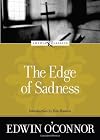
Pulitzer Prize Winner 1962. You know how I always rant about the non-literary quality of christian fiction? Well.... Rant over. I found the novel I've always been wanting to read.
The book tells the story of a fallen Catholic Priest, fallen into alcoholism after his father died. This is his story of recovery and ministry, an exploration of how he fell into sin, and a journey of how he came back. It is also the story of his childhood family friends, the Carmodys. The Carmodys are a sprawling, show more Irish-Catholic family living in Boston with quirky temperaments and sometimes strange behaviors.
The novel has a true literary nature, with philosophical moments, beautiful descriptions, and lengthy sentences. It's beautiful.
Several people have asked me if the book is sad. Not really. The first 500 pages are not really sad-- thought-provoking, but not really sad. The ending of the book is sad and hopeful at the same time.
The themes explore the dangers of isolation, of being busy for the sake of busyness, of hating your fellow man. Sometimes, what's right for us is not what we want. When you are talking about Christian ministry this takes on another dimension all on its own. show less
The book tells the story of a fallen Catholic Priest, fallen into alcoholism after his father died. This is his story of recovery and ministry, an exploration of how he fell into sin, and a journey of how he came back. It is also the story of his childhood family friends, the Carmodys. The Carmodys are a sprawling, show more Irish-Catholic family living in Boston with quirky temperaments and sometimes strange behaviors.
The novel has a true literary nature, with philosophical moments, beautiful descriptions, and lengthy sentences. It's beautiful.
Several people have asked me if the book is sad. Not really. The first 500 pages are not really sad-- thought-provoking, but not really sad. The ending of the book is sad and hopeful at the same time.
The themes explore the dangers of isolation, of being busy for the sake of busyness, of hating your fellow man. Sometimes, what's right for us is not what we want. When you are talking about Christian ministry this takes on another dimension all on its own. show less

I enjoyed this telling of the trials and tribulations catholic priests endure while serving the community. The protagonist is Father Hugh Kennedy, a priest for the slightly rundown, ethnically diverse parish of St. Paul's and a recovering alcoholic. Still, the story revolves around a strange and annoying man named Charlie Carmody and his family. Some narratives are long-winded, but the author's witty and heartfelt characters make this a charming and worthwhile read.
While I do like to think that I have a decent sense of humor, I've never been one to laugh out loud much.
This book is probably the first book I've ever read that had me constantly cracking up. However, I doubt anyone else would have the same experience.
The book is basically about a priest who is very close to his father. When his dad dies, he ends up going off the deep end and getting wasted all the time. Eventually the Cardinal sends him to a rehab-for-Priests place in Arizona. After 4 or show more so years there, he finally gets a Parish back.
The Parish he gets though, is not the one he would have wanted. It's a Parish for non-English speakers, poor folks and those who are just looking for a place to eat. His church was once the most beautiful around, but now most of its rooms are boarded up and not used. If it weren't for the Cardinal's personal love for the church (he attended it as a child), there's no way that this Parish would continue to exist.
Throughout the course of the book, the Priest begins to get in touch with people from his past, who know about his drinking problem. The book is full of colorful and hilarious characters. I'd never really considered what a Priest thinks about on a day to day basis, but it was pretty funny reading his reactions to these goofy people and his insane Parishiners.
My favorite character though, is the Priest's young protege. After reading a few pages of his dialouge and inane ramblings, I realized that he's a dead ringer for Dwight from The Office.
In summation : If you're me and you want to laugh for like 10,000 hours, you should read this hilarious and ridiculous book.
P.S. I should really explain a thing or two more in regard to why other people wouldn't find this funny. It's mostly really serious and sad. However, the reason it's my jam is that all of the humor is extremely dry and subtle. Seriously, if anyone actually read this book with this review in mind, it would lead to massive confusion. Also, explosions! show less
This book is probably the first book I've ever read that had me constantly cracking up. However, I doubt anyone else would have the same experience.
The book is basically about a priest who is very close to his father. When his dad dies, he ends up going off the deep end and getting wasted all the time. Eventually the Cardinal sends him to a rehab-for-Priests place in Arizona. After 4 or show more so years there, he finally gets a Parish back.
The Parish he gets though, is not the one he would have wanted. It's a Parish for non-English speakers, poor folks and those who are just looking for a place to eat. His church was once the most beautiful around, but now most of its rooms are boarded up and not used. If it weren't for the Cardinal's personal love for the church (he attended it as a child), there's no way that this Parish would continue to exist.
Throughout the course of the book, the Priest begins to get in touch with people from his past, who know about his drinking problem. The book is full of colorful and hilarious characters. I'd never really considered what a Priest thinks about on a day to day basis, but it was pretty funny reading his reactions to these goofy people and his insane Parishiners.
My favorite character though, is the Priest's young protege. After reading a few pages of his dialouge and inane ramblings, I realized that he's a dead ringer for Dwight from The Office.
In summation : If you're me and you want to laugh for like 10,000 hours, you should read this hilarious and ridiculous book.
P.S. I should really explain a thing or two more in regard to why other people wouldn't find this funny. It's mostly really serious and sad. However, the reason it's my jam is that all of the humor is extremely dry and subtle. Seriously, if anyone actually read this book with this review in mind, it would lead to massive confusion. Also, explosions! show less
Lists
Favourite Books (1)
Five star books (1)
Awards


You May Also Like


Associated Authors
Statistics
- Works
- 9
- Also by
- 8
- Members
- 1,245
- Popularity
- #20,609
- Rating
- 3.8
- Reviews
- 25
- ISBNs
- 26
- Languages
- 1
- Favorited
- 2