Crampton Hodnet
by Barbara Pym 
On This Page
Description
Life has a certain reassuring if not terribly exciting rhythm for the residents of North Oxford. Miss Morrow is content in her position as spinster companion to Miss Doggett, even if her employer and the woman's social circle regard her as a piece of furniture. Stephen Latimer, the new cleric and Miss Doggett's dashing new tenant, upsets the balance for Miss Morrow by proposing the long discounted possibility of marriage. Miss Doggett's nephew, Mr. Francis Cleveland, is a handsome, show more middle-aged professor not destined for greatness in his field. He has a complaisant wife and an adoring pupil, a dangerous midlife combination. The town gossips witness an impulsive declaration of love between Francis Cleveland and Miss Bird and conclude that Mr. Cleveland is willing to sacrifice marriage and respectability for the sake of passion. Caught in a potentially compromising situation with Miss Morrow, Mr. Latimer clumsily refers to a nonexistent town: Crampton Hodnet. show lessTags
Recommendations





















Member Reviews
Set in Oxford during the 1930s, Crampton Hodnet is for me one of Barbara Pym’s funniest books. Pym finished it during the war but, as she was becoming increasingly involved in her war work, did not send the manuscript to publishers immediately. She later considered it too dated so it remained unpublished during her lifetime. However, I am glad it’s now available to readers as I enjoyed it very much.
The book opens by introducing two characters who also appear in Jane and Prudence: the formidable Miss Doggett and her long-suffering companion, Jessie Morrow, who are giving a tea-party for students on a gloomy Sunday in respectable north Oxford. It was difficult for me to believe that even in the 1930s undergraduates would willingly go show more to the rather stuffy and middle-aged tea-parties described in this novel, but it seems to have been a major part of student social life (perhaps because of the free tea and cake), and it does result in some of the most hilarious scenes in the novel. I particularly liked Michael and Gabriel, a foppish Brideshead-esque pair of students, who often appear to speak in unison and inexplicably worship Miss Doggett. They provide some really funny moments – I would love to read more about them.
Miss Morrow is a slightly melancholy figure, who has to endure Miss Doggett’s inconsiderate demands and tactless remarks as part of her job. She listens to gramophone records on wet afternoons, dreaming that she is somewhere else. However, she has an unexpected strength of character which emerges in her occasionally cynical comments on the action going on around her and results in her friendship with Miss Doggett’s new lodger, the curate Stephen Latimer.
Miss Morrow’s life forms only one aspect of the plot, as there is a large cast of characters, mainly students, academics and their families, and the ‘excellent women’ of north Oxford. Another subplot involves professor Francis Cleveland’s affair with one of his students, Barbara Bird. Francis is married but his wife Margaret seems to have grown tired of him long ago. She practically encourages him to spend long hours in his study working on the book he has been writing for the past 28 years (‘it was not yet finished, and there seemed no prospect that it would ever be’) or to go to the Bodleian on the pretext of doing some research, in the hope that he might ‘find a nice young woman working there and take her out to tea’. This casts an unexpected light on Francis’ attraction to Barbara, since, although it causes great outrage among Miss Doggett’s social circle, Margaret is quite unperturbed by the whole matter. As usual, although she writes about people with mainly conventional opinions, Barbara Pym is not quite so conventional herself.
I found the character of Barbara interesting. She is intelligent and attractive, so it’s not difficult to see why Francis becomes smitten with her, but although she is equally drawn to him, she is not really interested in having an affair with anyone. She doesn’t like being kissed by any of her many admirers and feels that ‘there was no need even for their beautiful friendship to be turned into a sordid intrigue’. She is interested in a more idealised, non-sexual kind of love. Barbara is a romantic dreamer but her passion is really more directed towards poetry and history than towards Francis; when he declares his love to her in the British Museum, she is more interested in ‘going into raptures over Milton’s commonplace book’ in the glass case nearby. When I finished the novel, I wondered what would happen to Barbara in the future and whether she would find happiness.
Miss Morrow is another character who has romantic dreams but is equivocal about whether she wants her life to change. There is something sad about how she buys herself beautiful clothes such as the ‘dress of tender leaf green...in her wardrobe among her old, drab things, where it might have to wait many weeks before she had the courage to wear it’. But she does not really make any efforts to escape her life with Miss Doggett and seems to feel a secret contentment with her unobtrusive place as an lady’s companion. Although there is certainly a fair amount of action in Barbara Pym’s novels, at least in terms of people’s relationships, there is also the feeling that some things stay the same and that, in the end, her novels seem to come full circle. She often writes about narrow, mostly uneventful worlds whose characters derive comfort from routine and quiet. The repeating cycle of the academic year and the unchanging social background of Oxford in the 1930s are perfect for this kind of story, even though very soon of course there would be huge change with the coming of WW2.
Personally I loved reading a novel set in Oxford, full of details of the Bodleian, the cafes and the Botanical Gardens, but what really makes the setting come to life are the many humorous minor characters, types probably still recognisable among Oxford residents even today. As Miss Morrow strolls through the park on a sunny spring day, she sees:
‘Dons striding along with walking sticks, wives in Fair Isle jumpers coming low over their hips, nurses with prams, and governesses with intelligent children asking ceaseless questions in their clear, fluty voices. And then there were the clergymen, solitary bearded ones reading books, young earnest ones, like chickens just out of the egg, discussing problems which had nothing to do with the sunshine or the yellow-green leaves uncurling on the trees. There were undergraduates too, and young women with Sweet’s Anglo-Saxon Reader or lecture notebooks under their arms, and lovers, clasping each other’s fingers and trying to find secluded paths where they might kiss. But for Miss Morrow the lovers were only a minor element; the north Oxford and clerical elements were stronger and gave more character to the ballet. She felt that even she and Miss Doggett could be principals in it...’ [2012] show less
The book opens by introducing two characters who also appear in Jane and Prudence: the formidable Miss Doggett and her long-suffering companion, Jessie Morrow, who are giving a tea-party for students on a gloomy Sunday in respectable north Oxford. It was difficult for me to believe that even in the 1930s undergraduates would willingly go show more to the rather stuffy and middle-aged tea-parties described in this novel, but it seems to have been a major part of student social life (perhaps because of the free tea and cake), and it does result in some of the most hilarious scenes in the novel. I particularly liked Michael and Gabriel, a foppish Brideshead-esque pair of students, who often appear to speak in unison and inexplicably worship Miss Doggett. They provide some really funny moments – I would love to read more about them.
Miss Morrow is a slightly melancholy figure, who has to endure Miss Doggett’s inconsiderate demands and tactless remarks as part of her job. She listens to gramophone records on wet afternoons, dreaming that she is somewhere else. However, she has an unexpected strength of character which emerges in her occasionally cynical comments on the action going on around her and results in her friendship with Miss Doggett’s new lodger, the curate Stephen Latimer.
Miss Morrow’s life forms only one aspect of the plot, as there is a large cast of characters, mainly students, academics and their families, and the ‘excellent women’ of north Oxford. Another subplot involves professor Francis Cleveland’s affair with one of his students, Barbara Bird. Francis is married but his wife Margaret seems to have grown tired of him long ago. She practically encourages him to spend long hours in his study working on the book he has been writing for the past 28 years (‘it was not yet finished, and there seemed no prospect that it would ever be’) or to go to the Bodleian on the pretext of doing some research, in the hope that he might ‘find a nice young woman working there and take her out to tea’. This casts an unexpected light on Francis’ attraction to Barbara, since, although it causes great outrage among Miss Doggett’s social circle, Margaret is quite unperturbed by the whole matter. As usual, although she writes about people with mainly conventional opinions, Barbara Pym is not quite so conventional herself.
I found the character of Barbara interesting. She is intelligent and attractive, so it’s not difficult to see why Francis becomes smitten with her, but although she is equally drawn to him, she is not really interested in having an affair with anyone. She doesn’t like being kissed by any of her many admirers and feels that ‘there was no need even for their beautiful friendship to be turned into a sordid intrigue’. She is interested in a more idealised, non-sexual kind of love. Barbara is a romantic dreamer but her passion is really more directed towards poetry and history than towards Francis; when he declares his love to her in the British Museum, she is more interested in ‘going into raptures over Milton’s commonplace book’ in the glass case nearby. When I finished the novel, I wondered what would happen to Barbara in the future and whether she would find happiness.
Miss Morrow is another character who has romantic dreams but is equivocal about whether she wants her life to change. There is something sad about how she buys herself beautiful clothes such as the ‘dress of tender leaf green...in her wardrobe among her old, drab things, where it might have to wait many weeks before she had the courage to wear it’. But she does not really make any efforts to escape her life with Miss Doggett and seems to feel a secret contentment with her unobtrusive place as an lady’s companion. Although there is certainly a fair amount of action in Barbara Pym’s novels, at least in terms of people’s relationships, there is also the feeling that some things stay the same and that, in the end, her novels seem to come full circle. She often writes about narrow, mostly uneventful worlds whose characters derive comfort from routine and quiet. The repeating cycle of the academic year and the unchanging social background of Oxford in the 1930s are perfect for this kind of story, even though very soon of course there would be huge change with the coming of WW2.
Personally I loved reading a novel set in Oxford, full of details of the Bodleian, the cafes and the Botanical Gardens, but what really makes the setting come to life are the many humorous minor characters, types probably still recognisable among Oxford residents even today. As Miss Morrow strolls through the park on a sunny spring day, she sees:
‘Dons striding along with walking sticks, wives in Fair Isle jumpers coming low over their hips, nurses with prams, and governesses with intelligent children asking ceaseless questions in their clear, fluty voices. And then there were the clergymen, solitary bearded ones reading books, young earnest ones, like chickens just out of the egg, discussing problems which had nothing to do with the sunshine or the yellow-green leaves uncurling on the trees. There were undergraduates too, and young women with Sweet’s Anglo-Saxon Reader or lecture notebooks under their arms, and lovers, clasping each other’s fingers and trying to find secluded paths where they might kiss. But for Miss Morrow the lovers were only a minor element; the north Oxford and clerical elements were stronger and gave more character to the ballet. She felt that even she and Miss Doggett could be principals in it...’ [2012] show less
Absolutely hilarious, though you may already have to be a Pym fan to get into the jokes right away. I am, so within seconds of opening he book, I was giggling helplessly at the way she so masterfully presents (in an ever so slightly bitchy tone) the foibles of we kind and normal folk as we go about our day.
Life is everyday in Pym's stories, but everyday is immensely funny, when looked at through her magnifying glass.
Loved this book best of all I've read.
Life is everyday in Pym's stories, but everyday is immensely funny, when looked at through her magnifying glass.
Loved this book best of all I've read.
2020 has become my year of rereading the novels of Barbara Pym, my favourite novelist - "favourite" in the sense of "speaks most to my soul", not as in "greatest" or "best"; I believe she would have appreciated the distinction. This is my revised review.
"I feel there's something awkward about a silence in a tool shed..."
In sleepy 1930s North Oxford, university don Francis Cleveland tiptoes delicately toward an extramarital affair with one of his students, Barbara Bird, unaware that his idea of a discreet affair is in fact visible to half the town. Francis' daughter Anthea falls in love with the son of a wealthy woman, to the delight of her great-aunt Miss Doggett, whose primary characteristic for a marriage is the postcode of the show more parents. And Miss Doggett's paid companion, the homely Miss Morrow, has a momentary romance with their lodger, the curate Mr Latimer, which is based primarily on a secret walk along the moor and a conversation in a tool shed during a storm.
Crampton Hodnet is one of my favourite Barbara Pym novels. Its history is inauspicious: written when the author was in her 20s, the young Pym abandoned the novel due to the outbreak of World War II and later decided it was too dated to publish when she became a recognised author. After her death, it was dug out of the archives for publication. While the novel may have a slightly scruffy quality, this is a real joy, very funny, precise in its observations and touching in Pym's portrayals of the quietly unmarried (and the quietly married) residents of North Oxford.
In her trademark ironic third-person style, Pym gives us both the inner thoughts of every character (they're all resigned to lives of comfortable dissatisfaction) and also external views from other characters that remind us so much of life is a study in point-of-view. Pym is often compared to Austen, although I don't personally find their styles all that similar, but Crampton Hodnet is perhaps the closest match - unsurprising as it was written so young, when authors are usually still betraying their influences. The arch narrative voice is as strong here as it ever would be. I'd acknowledge that this book does not have the sheer staying power of Pym's later works, so it's perhaps not the best place for newcomers. But if you've enjoyed even a couple of her books, this should delight too.
Here also we have so many of the tropes of the author's canon. The lives of academics and the clergy, the experience of the women still in their 30s who have resigned themselves to never having love, the daffy young lovers and the imperious older women, the poetry quotations, and a profusion of tea and cake. (Here too we have Pym's first queer characters, in the two young art-lovers Gabriel and Michael; like all of her gay men, they are treated just like any other characters.)
Great fun. show less
"I feel there's something awkward about a silence in a tool shed..."
In sleepy 1930s North Oxford, university don Francis Cleveland tiptoes delicately toward an extramarital affair with one of his students, Barbara Bird, unaware that his idea of a discreet affair is in fact visible to half the town. Francis' daughter Anthea falls in love with the son of a wealthy woman, to the delight of her great-aunt Miss Doggett, whose primary characteristic for a marriage is the postcode of the show more parents. And Miss Doggett's paid companion, the homely Miss Morrow, has a momentary romance with their lodger, the curate Mr Latimer, which is based primarily on a secret walk along the moor and a conversation in a tool shed during a storm.
Crampton Hodnet is one of my favourite Barbara Pym novels. Its history is inauspicious: written when the author was in her 20s, the young Pym abandoned the novel due to the outbreak of World War II and later decided it was too dated to publish when she became a recognised author. After her death, it was dug out of the archives for publication. While the novel may have a slightly scruffy quality, this is a real joy, very funny, precise in its observations and touching in Pym's portrayals of the quietly unmarried (and the quietly married) residents of North Oxford.
In her trademark ironic third-person style, Pym gives us both the inner thoughts of every character (they're all resigned to lives of comfortable dissatisfaction) and also external views from other characters that remind us so much of life is a study in point-of-view. Pym is often compared to Austen, although I don't personally find their styles all that similar, but Crampton Hodnet is perhaps the closest match - unsurprising as it was written so young, when authors are usually still betraying their influences. The arch narrative voice is as strong here as it ever would be. I'd acknowledge that this book does not have the sheer staying power of Pym's later works, so it's perhaps not the best place for newcomers. But if you've enjoyed even a couple of her books, this should delight too.
Here also we have so many of the tropes of the author's canon. The lives of academics and the clergy, the experience of the women still in their 30s who have resigned themselves to never having love, the daffy young lovers and the imperious older women, the poetry quotations, and a profusion of tea and cake. (Here too we have Pym's first queer characters, in the two young art-lovers Gabriel and Michael; like all of her gay men, they are treated just like any other characters.)
Great fun. show less
Crampton Hodnet is a delightful comedy of manners set in Oxford's academic community. The plot is straightforward and in some ways predictable, but it's simply the backdrop for some memorable characters and situations that are laugh-out-loud funny.
The elderly spinster Miss Doggett and her paid companion, Miss Morrow, serve to connect all the characters. Miss Doggett's nephew, Francis Cleveland, is an Oxford don infatuated with Barbara, one of his students. As their relationship evolves, they are increasingly observed by others (except, of course, Francis' wife Margaret), and become the subject of village gossip. Miss Doggett wants so badly to be in control, both of the relationship and the way it is revealed to Margaret, and her show more controlling nature is very funny, indeed. As Miss Doggett meddles in everyone's affairs, Miss Morrow quietly and patiently observes, sharing her innermost thoughts only with the reader.
Meanwhile Miss Morrow has ideas of her own, as she unleashes her wiles on a new curate, Mr. Latimer. Miss Doggett does not approve:
They were still laughing when Miss Doggett came in. The sound of their laughter was the first thing that she heard before the shameful sight met her eyes: the sight of Miss Morrow -- painted like a harlot -- sitting laughing on the bed with a handsome clergyman whom she had just met for the first time, the new curate whose welcome Miss Doggett had planned so carefully. It was too bad. Miss Doggett cast about in her mind for words strong enough to describe Miss Morrow's perfidy and deceit, but could find none. (p. 24)
To fully appreciate this quote one has to conjure up an image of the biggest busybody you've ever seen, decked out in a ridiculous hat, bursting in on the mousey Miss Morrow and the unsuspecting curate. Crampton Hodnet is full such little moments, where words and imagination come together to marvelous effect. Like when the persnickety, effeminate Edward Killigrew reflects on living with his mother:
'Oh, Mother is very well, thank you,' said Edward. 'Full of beans, as usual,' he added, his tone losing a little of its joviality. He knew that it was wicked and unfilial of him, but he sometimes wished that Mother was not quite so full of beans. (p. 74)
Or this, as Latimer prepares to go on holiday with another clergyman:
His friend, the Reverend Theodore James, was rather too serious a companion for a holiday. He couldn't think now why he had suggested that he should join him. It wasn't as if they had ever liked each other. Still, it was too late to do anything about it now, and at least they would be able to have a good talk about old times, rejoicing over those of their contemporaries who had not fulfilled their early promise and belittling those who had. (p. 158)
My only complaint about this book is that I would have liked for Margaret to show a bit more emotion -- anger, even -- at Francis' indiscretions. But Pym wasn't trying to make a statement; his infidelity was simply a mechanism to unleash a variety of characters and put them in awkward or humorous situations for the reader's enjoyment. And enjoy it, I did! show less
The elderly spinster Miss Doggett and her paid companion, Miss Morrow, serve to connect all the characters. Miss Doggett's nephew, Francis Cleveland, is an Oxford don infatuated with Barbara, one of his students. As their relationship evolves, they are increasingly observed by others (except, of course, Francis' wife Margaret), and become the subject of village gossip. Miss Doggett wants so badly to be in control, both of the relationship and the way it is revealed to Margaret, and her show more controlling nature is very funny, indeed. As Miss Doggett meddles in everyone's affairs, Miss Morrow quietly and patiently observes, sharing her innermost thoughts only with the reader.
Meanwhile Miss Morrow has ideas of her own, as she unleashes her wiles on a new curate, Mr. Latimer. Miss Doggett does not approve:
They were still laughing when Miss Doggett came in. The sound of their laughter was the first thing that she heard before the shameful sight met her eyes: the sight of Miss Morrow -- painted like a harlot -- sitting laughing on the bed with a handsome clergyman whom she had just met for the first time, the new curate whose welcome Miss Doggett had planned so carefully. It was too bad. Miss Doggett cast about in her mind for words strong enough to describe Miss Morrow's perfidy and deceit, but could find none. (p. 24)
To fully appreciate this quote one has to conjure up an image of the biggest busybody you've ever seen, decked out in a ridiculous hat, bursting in on the mousey Miss Morrow and the unsuspecting curate. Crampton Hodnet is full such little moments, where words and imagination come together to marvelous effect. Like when the persnickety, effeminate Edward Killigrew reflects on living with his mother:
'Oh, Mother is very well, thank you,' said Edward. 'Full of beans, as usual,' he added, his tone losing a little of its joviality. He knew that it was wicked and unfilial of him, but he sometimes wished that Mother was not quite so full of beans. (p. 74)
Or this, as Latimer prepares to go on holiday with another clergyman:
His friend, the Reverend Theodore James, was rather too serious a companion for a holiday. He couldn't think now why he had suggested that he should join him. It wasn't as if they had ever liked each other. Still, it was too late to do anything about it now, and at least they would be able to have a good talk about old times, rejoicing over those of their contemporaries who had not fulfilled their early promise and belittling those who had. (p. 158)
My only complaint about this book is that I would have liked for Margaret to show a bit more emotion -- anger, even -- at Francis' indiscretions. But Pym wasn't trying to make a statement; his infidelity was simply a mechanism to unleash a variety of characters and put them in awkward or humorous situations for the reader's enjoyment. And enjoy it, I did! show less
Completed around 1940, but not published until five years after her death in 1985, Barbara Pym’s Crampton Hodnet is an early example of what can only be described as “vintage Pym.” As expected, this novel is replete with bumbling academics, clueless prelates, gossiping spinsters, gay men and failed romances. It’s the funniest Pym I’ve read yet and absolutely charming.
Miss Doggett’s companion, Jessie Morrow (Hello old friends!), “a thin, used-up looking woman in her middle thirties,” has become a kind friend to new, handsome curate Reverend Stephen Latimer, who has come to live with them during his time in the parish. He gets the idea that he “might do worse than marry Miss Morrow.” The skeptical Jessie Morrow is show more apparently looking for something a wee bit more…..tempting.
At the same time, Francis Cleveland, a University lecturer in English Literature, is bored with his humdrum life with his wife, Margaret and daughter Anthea, and is gravitating more toward the lovely Miss Barbara Bird, a student that he is tutoring. He sees a future for them while she sees a platonic friendship. Anthea, meanwhile, is head over heels for twenty year old Simon Beddoes, whose only goal right now is to be Prime Minister.
Overseeing all that goes on in North Oxford is Miss Doggett, whose laser-like ability to nose out any story and insert herself into all predicaments is quite astounding. When it becomes apparent that Mr. Latimer is not going to be easy to push around, Pym gives us this hysterical bit:
“Miss Morrow knew that it was the beginning of the end. Mr. Latimer was starting to break away, if he had not already broken. It would not be long now before Miss Doggett would have to be finding herself another curate, preferably an old, disillusioned one with no spirit left in him, who had long ago given up the struggle. One who would be thankful just to have a bed and food and a corner in a dark Victorian-Gothic house in North Oxford where he might end his days in peace.” (Page 155)
I can’t overstate my admiration for Barbara Pym’s ability to depict with wit and irony the everyday occurrences in this genteel Oxford community. Highly recommended. show less
Miss Doggett’s companion, Jessie Morrow (Hello old friends!), “a thin, used-up looking woman in her middle thirties,” has become a kind friend to new, handsome curate Reverend Stephen Latimer, who has come to live with them during his time in the parish. He gets the idea that he “might do worse than marry Miss Morrow.” The skeptical Jessie Morrow is show more apparently looking for something a wee bit more…..tempting.
At the same time, Francis Cleveland, a University lecturer in English Literature, is bored with his humdrum life with his wife, Margaret and daughter Anthea, and is gravitating more toward the lovely Miss Barbara Bird, a student that he is tutoring. He sees a future for them while she sees a platonic friendship. Anthea, meanwhile, is head over heels for twenty year old Simon Beddoes, whose only goal right now is to be Prime Minister.
Overseeing all that goes on in North Oxford is Miss Doggett, whose laser-like ability to nose out any story and insert herself into all predicaments is quite astounding. When it becomes apparent that Mr. Latimer is not going to be easy to push around, Pym gives us this hysterical bit:
“Miss Morrow knew that it was the beginning of the end. Mr. Latimer was starting to break away, if he had not already broken. It would not be long now before Miss Doggett would have to be finding herself another curate, preferably an old, disillusioned one with no spirit left in him, who had long ago given up the struggle. One who would be thankful just to have a bed and food and a corner in a dark Victorian-Gothic house in North Oxford where he might end his days in peace.” (Page 155)
I can’t overstate my admiration for Barbara Pym’s ability to depict with wit and irony the everyday occurrences in this genteel Oxford community. Highly recommended. show less
An amusing but rarely laugh-out-loud funny story about romantic dalliances between upper class English people in a college town in the 1930's. I found the relationship between the Oxford Don and his graduate student to be a lot less amusing than the one between the curate and the lady's companion who works for his landlady. In the latter case, the very sensible woman in question responds to the curate's romantic overtures with thoughtful consideration and, when he shows that he doesn't really respect her, sarcastic wit.
In this comedy of manners set in Oxford, England, between the wars, we are afforded a look into the lives of the genteel class of North Oxford. The foibles and pecadilloes of the comfortably off are exposed and discussed with a delightful acerbity and controlled understatement as they go about their daily lives. Miss Doggett (lady of the Lodge, in her 70s) and her live-in paid companion, Miss Morrow (aged 36), form the loose centre of this cluster of characters and their goings-on. Miss Morrow's voice and her observations are what we come to trust, as this outwardly desiccated old maid (her words, in essence) harbours a good, well-educated mind and a wryly realistic approach to life. One of the main plots involves a basically lazy show more professor of English Literature who attempts a romance with one of his undergrad students, threatening to upset the staid comfort of his life - is she worth losing a large sitting room over? A genuine comfort read for those times when your mind can't handle much more, yes, but not a dopey book, either. I don't think anyone can write a comedy of manners better than the English, bless 'em. And Pym writes better than most. show less
Members
- Recently Added By
Lists

Favourite Virago Modern Classics
183 works; 38 members

Small Town Fiction
66 works; 13 members

Novels Published in 1985
14 works; 3 members

Books Read in 2021
5,361 works; 114 members

Top Five Books of 2023
767 works; 317 members
Talk Discussions
Past Discussions
Barbara Pym centenary: Crampton Hodnet in Virago Modern Classics (October 2013)
Author Information

27+ Works 14,754 Members
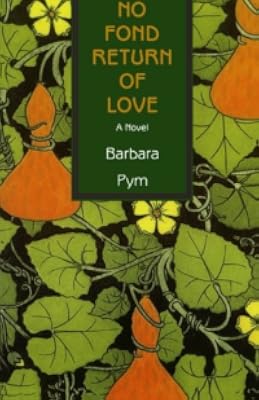
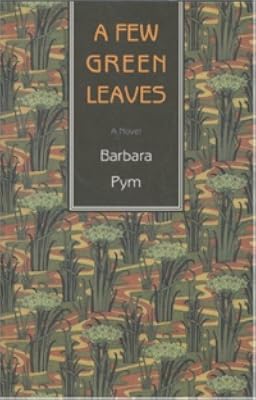
Novelist Barbara Pym was born in Shropshire and educated at Oxford University. An editor of Africa, an anthropological review, for many years, she published her first novel, Some Tame Gazelle, in 1950. Since then, a number of popular works have been published. Often compared with the works of Jane Austen in both manner and subject, Pym's novels show more are apparently guileless evocations of the foibles of aging and isolated characters. She has a sure, if understated, sense of her characters' psychology and of their unintentionally comic revelations about themselves and their futile lives. After the publication of No Fond Return of Love (1961), all her books were out of print until she was cited, coincidentally by both David Cecil and Philip Larkin, as among the most underestimated novelists of the 20th century. She subsequently completed two successful novels, The Sweet Dove Died (1978) and Quartet in Autumn (1978), the latter a comic-pathetic study of two men and two women in their sixties who work in the same office but lead separate, lonely lives outside. Many of her earlier books have since been reprinted, including Excellent Women (1952) and A Glass of Blessings (1958), both perceptive psychological studies of aging women taken advantage of by others. A posthumous novel, A Few Green Leaves (1980), is a superb comedy of provincial village life. (Bowker Author Biography) show less
Barbara Pym has a Legacy Library. Legacy libraries are the personal libraries of famous readers, entered by LibraryThing members from the Legacy Libraries group.
All Editions
Some Editions
Series
Belongs to Publisher Series
Virago Modern Classics (568)
Work Relationships
Is contained in
Has as a reference guide/companion
Common Knowledge
- Canonical title
- Crampton Hodnet
- Original title
- Crampton Hodnet
- Original publication date
- 1985 (posthumous: completed 1939) (posthumous: completed 1939)
- People/Characters
- Jessie Morrow; Miss Doggett; Mr. Latimer; Barbara Bird; Francis Cleveland
- Important places
- Oxford, Oxfordshire, England, UK; Crampton Hodnet
- First words
- It was a wet Sunday afternoon in North Oxford at the beginning of October.
- Last words
- (Click to show. Warning: May contain spoilers.)And Miss Morrow was inclined to agree with her.
- Blurbers
- Larkin, Philip; Betjeman, John
Classifications
Statistics
- Members
- 945
- Popularity
- 28,133
- Reviews
- 42
- Rating
- (3.92)
- Languages
- English, French, German, Italian
- Media
- Paper, Audiobook, Ebook
- ISBNs
- 23
- ASINs
- 10