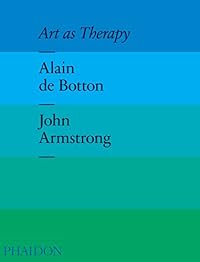
Art as Therapy
by Alain De Botton, John Armstrong
On This Page
Description
Describes a new way of looking at familiar masterpieces, suggesting that the works of art can be useful, relevant--and even therapeutic.Tags
Recommendations












Member Reviews
This book really, really annoyed me.
If Alain de Botton finds the current art world snotty and elitist (he never comes out and says it, but it's heavily implied) I find his alternative suggestions range from the laughable to the downright bizarre. They also are likely to be seen as equally patronizing in a very different way. That's because when it comes down to it, what de Botton completely ignores, overlooks or fails to understand is that the relationship between a work of art and an individual is a personal one.
Ergo, some kind of "top down" approach, in which museums and galleries opt to encourage art that tries to develop empathy or understanding, or other such therapeutic approaches, is going to be doomed to failure anyway. Even show more if it weren't, the idea of commissioning works to evoke certain feelings is ludicrous. Why does he imagine we'd end up with anything different than what we have in popular culture?
I tend to agree with some of his assessments, for instance that the pendulum may have swung too far in the direction of deferring to artists in the determination of what becomes art. But the idea that "we abandon to chance the hope that our key needs will be covered by the unstructured and mysterious inspiration of artists" is simply bollocks. There's this little thing called the market. If artists aren't creating things that buyers can respond to, those objects won't sell.
The patron doesn't need to be able to "direct" the art in order to determine the outcome. He or she simply can keep their wallet shut unless and until they identify a a piece that they respond to. (Alternatively, they can find an artist whose work they admire and, yes, commission a specific piece: it happens quite frequently...) Nor, I'd suggest, is it always desirable that we do direct art, as de Botton so glibly suggests might be wise. Yes, the Catholic church created some great art, but great art was born in rejection of it, too. And more great art was born in opposition to the agendas of those who tried to "shape" art in society's interest than in response to it.
Repeatedly, de Botton misunderstands the art market: he argues that people buy art solely because of the "brand name". That may be so for some collectors, but almost invariably, if you talk to collectors (as I've done, as a journalist writing about the topic) they have a tremendous passion for certain artists and kinds of work (like hedge fund manager Dave Ganek and photography). Similarly, there are big brand names whose works the biggest galleries and auction houses struggle to shift: early "dark" works by van Gogh (people will buy "Potato Eaters" canvases, should they become available, ONLY because of the brand name, and some gloomy works by Lucian Freud have remained unsold at high-profile auctions.) Regardless of how big the brand, there are some things nobody wants in their homes. Again, that pesky personal connection.
I agree with de Botton that a plain vanilla label on a resurrection scene from a triptych, with Jesus visiting Mary that deals only with the work's art historical and historical importance is skimpy. But what would you make of one that had none of that detail, and instead told you that the scen was one of a "loving mother-son relationship" "that does not avoid conflict or grief... They do not embrace. He will soon leave. ... The picture makes the claim that such moments of return (and of survival), though fleeting and rare, are crucially important in life. It wants men to understand -- and call their mothers." Nothing about the centrality of these scenes in Christian iconography -- it's completely dissociated from its context. Nothing about the piece's history (it once belonged to Isabella of Castile) or why we're looking at this rather than some other representation of precisely the same scene (which has been reproduced thousands of times). Instead it suggests it's about guys who need to be in touch with their mothers.
To me, that captured the problem with the book as a whole. That's the kind of epiphany that someone might well have while gazing thoughtfully at such a work of art. But is it an epiphany that anyone should be INSTRUCTED to have? Which is really what de Botton's alternative approach is suggesting. By all means, encourage people to ponder works of art with the aim of thinking about them in personal ways -- I think anyone who responds to art already does so. Will it make it easier for someone who doesn't find much to react to in, say, a Monet waterlily painting if it is displayed differently or he is told to think of it as a tool to calmness and an alternative to valium?
In other words, this is a very deeply annoying book that does a disservice to any real understanding of art, art history, the art market and even the main subject -- the role that looking at art can have on an individual's ability to grapple with whatever the world throws at them. de Botton emerges from this as just as doctrinaire and prescriptive as the art world that he criticizes, and that critique is just another form of elitism cloaked in a thin veneer of populism. show less
If Alain de Botton finds the current art world snotty and elitist (he never comes out and says it, but it's heavily implied) I find his alternative suggestions range from the laughable to the downright bizarre. They also are likely to be seen as equally patronizing in a very different way. That's because when it comes down to it, what de Botton completely ignores, overlooks or fails to understand is that the relationship between a work of art and an individual is a personal one.
Ergo, some kind of "top down" approach, in which museums and galleries opt to encourage art that tries to develop empathy or understanding, or other such therapeutic approaches, is going to be doomed to failure anyway. Even show more if it weren't, the idea of commissioning works to evoke certain feelings is ludicrous. Why does he imagine we'd end up with anything different than what we have in popular culture?
I tend to agree with some of his assessments, for instance that the pendulum may have swung too far in the direction of deferring to artists in the determination of what becomes art. But the idea that "we abandon to chance the hope that our key needs will be covered by the unstructured and mysterious inspiration of artists" is simply bollocks. There's this little thing called the market. If artists aren't creating things that buyers can respond to, those objects won't sell.
The patron doesn't need to be able to "direct" the art in order to determine the outcome. He or she simply can keep their wallet shut unless and until they identify a a piece that they respond to. (Alternatively, they can find an artist whose work they admire and, yes, commission a specific piece: it happens quite frequently...) Nor, I'd suggest, is it always desirable that we do direct art, as de Botton so glibly suggests might be wise. Yes, the Catholic church created some great art, but great art was born in rejection of it, too. And more great art was born in opposition to the agendas of those who tried to "shape" art in society's interest than in response to it.
Repeatedly, de Botton misunderstands the art market: he argues that people buy art solely because of the "brand name". That may be so for some collectors, but almost invariably, if you talk to collectors (as I've done, as a journalist writing about the topic) they have a tremendous passion for certain artists and kinds of work (like hedge fund manager Dave Ganek and photography). Similarly, there are big brand names whose works the biggest galleries and auction houses struggle to shift: early "dark" works by van Gogh (people will buy "Potato Eaters" canvases, should they become available, ONLY because of the brand name, and some gloomy works by Lucian Freud have remained unsold at high-profile auctions.) Regardless of how big the brand, there are some things nobody wants in their homes. Again, that pesky personal connection.
I agree with de Botton that a plain vanilla label on a resurrection scene from a triptych, with Jesus visiting Mary that deals only with the work's art historical and historical importance is skimpy. But what would you make of one that had none of that detail, and instead told you that the scen was one of a "loving mother-son relationship" "that does not avoid conflict or grief... They do not embrace. He will soon leave. ... The picture makes the claim that such moments of return (and of survival), though fleeting and rare, are crucially important in life. It wants men to understand -- and call their mothers." Nothing about the centrality of these scenes in Christian iconography -- it's completely dissociated from its context. Nothing about the piece's history (it once belonged to Isabella of Castile) or why we're looking at this rather than some other representation of precisely the same scene (which has been reproduced thousands of times). Instead it suggests it's about guys who need to be in touch with their mothers.
To me, that captured the problem with the book as a whole. That's the kind of epiphany that someone might well have while gazing thoughtfully at such a work of art. But is it an epiphany that anyone should be INSTRUCTED to have? Which is really what de Botton's alternative approach is suggesting. By all means, encourage people to ponder works of art with the aim of thinking about them in personal ways -- I think anyone who responds to art already does so. Will it make it easier for someone who doesn't find much to react to in, say, a Monet waterlily painting if it is displayed differently or he is told to think of it as a tool to calmness and an alternative to valium?
In other words, this is a very deeply annoying book that does a disservice to any real understanding of art, art history, the art market and even the main subject -- the role that looking at art can have on an individual's ability to grapple with whatever the world throws at them. de Botton emerges from this as just as doctrinaire and prescriptive as the art world that he criticizes, and that critique is just another form of elitism cloaked in a thin veneer of populism. show less
"This is one of the most ambitions concepts of art...incarnating an abstract idea in a material object, [and] finding a way to make an idea palpable and direct." de Botton and Armstrong present an engaging, and occasionally surprising, treatise on art's role to direct/encourage us all to become better, more self-aware and compassionate people.
Especially enjoyable for me are passages addressing the issue of art and capitalism, and a well-crafted passage defending the notion of censorship.
"We cannot claim both that art will elevate us and that ugliness will leave us unaffected. The rightful celebration of freedom as an organizing principle in democracy has blinded us to an awkward truth: that freedom should, in some contexts, be limited show more for the sake of our wellbeing."
Accessible writing makes unexpected arguments easy to consider. What kept this at a solid 4 stars is the stunning shortage of representation of art created by women. show less
Especially enjoyable for me are passages addressing the issue of art and capitalism, and a well-crafted passage defending the notion of censorship.
"We cannot claim both that art will elevate us and that ugliness will leave us unaffected. The rightful celebration of freedom as an organizing principle in democracy has blinded us to an awkward truth: that freedom should, in some contexts, be limited show more for the sake of our wellbeing."
Accessible writing makes unexpected arguments easy to consider. What kept this at a solid 4 stars is the stunning shortage of representation of art created by women. show less
Although the idea behind the book: that art should be used to improve humanity - is intriguing, I found the lecturing style of the prose to be tiresome and self-righteous in a particular, post-enlightenment effete intellectual atheist way. De Botton seems to imply that he knows best for everyone. While I enjoyed his interpretations of art and objects, they are pretty idiosyncratic and any museum curated by him would be way too propagandistic for my tastes.
Alain de Botton and John Armstrong have received a lot of flack over this but I enjoyed the book. Sometimes I agreed with them, sometimes I did not, but I always found them thought provoking. I found it useful to view art from an entirely new perspective, and the book has certainly extended my understanding of the subject.
I felt a bit underwhelmed by this book. I do like Alain de Bottom, but i wonder if this book was written in the bandwagon of his previous book successes.
I wish he had written an essay and left at that. As it is, although the premises are interesting and I did enjoy the first few chapters, I felt as if he was trying too hard to come up with material to justify a whole book.
I wish he had written an essay and left at that. As it is, although the premises are interesting and I did enjoy the first few chapters, I felt as if he was trying too hard to come up with material to justify a whole book.
I really liked the perspective of art presented in this book. It was a very fresh look at art and its usefulness to us.
I really liked the perspective of art presented in this book. It was a very fresh look at art and its usefulness to us.
Members
- Recently Added By
Published Reviews
ThingScore 13
Dat kunst niet alleen de mooie kwaliteiten, maar álle kwaliteiten van de mens aan de orde kan stellen, ook de meest destructieve, past niet in De Bottons pleidooi. Dat in kunst altijd meer dan één betekenis schuilt, wat een essentiële eigenschap is (anders hadden atheïsten niet van Kruisafnemingen kunnen houden), interesseert hem niet, wat zijn interpretaties soms licht absurd maakt: 'De show more Koreaanse maanvaas geeft niets om status. Hij is wijs genoeg om niet te vragen hem als bijzonder object te beschouwen. Hij is niet nederig, maar gewoon tevreden met wat hij is.' Dergelijke personificaties kunnen in Toon Tellegen-achtige poëzie prachtig zijn - waar ze bloedserieus als boodschap worden geponeerd, schuurt het als eczeem. De vorm tenslotte waarin een 'waarde' verbeelding krijgt, is voor de auteur van beduidend minder belang dan de boodschap. Dat is kwalijk, aangezien troost bij Fra Angelico nogal verschilt van troost bij een zigeunerjongen met een traan. Het is alsof je voetballiefhebbers zegt dat het niet uitmaakt of je naar een wedstrijd van Barcelona of van SV De watervogels in Den Helder kijkt: sport is immers gezond!
Kunst ís vorm: de kwaliteit van de uitbeelding bepaalt de betekenis.
Had De Botton het maar gelaten bij zijn observaties van menselijk gedrag, en ter overweging een paar kunstwerken erbij geplaatst.
Maar hij maakt zijn onderwerp instrumenteel als de cijfers in een rekensom, en negeert daarmee de essentie van kunst. Hoe moeilijk het ook is uit te leggen of verdedigen: juist omdát kunst ontsnapt aan vaste omlijningen, kan het kunst zijn. Het is het altijd meer dan het is.
Wat een welkom provocatief boek had kunnen zijn, blijft steken in een dwingend pleidooi voor verbetering van het ego. show less
Kunst ís vorm: de kwaliteit van de uitbeelding bepaalt de betekenis.
Had De Botton het maar gelaten bij zijn observaties van menselijk gedrag, en ter overweging een paar kunstwerken erbij geplaatst.
Maar hij maakt zijn onderwerp instrumenteel als de cijfers in een rekensom, en negeert daarmee de essentie van kunst. Hoe moeilijk het ook is uit te leggen of verdedigen: juist omdát kunst ontsnapt aan vaste omlijningen, kan het kunst zijn. Het is het altijd meer dan het is.
Wat een welkom provocatief boek had kunnen zijn, blijft steken in een dwingend pleidooi voor verbetering van het ego. show less
added by WiJiWiJi
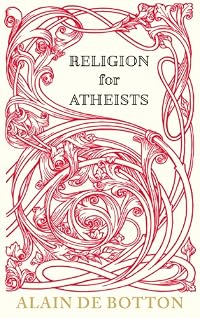
priesterlijke overtuigingen die hij in zijn boek Religie voor atheïsten belijdt en kennelijk nog verder gaat uitdragen met zijn volgend jaar te verschijnen boek Art as Therapy. Voor De Botton zijn kunstwerken niets op zichzelf als kunstwerk, ze zijn er een middel om onze zachte kanten te ontwikkelen, zodat we (ik citeer) ‘in de keuken, de speelkamer, de badkamer, het park en op het show more kantoor’ emotioneel beter functioneren. En moeder wat vaker bellen.
De nieuwe opstelling van de collectie in het Rijksmuseum biedt alle mogelijkheden om verrassende wisselende tentoonstellingen te maken die zich verre houden van het spirituele gesop van Alain de Botton. In zulke tentoonstellingen gaat het kunstgehalte samen met bepaalde thema’s, zoals dat in het verleden ook zo is geweest: tentoonstellingen over kinderen, over feesten, over het vaderlands gevoel, over de Verlichting, over calvinistisch schilderen, over allegorische voorstellingen, over liefde, lust en lijden. Maar dat is wat anders dan de kunstwerken gebruiken als spiritueel vehikel, zoals De Botton dat wil, als levensles, als recept voor goed leven, voor onze ‘diepste behoeften.’ Wat weet De show less
De nieuwe opstelling van de collectie in het Rijksmuseum biedt alle mogelijkheden om verrassende wisselende tentoonstellingen te maken die zich verre houden van het spirituele gesop van Alain de Botton. In zulke tentoonstellingen gaat het kunstgehalte samen met bepaalde thema’s, zoals dat in het verleden ook zo is geweest: tentoonstellingen over kinderen, over feesten, over het vaderlands gevoel, over de Verlichting, over calvinistisch schilderen, over allegorische voorstellingen, over liefde, lust en lijden. Maar dat is wat anders dan de kunstwerken gebruiken als spiritueel vehikel, zoals De Botton dat wil, als levensles, als recept voor goed leven, voor onze ‘diepste behoeften.’ Wat weet De show less
added by WiJiWiJi
Lists

The Great Courses: Visual Literacy Skills
53 works; 1 member
Author Information

52+ Works 25,948 Members
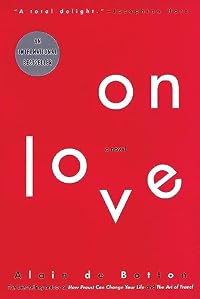
Born in Zurich, Switzerland on December 20, 1969, Alain de Botton was educated at Cambridge University, England, and now divides his time between London and Washington, D.C. With the publication of his first novel, Essays in Love, de Botton quickly became one of the most talked about British novelists of the 1990s. Although the basic plot of show more Essays in Love (published in the U.S. as On Love) is a rather typical love story, de Botton presents it in a unique and humorous way. De Botton's other novels include The Romantic Movement: Sex, Shopping and the Novel, which is written in a similar style to Essays on Love, and Kiss and Tell, which follows a would-be biographer as he attempts to write the life story of the first person he encounters. The Course of Love is his latest novel and is on the bestsellers list. Alain de Botton is also the author of How Proust Can Change Your Life: Not a Novel. (Bowker Author Biography) show less

11+ Works 1,427 Members
John Armstrong, philosopher and author, has previously published a number of books, including In Search of Civilization and Love, Life, Goethe. He lives in Melbourne.
Series
Belongs to Publisher Series
Common Knowledge
- Canonical title
- Art as Therapy
- Original title
- Art as Therapy
- Original publication date
- 2013
- Original language
- English
Classifications
Statistics
- Members
- 598
- Popularity
- 48,691
- Reviews
- 9
- Rating
- (3.66)
- Languages
- 10 — Chinese, Dutch, English, French, German, Greek, Italian, Portuguese, Spanish, Turkish
- Media
- Paper, Ebook
- ISBNs
- 17
- ASINs
- 5