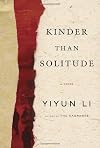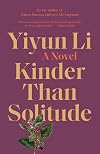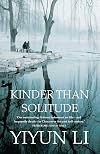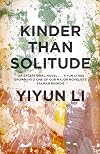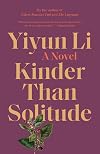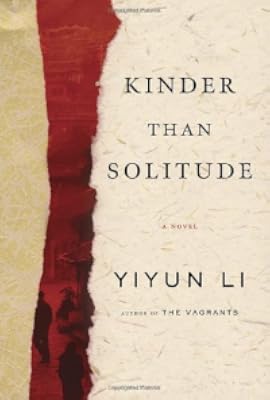
Kinder Than Solitude
by Yiyun Li
On This Page
Description
Fiction. Literature. HTML:A profound mystery is at the heart of this magnificent new novel by Yiyun Li, “one of America’s best young novelists” (Newsweek) and the celebrated author of The Vagrants, winner of the Hemingway Foundation/PEN Award. Moving back and forth in time, between America today and China in the 1990s, Kinder Than Solitude is the story of three people whose lives are changed by a murder one of them may have committed. As one of the three observes, “Even the most show more innocent person, when cornered, is capable of a heartless crime.”When Moran, Ruyu, and Boyang were young, they were involved in a mysterious incident in which a friend of theirs was poisoned. Grown up, the three friends are separated by distance and personal estrangement. Moran and Ruyu live in the United States, Boyang in China; all three are haunted by what really happened in their youth, and by doubt about themselves. In California, Ruyu helps a local woman care for her family and home, avoiding entanglements, as she has done all her life. In Wisconsin, Moran visits her ex-husband, whose kindness once overcame her flight into solitude. In Beijing, Boyang struggles to deal with an inability to love, and with the outcome of what happened among the three friends twenty years before.
Brilliantly written, a breathtaking page-turner, Kinder Than Solitude resonates with provocative observations about human nature and life. In mesmerizing prose, and with profound insight, Yiyun Li unfolds this remarkable story, even as she explores the impact of personality and the past on the shape of a person’s present and future.
Praise for Kinder Than Solitude
“This is an exceptional novel, and Yiyun Li has grown into one of our major novelists.”—Salman Rushdie
“Yiyun Li infuses the traditional form with a fresh, rigorous beauty and a sense of permanence and increasing value.”—Mona Simpson, author of My Hollywood
“[A] sleek, powerful novel about the weight of memory, the brunt of loss and the myriad ways the past can crimp the soul . . . Li gives us gifts of gorgeous prose. . . . Rarely are ordinary humans given such eloquent witness.”—The Washington Post
“What makes [Kinder Than Solitude] so vivid is its humanity. . . . It is an inquiry into how the past scars us, shaping present and future, and some deeds, once committed, can never be undone.”—Los Angeles Times
“[Li’s] true gift . . . is old-fashioned storytelling [and] a sense that a life, a whole life, can be captured on pages.”—The Boston Globe
“A stunning, dark, and beautiful book . . . Yiyun Li writes with characteristic genius.”—Paul Harding, author of Tinkers and Enon. show less
Tags
Recommendations






Member Reviews
Author Yiyun Li’s new novel, Kinder than Solitude, follows the lives of four young people who came of age in Beijing at the time of Tiananmen Square. There is Moran, gentle, kind, and caring, Boyang, son of wealthy academics, Ruyu, secretive and seemingly cold, by her own description a ‘lonely, vicious, remorseless orphan’, raised by her strict Catholic aunts, and, finally, Shaoai, older and a political activist. When Shaoai is poisoned, their quiet lives are changed completely. Shaoai survives and lives for 21 more years but is left with severe and irreversible brain damage.
The story moves back and forth between this early period and later to when Shaoai finally dies, between the promise of their younger selves and the stagnant show more banality of their lives after the poisoning. Moran and Ruyu have both moved to the United States. Moran has returned to her ex-husband who is suffering from terminal cancer, Boyang has become a wealthy businessman moving from one relationship to another with younger women, and Ruyu is working for a young egotistically liberal couple who mistakenly believe she sees them as friends. As each of the three learns of Shaoai’s death, they reflect on their lives and we slowly learn who poisoned her and why. Although only one is directly guilty, it is clear that there is at least a sense of shared culpability and Shaoai isn’t the only one infected by the poison. As adults, the three seem incapable of making intimate connections with others, leaving in their wake failed marriages and relationships. Each of them is aware of their failings and how it affects any who enter into their sphere but they seem unable, unwilling, or too selfish to change.
Kinder Than Solitude is a beautifully written, often slow, almost unrelentingly bleak novel of lives less lived, poisoned by political events and social relationships. It is more social commentary than mystery and it is impossible not to see it, at least on some level, as an allegory of China, the hope expressed by a generation and how that hope was extinguished first by the massacre and then by the realities of the new China. It is not an easy read with mostly unlikeable characters who are not trustworthy narrators and, as such, it will not appeal to everyone. But for fans of literary fiction who don’t shy away from the most unappealing aspects of the human heart, it is well worth the effort. show less
The story moves back and forth between this early period and later to when Shaoai finally dies, between the promise of their younger selves and the stagnant show more banality of their lives after the poisoning. Moran and Ruyu have both moved to the United States. Moran has returned to her ex-husband who is suffering from terminal cancer, Boyang has become a wealthy businessman moving from one relationship to another with younger women, and Ruyu is working for a young egotistically liberal couple who mistakenly believe she sees them as friends. As each of the three learns of Shaoai’s death, they reflect on their lives and we slowly learn who poisoned her and why. Although only one is directly guilty, it is clear that there is at least a sense of shared culpability and Shaoai isn’t the only one infected by the poison. As adults, the three seem incapable of making intimate connections with others, leaving in their wake failed marriages and relationships. Each of them is aware of their failings and how it affects any who enter into their sphere but they seem unable, unwilling, or too selfish to change.
Kinder Than Solitude is a beautifully written, often slow, almost unrelentingly bleak novel of lives less lived, poisoned by political events and social relationships. It is more social commentary than mystery and it is impossible not to see it, at least on some level, as an allegory of China, the hope expressed by a generation and how that hope was extinguished first by the massacre and then by the realities of the new China. It is not an easy read with mostly unlikeable characters who are not trustworthy narrators and, as such, it will not appeal to everyone. But for fans of literary fiction who don’t shy away from the most unappealing aspects of the human heart, it is well worth the effort. show less
What happens if you strip all your characters - indeed, your whole story - of sentiment? Answer: you get this bleak exploration of solitude and isolation that delivers as a literary experiment in modernism but shortchanges such traditional storytelling elements such plot, pacing, and authenticity.
In this case, you really can summarize the plot in a single blurb: 21 years later, three former friends struggle to cope with the mysterious death of a friend by ruthlessly expunging their lives and souls of sentiment. It’s easy to summarize the plot because there’s so little of it. Even the “mysterious death” isn’t truly mysterious; the tragedy merely serves as a narrative device to explain why the characters have decided to strip show more their lives of sentiment, and for the author to explore the complex tangle of perception and self-denial that they use to justify their lives of emotional isolation.
Friend #1, Boyang, dooms himself to solitude by choosing to keep the tragedy - and its consequences - entirely secret from everyone else in his life, thereby ensuring that none of his relationships will ever be honest or emotionally fulfilling. Friend #2, Ruyu, as an orphan, is literally lonely from birth; just to underscore the point, however, the author provides her with a set of cold, manipulative adoptive aunts who raise her to place herself apart from others. Friend #3, Moran, creates her own loneliness by ruthlessly purging herself of past and future. In sharing their stories, author Li likewise ruthlessly strips her prose of sentiment, refusing to judge her characters or their choices. (The one exception to this is the author’s descriptions of Beijing; perhaps her overly-sentimental descriptions of the city’s beauty and history are meant to serve as an intentional counterpoint for the rest of the tale?)
Even so, it’s hard not to interpret this as a moral admonition about the consequences of living your life without courage, without connections, without love. While each of these characters appear outwardly successful and happy, their internal lives are unrelentingly bleak. Plenty of books before this one have struggled with “the purpose of life” – is it enough to exist, or is existence without connection somehow “wimping out”? For all Li’s care to withhold judgment, by the end of the book it’s hard not to conclude that any human interaction, no matter how shallow, is still “kinder than solitude.” Even the novel’s major subplots – in which various Chinese citizens resign themselves to living in oppression rather than risk voicing their true feelings - seem to affirm this conclusion.
For the most part I found this exercise in literary experimentation to be novel and worthy, if not particularly entertaining or diverting. However, the pacing of the novel was problematical for me. While Li may refuse to pass judgment on her characters, they themselves appear trapped in endless, vicious loops of self-examination. Rarely do they allow a decision, an idea, even a sentence of spoken dialog to pass without at least 1-2 paragraphs of meticulous dissection and reflection. Mind you, thanks to Li’s narrative gifts, these reflections are often beautiful and penetrating. It’s just that there’s so MUCH reflection … after a time, I began to understand why writers are urged to “show, not tell.” Between the slow-as-molasses plot, the difficult-to-sympathize-with characters, and Li telling us pretty much everything, there’s just not that much left over to keep a reader engaged. show less
In this case, you really can summarize the plot in a single blurb: 21 years later, three former friends struggle to cope with the mysterious death of a friend by ruthlessly expunging their lives and souls of sentiment. It’s easy to summarize the plot because there’s so little of it. Even the “mysterious death” isn’t truly mysterious; the tragedy merely serves as a narrative device to explain why the characters have decided to strip show more their lives of sentiment, and for the author to explore the complex tangle of perception and self-denial that they use to justify their lives of emotional isolation.
Friend #1, Boyang, dooms himself to solitude by choosing to keep the tragedy - and its consequences - entirely secret from everyone else in his life, thereby ensuring that none of his relationships will ever be honest or emotionally fulfilling. Friend #2, Ruyu, as an orphan, is literally lonely from birth; just to underscore the point, however, the author provides her with a set of cold, manipulative adoptive aunts who raise her to place herself apart from others. Friend #3, Moran, creates her own loneliness by ruthlessly purging herself of past and future. In sharing their stories, author Li likewise ruthlessly strips her prose of sentiment, refusing to judge her characters or their choices. (The one exception to this is the author’s descriptions of Beijing; perhaps her overly-sentimental descriptions of the city’s beauty and history are meant to serve as an intentional counterpoint for the rest of the tale?)
Even so, it’s hard not to interpret this as a moral admonition about the consequences of living your life without courage, without connections, without love. While each of these characters appear outwardly successful and happy, their internal lives are unrelentingly bleak. Plenty of books before this one have struggled with “the purpose of life” – is it enough to exist, or is existence without connection somehow “wimping out”? For all Li’s care to withhold judgment, by the end of the book it’s hard not to conclude that any human interaction, no matter how shallow, is still “kinder than solitude.” Even the novel’s major subplots – in which various Chinese citizens resign themselves to living in oppression rather than risk voicing their true feelings - seem to affirm this conclusion.
For the most part I found this exercise in literary experimentation to be novel and worthy, if not particularly entertaining or diverting. However, the pacing of the novel was problematical for me. While Li may refuse to pass judgment on her characters, they themselves appear trapped in endless, vicious loops of self-examination. Rarely do they allow a decision, an idea, even a sentence of spoken dialog to pass without at least 1-2 paragraphs of meticulous dissection and reflection. Mind you, thanks to Li’s narrative gifts, these reflections are often beautiful and penetrating. It’s just that there’s so MUCH reflection … after a time, I began to understand why writers are urged to “show, not tell.” Between the slow-as-molasses plot, the difficult-to-sympathize-with characters, and Li telling us pretty much everything, there’s just not that much left over to keep a reader engaged. show less
Solitude is not kind in the world of this novel. But there is little that is kind, so solitude becomes a refuge and false haven.
This is a powerful and intensely meditative novel. Children on the treacherous shoals of their teenage years sense the dangers, but don’t really understand the nature of them, and can be helpless to avoid them, especially if they already feel isolated. They say false things, or do seemingly malicious deeds, without fully appreciating the consequences which may then go on to haunt them.
Li writes exquisite prose — this alone is worth the read. These are intensely wrought sentences of astute insights, illustrating rich complexities of thought.
“A born murderess, she had mastered the skill of snuffing out show more each moment before releasing it to join the other passed moments. Nothing connects one self to another; time effaced does not become memory”
”…his voice had left a crack through which loneliness flooded into her room.”
“If she had ever felt anything close to passion, it was a passion of the obliterating kind: any connection made by another human being, by accident or by intention, had to be erased; the void she maintained around herself was her only meaningful possession.”
The book is littered with aphorisms and observations about the human condition:
“…one’s preparation for departure should begin long before arrival”
“Do not expose your soul uninvited”
“Nothing destroys a livable life more completely than unfounded hope”
“It takes courage to find solace in trivialities, willfulness not to let trivialities usurp one’s life.”
Solitude and loneliness are tiring to read about, never mind experiencing. By the end I felt exhausted, wrung out, from the tension of repression and loneliness that permeates the story. Nonetheless, highly recommended. Just pair it with the right mood accordingly.
(ARC from Random House via NetGalley.) show less
This is a powerful and intensely meditative novel. Children on the treacherous shoals of their teenage years sense the dangers, but don’t really understand the nature of them, and can be helpless to avoid them, especially if they already feel isolated. They say false things, or do seemingly malicious deeds, without fully appreciating the consequences which may then go on to haunt them.
Li writes exquisite prose — this alone is worth the read. These are intensely wrought sentences of astute insights, illustrating rich complexities of thought.
“A born murderess, she had mastered the skill of snuffing out show more each moment before releasing it to join the other passed moments. Nothing connects one self to another; time effaced does not become memory”
”…his voice had left a crack through which loneliness flooded into her room.”
“If she had ever felt anything close to passion, it was a passion of the obliterating kind: any connection made by another human being, by accident or by intention, had to be erased; the void she maintained around herself was her only meaningful possession.”
The book is littered with aphorisms and observations about the human condition:
“…one’s preparation for departure should begin long before arrival”
“Do not expose your soul uninvited”
“Nothing destroys a livable life more completely than unfounded hope”
“It takes courage to find solace in trivialities, willfulness not to let trivialities usurp one’s life.”
Solitude and loneliness are tiring to read about, never mind experiencing. By the end I felt exhausted, wrung out, from the tension of repression and loneliness that permeates the story. Nonetheless, highly recommended. Just pair it with the right mood accordingly.
(ARC from Random House via NetGalley.) show less
Mona Simpson describes Yiyun Li as a "high modernist" and the more I think about it, the more I feel that term really fits this novel. Modernist works were always distinguished by a lack of sentimentality, a penchant for undermining typical audience expectations for narrative - especially for heroic or even admirable characters, emotional satisfaction or closure - and for their focus on the fundamental isolation of modern men and women. They were critiques of society without being polemics, because what they were critiquing wasn't so much particular societies as the universal phenomena of isolate beings: betrayal, lack of compassion, inability to love. Kinder than Solitude fits in every way, with the possible exception of the emphasis show more on radical experimentation in prose style that was also a signature of much high modernism. Li isn't a master of style, but her sometimes gauche phrasing has its own power and seems utterly without conceit. She brings a brusque strangeness to the language that does better at capturing the sad plainness and hollowness of everyday life, whether in China or the US, than the polished prose of many writers who far more self-consciously strive for effect.
Also missing here, unfortunately, is any attempt at discovering, or even thinking about, ultimate reality - even if the 20th century modernists knew that the idea of ultimate reality was absurd, the hopeless quest gave their work more substance and psychological power. Here the perspective is so thoroughly jaded, almost beaten down, that it would be shocking in a young writer, if a simple look around at the world didn't immediately show how justified it was. show less
Also missing here, unfortunately, is any attempt at discovering, or even thinking about, ultimate reality - even if the 20th century modernists knew that the idea of ultimate reality was absurd, the hopeless quest gave their work more substance and psychological power. Here the perspective is so thoroughly jaded, almost beaten down, that it would be shocking in a young writer, if a simple look around at the world didn't immediately show how justified it was. show less
Three young people — Boyang, Moran, and Ruyu — are thrust together by circumstance and familial connection in a poor neighbourhood in Beijing shortly after the Tiananmen Square uprising. They must balance loyalty, fealty, and self-interest in their individual efforts to survive in a world beyond their grasp and possibly their comprehension. For some, love is the prime motivator. For others, the happiness of others. And for still others only the protection of an enclave of privacy matters. A suspicious possible poisoning and long-delayed death explodes their tiny network and the three take very different trajectories through life finding, each, their separate existential solitude. And whatever small additions that they allow to show more accrue or intrude upon that solitude.
This is difficult novel to like. Li’s theme of existential estrangement carries over into the structure of her telling as she follows the lives of the three young people separately twenty years after the events of their youth. Connection is frustrated (Moran and Ruyu never reply to Boyang’s email updates). Love, and even friendship, are impossible. To survive at all seems to require retreat into a theoretical shell of a human being. ‘Theoretical’ because it often feels as though Li is working through a narrative challenge set by French and Russian writers, some of whom she references, rather than exploring real relationships, if ‘real’ here can mean anything more than mundane. While I grew to respect the problem that Li had set herself, I didn’t warm to the execution, neither the structure, the characters, nor the plot, such as it is. Of course maybe I’m not supposed to warm to such cold figures. But then I think I would prefer even more heightened representation of reality to achieve that Brechtian emotional distance.
Perhaps on another day I might have appreciated this novel more. But for now, not recommended. show less
This is difficult novel to like. Li’s theme of existential estrangement carries over into the structure of her telling as she follows the lives of the three young people separately twenty years after the events of their youth. Connection is frustrated (Moran and Ruyu never reply to Boyang’s email updates). Love, and even friendship, are impossible. To survive at all seems to require retreat into a theoretical shell of a human being. ‘Theoretical’ because it often feels as though Li is working through a narrative challenge set by French and Russian writers, some of whom she references, rather than exploring real relationships, if ‘real’ here can mean anything more than mundane. While I grew to respect the problem that Li had set herself, I didn’t warm to the execution, neither the structure, the characters, nor the plot, such as it is. Of course maybe I’m not supposed to warm to such cold figures. But then I think I would prefer even more heightened representation of reality to achieve that Brechtian emotional distance.
Perhaps on another day I might have appreciated this novel more. But for now, not recommended. show less
Note: I received an Advance Reading Copy of this book through the You Review program of The American Book Centre.
There were two things that grabbed me in the description of Yiyun Li's 'Kinder Than Solitude'. On the one hand there is a mystery at the heart of the story, and I like a nice mystery, especially when the book isn't so much about who did it, but more about how did it affect those surrounding it, and on the other hand this is a story taking place in China, written by a Chinese/American (Li left China for the United States after earning her B.S. at Peking University), which in my mind means that the book is reminiscent of a different culture and a different way of looking at life.
The book is divided into two parts, alternating show more between the two. In one storyline we read about the lives of Ruyu, Moran and Boyang as teenagers in Beijing. Moran and Boyang are best friends who live in the same housing square. Ruyu is an orphan who later moves to the square, to her 'aunt and uncle' (family of the two great-aunts that found her on their doorstep) and their older daughter Shaoai. Ruyu is a very analytical and unemotional girl, something which catches everyone who meets her of guard. During that time, because of Ruyu, an accident happens to Shaoai, an accident which keeps haunting them the rest of their lives. In the other story-line it is twenty years later and the accident in their youth has led to a conclusion only Boyang has to deal with in Beijing. Ruyu and Moran have both emigrated to the United States, Ruyu working for a family and their friends, without starting any personal attachments, and Moran is living by herself but still unable to let go of her ex-husband. All of them have trouble maintaining relationships with others and live in solitude. The new events with regards to the accident of Shaoai force them to look at their lives as they are, and deal with their solitude.
I'm happy to say that the two expectations I had when requesting this book (the mystery and the different world view) were not disappointed. Li writes beautifully about daily life in Beijing for both common folk and rich people, for teenagers going to school, for teenagers protesting against those in charge and for their parents. She also writes (from experience I am assuming) about the culture shock experienced by Ruyu and Moran when they came to the United States. On top of that, you get the contemplations about how the mystery has affected Boyan, Ruyu and Moran each differently, but for each of them resulting in solitude. The result is a beautiful book. It took some getting used to the language used, which is very descriptive, but after a couple of pages the book had me hooked. I highly recommend this book for those who like to read about the effects of a traumatic event, about life in China for a couple of teenagers in the early nineties. For me, I give this book four out of five stars. show less
There were two things that grabbed me in the description of Yiyun Li's 'Kinder Than Solitude'. On the one hand there is a mystery at the heart of the story, and I like a nice mystery, especially when the book isn't so much about who did it, but more about how did it affect those surrounding it, and on the other hand this is a story taking place in China, written by a Chinese/American (Li left China for the United States after earning her B.S. at Peking University), which in my mind means that the book is reminiscent of a different culture and a different way of looking at life.
The book is divided into two parts, alternating show more between the two. In one storyline we read about the lives of Ruyu, Moran and Boyang as teenagers in Beijing. Moran and Boyang are best friends who live in the same housing square. Ruyu is an orphan who later moves to the square, to her 'aunt and uncle' (family of the two great-aunts that found her on their doorstep) and their older daughter Shaoai. Ruyu is a very analytical and unemotional girl, something which catches everyone who meets her of guard. During that time, because of Ruyu, an accident happens to Shaoai, an accident which keeps haunting them the rest of their lives. In the other story-line it is twenty years later and the accident in their youth has led to a conclusion only Boyang has to deal with in Beijing. Ruyu and Moran have both emigrated to the United States, Ruyu working for a family and their friends, without starting any personal attachments, and Moran is living by herself but still unable to let go of her ex-husband. All of them have trouble maintaining relationships with others and live in solitude. The new events with regards to the accident of Shaoai force them to look at their lives as they are, and deal with their solitude.
I'm happy to say that the two expectations I had when requesting this book (the mystery and the different world view) were not disappointed. Li writes beautifully about daily life in Beijing for both common folk and rich people, for teenagers going to school, for teenagers protesting against those in charge and for their parents. She also writes (from experience I am assuming) about the culture shock experienced by Ruyu and Moran when they came to the United States. On top of that, you get the contemplations about how the mystery has affected Boyan, Ruyu and Moran each differently, but for each of them resulting in solitude. The result is a beautiful book. It took some getting used to the language used, which is very descriptive, but after a couple of pages the book had me hooked. I highly recommend this book for those who like to read about the effects of a traumatic event, about life in China for a couple of teenagers in the early nineties. For me, I give this book four out of five stars. show less
Unrelentingly bleak. Three friends may or may not be responsible for the poisoning of a fourth. Of the three, one remains in China, the other two go to the US, but all three lead lonely, isolated lives, whether by choice or by bad luck. There is a suggestion that the story is a metaphor for the post-Tienanmen generation and the destruction of the old neighborhoods and ways of Beijing, but it's pretty subtle.
I thought the writing was a little woolly in places - especially when compared to the crystalline prose of her short stories - but there is no doubt that Li's a talented writer and this is a brilliant, if upsetting, look at human nature.
I thought the writing was a little woolly in places - especially when compared to the crystalline prose of her short stories - but there is no doubt that Li's a talented writer and this is a brilliant, if upsetting, look at human nature.
Members
- Recently Added By
Lists

Books Read in 2016
4,666 works; 199 members

Folio Prize 2015 Longlist
79 works; 2 members

Llibres que he llegit el 2026
39 works; 2 members
Author Information

29+ Works 4,575 Members
Awards and Honors
Awards
Series
Belongs to Publisher Series
Keltainen kirjasto (459)
Common Knowledge
- Canonical title
- Kinder Than Solitude
- Original title
- Kinder than solitude
- Original language*
- englanti
*Some information comes from Common Knowledge in other languages. Click "Edit" for more information.
Classifications
Statistics
- Members
- 343
- Popularity
- 92,280
- Reviews
- 14
- Rating
- (3.52)
- Languages
- 10 — Dutch, English, Finnish, French, German, Italian, Norwegian (Bokmål), Russian, Spanish, Swedish
- Media
- Paper, Audiobook, Ebook
- ISBNs
- 23
- ASINs
- 7