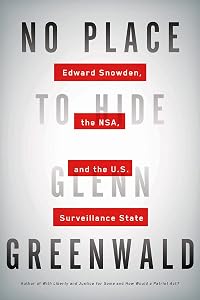
No Place to Hide: Edward Snowden, the NSA, and the U.S. Surveillance State
by Glenn Greenwald
On This Page
Description
"Investigative reporter for The Guardian and bestselling author Glenn Greenwald, provides an in-depth look into the NSA scandal that has triggered a national debate over national security and information privacy. With further revelations from documents entrusted to Glenn Greenwald by Edward Snowden himself, this book explores the extraordinary cooperation between private industry and the NSA, and the far-reaching consequences of the government's surveillance program, both domestically and show more abroad" -- show lessTags
Recommendations












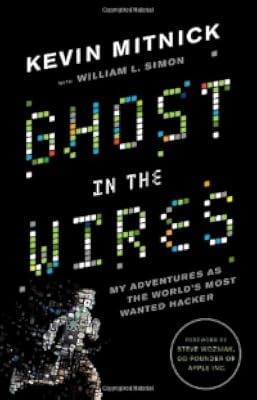
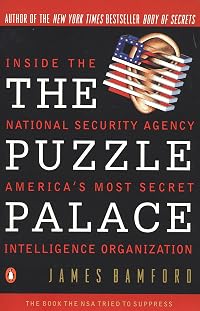
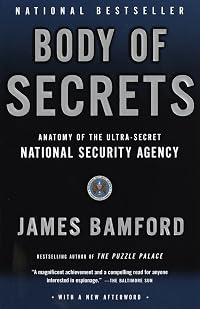
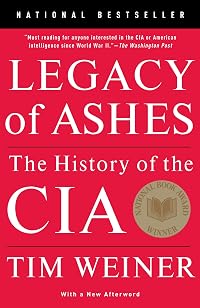







Member Reviews
This is a MUST read for every voting age, and soon to be voting US citizen along with all those globally that are able to get their hands on this book. Dissent is not a crime. The ability to have this country function as a democratic republic requires an educated populous with individuals who will stand up to the bullying of those who grasp at anything to remain in power.
The price of freedom is not safety and security, it is the physical and emotional damage to stand up for own's beliefs. More so, when those beliefs run counter to the majority.
G. Greenwald's book shows exactly what the price of Freedom is.
The price of freedom is not safety and security, it is the physical and emotional damage to stand up for own's beliefs. More so, when those beliefs run counter to the majority.
G. Greenwald's book shows exactly what the price of Freedom is.
Such an important book! It gets 5 stars because every thinking person on earth should read it and consider deeply its message.
I read the "Edward Snowden Files" in March, the story of the NSA whistle-blower told from the perspective of the Guardian journalists. Now here is the point of view of Glenn Greenwald, the journalist who conveyed Snowden's story to the world. The two books are complementary and consistent in their stories, but Greenwald's message is much more clearly articulated. His Chapter 5 analysis of the role of the modern media in maintaining the powers that be, rather than as a force for change, is trenchant (in every connotation of that word).
Of course, the surprise is that this is a surprise. Decades ago analysis such as show more that done by the Glasgow University School of Communications showed how late 20th century journalism had become a conservative force for maintaining the status quo. Greenwald's analysis only shows how more profoundly true that is today.
The book is easy to read. Nicely balanced between the adventure of the chase for the story, and his analysis of what it all means. I would say he is hopeful and a bit scared by the implications. Me too. show less
I read the "Edward Snowden Files" in March, the story of the NSA whistle-blower told from the perspective of the Guardian journalists. Now here is the point of view of Glenn Greenwald, the journalist who conveyed Snowden's story to the world. The two books are complementary and consistent in their stories, but Greenwald's message is much more clearly articulated. His Chapter 5 analysis of the role of the modern media in maintaining the powers that be, rather than as a force for change, is trenchant (in every connotation of that word).
Of course, the surprise is that this is a surprise. Decades ago analysis such as show more that done by the Glasgow University School of Communications showed how late 20th century journalism had become a conservative force for maintaining the status quo. Greenwald's analysis only shows how more profoundly true that is today.
The book is easy to read. Nicely balanced between the adventure of the chase for the story, and his analysis of what it all means. I would say he is hopeful and a bit scared by the implications. Me too. show less
I'm giving this book five stars, even though the book isn't perfect. The first part drags a bit, and if you're looking for a fast-paced tale of espionage, this isn't it either. But it took some serious courage for both Snowden to reveal what he did and for Greenwald to stand up to the US government (amid calls for his arrest and prosecution for even daring to print articles using the leaked NSA documents), and I am just giving two thumbs up (and would give more if I had more thumbs) for them refusing to back down.
I think most (if not all) readers coming to this book know about Edward Snowden, at least a little bit, so I'm not going to talk about him in this review. And Greenwald doesn't go into great detail about Snowden, either; sure, show more he mentions Snowden's background and how he got to be where he was, but this is no biography of Snowden. Instead, Greenwald's main focus for the last half of the book (which is by far the more interesting half) is the NSA and the American surveillance state - and that is how Snowden wanted it.
Look, everyone has an opinion about Snowden. He's a hero. He's a traitor. He's a patriot. He's a turncoat. He's selfless. He's a narcissistic egomaniac. He's a paragon of virtue. He belongs in prison. He's trying to set the country right by exposing the NSA. He's trying to bring the country down by exposing state secrets. But you know what? None of that fucking matters. Because instead of demonizing Snowden, or even putting him on a pedestal, we should be focused on what the documents he released actually say, rather than focusing on the medium.
I have my own opinions of Snowden. I do see him as a patriot. But my opinion of him does not matter.
What matters is that the NSA, under both Republican and Democratic presidencies, has been spying on American citizens and doesn't give one fucking shit about civil liberties. And someone can argue, which many have, "oh, if you don't have anything to hide, you shouldn't be afraid." Can anyone HONESTLY say that they have nothing to hide? Really? Never looked at some porn you'd not want your parents, significant other, or kids to find out about? Never cheated on a boyfriend/girlfriend/spouse? Never torrented files (music, ebooks, movies, whatever)? Never totally trashed your boss in an email? Never broke a law, no matter how petty? Never smoked some weed in an illegal state?
I am not saying the NSA will target anyone in particular. But if you cross their radar paths and they view you, for whatever reason, as a threat, they can and WILL use anything against you that they can dig up - and as the documents Edward Snowden released shows, they can dig up a whole bunch of shit.
Greenwald prints a lot of things in this book that the NSA definitely did not want people to see. There are PowerPoint slides, memos, briefings, etc that are all in this book (see chapter three, mostly). And they paint a picture that is absolutely chilling.
And not only does Greenwald expose the NSA - he exposes corporate "journalism," which toadies up to those in charge. I've said for a long while that mass media can't be trusted, and the treatment of Snowden, Greenwald, the Guardian, and the NSA in "journalistic" circles just proves that. Hell, I grew up in a town where the newspaper only printed news that the "powers that be" in the town decided was newsworthy - and if they didn't want a story getting printed in the local paper, it sure didn't, even if the Columbus Dispatch and other local papers were running it on the front page. To think that this isn't happening on a national level is willful ignorance at this point.
Greenwald is far more optimistic about Snowden's leak than I am. I'm a pessimist at heart. And I see so many people trying to flay Snowden's character instead of focusing on what ACTUALLY FUCKING MATTERS. But there was definitely some good that came from the NSA leaks, if only to show the blatant disregard that the US government (and it doesn't matter WHICH party) has for those it is supposedly serving (the people) and their rights.
Highly recommended. show less
I think most (if not all) readers coming to this book know about Edward Snowden, at least a little bit, so I'm not going to talk about him in this review. And Greenwald doesn't go into great detail about Snowden, either; sure, show more he mentions Snowden's background and how he got to be where he was, but this is no biography of Snowden. Instead, Greenwald's main focus for the last half of the book (which is by far the more interesting half) is the NSA and the American surveillance state - and that is how Snowden wanted it.
Look, everyone has an opinion about Snowden. He's a hero. He's a traitor. He's a patriot. He's a turncoat. He's selfless. He's a narcissistic egomaniac. He's a paragon of virtue. He belongs in prison. He's trying to set the country right by exposing the NSA. He's trying to bring the country down by exposing state secrets. But you know what? None of that fucking matters. Because instead of demonizing Snowden, or even putting him on a pedestal, we should be focused on what the documents he released actually say, rather than focusing on the medium.
I have my own opinions of Snowden. I do see him as a patriot. But my opinion of him does not matter.
What matters is that the NSA, under both Republican and Democratic presidencies, has been spying on American citizens and doesn't give one fucking shit about civil liberties. And someone can argue, which many have, "oh, if you don't have anything to hide, you shouldn't be afraid." Can anyone HONESTLY say that they have nothing to hide? Really? Never looked at some porn you'd not want your parents, significant other, or kids to find out about? Never cheated on a boyfriend/girlfriend/spouse? Never torrented files (music, ebooks, movies, whatever)? Never totally trashed your boss in an email? Never broke a law, no matter how petty? Never smoked some weed in an illegal state?
I am not saying the NSA will target anyone in particular. But if you cross their radar paths and they view you, for whatever reason, as a threat, they can and WILL use anything against you that they can dig up - and as the documents Edward Snowden released shows, they can dig up a whole bunch of shit.
Greenwald prints a lot of things in this book that the NSA definitely did not want people to see. There are PowerPoint slides, memos, briefings, etc that are all in this book (see chapter three, mostly). And they paint a picture that is absolutely chilling.
And not only does Greenwald expose the NSA - he exposes corporate "journalism," which toadies up to those in charge. I've said for a long while that mass media can't be trusted, and the treatment of Snowden, Greenwald, the Guardian, and the NSA in "journalistic" circles just proves that. Hell, I grew up in a town where the newspaper only printed news that the "powers that be" in the town decided was newsworthy - and if they didn't want a story getting printed in the local paper, it sure didn't, even if the Columbus Dispatch and other local papers were running it on the front page. To think that this isn't happening on a national level is willful ignorance at this point.
Greenwald is far more optimistic about Snowden's leak than I am. I'm a pessimist at heart. And I see so many people trying to flay Snowden's character instead of focusing on what ACTUALLY FUCKING MATTERS. But there was definitely some good that came from the NSA leaks, if only to show the blatant disregard that the US government (and it doesn't matter WHICH party) has for those it is supposedly serving (the people) and their rights.
Highly recommended. show less
It's hard to know where to begin in describing this book. I sort of knew about Edward Snowden from the time he made the news after revealing top secrets regarding the National Security Agency's secret surveillance of America citizens on all electronic media. Then I decided to read Glenn Greenwald's book to learn more specifically about what he did, and I am very glad I did so. I've gotten a great understanding of what happened. Just prior to finishing the book, I also saw the Academy Award winning documentary, "Citizenfour" by Laura Poitras. All I could say was, "Wow!" I know that Edward Snowden is a very controversial figure, but, after reading this book, I can say that he is my hero. I do know that Big Brother is reading this.
The show more book itself is divided into three parts. The first part describes the original contact with Snowden, the meeting in his Hong Kong Hotel Room, and his escape to Moscow. The second part of the book shows copies of actual documents taken from NSA with areas blocked out so as not to cause any harm to individuals. The last part summarizes how Snowden's activities have affected others.
The book is written so that it is easy to understand. Glenn Greenwald takes it slowly so that the reader can absorb this information. Acronyms are explained, and reasons are given for the actions that were taken. The book is totally fascinating. At the end, I could only be amazed that someone would risk so much to preserve the freedom of the American public. When you are always under surveillance, you are not free.
I learned from this book that the American government is not as good as it seems or tries to make itself look. That the American government could flagrantly disregard constitutional law (i.e. the Fourth Amendment to the Constitution) as it claimed it was fighting terrorism is mind-blowing.
In conclusion, Glenn Greenwald writes, "Snowden...has reminded everyone about the extraordinary ability of any human being to change the world. An ordinary person in all outward respects--raised by parents without particular wealth or power, lacking even a high school diploma, working as an obscure employee of a giant corporation--he has, through a single act of conscience, literally altered the course of history." show less
The show more book itself is divided into three parts. The first part describes the original contact with Snowden, the meeting in his Hong Kong Hotel Room, and his escape to Moscow. The second part of the book shows copies of actual documents taken from NSA with areas blocked out so as not to cause any harm to individuals. The last part summarizes how Snowden's activities have affected others.
The book is written so that it is easy to understand. Glenn Greenwald takes it slowly so that the reader can absorb this information. Acronyms are explained, and reasons are given for the actions that were taken. The book is totally fascinating. At the end, I could only be amazed that someone would risk so much to preserve the freedom of the American public. When you are always under surveillance, you are not free.
I learned from this book that the American government is not as good as it seems or tries to make itself look. That the American government could flagrantly disregard constitutional law (i.e. the Fourth Amendment to the Constitution) as it claimed it was fighting terrorism is mind-blowing.
In conclusion, Glenn Greenwald writes, "Snowden...has reminded everyone about the extraordinary ability of any human being to change the world. An ordinary person in all outward respects--raised by parents without particular wealth or power, lacking even a high school diploma, working as an obscure employee of a giant corporation--he has, through a single act of conscience, literally altered the course of history." show less
It's easy to feel a bit of information overload when you first learn about an information leak revealing that the NSA has spied on regular American citizens and that major Internet companies like Microsoft and Facebook have helped them do it.
Glenn Greenwald is the reporter who read through countless documents provided by the whistleblower Edward Snowden and wrote the first news articles bringing that information to the public's attention.
Now, with his excellent book No Place to Hide, Greenwald offers an insightful and comprehensive discussion of the controversial documents. Greenwald clearly lays out the most significant revelations and why they matter to everyday people.
The first part reads like a spy novel, grabbing the reader from show more the first page with an exciting account of how Snowden first contacted Greenwald, their secret meeting in Hong Kong, and the ensuing behind-the-scenes drama to get the information into the newspapers. While some have criticized the Snowden leak as threatening national security, the book highlights the care and scrutiny with which Greenwald and his collaborator Laura Poitras handled the classified documents, seeking to shine light without putting anyone's lives in danger.
The next two sections contain less narrative, spending more time explaining the most significant revelations and why surveillance is harmful to society. While they don't read quite as fast as the thrilling opening, these parts are great for anyone who had trouble keeping up with the Snowden leaks and what they meant.
Greenwald closes with a critical and thought-provoking discussion of the American media and what he perceives as journalists' growing sympathy to the government. In Greenwald's view, journalism has lost its investigative edge, giving too much power to the government to decide what information is published -- and perhaps more critically -- what information is not.
As a journalist, I found this section fascinating. While it paints a dismal picture of corporate media, the book's existence provides optimism for the rise of independent journalists to maintain the mantle of the Fourth Estate. show less
Glenn Greenwald is the reporter who read through countless documents provided by the whistleblower Edward Snowden and wrote the first news articles bringing that information to the public's attention.
Now, with his excellent book No Place to Hide, Greenwald offers an insightful and comprehensive discussion of the controversial documents. Greenwald clearly lays out the most significant revelations and why they matter to everyday people.
The first part reads like a spy novel, grabbing the reader from show more the first page with an exciting account of how Snowden first contacted Greenwald, their secret meeting in Hong Kong, and the ensuing behind-the-scenes drama to get the information into the newspapers. While some have criticized the Snowden leak as threatening national security, the book highlights the care and scrutiny with which Greenwald and his collaborator Laura Poitras handled the classified documents, seeking to shine light without putting anyone's lives in danger.
The next two sections contain less narrative, spending more time explaining the most significant revelations and why surveillance is harmful to society. While they don't read quite as fast as the thrilling opening, these parts are great for anyone who had trouble keeping up with the Snowden leaks and what they meant.
Greenwald closes with a critical and thought-provoking discussion of the American media and what he perceives as journalists' growing sympathy to the government. In Greenwald's view, journalism has lost its investigative edge, giving too much power to the government to decide what information is published -- and perhaps more critically -- what information is not.
As a journalist, I found this section fascinating. While it paints a dismal picture of corporate media, the book's existence provides optimism for the rise of independent journalists to maintain the mantle of the Fourth Estate. show less
So I watched Citizen Four a while back, and think it helped in reading this. Though not nec. it certainly helped me remember parts of the documentary, as well as vicualize parts of the story as they unfolded.
That said, wow, good book. Scary, and pretty depressing, but good, and everyone should read it.
It's startling to see just how far our government (including the President i voted for and mostly love) has gone to erasing our privacy. How far in the pocket our journalists are, and how much we've willingly or otherwise given up in the name of (false) security.
Greenwald does an excellent job pointing out the lies (outright and by omission) our government and media have spread to convince us that we're somehow safer having either given show more up or (more often than not) had taken away our rights.
it's eye opening to see how bad it's gotten, and how completely untrustworthy our media is with regard to our government. show less
That said, wow, good book. Scary, and pretty depressing, but good, and everyone should read it.
It's startling to see just how far our government (including the President i voted for and mostly love) has gone to erasing our privacy. How far in the pocket our journalists are, and how much we've willingly or otherwise given up in the name of (false) security.
Greenwald does an excellent job pointing out the lies (outright and by omission) our government and media have spread to convince us that we're somehow safer having either given show more up or (more often than not) had taken away our rights.
it's eye opening to see how bad it's gotten, and how completely untrustworthy our media is with regard to our government. show less
I gave this a 4 star because I want to withhold a star for healthy skepticism. It is such alarming an book, that I need to be skeptical! The power of the NSA can't be that bad. Surely this whole panopticon paranoia is in the same category as Area 51 coverups and the staging of the first lunar landing. Right?
If you were like me, and didn't pay attention to the whole Snowden story in the first place, then this is a way to circle back and take look. I've read other reviews hailing Snowden as a hero, and certainly this book is about repairing lost reputations of Snowden and his supporters. But I'm not ready to call him a hero. Neither would I call him a villain or even a narcissist. A traitor? Maybe. He did break the law, and I wonder what show more the ramification are in regards to our national security. Was it right for him to make the decision to leak secret documents on our behalf to expose the NSA? I think you'll have to read and decide for yourself.
Greenwald unfolds the Snowden story for us, as well as breaks down the capabilities the US has when it comes to sweeping up our information in indiscriminate quantities. He also takes a whack at the "so what" if the government scans my emails. There are many valid points to why we should all be concerned (or outraged and paranoid) about the power the NSA has to access our lives. Basically you'll be seeing the Eye of Sauron in your sleep after you read this book. Regardless if Snowden's actions were right or wrong, this book will challenge you to rethink the way you view national security, privacy, and personal freedom. show less
If you were like me, and didn't pay attention to the whole Snowden story in the first place, then this is a way to circle back and take look. I've read other reviews hailing Snowden as a hero, and certainly this book is about repairing lost reputations of Snowden and his supporters. But I'm not ready to call him a hero. Neither would I call him a villain or even a narcissist. A traitor? Maybe. He did break the law, and I wonder what show more the ramification are in regards to our national security. Was it right for him to make the decision to leak secret documents on our behalf to expose the NSA? I think you'll have to read and decide for yourself.
Greenwald unfolds the Snowden story for us, as well as breaks down the capabilities the US has when it comes to sweeping up our information in indiscriminate quantities. He also takes a whack at the "so what" if the government scans my emails. There are many valid points to why we should all be concerned (or outraged and paranoid) about the power the NSA has to access our lives. Basically you'll be seeing the Eye of Sauron in your sleep after you read this book. Regardless if Snowden's actions were right or wrong, this book will challenge you to rethink the way you view national security, privacy, and personal freedom. show less
Members
- Recently Added By
Lists

2015 Notable Books for Adults
26 works; 4 members

Exposing the Man Behind the Curtain
28 works; 3 members
Author Information

Glenn Greenwald is a former constitutional law and civil rights litigator. He was a columnist for The Guardian until October 2013 and is now a founding editor of The Intercept. He has won numerous awards for his NSA reporting including the 2013 Polk Award, the Esso Award for Excellence in Reporting, and the 2013 Pioneer Award. He also received the show more first annual I. F. Stone Award for Independent Journalism in 2009 and a 2010 Online Journalism Award for his investigative work on the arrest and detention of Chelsea Manning. In 2013, he led the Guardian reporting that was awarded the Pulitzer Prize for public service. He has written several books including How Would a Patriot Act: Defending American Values from a President Run Amok, With Liberty and Justice for Some: How the Law Is Used to Destroy Equality and Protect the Powerful, and No Place to Hide: Edward Snowden, the NSA, and the U. S. Surveillance State. (Bowker Author Biography) show less
Some Editions
Awards and Honors
Awards
Distinctions
Work Relationships
Common Knowledge
- Canonical title
- No Place to Hide: Edward Snowden, the NSA, and the U.S. Surveillance State
- Original publication date
- 2014
- People/Characters
- Edward Snowden; Glenn Greenwald; Laura Poitras
- Important places
- Washington, D.C., USA
- Epigraph
- The United States government has perfected a technological capability that enables us to monitor the messages that go through the air. . . That capability at any time could be turned around on the American people, and no Amer... (show all)ican would have any privacy left, such is the capability to monitor everything -- telephone conversations, telegrams, it doesn't matter. There would be no place to hide.
- Senator Frank Church, Chair, Senate Select Committee to Study Governmental Operations with Respect to Intelligence Activities, 1975 - Dedication
- This book is dedicated to all those who have sought to shine a light on the US government's secret mass surveillance systems, particularly the courageous whistle-blowers who have risked their liberty to do so.
- First words
- Introduction: In the fall of 2005, without much in the way of grandiose expectations, I decided to create a political blog.
- Quotations
- When marginalized youths commit minor infractions, we as a society turn a blind eye as they suffer insufferable consequences in the world's largest prison system, yet when the richest and most powerful telecommunications prov... (show all)iders in the country knowingly commit tens of millions of felonies, Congress passes our nation's first law providing their elite friends with full retroactive immunity--civil and criminal--for crimes that would have merited the longest sentences [] in history.
I understand that I will be made to suffer for my actions,and that the return of this information to the public marks my end. I will be satisfied if the federation of secret law, unequal pardon, and irresistible executive pow... (show all)ers that rule the world that I love are revealed for even an instant. If you seek to help, join the open source community and fight to keep the spirit of the press alive and the internet free. I have been to the darkest corners of the government, and what they fear is light.
Taken in its entirety, the Snowden archive led to an ultimately simple conclusion: the U.S. government had built a system that has as its goal the complete elimination of electronic privacy worldwide.
(Glenn Greenwald writes...)
Congressman Alan Grayson wrote to Attorney General Holder, noting that prominent political figures called for my arrest and that I had had to decline an invitation to testify before Congress ab... (show all)out the NSA due to concerns about possible prosecution. He concluded the letter saying:
I regard this as regrettable because (1) the commission of journalism is not a crime; (2) on the contrary, it is protected explicitly under the First Amendment; (3) Mr. Greenwald's reports regarding these subjects have, in fact, informed me, other members of Congress, and the general public of serious, pervasive violations of law and constitutional rights committed by agents of the government.
...Snowden...has reminded everyone about the extraordinary ability of any human being to change the world. An ordinary person in all outward respects--raised by parents without particular wealth or power, lacking even a high ... (show all)school diploma, working as an obscure employee of a giant corporation--he has, through a single act of conscience, literally altered the course of history. - Last words
- (Click to show. Warning: May contain spoilers.)Epilogue: And that's what is happening now, thanks to the revelations brought about by Edward Snowden.
- Blurbers
- Maddow, Rachel
- Canonical DDC/MDS
- 327.1206073
- Canonical LCC
- JF1525.W45
Classifications
- Genres
- General Nonfiction, Politics and Government, Nonfiction, History, Technology
- DDC/MDS
- 327.1206073 — Society, government, & culture Political science International Relations: Spies Foreign policy and specific topics in international relations Espionage and subversion Intelligence Gathering - subdivisions Organizations involved with intelligence gathering
- LCC
- JF1525 .W45 — Political Science Political institutions and public administration Political institutions and public administration Public administration
- BISAC
Statistics
- Members
- 1,317
- Popularity
- 18,326
- Reviews
- 43
- Rating
- (4.03)
- Languages
- 11 — Danish, Dutch, English, Finnish, French, German, Hungarian, Italian, Portuguese, Spanish, Swedish
- Media
- Paper, Audiobook, Ebook
- ISBNs
- 35
- ASINs
- 10