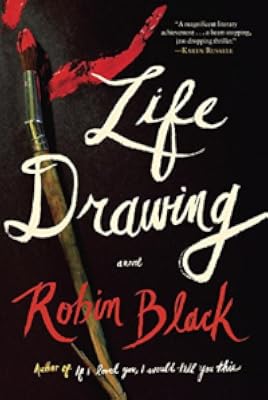
Life Drawing
by Robin Black 
On This Page
Description
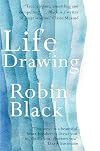
NAMED ONE OF THE BEST BOOKS OF THE YEAR BY NPR“Taut, elegant . . . Black is a writer of great wisdom.”—Claire Messud, The Guardian (UK)
Look for special features inside. Join the Random House Reader’s Circle for author chats and more.
Augusta Edelman—Gus to her friends—is a painter, a wife, and not always the best judge of her own choices—one of them bad enough that she and her husband, Owen, have fled their longtime city home and its reminders of troubling events. Now, show more three years into their secluded country life, Gus works daily on the marriage she nearly lost, discovers new inspiration for her art, and contemplates the mysteries of a childhood tragedy. But this quiet, healing rhythm is forever shattered one hot July day when a stranger moves into the abandoned house next door and crosses more boundaries than just those between their lands. A fierce, honest, and moving portrait of a woman grappling with her fate, Life Drawing is a debut novel as beautiful and unsparing as the human heart.
Praise for Life Drawing
“The page-turning suspense of Robin Black’s novel comes from her beautiful, honest portrait of a marriage, of a life. . . . A novel of consequence, and a stunning one.”—San Francisco Chronicle
“Gripping . . . the power of this story is how it illuminates, in utterly compelling detail, the complex give-and-take of a couple trying to save their marriage.”—O: The Oprah Magazine
“Truly brilliant . . . [Black] is that rare writer whose gift for prose is matched by her mastery of the other elements that make a great novel. . . . [Her] psychological prowess and incisive observations lend an edge even to seemingly straightforward scenes.”—Chicago Tribune
“Races to its resolution . . . Black’s writing is clear and direct [with] observations about the way people relate that resonate well after the book is closed.”—The New York Times Book Review. show less
Tags
Recommendations







Member Reviews
2.5
I bought this book well over a decade ago after being impressed with Black’s debut story collection If I Loved You, I Would Tell You This. I then tried—multiple times, always unsuccessfully—to read it. I could never get far, so self-absorbed, even insufferable, did I find the first person narrator, Augusta “Gus” Edelman, a visual artist.
The novel focuses on the very long shadow cast by 47-year-old Gus’s infidelity a few years before the story opens. She had an affair with the father of a troubled teenage art student, Laine. Gus was mentoring the girl—and continues even now, unbeknownst to her husband, to have contact with her. At the time, Gus had been willing to run off with her lover, leaving Owen, her partner for show more over two decades, behind. As is so often the case, though, the lover had no intention of leaving his marriage, and the affair ended. Deeply ashamed, Gus confessed to Owen. The two remained together, finally married, and committed to a life in which truthfulness was to reign supreme going forward.
Now the couple have been living in the country for three years. Owen, a writer, came into an inheritance and they were able to purchase and renovate a farmhouse. Gus is enthusiastic about a new art project based on the obituaries of local soldiers from the First World War. Crumpled old newspapers with the young men’s photos and death notices had been found behind the walls of a room that was being made over. Having lost her young mother in childhood and a beloved sister only a few years ago, Gus is interested in the ways we are haunted by those who have left us. Now she’s affected by the knowledge of other young lives cut short.
While Gus’s creativity has been sparked in the heat of summer, Owen is going through a period of writerly drought. Day after day, he walks out to his work space in the made-over barn; evening after evening he returns to the house frustrated and grim.
Then things change: Alison Hemmings, an aspiring middle-aged amateur artist who’s fleeing an abusive marriage ends up renting the farmhouse next door. Gus takes to the woman, quickly and injudiciously sharing confidences with her, including private details about her marriage,Owen’s infertility her past infidelity, and her ongoing contact with her former lover’s daughter.
What can I say about these two women? Not much. If it is difficult to warm to Gus, a protagonist glaringly deficient in judgement and discretion, it is no less challenging to feel sympathy for the false and ingratiating Alison, a classic codependent female.
Alison’s presence is certainly disruptive, but the really big problem is Nora, her 22-year-old daughter, who arrives later. Less a character than a caricature, Nora has literary aspirations herself and falls for Owen. He does not discourage the young woman’s declarations of love. Her presence stimulates his—ahem—writing. Adhering to the strict code of honesty in all things, he admits as much to his wife. Gus has long feared this moment—the moment when the universe pays her back for her earlier betrayal. Owen, however, assures her that though he is stirred by Nora, the relationship will not become a sexual one. The young woman is his muse; he cannot give her up.
There’s also a secondary story here that involves Gus’s father, an institutionalized Alzheimer’s patient, who has to be placed on a locked ward after aggressive incidents with nursing staff. In sending Gus to visit her dad, the author was evidently trying to provide her protagonist with a history, give her something to do besides paint, walk, converse dully with Alison, and seethe about Nora. No doubt the reader was supposed to gain insight into why Gus is the way she is by seeing her interact with the father who had forbidden his three daughters to mention their dead mother. Unfortunately, this plot strand was underdeveloped and didn’t offer much.
Having already given away a great deal, I won’t discuss the conclusion, aside from saying that it is high melodrama. It is not that what happens is implausible exactly. But to pull such a climax off, a writer needs more skill than what is evident here.
In the end, reading this novel made me question my memory of Black’s debut story collection. Was it really as fine as I once thought? I don’t remember it well enough to know. What I can say is that I didn’t much like this sophomore effort. Yes, it raises some interesting questions about how radically honest partners should be with each other and how much either should be asked to tolerate. Can relationships even survive and thrive after infidelity? And another question: how much are eros and creativity connected?
I am very late to this book and evidently an outlier. I admit to being less than keen on novels about infidelity. However, it’s the lack of depth and complexity in the characters that really does this novel in. Black’s people are dull. Consequently, pretty much everything else is as well. show less
I bought this book well over a decade ago after being impressed with Black’s debut story collection If I Loved You, I Would Tell You This. I then tried—multiple times, always unsuccessfully—to read it. I could never get far, so self-absorbed, even insufferable, did I find the first person narrator, Augusta “Gus” Edelman, a visual artist.
The novel focuses on the very long shadow cast by 47-year-old Gus’s infidelity a few years before the story opens. She had an affair with the father of a troubled teenage art student, Laine. Gus was mentoring the girl—and continues even now, unbeknownst to her husband, to have contact with her. At the time, Gus had been willing to run off with her lover, leaving Owen, her partner for show more over two decades, behind. As is so often the case, though, the lover had no intention of leaving his marriage, and the affair ended. Deeply ashamed, Gus confessed to Owen. The two remained together, finally married, and committed to a life in which truthfulness was to reign supreme going forward.
Now the couple have been living in the country for three years. Owen, a writer, came into an inheritance and they were able to purchase and renovate a farmhouse. Gus is enthusiastic about a new art project based on the obituaries of local soldiers from the First World War. Crumpled old newspapers with the young men’s photos and death notices had been found behind the walls of a room that was being made over. Having lost her young mother in childhood and a beloved sister only a few years ago, Gus is interested in the ways we are haunted by those who have left us. Now she’s affected by the knowledge of other young lives cut short.
While Gus’s creativity has been sparked in the heat of summer, Owen is going through a period of writerly drought. Day after day, he walks out to his work space in the made-over barn; evening after evening he returns to the house frustrated and grim.
Then things change: Alison Hemmings, an aspiring middle-aged amateur artist who’s fleeing an abusive marriage ends up renting the farmhouse next door. Gus takes to the woman, quickly and injudiciously sharing confidences with her, including private details about her marriage,
What can I say about these two women? Not much. If it is difficult to warm to Gus, a protagonist glaringly deficient in judgement and discretion, it is no less challenging to feel sympathy for the false and ingratiating Alison, a classic codependent female.
Alison’s presence is certainly disruptive, but the really big problem is Nora, her 22-year-old daughter, who arrives later. Less a character than a caricature, Nora has literary aspirations herself and falls for Owen. He does not discourage the young woman’s declarations of love. Her presence stimulates his—ahem—writing. Adhering to the strict code of honesty in all things, he admits as much to his wife. Gus has long feared this moment—the moment when the universe pays her back for her earlier betrayal. Owen, however, assures her that though he is stirred by Nora, the relationship will not become a sexual one. The young woman is his muse; he cannot give her up.
There’s also a secondary story here that involves Gus’s father, an institutionalized Alzheimer’s patient, who has to be placed on a locked ward after aggressive incidents with nursing staff. In sending Gus to visit her dad, the author was evidently trying to provide her protagonist with a history, give her something to do besides paint, walk, converse dully with Alison, and seethe about Nora. No doubt the reader was supposed to gain insight into why Gus is the way she is by seeing her interact with the father who had forbidden his three daughters to mention their dead mother. Unfortunately, this plot strand was underdeveloped and didn’t offer much.
Having already given away a great deal, I won’t discuss the conclusion, aside from saying that it is high melodrama. It is not that what happens is implausible exactly. But to pull such a climax off, a writer needs more skill than what is evident here.
In the end, reading this novel made me question my memory of Black’s debut story collection. Was it really as fine as I once thought? I don’t remember it well enough to know. What I can say is that I didn’t much like this sophomore effort. Yes, it raises some interesting questions about how radically honest partners should be with each other and how much either should be asked to tolerate. Can relationships even survive and thrive after infidelity? And another question: how much are eros and creativity connected?
I am very late to this book and evidently an outlier. I admit to being less than keen on novels about infidelity. However, it’s the lack of depth and complexity in the characters that really does this novel in. Black’s people are dull. Consequently, pretty much everything else is as well. show less
This gorgeously written deconstruction of a marriage drew me in with its deep analysis of marriage and of the creative process, its detail of the quotidian, and its wise reflection on the the outsize impact a single choice or act can have on the symbiosis (stasis?) of a long relationship. Many relationships are discussed, but the focus is on how events impact the marital relationship.
Gus (officially Augusta) made some bad choices years ago and her husband, Owen, cannot get over it. They never discuss this other than those times when Owen's lingering rage pops up and he reminds her of her "villainy"to trigger her self-loathing and fear of abandonment. Mostly though they maintain a fragile detente with the agreement to never speak of her show more actions or of Owen's feelings of guilt and useless due to his infertility and his writer's block.
The erosion of a committed relationship never comes down to one event or one partner but the choice to hold everything hurtful in some locked room where it is never spoken of is often the main catalyst in a relationship's demise. Black provides a chilling and true picture of how that works. In my own long deceased relationship my ex-husband was infertile. We could have worked through it, but he absolutely refused to discuss his infertility or adoption or artificial insemination. When you cannot discuss the most important thing in your lives you stop talking about anything important, and silence and politeness eventually asphyxiates the relationship. From my experience I think Black shows us exactly how this process feels.
Mostly I loved the book, but I did think some characters and events were poorly integrated into the central story. Gus's interactions with her father, who has Alzheimer's, were clunky, unrealistic, and unnecessary, I think Black was trying to tie the story of how some violent outbursts from her father that ended almost as quickly as they started, and his consequent forced and permanent move from regular assisted living to a locked ward, related to Gus's own misstep and consequent prison of polite solitude. I did not think that succeeded. I also wish Black had made the neighbors, Alison and Nora (who are, among other things, the catalysts for the book's climax) less stupid. All in all though I understood all of these people, I was interested in them, and I was blown away by Gus's observations and Black's writing prowess. Highly recommend this one. show less
Gus (officially Augusta) made some bad choices years ago and her husband, Owen, cannot get over it. They never discuss this other than those times when Owen's lingering rage pops up and he reminds her of her "villainy"to trigger her self-loathing and fear of abandonment. Mostly though they maintain a fragile detente with the agreement to never speak of her show more actions or of Owen's feelings of guilt and useless due to his infertility and his writer's block.
The erosion of a committed relationship never comes down to one event or one partner but the choice to hold everything hurtful in some locked room where it is never spoken of is often the main catalyst in a relationship's demise. Black provides a chilling and true picture of how that works. In my own long deceased relationship my ex-husband was infertile. We could have worked through it, but he absolutely refused to discuss his infertility or adoption or artificial insemination. When you cannot discuss the most important thing in your lives you stop talking about anything important, and silence and politeness eventually asphyxiates the relationship. From my experience I think Black shows us exactly how this process feels.
Mostly I loved the book, but I did think some characters and events were poorly integrated into the central story. Gus's interactions with her father, who has Alzheimer's, were clunky, unrealistic, and unnecessary, I think Black was trying to tie the story of how some violent outbursts from her father that ended almost as quickly as they started, and his consequent forced and permanent move from regular assisted living to a locked ward, related to Gus's own misstep and consequent prison of polite solitude. I did not think that succeeded. I also wish Black had made the neighbors, Alison and Nora (who are, among other things, the catalysts for the book's climax) less stupid. All in all though I understood all of these people, I was interested in them, and I was blown away by Gus's observations and Black's writing prowess. Highly recommend this one. show less
It is so easy to dislike all of the characters involved in Life Drawing. They are all flawed, self-involved, and focused on the wrong things. Gus and Owen have some very nontraditional ideas about relationships that may or may not be the root of their problems depending on how one interprets their actions. Alison has obvious issues, making Gus’ confessional involvement with her questionable. As for Nora, she may or may not be exactly what Gus considers her to be. The danger is discerning Gus’ very strong opinions and preventing them from influencing one’s own awareness of the story and its characters. Yet, this emotional involvement and Gus’ obvious bias towards Nora and by extension Alison pique a reader’s interest. One wants show more to know how their story intersects to create such strong emotion.
In addition, knowing how Gus and Owen’s story ends creates an unspoken tension that fuels a reader’s engagement in the story. It is not so much a need to play detective as a need to know how it all develops. Gus reveals very few clues but her pain is obvious, serving to heighten the suspense and sense of doom that permeates the story.
Life Drawing is truly a gorgeous novel. The writing is outstanding. Intense, emotionally wrought, and with an attention to detail that rivals Gus’ own, Ms. Black makes readers become part of the story. The reader will feel emotionally invested in the unfolding drama not only because the reader knows exactly how it is going to end based on the first sentence of the novel but also because one cannot help become swept up in the emotional roller coaster. show less
In addition, knowing how Gus and Owen’s story ends creates an unspoken tension that fuels a reader’s engagement in the story. It is not so much a need to play detective as a need to know how it all develops. Gus reveals very few clues but her pain is obvious, serving to heighten the suspense and sense of doom that permeates the story.
Life Drawing is truly a gorgeous novel. The writing is outstanding. Intense, emotionally wrought, and with an attention to detail that rivals Gus’ own, Ms. Black makes readers become part of the story. The reader will feel emotionally invested in the unfolding drama not only because the reader knows exactly how it is going to end based on the first sentence of the novel but also because one cannot help become swept up in the emotional roller coaster. show less
Some books have first lines that really draw you in. Even when the line tells you the outcome of the book, you read along curiously, wanting to know how the book will come full circle to the outcome already contained in its very first words. It gives you expectations and for those of us, like me, who can't help ourselves, it challenges us to figure out how the author is taking us on this ride, drawing attention to the underlying structure of the story, the craft of the writing itself. Robin Black's novel, Life Drawing, is a book that does just this. It is a careful, character driven novel that opens with the intriguing line, "In the days leading up to my husband Owen's death, he visited Alison's house every afternoon." As hooks go, it's show more a pretty big one.
Gus and her husband Owen live in the Pennsylvania countryside, remote and solitary by choice. Gus is a well received painter whose specialty is the quality of light on still lifes and landscapes and Owen is a critically acclaimed writer who has never quite found commercial success. They have retreated from their busy city life, to this house in the middle of nowhere to recover emotionally and professionally from Gus' affair with the father of one of her students. Owen has been unable to write in the handful of years since Gus' compulsive revelation of the affair, while Gus, by contrast, has lighted upon a new and energizing idea, wanting to capture the local WWI dead whose newspaper obituaries, with pictures, she has found crumpled up and used as insulation in the old farmhouse. But as the putative reason for Owen's writer's block, she cannot discuss her bubbling ideas with Owen, too aware that her productivity highlights afresh his own blank pages. When a teacher on sabbatical moves into the ramshackle place next door, Gus finds a confidante of sorts in Alison, herself a painter. Gus finds the emotional intimacy in her relationship with Alison that she is so unconsciously missing in her marriage so she confides perhaps more than she should to this virtual stranger. When Alison's daughter, Nora, comes to visit, the balance of everyone's relationships changes. Nora is a budding writer and she venerates Owen, spending hours in his company out in his converted barn, where he has done little writing thus far.
The novel is quietly intense and like many character driven novels, doesn't present much action to move the story, relying instead on the psychological drama of the main characters. Gus narrates the novel from her position as the guilty party, sharing with the reader her desire to finally exonerate herself, her need to appear magnanimous to Owen, and her quest to seek understanding and absolution even as her art reflects her unstated, and perhaps unconscious, thoughts on the difference between potential and consequences, not only in reference to the boys dead so young and long ago but also in her own life and choices. With the focus entirely from Gus' point of view, there is the looming question of just how well she actually knows her husband and what drives him but ultimately, she is the only one left to tell the story after his death. Although little happens in the way of plot, there is a rising claustrophobic feeling to the novel, a subtly increasing tension that pulls the reader inexorably along ever closer to the fact of Owen's death. Black has written a stunning tale of jealousy, betrayal, and the treacherous undercurrents of a marriage already bowed to the breaking point by stress. As for the challenge of the ending? It ended in the only way that it could, an explosive release to the pent up tension of this carefully constructed tale. (Yes, I figured it out before the end. Will you?) show less
Gus and her husband Owen live in the Pennsylvania countryside, remote and solitary by choice. Gus is a well received painter whose specialty is the quality of light on still lifes and landscapes and Owen is a critically acclaimed writer who has never quite found commercial success. They have retreated from their busy city life, to this house in the middle of nowhere to recover emotionally and professionally from Gus' affair with the father of one of her students. Owen has been unable to write in the handful of years since Gus' compulsive revelation of the affair, while Gus, by contrast, has lighted upon a new and energizing idea, wanting to capture the local WWI dead whose newspaper obituaries, with pictures, she has found crumpled up and used as insulation in the old farmhouse. But as the putative reason for Owen's writer's block, she cannot discuss her bubbling ideas with Owen, too aware that her productivity highlights afresh his own blank pages. When a teacher on sabbatical moves into the ramshackle place next door, Gus finds a confidante of sorts in Alison, herself a painter. Gus finds the emotional intimacy in her relationship with Alison that she is so unconsciously missing in her marriage so she confides perhaps more than she should to this virtual stranger. When Alison's daughter, Nora, comes to visit, the balance of everyone's relationships changes. Nora is a budding writer and she venerates Owen, spending hours in his company out in his converted barn, where he has done little writing thus far.
The novel is quietly intense and like many character driven novels, doesn't present much action to move the story, relying instead on the psychological drama of the main characters. Gus narrates the novel from her position as the guilty party, sharing with the reader her desire to finally exonerate herself, her need to appear magnanimous to Owen, and her quest to seek understanding and absolution even as her art reflects her unstated, and perhaps unconscious, thoughts on the difference between potential and consequences, not only in reference to the boys dead so young and long ago but also in her own life and choices. With the focus entirely from Gus' point of view, there is the looming question of just how well she actually knows her husband and what drives him but ultimately, she is the only one left to tell the story after his death. Although little happens in the way of plot, there is a rising claustrophobic feeling to the novel, a subtly increasing tension that pulls the reader inexorably along ever closer to the fact of Owen's death. Black has written a stunning tale of jealousy, betrayal, and the treacherous undercurrents of a marriage already bowed to the breaking point by stress. As for the challenge of the ending? It ended in the only way that it could, an explosive release to the pent up tension of this carefully constructed tale. (Yes, I figured it out before the end. Will you?) show less
An ambitious examination of the intricacies of artistic life and relationships, where life-decisions that are neither innocent or malicious have drastic consequences. Gus, an artist, and Owen, a writer, have fled from Philadelphia to country isolation in hopes of escaping marital difficulties. Gus and Owen’s lives are complicated when their isolation is interrupted by Allison who moves next door. Black’s novel draws obvious comparison to Clair Messud’s The Woman Upstairs, which is more skillfully executed. Life Drawing works best during its examination of the inner workings and inspirations of the artists’ minds. Like the The Woman Upstairs, there are competing female artistic relationships. Gus and Allison are both painters, show more one professional and the other recreational. The novel also introduces issues of guilt, aging, religion, and the complications that attend to getting to know someone indepthly. The tragic ending, which is alluded to at the very start of the novel, feels unearned because Black uses first person narration to tell us what the conflicts are, rather than showing the relationships develop. The peeks into Gus’ inspirations and tribulations with her artistic starts and stops ring truest and are the most interesting parts of the book. Equally well done is the atmosphere of menace that pervades the book. I have a feeling a more fully realized novel is in store 1 or 2 efforts down the road. show less
 This review was written for LibraryThing Early Reviewers.
"The Bookseller" quote on the cover is: "...might be the nearest thing to a perfect novel that I have ever read.” and for once I reckon the hype is correct, Everything about this novel appealed to me. Robin Black is a brilliant writer. I had concluded that when I read her book of short stories, "If I Loved You, I Would Tell You This" but I wasn't sure if she would be so successful in a full length novel. It didn't take me much reading at all to realize that she is just as good in the longer format. This is a story about relationships, hence many will tag this as 'women's fiction', but with all due respect to that half of the population, any man with a degree of self understanding and an interest in relationships will also find this to show more be a riveting read. Ms Black is just so good at capturing the dynamic of interpersonal relationships that I can't imagine how any self-aware reader could fail to be drawn in. In fact Chapter 13 , in which tension develops between the two main characters, is perhaps one of the two or three best pieces of writing I've ever encountered. Robin Black is especially aware of the subtle nuances of body language, pauses in speech, and words left unspoken that are as powerful as the spoken words themselves.
My only disappointment is that now I have read Robin Black's entire published output and I'm hungry for more! show less
My only disappointment is that now I have read Robin Black's entire published output and I'm hungry for more! show less
I was happy to receive an advanced reader’s edition of “Life Drawing”, author Robin Black’s first novel. She received plenty of positive attention for her short story collection published back in 2011.
The writing in “Life Drawing” is very good, at times lovely and at times fraught with undercurrents of tension. The title is very symbolic of the themes of the story, told from the view of Augusta Edelman, an artist who is in a very close marriage to a writer, Owen. They have moved to an isolated farmhouse to recover from the devastating impact that an affair had on their relationship. Everything changes when a neighbor moves in with her own complicated past and family. There is plenty of realistic dialogue mixed in with show more enough foreshadowing to keep things moving toward the dramatic conclusion.
This is a novel about marriage, friendship, and building long-term commitments. It is about artists who live with both exhilarating muses and haunting, crippling demons. In the end, Black has created a multi-layered depiction of those profound life choices that we all take, sometimes wondering as we look back why, oh why. show less
The writing in “Life Drawing” is very good, at times lovely and at times fraught with undercurrents of tension. The title is very symbolic of the themes of the story, told from the view of Augusta Edelman, an artist who is in a very close marriage to a writer, Owen. They have moved to an isolated farmhouse to recover from the devastating impact that an affair had on their relationship. Everything changes when a neighbor moves in with her own complicated past and family. There is plenty of realistic dialogue mixed in with show more enough foreshadowing to keep things moving toward the dramatic conclusion.
This is a novel about marriage, friendship, and building long-term commitments. It is about artists who live with both exhilarating muses and haunting, crippling demons. In the end, Black has created a multi-layered depiction of those profound life choices that we all take, sometimes wondering as we look back why, oh why. show less
This review was written for LibraryThing Early Reviewers.Members
- Recently Added By
Lists

Summer Reads 2014
207 works; 70 members

Dublin Literary Award Longlist 2016
148 works; 4 members

Books Read in 2015
3,299 works; 129 members

Folio Prize 2015 Longlist
79 works; 2 members
Author Information

3+ Works 733 Members
Robin Black¿s short story collection If I loved you, I would tell you this, was a finalist for the Frank O¿Connor International Short Story Prize and an O. Magazine Summer Reading Pick. Her debut novel Life Drawing has been called a magnificent literary achievement, by Karen Russell; and of Black¿s writing Claire Messud has said she is a writer show more of great wisdom, and illuminates, without undue emphasis, the flickering complexity of individual histories. Black¿s stories and essays have been widely published including in The New York Times Magazine, The Chicago Tribune, The Southern Review and One Story. Winner of the 2005 Pirates Alley Faulkner/Wisdom Prize for a Short Story, she was the 2012-13 Distinguished Visiting Writer at Bryn Mawr College and has taught most recently in the Brooklyn College MFA Program. Black, who holds an MFA from the Warren Wilson MFA Program for writers. In 2015 her title Life Drawing made the Australian Book Designers Association Award shortlist. (Bowker Author Biography) show less
Robin Black is a LibraryThing Author, an author who lists their personal library on LibraryThing.
Some Editions
Awards and Honors
Awards
Distinctions
Common Knowledge
- Canonical title
- Life Drawing
- People/Characters
- Augusta (Gus, Augie) Edelman (Gus, Augie); Owen Edelman; Alison; Bill; Laine; Nora
- Important places
- Philadelphia, Pennsylvania, USA
- Epigraph
- The greatest Happiness of life is the conviction that we are loved; loved for ourselves, or rather, loved in spite of ourselves. ------------------Victor Hugo
Our dead are never dead to s, until we have forgotten them. -----------George Eliot - Dedication
- For my children, Elizabeth, David and Annie & For my mother, Barbara Aronstein Black
- First words
- In the days leading up to my husband Owen's death, he visited Alison's house every afternoon.
- Last words
- (Click to show. Warning: May contain spoilers.)And then, when the sun has fallen into the pond, I thaw some stew for dinner and we share it, sitting on the couch in front of a fire, the chaos and beauty of a milliner's shop before our eyes.
Classifications
Statistics
- Members
- 344
- Popularity
- 92,115
- Reviews
- 62
- Rating
- (3.64)
- Languages
- English, German, Italian
- Media
- Paper, Audiobook, Ebook
- ISBNs
- 14
- UPCs
- 1
- ASINs
- 5