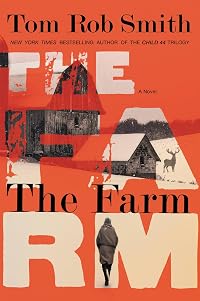
The Farm
by Tom Rob Smith
On This Page
Description
The new international bestseller, from the author of phenomenal Child 44 trilogy...The Farm
If you refuse to believe me, I will no longer consider you my son.
Daniel believed that his parents were enjoying a peaceful retirement on a remote farm in Sweden. But with a single phone call, everything changes.
Your mother...she's not well, his father tells him. She's been imagining things - terrible, terrible things. She's had a psychotic breakdown, and been committed to a mental hospital.
Before show more Daniel can board a plane to Sweden, his mother calls: Everything that man has told you is a lie. I'm not mad... I need the police... Meet me at Heathrow.
Caught between his parents, and unsure of who to believe or trust, Daniel becomes his mother's unwilling judge and jury as she tells him an urgent tale of secrets, of lies, of a crime and a conspiracy that implicates his own father.
. show less
Tags
Recommendations






Member Reviews
I thought this book was going to be dull; the premise, as billed certainly didn't seem that original: a woman alleges a horrible crime. Is she crazy or is it a coverup? Probably one of the most cliche plots. In addition, I tend to avoid literary depictions of "crazy" that don't resemble reality -- for example, highly organized improbable thoughts, being presented calmly and rationally. (I'm biting back a long digression here about the history of psychiatry as a tool to discredit women. By the way, the most coherent psychotic episode I've ever witnessed included a patient telling us how groundhogs were equipped with satellites to spy on her -- they're very rarely calm, realistic and difficult to dissect from reality.)
But the Farm, while show more it skirts that cliched territory, avoids it, rather being something much deeper about people, and their relationships to each other.
I first got drawn in in the first chapter. The (ostensible) narrator, Daniel, notes that he hasn't told his parents that he's gay, even though he considers himself close to them, because they tried so hard to create a happy childhood for them and he doesn't want them to doubt that he was happy. This paragraph, a virtual aside, I found so twisted, so illogical and so compelling that I had to read further to find out if it was intentional. The answer is unequivocally yes: this is the world Smith has created for Daniel. A world where people keep relatively benign, mundane secrets from each other for no good reason, except the desire to keep a completely perfect facade. This is one example of money that will come forth in the book and Smith makes it quite clear: the premise of the book -- where either Daniel's mother has either been completely psychotic for about a year, or where Daniel's father is involved in a conspiracy to commit murder and has been for several months, all the while Daniel thinking that they were happily living on a farm -- is only possible in the context where secrets are habitually kept under the guise of emotional "closeness." I thought this had particular relevance to today's age and facebook culture, where people post a carefully curated life and keep their feelings under close wraps.
The bulk of the book, while still officially narrated by Daniel, is really the exposition of his mother, Tilde, her "evidence" for the conspiracy and her story of what has happened. Far from being an over-the-top portrayal of psychosis or the depiction of a completely normal woman taken for insane for no clear reason, Smith's depiction here is nuanced: it's impossible to get through this section without believing that Tilde is extrapolating quite a lot from quite a little and, conversely, without believing that there are at least some goings-on that are not totally on the up-and-up.I found out after I read the book that it is based on an autobiographical episode, wherein Smith's mother, who had been living on a farm in Sweden, flew to see him, alleging that his father was involved in a conspiracy, and was declared psychotic. I think the experience and the realism really shows through, here. I loved little touches like the episode where Tilde is mushroom picking and realizes she's got a basket full of leaves instead, and by that point it's so clear she's been hallucinating, but she instead confabulates a story about being gaslit. It's so clear to the reader and so, so sad.
The other thing that I'll note, is in the genre of Shocking Family Secrets! which I usually avoid, because it's usually one of three secrets anyway (affair! homosexuality! abuse!) The Farm built up this shocking secret, about how Tilde, while she claims to lime and respect her parents, ran away and hasn't spoken to them since she was sixteen. And I was convinced that it would be a canonical secret, and it wasn't and indeed, I was shocked:Tilde had a best friend, Freja, who believed in trolls, and they tried to run away together, but it failed and afterwards Freja denied she'd ever been friends with Tilde, and then died under suspicious circumstances. And Tilde ran away because she knew that her parents believed that she killed Freja, even though she didn't. I finished this section and it was chilling -- this idea of "they don't believe me, I'm going to run away from the country forever and never look back" was so beyond the norm and so beyond what I expected, and it really established the tone for the stakes of Tilde's narrative. If I could nest spoilers I would, because once I worked through the matryoshka doll of this secret to find a classic family secret at the middle (Tilde's narrative, in which nests the imputed murder of Freja/Tilde's first psychotic break, in which nests Tilde's father's first story about Freja being imaginary, in which nests Tilde's abuse at her father's hands) I was already sufficiently impressed with the delicate psychology that Smith worked to be impressed show less
But the Farm, while show more it skirts that cliched territory, avoids it, rather being something much deeper about people, and their relationships to each other.
I first got drawn in in the first chapter. The (ostensible) narrator, Daniel, notes that he hasn't told his parents that he's gay, even though he considers himself close to them, because they tried so hard to create a happy childhood for them and he doesn't want them to doubt that he was happy. This paragraph, a virtual aside, I found so twisted, so illogical and so compelling that I had to read further to find out if it was intentional. The answer is unequivocally yes: this is the world Smith has created for Daniel. A world where people keep relatively benign, mundane secrets from each other for no good reason, except the desire to keep a completely perfect facade. This is one example of money that will come forth in the book and Smith makes it quite clear: the premise of the book -- where either Daniel's mother has either been completely psychotic for about a year, or where Daniel's father is involved in a conspiracy to commit murder and has been for several months, all the while Daniel thinking that they were happily living on a farm -- is only possible in the context where secrets are habitually kept under the guise of emotional "closeness." I thought this had particular relevance to today's age and facebook culture, where people post a carefully curated life and keep their feelings under close wraps.
The bulk of the book, while still officially narrated by Daniel, is really the exposition of his mother, Tilde, her "evidence" for the conspiracy and her story of what has happened. Far from being an over-the-top portrayal of psychosis or the depiction of a completely normal woman taken for insane for no clear reason, Smith's depiction here is nuanced: it's impossible to get through this section without believing that Tilde is extrapolating quite a lot from quite a little and, conversely, without believing that there are at least some goings-on that are not totally on the up-and-up.
The other thing that I'll note, is in the genre of Shocking Family Secrets! which I usually avoid, because it's usually one of three secrets anyway (affair! homosexuality! abuse!) The Farm built up this shocking secret, about how Tilde, while she claims to lime and respect her parents, ran away and hasn't spoken to them since she was sixteen. And I was convinced that it would be a canonical secret, and it wasn't and indeed, I was shocked:
Daniel believes that his parents are happily enjoying retired life in Sweden until the day he gets a call from his father telling him his mother has had a mental breakdown, been admitted to a mental hospital, and escaped. And then his mother calls him, telling him that everything his father has told him is a lie and to meet her at the airport. And so begins his mother’s struggle to convince him of a town-wide cover-up of the murder of a teen girl and a conspiracy against her for trying to uncover the truth.
A really well-done plot with great pacing and some clever twists. Tilda’s story is at all times equal parts convincing and suspicious, and it keeps you guessing right up to the end.
A really well-done plot with great pacing and some clever twists. Tilda’s story is at all times equal parts convincing and suspicious, and it keeps you guessing right up to the end.
There has been a glut of books in recent months in which the narrator may or may not be psychologically disturbed. The Farm takes this trend one step further. As The Farm is a story within a story, readers get the chance to see and hear a potentially unreliable narrator through another set of eyes. This one-step removal from the possible unreliable narrator creates an intriguing dynamic within the story. Instead of wrestling with one person’s point of view, readers must now judge both narrators for credibility and bias. As such, it requires a level of engagement on the part of the reader that most psychological novels do not entail and provides a rewarding experience for those patient readers who work through the confusion, blatant show more contradictions, and other misdirection.
Tilde’s story that she tells Daniel is one of secrets and betrayals. Because neither Daniel nor the reader have been to their farm in Sweden and met any of the personages she references, one can only take her word that a neighbor was acting suspiciously or someone’s behavior was a cry for help. That Tilde is suffering from a psychological trauma is evident from her very nature. Just how far that trauma goes in affecting her reasoning is left for Daniel and readers to determine. Daniel certain throws out his own doubts, as readers are privy to his thought process as he listens to his mother’s rantings. However, his desire to please his mother and obtain a measure of closeness directly contradicts his disbelief that his father is capable of the deception of which Tilde accuses him. It is an emotional see-saw with readers along for the ride.
Mr. Smith fills The Farm with a vivid cast of characters. Even through Tilde’s second-hand narration, her neighbors become larger than life as their distinct personalities prevent them from ever being one-dimensional. Interestingly enough, Daniel is one of the weaker characters to exist within the story. However, Mr. Smith utilizes Daniel’s passivity to not only tell a story but to provide context to Tilde’s, When Daniel meets some of Tilde’s foes firsthand, one gets a true sense of the force of personalities she faced and how easily it was for her to become caught up in situations she never had a chance to completely understand.
Mr. Smith also takes great care to establish a crystal-clear background against which the action unfolds. The remote setting of the farm is essential to understanding Tilde’s frame of mind throughout her narrative. The isolation, the harshness of the elements, and even their poverty all become minor characters that directly impact Tilde and, later, Daniel. To accomplish this, Mr. Smith carefully crafts all descriptive narrative for maximum effectiveness to the point where a reader who has never seen a picture of a remote Swedish farm will be able to picture Tilde’s new home and surrounding countryside. His inclusion of traditional customs and cultural quirks rounds out the picture so that one feels as if one is just a step away from the action.
The main plot of The Farm is ultimately less compelling than the roiling emotions that fill every page. Tilde’s story to Daniel is interesting but not as interesting as her obvious agitation and the hidden reasons for her distress. Similarly, Daniel’s own story is not quite as captivating as his fears for or on behalf of his parents and his partner. There is action and a true mystery, the resolution of which will all but break a reader’s heart. However, they become secondary to this palpably emotional story with its gorgeous imagery and intricate details. show less
Tilde’s story that she tells Daniel is one of secrets and betrayals. Because neither Daniel nor the reader have been to their farm in Sweden and met any of the personages she references, one can only take her word that a neighbor was acting suspiciously or someone’s behavior was a cry for help. That Tilde is suffering from a psychological trauma is evident from her very nature. Just how far that trauma goes in affecting her reasoning is left for Daniel and readers to determine. Daniel certain throws out his own doubts, as readers are privy to his thought process as he listens to his mother’s rantings. However, his desire to please his mother and obtain a measure of closeness directly contradicts his disbelief that his father is capable of the deception of which Tilde accuses him. It is an emotional see-saw with readers along for the ride.
Mr. Smith fills The Farm with a vivid cast of characters. Even through Tilde’s second-hand narration, her neighbors become larger than life as their distinct personalities prevent them from ever being one-dimensional. Interestingly enough, Daniel is one of the weaker characters to exist within the story. However, Mr. Smith utilizes Daniel’s passivity to not only tell a story but to provide context to Tilde’s, When Daniel meets some of Tilde’s foes firsthand, one gets a true sense of the force of personalities she faced and how easily it was for her to become caught up in situations she never had a chance to completely understand.
Mr. Smith also takes great care to establish a crystal-clear background against which the action unfolds. The remote setting of the farm is essential to understanding Tilde’s frame of mind throughout her narrative. The isolation, the harshness of the elements, and even their poverty all become minor characters that directly impact Tilde and, later, Daniel. To accomplish this, Mr. Smith carefully crafts all descriptive narrative for maximum effectiveness to the point where a reader who has never seen a picture of a remote Swedish farm will be able to picture Tilde’s new home and surrounding countryside. His inclusion of traditional customs and cultural quirks rounds out the picture so that one feels as if one is just a step away from the action.
The main plot of The Farm is ultimately less compelling than the roiling emotions that fill every page. Tilde’s story to Daniel is interesting but not as interesting as her obvious agitation and the hidden reasons for her distress. Similarly, Daniel’s own story is not quite as captivating as his fears for or on behalf of his parents and his partner. There is action and a true mystery, the resolution of which will all but break a reader’s heart. However, they become secondary to this palpably emotional story with its gorgeous imagery and intricate details. show less
I loved Tom Rob Smith's Child 44 when I read it years ago so I was very excited to get a copy of the Farm from an LT friend! When I sat down to look through the first chapter, the thing I love most happened...which is I just kept reading it until I finished it last night. What would you do if your father called you up and told you that your mother was psychotic and had been committed to a psych ward and then your next phone call was from your mother telling you not to believe anything your father said and she was on her way to you for help. Yikes! Who do you believe? The fact that Smith's mother had a psychotic breakdown (which she recovered from) makes this book even more interesting to me. Highly recommended.
There are two versions of the truth. One told by your mother who shares an unbelievable story about a cover-up of a crime that deals with the depravity of man and his needs, a story that embroils an entire community of people. The other is told by your father who claims your mother needs help, that she has had a psychotic episode and nothing she says should be trusted. Who do you believe? Daniel is caught in the middle of two completely different stories, but equally horrific if either one has an echo of reality. He alone is judge and juror as he weighs the evidence against experience and hopes that somewhere in all of it, the truth will be found.
Smith is masterful at leading you down rabbit trails, thinking you understand where the show more story is heading until you realized you didn't have a clue. His twists, turns, and revelations are mind spinning, leaving you breathless and unable to stop even though you are fully aware that the destination may not be what you expect or want. The Farm is no exception, employing similar tactics found in his previous books, letting you, the reader hang by the edge of your seat, heart racing, and mind blown. Recommended. show less
Smith is masterful at leading you down rabbit trails, thinking you understand where the show more story is heading until you realized you didn't have a clue. His twists, turns, and revelations are mind spinning, leaving you breathless and unable to stop even though you are fully aware that the destination may not be what you expect or want. The Farm is no exception, employing similar tactics found in his previous books, letting you, the reader hang by the edge of your seat, heart racing, and mind blown. Recommended. show less
This psychological crime thriller is a great summer read.
Tilde, Daniel’s Swedish mother, and Chris, his English father, have left London and retired to an isolated farm in Sweden. A few months later, Daniel learns that his mother is a patient in a psychiatric facility. Before he has a chance to fly to Sweden, his mother arrives in London full of accusations against Chris and other men of the district in which they had taken up residence. She claims that her husband was involved in a conspiracy which led to the disappearance of a teenage girl.
The majority of the novel is Daniel’s listening to his mother’s version of events in Sweden. Throughout her narration, she takes out items from a satchel she has brought with her, items she show more claims are evidence against Chris and other powerful men in the community. Daniel remains confused throughout; parts of his mother’s story are credible but at other times she seems paranoid. Is she sane or does she require psychiatric treatment? The reader shares Daniel’s uncertainty, and therein lies the novel’s interest. It is clear that Tilde is not an entirely reliable narrator, but it is difficult to dismiss her totally.
Besides just providing a suspenseful read, the novel does examine some serious issues. One theme is that we often do not really know the members of our family. Chris and Tilde have kept secrets from their son, and he has kept secrets from them. At one point Daniel admits, “I’d mistaken familiarity for insight and equated hours spent together as a measure of understanding” (133). People may keep secrets and tell falsehoods to others and sometimes people tell themselves stories to make their lives easier; there are several instances of this latter type of behaviour.
The book also examines mental illness. Certainly a correlation is indicated between isolation and mental health. There is also discussion of the stigma attached to mental illness. Tilde mentions that, “Once you’ve been checked into an asylum your credibility is destroyed. It doesn’t matter if you’re released the next day. It doesn’t matter if the doctors declare your mind okay” (283 – 284).
I love the use of trolls in the novel. They appear everywhere. Daniel remembers a collection of Swedish troll stories from his childhood; his mother read him the gruesome stories rather than the sanitized child-friendly versions: “It was a contradiction that she’d always shielded me from trauma, yet when it came to fairy tales she’d wilfully sought out more disturbing stories” (50). Is she now telling him another one of these grim tales or are there trolls hidden and ready to pounce on unsuspecting people?
The book is fast-paced with many short chapters ending in cliff hangers. It will keep you interested and guessing until the end when the truth is revealed. The ending may be a surprise but it reveals a great deal about the workings of the human mind. show less
Tilde, Daniel’s Swedish mother, and Chris, his English father, have left London and retired to an isolated farm in Sweden. A few months later, Daniel learns that his mother is a patient in a psychiatric facility. Before he has a chance to fly to Sweden, his mother arrives in London full of accusations against Chris and other men of the district in which they had taken up residence. She claims that her husband was involved in a conspiracy which led to the disappearance of a teenage girl.
The majority of the novel is Daniel’s listening to his mother’s version of events in Sweden. Throughout her narration, she takes out items from a satchel she has brought with her, items she show more claims are evidence against Chris and other powerful men in the community. Daniel remains confused throughout; parts of his mother’s story are credible but at other times she seems paranoid. Is she sane or does she require psychiatric treatment? The reader shares Daniel’s uncertainty, and therein lies the novel’s interest. It is clear that Tilde is not an entirely reliable narrator, but it is difficult to dismiss her totally.
Besides just providing a suspenseful read, the novel does examine some serious issues. One theme is that we often do not really know the members of our family. Chris and Tilde have kept secrets from their son, and he has kept secrets from them. At one point Daniel admits, “I’d mistaken familiarity for insight and equated hours spent together as a measure of understanding” (133). People may keep secrets and tell falsehoods to others and sometimes people tell themselves stories to make their lives easier; there are several instances of this latter type of behaviour.
The book also examines mental illness. Certainly a correlation is indicated between isolation and mental health. There is also discussion of the stigma attached to mental illness. Tilde mentions that, “Once you’ve been checked into an asylum your credibility is destroyed. It doesn’t matter if you’re released the next day. It doesn’t matter if the doctors declare your mind okay” (283 – 284).
I love the use of trolls in the novel. They appear everywhere. Daniel remembers a collection of Swedish troll stories from his childhood; his mother read him the gruesome stories rather than the sanitized child-friendly versions: “It was a contradiction that she’d always shielded me from trauma, yet when it came to fairy tales she’d wilfully sought out more disturbing stories” (50). Is she now telling him another one of these grim tales or are there trolls hidden and ready to pounce on unsuspecting people?
The book is fast-paced with many short chapters ending in cliff hangers. It will keep you interested and guessing until the end when the truth is revealed. The ending may be a surprise but it reveals a great deal about the workings of the human mind. show less
Oh my goodness! I've been hanging out to read The Farm by Tom Rob Smith ever since I heard the premise:
Daniel's parents have retired to Sweden, and all seems well until he receives a call from his father.
"Your mother's not well. She's been imagining things - terrible, terrible things. She's had a psychotic breakdown, and has been committed to a mental hospital."
But then his mother rings to say: "I'm sure your father has spoken to you. Everything that man has told you is a lie. I'm not mad. I don't need a doctor. I need the police. I'm about to board a flight to London. Meet me at Heathrow." (Source: GoodReads).
Daniel then has to decide which of his parents to believe. I was instantly hooked by the premise, and instantly gripped by the show more plot as soon as I picked up the book.
In fact, there was so much tension in The Farm, that I actually exclaimed, out loud, twice! The first was when Daniel's Mum says the simple words: "I told him everything" and I instantly yelled out "NO!"
And the second was when it was clear Daniel had made his decision about which parent to believe (no spoilers though). Oh, and the ending too, so I guess that makes three out loud exclamations and luckily for me they all occurred at home.
The Farm is a mystery and psychological thriller, which is surprising given the content is not driven by action so much as learning the truth about what took place. The plot is tight and the tension is palpable, and I thoroughly enjoyed it and highly recommend it.
I was also pleased to learn the movie rights have been sold, hopefully it's not too long before we can watch The Farm on the big screen. Get it, read it now! show less
Daniel's parents have retired to Sweden, and all seems well until he receives a call from his father.
"Your mother's not well. She's been imagining things - terrible, terrible things. She's had a psychotic breakdown, and has been committed to a mental hospital."
But then his mother rings to say: "I'm sure your father has spoken to you. Everything that man has told you is a lie. I'm not mad. I don't need a doctor. I need the police. I'm about to board a flight to London. Meet me at Heathrow." (Source: GoodReads).
Daniel then has to decide which of his parents to believe. I was instantly hooked by the premise, and instantly gripped by the show more plot as soon as I picked up the book.
In fact, there was so much tension in The Farm, that I actually exclaimed, out loud, twice! The first was when Daniel's Mum says the simple words: "I told him everything" and I instantly yelled out "NO!"
And the second was when it was clear Daniel had made his decision about which parent to believe (no spoilers though). Oh, and the ending too, so I guess that makes three out loud exclamations and luckily for me they all occurred at home.
The Farm is a mystery and psychological thriller, which is surprising given the content is not driven by action so much as learning the truth about what took place. The plot is tight and the tension is palpable, and I thoroughly enjoyed it and highly recommend it.
I was also pleased to learn the movie rights have been sold, hopefully it's not too long before we can watch The Farm on the big screen. Get it, read it now! show less
Members
- Recently Added By
Published Reviews
ThingScore 75
Meticulously weaving together literary themes of revenge and madness (it is easy to lose count how many woman submerge themselves in bodies of water at various points in the novel), this latest offering is a tapestry of fairytales old and new; so unsettling and oppressive that it blurs the distinctions between sanity and madness, reality and fantasy, leaving the reader guessing until the show more bitter end. show less
added by geocroc
It would be easy to accuse Child 44 author Tom Rob Smith, whose latest novel is set between London and rural Sweden, of jumping on the bandwagon. The Farm lays out a pattern with which readers have become familiar. The picturesque but boring village ringed by isolated farms; a district dominated by a strong but taciturn patriarch; the disappearance of a vulnerable young woman, which is show more uncovered by an unreliable female investigator; the veneer of respectability that readers soon begin to suspect masks something rotten in the state of Scandi. But Smith, whose mother is Swedish, is playing a long game. The world he has created may initially appear full of enjoyably restful conventions, but any cliches in The Farm exist to wrongfoot us. This is a neatly plotted book full of stories within stories, which gradually unravel to confound our expectations. show less
added by geocroc
Lists

Books Read in 2014
2,343 works; 89 members

Ultimate Thriller Guide
52 works; 4 members

Books Read in 2018
4,360 works; 110 members

2022 Christmas Gifts
60 works; 13 members

Books recommended by Calgary Public Library staff
1,588 works; 4 members
Author Information

26+ Works 9,091 Members
Some Editions
Awards and Honors
Awards
Distinctions
Notable Lists
Series
Belongs to Publisher Series
Common Knowledge
- Canonical title*
- Ohne jeden Zweifel
- Original title
- The Farm
- Original publication date
- 2014-06-03
- People/Characters
- Tilde; Chris; Mia; Håkan; Daniel; Mark
- Important places
- London, England, UK; Sweden
- First words
- Until that phone call it had been an ordinary day. Laden with groceries, I was walking home through Bermondsey, a neighborhood of London, just south of the river. It was a stifling August evening and when the phone rang. I co... (show all)nsidered ignoring it, keen to hurry home and shower Curiosity got the better of me so I slowed, sliding the phone out of my pocket, pressing it against my ear - sweat pooling on the screen. It was my dad. He'd recently moved to Sweden and the call was unusual; he rarely used his mobile and it wouldn't been expensive to call London. My dad was crying. -Chapter 1
- Last words
- (Click to show. Warning: May contain spoilers.)"Your Mum wants a word."
- Blurbers
- Billingham, Mark; Deaver, Jeffery; Moyes, Jojo
- Canonical DDC/MDS
- 823.92
- Canonical LCC
- PR6119.M586
*Some information comes from Common Knowledge in other languages. Click "Edit" for more information.
Classifications
Statistics
- Members
- 1,003
- Popularity
- 26,021
- Reviews
- 75
- Rating
- (3.52)
- Languages
- 9 — Dutch, English, French, German, Hebrew, Italian, Spanish, Swedish, Portuguese (Portugal)
- Media
- Paper, Audiobook, Ebook
- ISBNs
- 43
- ASINs
- 9