On This Page
Description
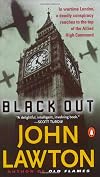
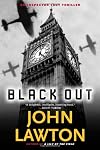
London, 1944. While the Luftwaffe makes its final assault on the already battered British capital, Londoners rush through the streets, seeking underground shelter in the midst of the city's blackout. When the panic subsides, other things begin to surface along with London's war-worn citizens. A severed arm is discovered by a group of children playing at an East End bomb site, and when Scotland Yard's Detective Sergeant Frederick Troy arrives at the scene, it becomes apparent that the show more dismembered body is not the work of a V-1 rocket.After Troy manages to link the severed arm to the disappearance of a refugee scientist from Nazi Germany, America's newest intelligence agency, the OSS, decides to get involved. The son of a titled Russian emigre, Troy is forced to leave the London he knows and enter a corrupt world of bloody consequences, stateless refugees, and mysterious women as he unearths a chain of secrets leading straight to the Allied high command. show lessTags
Recommendations




Member Reviews
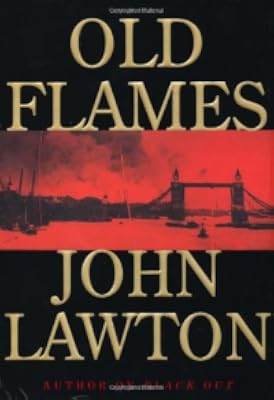
This is my third book in the Inspector Troy series. A few years ago, I read "Old Flames," set in the 1950s, which was excellent. I had meant to go back and read the books chronologically, but never did it for some reason. I recently read the latest installment in the Inspector Troy series, "A Lily of the Field" (2010). While I thoroughly enjoyed that book, compared to "Black Out" it is simply very good, while "Black Out" is superb. I've already bought "Second Violin," the first in the series chronologically and I can't wait to start it.
Reading the books out of order, I already knew some of the characters in "Black Out" and I knew their fates. However, I still loved this book and could not figure out how Lawton was going to bring show more together the threads of an exceedingly complex plot. Other reviewers have mentioned Lawton's evocative style; you feel as though you are living in wartime London. However, what I realized I missed in "A Lily of the Field" is the clear presence of Troy. "Black Out" was the first book in the series and Lawton pulls out all the stops in his portrayal of Troy. He is deeply flawed yet captivating. In "Black Out" Troy suffers an unbelievable number of serious injuries; he is beaten, bombed, stabbed, and shot. Some more than once. Toward the end of the book Troy is honestly not in his right mind. If he hadn't been the series protagonist, he would have been dead. Troy is clearly suffering mentally from his injuries and maybe the after-effects of drugs administered in the hospital. But Troy like a train wreck; the reader cannot look away.
And then there's Troy's taste in women. Not good. Well, good in that they are sexy and beautiful, but not good if you don't want to die and you don't want your heart broken. At one point near the end of the book, Troy is having Christmas eve dinner with a German policeman and his wife in Berlin. They are obviously very much in love. Lawton writes, "They fitted each other like gloves. It was startlingly natural. It had beauty, contentment, safety, peace and pleasure. It occurred to him [Troy] that this was a way of life he had rejected, or that had somehow passed him by, and at thirty-three was unlikely in the extreme to be offered to him. And he didn't miss it one jot." That pretty much sums up Troy. show less
Reading the books out of order, I already knew some of the characters in "Black Out" and I knew their fates. However, I still loved this book and could not figure out how Lawton was going to bring show more together the threads of an exceedingly complex plot. Other reviewers have mentioned Lawton's evocative style; you feel as though you are living in wartime London. However, what I realized I missed in "A Lily of the Field" is the clear presence of Troy. "Black Out" was the first book in the series and Lawton pulls out all the stops in his portrayal of Troy. He is deeply flawed yet captivating. In "Black Out" Troy suffers an unbelievable number of serious injuries; he is beaten, bombed, stabbed, and shot. Some more than once. Toward the end of the book Troy is honestly not in his right mind. If he hadn't been the series protagonist, he would have been dead. Troy is clearly suffering mentally from his injuries and maybe the after-effects of drugs administered in the hospital. But Troy like a train wreck; the reader cannot look away.
And then there's Troy's taste in women. Not good. Well, good in that they are sexy and beautiful, but not good if you don't want to die and you don't want your heart broken. At one point near the end of the book, Troy is having Christmas eve dinner with a German policeman and his wife in Berlin. They are obviously very much in love. Lawton writes, "They fitted each other like gloves. It was startlingly natural. It had beauty, contentment, safety, peace and pleasure. It occurred to him [Troy] that this was a way of life he had rejected, or that had somehow passed him by, and at thirty-three was unlikely in the extreme to be offered to him. And he didn't miss it one jot." That pretty much sums up Troy. show less
If I'd paid a little more attention to the clues planted in the synopsis of this book, I would not have purchased it-- but more on that a little later.
Black Out covers 1944-1948 in London, and as I have been enjoying a few mysteries set in that same time period, I decided to see what this book was all about. For me, there was very little real historical flavor to the setting outside of blackout curtains, potholes in the roads, and having the occasional bomb land somewhere nearby. The major reason why I should have paid more attention to the synopsis is that I do not care for spy thrillers, and that is precisely what Black Out turned out to be. Paraphrasing the words of one of the characters: Just give me an old-fashioned murder any day, show more thank you very much.
However, it wasn't just the spy game element of the book that left me cold; the characters did, too. The two token women, Tosca and Brack, played their jolly nymphomaniac and tall, cool femme fatale roles to perfection, but nothing they did really surprised me. Constable Wildeve was my favorite of the lot, and he deserved a drawerful of commendations for putting up with Sergeant Troy, who seemed to believe that the young man was psychic.
Troy is the son of a titled Russian émigré, and it's a combination of this background coupled with how his schoolmates and others have reacted to it that has made him distrustful. He holds himself apart and does quite a good job of behaving like a cold fish. Troy also is the sort of police officer that I don't particularly care for. He's all about the chase, regardless of whom he puts at risk. It's not so bad when the only person in danger is himself, but he willfully throws other people under the bus, too. I like my coppers with a bit more compassion because it isn't just about the chase.
So... my opinion of Black Out isn't all that great. I can see that it is fast-paced and well-written, and it does have a story that held my interest, but Troy just isn't my sort of policeman. Keep in mind that your mileage may certainly vary. Now I just have to remind myself to pay closer attention to those synopses! show less
Black Out covers 1944-1948 in London, and as I have been enjoying a few mysteries set in that same time period, I decided to see what this book was all about. For me, there was very little real historical flavor to the setting outside of blackout curtains, potholes in the roads, and having the occasional bomb land somewhere nearby. The major reason why I should have paid more attention to the synopsis is that I do not care for spy thrillers, and that is precisely what Black Out turned out to be. Paraphrasing the words of one of the characters: Just give me an old-fashioned murder any day, show more thank you very much.
However, it wasn't just the spy game element of the book that left me cold; the characters did, too. The two token women, Tosca and Brack, played their jolly nymphomaniac and tall, cool femme fatale roles to perfection, but nothing they did really surprised me. Constable Wildeve was my favorite of the lot, and he deserved a drawerful of commendations for putting up with Sergeant Troy, who seemed to believe that the young man was psychic.
Troy is the son of a titled Russian émigré, and it's a combination of this background coupled with how his schoolmates and others have reacted to it that has made him distrustful. He holds himself apart and does quite a good job of behaving like a cold fish. Troy also is the sort of police officer that I don't particularly care for. He's all about the chase, regardless of whom he puts at risk. It's not so bad when the only person in danger is himself, but he willfully throws other people under the bus, too. I like my coppers with a bit more compassion because it isn't just about the chase.
So... my opinion of Black Out isn't all that great. I can see that it is fast-paced and well-written, and it does have a story that held my interest, but Troy just isn't my sort of policeman. Keep in mind that your mileage may certainly vary. Now I just have to remind myself to pay closer attention to those synopses! show less
Depending on your reading preferences, especially fiction, this may be as exciting and a fun reading experience for you as it has been for me. The eight book series is structured like no other that I have read, not just across the eight books, but also within each of the eight books. Let me try to explain – and fortunately, this book, “Black Out” (BO) the first written in the series, serves as an excellent example. BO was published in 1994. Most of the story is set in London, late in WWll, from February, 1944 until two days after D-Day (6/6/44). The last fifty pages take place in 1948, and the setting for those final pages is London and Berlin. The next book, “Old Flames” was published two years later. I have no idea what its show more chronology is; it may start in 1952, then after 100 pages leap backwards in time to 1938 for 150 pages or so, then leapfrog the early chapters and zip ahead to the later 50s. All of a sudden we are meeting characters from previous books, including some who died in those earlier books. And what characters! Author Lawton has created a set of gems with protagonist Freddie Troy, his Russian émigré dad, his MP, war hero brother, the older twin sisters both of whom enjoy embarrassing and tantalizing young Fred. Fred was born in approximately 1915, so he is in his late 20s when this story starts. Each book seems to have a fascinating supporting cast in addition to the family. Out of no where Joseph P Kennedy, US Ambassador to the UK will become a major character. Then there’s Ike, Winnie, etc.
Anyway, back to the chronology thing. While I can’t exactly explain why I can say I really enjoyed it. I must confess that I have read the entire series before, probably about ten years ago. Before realizing the date issue for the series, I made the situation even more complex by choosing the third or fourth book to be my first! Why?!. I do this sometimes, recognizing that the first book may be the weakest (characters are being developed, etc) and I don’t want to make a commitment to read the whole series based on anything short of having the author showing me his better/best stuff.
So what’s BO about? Troy is a homicide detective who finds most of a human arm while perusing the rubble of a bombed residence. Before long he is up to his ankles? knees(?) in suspect Germans (spies?), old photos, contacts….a murder mystery. But it’s a lot more than another crime fiction story. The reader is also absorbed by the war, with incredible scenes of packed humanity on the tube platforms, so thick that passengers have difficulty exiting the trains. And Berlin, with its skinny survivors 4 years after the war, still surrounded by dust, brick, destruction. The war is inescapable in this story.
The main suspect turns out to be an American Major, someone who seems to have a skill and a penchant for murder. And the major is very close to one of Troy’s sources. Two of these sources are rather incredible; both are beautiful, attractive, sexy women. One is Lady Diana Brack, a socialite, with a protective daddy and daddy’s lawyers; Diana is someone known to Freddie since childhood, and a childhood kiss. Brack, about 3 inches taller than Freddie, reminds this reader of that old song, “Whatever Lola wants, Lola….”. And then there’s Tosca, an aide to an American Colonel, who wants nothing to do with Freddie’s investigation. Tosca is blonde, small, but very athletic. Both girls are femmes fatale in their very different ways, and while both appear to wind up la morte towards the bloody climax (but not ultra bloody), at least one manages to survive. And who is this Anna character who pops up in the final pages ? Highly recommended. 4 ½ stars. show less
Anyway, back to the chronology thing. While I can’t exactly explain why I can say I really enjoyed it. I must confess that I have read the entire series before, probably about ten years ago. Before realizing the date issue for the series, I made the situation even more complex by choosing the third or fourth book to be my first! Why?!. I do this sometimes, recognizing that the first book may be the weakest (characters are being developed, etc) and I don’t want to make a commitment to read the whole series based on anything short of having the author showing me his better/best stuff.
So what’s BO about? Troy is a homicide detective who finds most of a human arm while perusing the rubble of a bombed residence. Before long he is up to his ankles? knees(?) in suspect Germans (spies?), old photos, contacts….a murder mystery. But it’s a lot more than another crime fiction story. The reader is also absorbed by the war, with incredible scenes of packed humanity on the tube platforms, so thick that passengers have difficulty exiting the trains. And Berlin, with its skinny survivors 4 years after the war, still surrounded by dust, brick, destruction. The war is inescapable in this story.
The main suspect turns out to be an American Major, someone who seems to have a skill and a penchant for murder. And the major is very close to one of Troy’s sources. Two of these sources are rather incredible; both are beautiful, attractive, sexy women. One is Lady Diana Brack, a socialite, with a protective daddy and daddy’s lawyers; Diana is someone known to Freddie since childhood, and a childhood kiss. Brack, about 3 inches taller than Freddie, reminds this reader of that old song, “Whatever Lola wants, Lola….”. And then there’s Tosca, an aide to an American Colonel, who wants nothing to do with Freddie’s investigation. Tosca is blonde, small, but very athletic. Both girls are femmes fatale in their very different ways, and while both appear to wind up la morte towards the bloody climax (but not ultra bloody), at least one manages to survive. And who is this Anna character who pops up in the final pages ? Highly recommended. 4 ½ stars. show less
Frederick Troy is the British antithesis to Bernie Gunther. A" toff" who becomes a cop in a London that is almost as violent as Berlin. D Day is the time frame and immigrant German scientists are being murdered, M 5, OSS and communists vie for roles as killers or killed. Can be hard to stay with the flow as Troy, easily the most "bombed" policeman in English History, with enough wounds and injuries than most Purple Heart candidates, battles almost every authority available to solve the murders.
This fine novel repeatedly brings to mind LeCarré. Scott Turow
Um, ... in what respect, Mr. Turow? Nothing about it brings to mind LeCarré except that I would rather be reading LeCarré than Lawton.
To be fair, it's not horrible, but it brings to mind Jacqueline Winspear more than it does LeCarré; and to be fair to Ms. Winspear, even Maisie Dobbs would have moved the storyline apace by page 101. The mystery would have been half-way resolved, rather than only partially outlined. Even the hapless Billy would have had more to offer by this point in the story. Instead, there's too much dragging out, with no sense of mystery, intrigue, purpose.
I may try again. Or may not. I'd have to be stuck in an airport or train station, without means show more of escape.
A great premise for my new genre literature: click-lit. (Made-for-TV.)
Addendum: It all makes sense now, having just found out Lawton is a TV producer, first and foremost. show less
Um, ... in what respect, Mr. Turow? Nothing about it brings to mind LeCarré except that I would rather be reading LeCarré than Lawton.
To be fair, it's not horrible, but it brings to mind Jacqueline Winspear more than it does LeCarré; and to be fair to Ms. Winspear, even Maisie Dobbs would have moved the storyline apace by page 101. The mystery would have been half-way resolved, rather than only partially outlined. Even the hapless Billy would have had more to offer by this point in the story. Instead, there's too much dragging out, with no sense of mystery, intrigue, purpose.
I may try again. Or may not. I'd have to be stuck in an airport or train station, without means show more of escape.
A great premise for my new genre literature: click-lit. (Made-for-TV.)
Addendum: It all makes sense now, having just found out Lawton is a TV producer, first and foremost. show less
A different story to many dealing with a series of murders in London during World War 2 investigated by tenacious Sgt Troy. Troy's chief suspects are an OSS officer and an upper class woman who is a close family friend. Interesting mix of fiction, fact and real people.
This is a murder mystery set in war-time London, and I believe it is the first in the Inspector Troy series. (I've read a couple of the later books in the series and have enjoyed very much their combination of murder mystery/political intrigue). This book starts with the discovery of a human arm, but soon there are two bodies and a third person is missing. The bodies appear to be German, but how did they get to London during the Blitz, and why were they there are puzzles Inspector Troy must confront as he searches for a possible serial killer. In his search, Troy must deal with spy agencies--British and American--as well as more than one love interest. I enjoyed this, and I've got another Inspector Troy on my TBR shelf to get to soon.
3 show more stars show less
3 show more stars show less
Members
- Recently Added By
Lists

Books Read in 2016
4,666 works; 197 members
Author Information

30+ Works 2,376 Members
Series


Common Knowledge
- Canonical title
- Black Out
- Original publication date
- 1995
- People/Characters
- Frederick Troy; Kolankiewicz; Jack Wildeve; Stanley Onions; Nikolai Troytsky; Lady Diana Brack (show all 12); Larissa Tosca; Jimmy Wayne; George Bonham; Neville Pym; Peter Wolinski; Freddie Bartholomew
- Important places
- London, England, UK; Berlin, Germany
- Important events
- World War II
- Dedication
- For
WPC Patricia Angadi
Women's Auxiliary Police Corp
Oxfordshire
1941-1943
Painter, Novelist and Copper - First words
- In the London borough of Stepney very little remained of Cardigan Street.
- Last words
- (Click to show. Warning: May contain spoilers.)Well, thought Troy, he had to have his little dig one way or another, didn't he?
Classifications
Statistics
- Members
- 504
- Popularity
- 59,660
- Reviews
- 23
- Rating
- (3.60)
- Languages
- 8 — Dutch, English, French, German, Italian, Romanian, Spanish, Swedish
- Media
- Paper, Audiobook, Ebook
- ISBNs
- 39
- ASINs
- 8