On This Page
Description
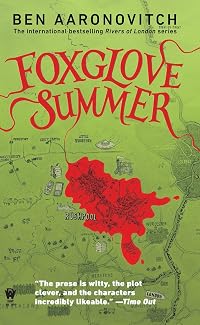
Fantasy. Fiction. Literature. Mystery. Peter Grant—cop, magical apprentice, and Londoner to the core—is being forced out of his comfort zone and into the English countryside. His latest case involves the disappearance of children in the small village of Herefordshire, and the local police are unwilling to admit there might be a supernatural element involved. Now Peter must deal with them, local river spirits, and the fact that all the shops close by 4 P.M.Tags
Recommendations












Member Reviews
I've fallen in love with the "Rivers of London" series. I look forward to each new book because I know I will slide into a world of PC Peter Grant and feel happier for being in his company: a mixed-race police constable in the Met, he approaches the world with an insatiable curiosity, a passion for architecture, a commitment to the scientific method, an implacable resistance to the abuse of power, a dry wit that never slides into jaded cynicism and the ability, after much practice and with great concentration, to do magic. He is clever, brave, amusing and easy to like.
The Rivers of London series describes how Peter becomes assigned to "The Folly", a once-grand establishment responsible for policing the interaction of the human and the show more magical, that has declined as magic started to ebb from the world. Peter. the only recruit for a generation, is assigned at a point when magic seems to be increasing and, of course, bad people are plotting to take advantage of it.
"Foxglove Summer", the fifth and latest in the series, delivers many of the things that I enjoyed in its predecessors: witty text, strong police procedure, often described tongue-in-cheek, Peter's obsession with architecture and with applying science to magic, likeable characters - even the ones who have shady allegiances and are not fully or even partly human. It also benefits from the excellent narration by Kobna Holdbrook-Smith who brings the characters in the book alive.
In previous books, London or aspects of her spirit or history, was almost a character in her own right. This book is set in deepest, darkest Herefordshire, a land of farms, forests, cows and dogging. By moving Peter Grant, the quintessential Londoner, from a city that he blends into like a lion on the Savannah, to the country where he doesn't have a clue, Ben Aaronvitch made it easier for me to see Peter and understand who is becoming.
Until "Foxglove Summer", Peter Grant played the role of apprentice, with his boss, The Nightingale, there to advise and support Peter's still-developing powers and guide his sometimes extremely rash judgements. In this book, Peter is at least a journeyman, choosing his own path independently of his mentor. He is also pushed to be more by Beverley Brook, a twenty-something river goddess who has been flirting with him and teasing him since the start of the series.
"Foxglove Summer" resists the Holmes vs Moriarty or Bond vs Spectre dynamic. Instead of Peter Grant pursuing the Faceless Man that he fought at the end of "Broken Homes", he is confronted in "Foxglove Summer" with nothing more or less sinister than a force of nature to whom his fate is largely incidental. The result is a kind of coming of age for Peter that I thought worked very well.
A couple of things in "Foxglove Summer" were less than satisfying: the storyline around the bees seemed to go nowhere, which felt somehow like a broken promise rather than a loose-end in the plot, and the resolution of the story was so focused on Peter that I didn't find out as much as I would have liked about what happened to the sisters.
These are small things that might have made a very good book even better. I'm still in love with this series. I hope it runs for a very long time. show less
The Rivers of London series describes how Peter becomes assigned to "The Folly", a once-grand establishment responsible for policing the interaction of the human and the show more magical, that has declined as magic started to ebb from the world. Peter. the only recruit for a generation, is assigned at a point when magic seems to be increasing and, of course, bad people are plotting to take advantage of it.
"Foxglove Summer", the fifth and latest in the series, delivers many of the things that I enjoyed in its predecessors: witty text, strong police procedure, often described tongue-in-cheek, Peter's obsession with architecture and with applying science to magic, likeable characters - even the ones who have shady allegiances and are not fully or even partly human. It also benefits from the excellent narration by Kobna Holdbrook-Smith who brings the characters in the book alive.
In previous books, London or aspects of her spirit or history, was almost a character in her own right. This book is set in deepest, darkest Herefordshire, a land of farms, forests, cows and dogging. By moving Peter Grant, the quintessential Londoner, from a city that he blends into like a lion on the Savannah, to the country where he doesn't have a clue, Ben Aaronvitch made it easier for me to see Peter and understand who is becoming.
Until "Foxglove Summer", Peter Grant played the role of apprentice, with his boss, The Nightingale, there to advise and support Peter's still-developing powers and guide his sometimes extremely rash judgements. In this book, Peter is at least a journeyman, choosing his own path independently of his mentor. He is also pushed to be more by Beverley Brook, a twenty-something river goddess who has been flirting with him and teasing him since the start of the series.
"Foxglove Summer" resists the Holmes vs Moriarty or Bond vs Spectre dynamic. Instead of Peter Grant pursuing the Faceless Man that he fought at the end of "Broken Homes", he is confronted in "Foxglove Summer" with nothing more or less sinister than a force of nature to whom his fate is largely incidental. The result is a kind of coming of age for Peter that I thought worked very well.
A couple of things in "Foxglove Summer" were less than satisfying: the storyline around the bees seemed to go nowhere, which felt somehow like a broken promise rather than a loose-end in the plot, and the resolution of the story was so focused on Peter that I didn't find out as much as I would have liked about what happened to the sisters.
These are small things that might have made a very good book even better. I'm still in love with this series. I hope it runs for a very long time. show less
This series just gets better as it goes on. I am a fan of the writing and the plotting and the characters, especially the main character, Peter Grant. The cover art is by a different illustrator, Patrick Knowles, than for the previous books but it is still worth spending some time looking at it.
Peter actually spends the whole book outside of London and he is only in occasional telephone contact with his mentor, Nightingale. So it seems he has really matured as an investigator. The location is part of the county of Herefordshire which actually sounds like a delightful place if it wasn't for the disappearance of two young girls. Livingstone sends Peter out to check on a retired magician in the vicinity to make sure he had nothing to do show more with the disappearance. Once Peter has checked him out (and decided that he could not have been involved) he decides to offer his assistance in the search for the missing girls. The Herefordshire constabulary are more than happy to have another body but they don't really know what use they can make of Peter's special talents. So they put him in as one of the Family Liason Officers but Peter doesn't stick around the family home very much. He partners up with Domenic Croft, who grew up in the village from which the girls disappeared and who knows everyone who lives there. The first indication that there may be magic afoot comes from one of Domenic's mates who calls to report her drug and poached meat stash has been raided. Beverley Brook, one of the London river goddesses who appeared in an earlier book, also comes to help out (and to get to know Peter better). Between the three they manage to find the girls and then figure out who kidnapped them. It would be giving too much away to say who that is but I will state that unicorns make an appearance. While all this is going on back in London Peter's former partner, Leslie, is being hunted by Nightingale et al. because she went over to the dark side in the last book. Leslie texts and then finally talks to Peter on the phone and hints that bad things are in store for him. She eludes capture so, no doubt, she will be turning up in the next book.
Part of what I love about these books is just how much description of the surroundings Ben Aaronovitch gives. This part of Herefordshire has ancient forests and Roman roads and Druid hill forts and Aaronovitch manages to work that all in. I was so interested that I searched Google maps of the area and I found that a pub next to the River Lugg, The Riverside Inn in Ayemestry, really exists. This location plays a major part in the blossoming relationship between Peter and Beverley. It would be a hoot to visit it. show less
Peter actually spends the whole book outside of London and he is only in occasional telephone contact with his mentor, Nightingale. So it seems he has really matured as an investigator. The location is part of the county of Herefordshire which actually sounds like a delightful place if it wasn't for the disappearance of two young girls. Livingstone sends Peter out to check on a retired magician in the vicinity to make sure he had nothing to do show more with the disappearance. Once Peter has checked him out (and decided that he could not have been involved) he decides to offer his assistance in the search for the missing girls. The Herefordshire constabulary are more than happy to have another body but they don't really know what use they can make of Peter's special talents. So they put him in as one of the Family Liason Officers but Peter doesn't stick around the family home very much. He partners up with Domenic Croft, who grew up in the village from which the girls disappeared and who knows everyone who lives there. The first indication that there may be magic afoot comes from one of Domenic's mates who calls to report her drug and poached meat stash has been raided. Beverley Brook, one of the London river goddesses who appeared in an earlier book, also comes to help out (and to get to know Peter better). Between the three they manage to find the girls and then figure out who kidnapped them. It would be giving too much away to say who that is but I will state that unicorns make an appearance. While all this is going on back in London Peter's former partner, Leslie, is being hunted by Nightingale et al. because she went over to the dark side in the last book. Leslie texts and then finally talks to Peter on the phone and hints that bad things are in store for him. She eludes capture so, no doubt, she will be turning up in the next book.
Part of what I love about these books is just how much description of the surroundings Ben Aaronovitch gives. This part of Herefordshire has ancient forests and Roman roads and Druid hill forts and Aaronovitch manages to work that all in. I was so interested that I searched Google maps of the area and I found that a pub next to the River Lugg, The Riverside Inn in Ayemestry, really exists. This location plays a major part in the blossoming relationship between Peter and Beverley. It would be a hoot to visit it. show less
My favorite one so far -- thank you, Ben Aaronovitch, for the happy pop culture references (I nearly hurt myself trying to giggle quietly on the bus at valor morgulis), for the continuing development of a complex and appealing character, and the excellent mystery. Two girls have gone missing from a country town and Peter goes out to make sure the local magical denizens aren't involved. He stays on and gets drawn into a very weird set of occurences. Brilliant!
I haven't yet been able to review a Peter Grant book immediately after finishing. I suppose I'm basking in book afterglow. Once again, Aaronovitch writes an engrossing, unpredictable urban fantasy. A good story, a generous sprinkling of dark police humor, decent police procedural all combine for a read that fully occupied my Sunday afternoon.
Chuckles as I started:
Sarcasm about family:
"I sighed--policing would be so much easier if people didn't have concerned relatives. The murder rate would be much lower, for one thing."
About procedure:
"'I'm fairly certain you're violating our human rights here,' she said.
'No,' I said with the absolute certainty of a man who'd taken a moment to look up the relevant legislation before leaving show more home."
About official-speak:
"I made a mental note to wheedle the list of old codgers out of Nightengale and get it properly sorted into a database. Hugh's 'grapevine' might be a useful source of information. If I'd been about four ranks higher up the heirarchy I'd have regarded it as an opportunity to realise additional intelligence assets through enhanced stakeholder engagement. But I'm just a constable so I didn't."
Okay, maybe that's not that funny. I thought so, but then I'm the sort to read the corporate bulletins, marveling at the abuse of language.
What I really love about Aaronovich--srsly, now--is that he brings a much looked for but seldom found level of social commentary to his urban fantasy. Grant has dark skin, and is painfully obvious out in the posh suburbs. At one point, there's a nice little aside when he notes the casual joking racism from an officer he's just met. He considers his normal snide comment, half laughing, half calling it out, but then decides to let it go with the assumption that the officer wouldn't even recognize the rebuke.
I'm always impressed the way Aaronovich weaves multiculturalism into his tales, in the most ideal of ways: acknowledging a different cultural experience, but not fetishizing it or diminutizing the truth of the experience. Grant understands the because he is a dark-skinned copper he will end up being 'poster boy' for the investigation. There's a world of cynicism, weariness and acceptance in the role he plays for the suburban police.
Grant has his own prejudices about the country, partly because he feels so out of his element, only going into the country when required on school trips.
"The air was still fresh but the sun was already sucking up the moisture from the fields and you didn't need to be chewing on a straw to know it was going to be another hot day."
There's also writing that is nicely balanced between description and action, occasionally even making a foray into lyricism:
"The pack [of reporters] has swept back into the village less than ten minutes after they'd left, and come boiling up the cul-de-sac like the return of a tide, licking at my heels as I ran up the path and only stopping at the hedge line because it was held by a special constable called Sally Donnahyde who was a primary school teacher in her other job and so wasn't going to take any lip from a bunch of journalists. The kitchen was at the back of the house, but I could still here them as a restless murmur, like surf on a pebble beach."
Oh yes, I liked the mystery, one of the most coherent storylines yet. The supernatural take is interesting, even if it comes to a somewhat familiar ending, but I appreciate the modern twist. It did trouble me somewhat that this might be a plot point that comes back to bite Peter in the butt, which led to unpleasant echoes of Dresden. But again, that's what fairy tales and mythology is about, putting the storyteller's spin on a cultural archetype.
Characterization is decent, with the majority of time spent on Peter. I don't mind; he's an interesting, thoughtful lead. I came to like his country partner. This time, Beverly Brook's role seemed appropriate and a little more fleshed out, if still slightly incoherent (must she always speak in riddles? must we have weird watery dalliances?)
In a rare moment for me, I would have liked a little more punctuation; at times it takes a minute to figure out the inflection (see above quote). But that's a stylistic quibble.
The ending, perhaps, was almost the least satisfying part of the story. Oh, don't worry; everything wraps up nicely with no nasty cliffhangers, except that giant multi-book arc that's going on. No, it is that the ending seemed a little too cinematic, and meant to appeal to the current UF reader, instead of being more character consistent. But that's me, and I'd be happy to discuss below with spoiler tags.
Still, Peter Grant remains one of the most consistently satisfying UF series out there, and I remain committed to reading whatever Aaronovitch releases.
Three and a half country stars
https://clsiewert.wordpress.com/2014/12/17/foxglove-summer-by-ben-aaronovich/ show less
Chuckles as I started:
Sarcasm about family:
"I sighed--policing would be so much easier if people didn't have concerned relatives. The murder rate would be much lower, for one thing."
About procedure:
"'I'm fairly certain you're violating our human rights here,' she said.
'No,' I said with the absolute certainty of a man who'd taken a moment to look up the relevant legislation before leaving show more home."
About official-speak:
"I made a mental note to wheedle the list of old codgers out of Nightengale and get it properly sorted into a database. Hugh's 'grapevine' might be a useful source of information. If I'd been about four ranks higher up the heirarchy I'd have regarded it as an opportunity to realise additional intelligence assets through enhanced stakeholder engagement. But I'm just a constable so I didn't."
Okay, maybe that's not that funny. I thought so, but then I'm the sort to read the corporate bulletins, marveling at the abuse of language.
What I really love about Aaronovich--srsly, now--is that he brings a much looked for but seldom found level of social commentary to his urban fantasy. Grant has dark skin, and is painfully obvious out in the posh suburbs. At one point, there's a nice little aside when he notes the casual joking racism from an officer he's just met. He considers his normal snide comment, half laughing, half calling it out, but then decides to let it go with the assumption that the officer wouldn't even recognize the rebuke.
I'm always impressed the way Aaronovich weaves multiculturalism into his tales, in the most ideal of ways: acknowledging a different cultural experience, but not fetishizing it or diminutizing the truth of the experience. Grant understands the because he is a dark-skinned copper he will end up being 'poster boy' for the investigation. There's a world of cynicism, weariness and acceptance in the role he plays for the suburban police.
Grant has his own prejudices about the country, partly because he feels so out of his element, only going into the country when required on school trips.
"The air was still fresh but the sun was already sucking up the moisture from the fields and you didn't need to be chewing on a straw to know it was going to be another hot day."
There's also writing that is nicely balanced between description and action, occasionally even making a foray into lyricism:
"The pack [of reporters] has swept back into the village less than ten minutes after they'd left, and come boiling up the cul-de-sac like the return of a tide, licking at my heels as I ran up the path and only stopping at the hedge line because it was held by a special constable called Sally Donnahyde who was a primary school teacher in her other job and so wasn't going to take any lip from a bunch of journalists. The kitchen was at the back of the house, but I could still here them as a restless murmur, like surf on a pebble beach."
Oh yes, I liked the mystery, one of the most coherent storylines yet. The supernatural take is interesting, even if it comes to a somewhat familiar ending, but I appreciate the modern twist. It did trouble me somewhat that this might be a plot point that comes back to bite Peter in the butt, which led to unpleasant echoes of Dresden. But again, that's what fairy tales and mythology is about, putting the storyteller's spin on a cultural archetype.
Characterization is decent, with the majority of time spent on Peter. I don't mind; he's an interesting, thoughtful lead. I came to like his country partner. This time, Beverly Brook's role seemed appropriate and a little more fleshed out, if still slightly incoherent (must she always speak in riddles? must we have weird watery dalliances?)
In a rare moment for me, I would have liked a little more punctuation; at times it takes a minute to figure out the inflection (see above quote). But that's a stylistic quibble.
The ending, perhaps, was almost the least satisfying part of the story. Oh, don't worry; everything wraps up nicely with no nasty cliffhangers, except that giant multi-book arc that's going on. No, it is that the ending seemed a little too cinematic, and meant to appeal to the current UF reader, instead of being more character consistent. But that's me, and I'd be happy to discuss below with spoiler tags.
Still, Peter Grant remains one of the most consistently satisfying UF series out there, and I remain committed to reading whatever Aaronovitch releases.
Three and a half country stars
https://clsiewert.wordpress.com/2014/12/17/foxglove-summer-by-ben-aaronovich/ show less
We’ve reached book 5 in the Rivers of London series, and so far I haven’t been disappointed by any of them. This time two children have been kidnapped from a small village in Herefordshire and Peter goes to make sure there are no magical elements to the case. But it wouldn’t be a Peter Grant book if it was all completely normal, would it?
We get to spend the entirety of the book outside of London and in rural England. As an American, I really enjoy the descriptions of life in London, but now we get to see the more pastoral side of the UK. Small towns and small-town people share similarities the world over, but there’s some distinctly British flavor to it that’s very fun.
Peter is still grappling with the events of previous show more books and the betrayal he experienced. It seems like he’s doing just fine, and nothing fazes him, but really he’s just bottling everything up. We get a great scene where he finally lets loose and takes out his anger and grief on a poor tree, egged on by Beverley, who I like more and more as time goes on. His dry wit and dark humor are still going strong, but we get to see Peter’s vulnerability. He continues to grow as a character, and I appreciate that our hero isn’t overpowered and perfect.
Speaking of overpowered, one thing I love about this series is the checks and balances, so to speak. Magic doesn’t come for free. It has a serious, frightening cost that means our wizards can’t just run about flinging fireballs willy nilly. If they cast a spell, it needs to be worth it, so they can’t just wave their hands and use magic to fix every single problem.
Because we’re out of London we don’t see very much Nightingale here, but we get more time and growth with the Peter/Beverley relationship. We also didn’t get much movement on the Faceless Man situation. The mystery was good but once we got to the end, it all seemed to get resolved very quickly; I’m hoping there may be some ongoing consequences or interactions with the antagonists because they seem super interesting, but it felt more like a Monster of the Week episode than a myth-arc episode, if you know what I mean.
All in all, this was a great addition to the series. If you haven’t figured out from my reviews yet, I think that if you like urban fantasy, you’ll love Rivers of London! show less
We get to spend the entirety of the book outside of London and in rural England. As an American, I really enjoy the descriptions of life in London, but now we get to see the more pastoral side of the UK. Small towns and small-town people share similarities the world over, but there’s some distinctly British flavor to it that’s very fun.
Peter is still grappling with the events of previous show more books and the betrayal he experienced. It seems like he’s doing just fine, and nothing fazes him, but really he’s just bottling everything up. We get a great scene where he finally lets loose and takes out his anger and grief on a poor tree, egged on by Beverley, who I like more and more as time goes on. His dry wit and dark humor are still going strong, but we get to see Peter’s vulnerability. He continues to grow as a character, and I appreciate that our hero isn’t overpowered and perfect.
Speaking of overpowered, one thing I love about this series is the checks and balances, so to speak. Magic doesn’t come for free. It has a serious, frightening cost that means our wizards can’t just run about flinging fireballs willy nilly. If they cast a spell, it needs to be worth it, so they can’t just wave their hands and use magic to fix every single problem.
Because we’re out of London we don’t see very much Nightingale here, but we get more time and growth with the Peter/Beverley relationship. We also didn’t get much movement on the Faceless Man situation. The mystery was good but once we got to the end, it all seemed to get resolved very quickly; I’m hoping there may be some ongoing consequences or interactions with the antagonists because they seem super interesting, but it felt more like a Monster of the Week episode than a myth-arc episode, if you know what I mean.
All in all, this was a great addition to the series. If you haven’t figured out from my reviews yet, I think that if you like urban fantasy, you’ll love Rivers of London! show less
Another rollicking magickal adventure of Peter Grant. This time, he is sent away from London into the countryside to lend his unique expertise to the investigation of the disappearance of two girls. As usual, this story manages to marry the mundane and the fantastic in perfect harmony. Just when I thought I was getting bogged down in flat-footed police work, something odd would happen to perk things up. And vice versa: when I felt like the esoteric was going to overwhelm me, something normal occurred to anchor me in reality. In the background is the ongoing mystery of Lesley: why did she cross the line in the last book, why is she tormenting him now? What is the end game there? It remains unresolved. At the end I wondered whether the show more next book would open with a rescue mission, but it seems it is not to be. I hope there is another installment! I find this world endlessly fascinating and entertaining.
Jan. 2020 update: I just wanted to add a few words to my original review, whereby I will extol the virtue of this volume, as I believe it is my favourite (so far). Probably I have said that about others in the series, but in the process of re-reading, I was captured by this as no other. I really don't actually like Lesley, and I wonder if I ever did. She seems like too much of a smarty-pants, and while I feel sort of sorry for her, I feel like she hasn't really earned my sympathy, showing Peter up and causing trouble. I hope she redeems herself--I can't remember what happens in the next book or two that I've already read. show less
Jan. 2020 update: I just wanted to add a few words to my original review, whereby I will extol the virtue of this volume, as I believe it is my favourite (so far). Probably I have said that about others in the series, but in the process of re-reading, I was captured by this as no other. I really don't actually like Lesley, and I wonder if I ever did. She seems like too much of a smarty-pants, and while I feel sort of sorry for her, I feel like she hasn't really earned my sympathy, showing Peter up and causing trouble. I hope she redeems herself--I can't remember what happens in the next book or two that I've already read. show less
This reviews the audiobook, read by the same guy as brilliantly always, because the library doesn't have the hard copy. I am still enjoying this series, despite the sex. At least he doesn't have to repeat the sex scenes and we can take further escapades as read.
Peter Grant is sent to check out a former practitioner who lives in the country when two 11 year old girls go missing. It's standard procedure, Nightingale assures him. While out there, Grant volunteers to help in the search as it seems that the retired wizard, in his dotage, is barely able to move much less kidnap anyone.
Although the country is hardly Grant's milieu, his suspicions are aroused that there may be something "magical" going on - that requires his particular show more expertise. Nightingale can't leave the Folly (supervising a prisoner and Lesley is still on the loose), so river spirit Beverly Brook is sent to help out. Will she be too much of a distraction?
It must be hard to keep track of all these supernatural thingies as a series goes on. You can't be fighting the same old wizards again and again without adding new wrinkles and often these wrinkles have to match folklore or previous authors' wrinkles. Aaronovitch keeps this enjoyable and in this story manages to elucidate some minor mysteries from the previous installments. show less
Peter Grant is sent to check out a former practitioner who lives in the country when two 11 year old girls go missing. It's standard procedure, Nightingale assures him. While out there, Grant volunteers to help in the search as it seems that the retired wizard, in his dotage, is barely able to move much less kidnap anyone.
Although the country is hardly Grant's milieu, his suspicions are aroused that there may be something "magical" going on - that requires his particular show more expertise. Nightingale can't leave the Folly (supervising a prisoner and Lesley is still on the loose), so river spirit Beverly Brook is sent to help out. Will she be too much of a distraction?
It must be hard to keep track of all these supernatural thingies as a series goes on. You can't be fighting the same old wizards again and again without adding new wrinkles and often these wrinkles have to match folklore or previous authors' wrinkles. Aaronovitch keeps this enjoyable and in this story manages to elucidate some minor mysteries from the previous installments. show less
Members
- Recently Added By
Lists

Best Urban Fantasy
632 works; 78 members

Civil Service Spec Fic
36 works; 4 members
London Urban Fantasy
33 works; 6 members

Favorite Books Published in 2014
27 works; 6 members

Books Read in 2015
3,299 works; 129 members

Top Five Books of 2015
811 works; 241 members

Books Read in 2018
4,360 works; 110 members

Books Read in 2020
4,379 works; 124 members

Books Read in 2022
5,218 works; 111 members
Favorite Books from the 2010s
75 works; 3 members

Books Read in 2019
4,052 works; 108 members

hypatian_kat to-read
429 works; 3 members

Paranormal investigators and space detectives
274 works; 9 members
Talk Discussions
Past Discussions
[Foxglove Summer]: A Spoiler Discussion in 75 Books Challenge for 2015 (April 2015)
Author Information

138+ Works 36,331 Members
Some Editions
Awards and Honors
Distinctions
Series

Belongs to Publisher Series
DAW Book Collectors (1666)
Work Relationships
Common Knowledge
- Canonical title
- Foxglove Summer
- Original title
- Foxglove Summer
- Original publication date
- 2014-11-13
- People/Characters
- Peter Grant (Constable); Thomas Nightingale (DCI); Beverley Brook; Abdul Haqq Walid; Dominic Croft (DC); Hugh Oswald (show all 16); Mellissa Oswald; Charles Edmondson (Inspector); David Windrow (DCI); Allison Cole (DS); Joanne Marstowe; Andy Marstowe; Victoria Lacey; Derek Lacey; Victor Lovell; Not-Nichole
- Important places
- Herefordshire, England, UK; Rushpool, Herefordshire, England, UK; Leominster, Herefordshire, England, UK
- Epigraph
- Part One
Borderlands
In th'olde days of the Kyng Arthour.
Of which that Britons speken greet honour.
Al was this land fulfild of fayerye.
The elf-queene, with hir joly compaignye,
Daunced ful oft... (show all)e on many a grene mede.
'The Wife of Bath's Tale', Geoffrey Chaucer
Part Two
The Other Country
The universe is full of magical things patiently waiting for our wits to grow sharper.
Eden Phillpotts 'A Shadow Passes' (1919) - Dedication
- This book is dedicated to Sir Terry Pratchett OBE
who has stood like a wossname upon the
rocky shores of our imaginations - the better
to guide us safely into harbour. - First words
- I was just passing the Hoover Centre when I heard Mr Punch scream his rage behind me.
- Quotations
- Caratacus suffered the double indignity of being taken to Rome in chains and having an opera written about him by Elgar.
We trooped off behind her into waist high bracken, down something that was not so much a path as a statistical variation in the density of the undergrowth. - Last words
- (Click to show. Warning: May contain spoilers.)I put my arms around Beverley's waist and buried my face in her hair. Beneath the oil and metal she smelt of peppermint and shea butter.
I was ready to go home to London. - Original language
- English
- Canonical DDC/MDS
- 823.087663
Classifications
- Genres
- Fantasy, Fiction and Literature, Mystery
- DDC/MDS
- 823.087663 — Literature & rhetoric English & Old English literatures English fiction By type Genre fiction Adventure fiction Speculative fiction Fantasy fiction Urban fantasy
- LCC
- PR6051 .A76 .F69 — Language and Literature English English Literature 1961-2000
- BISAC
Statistics
- Members
- 2,467
- Popularity
- 7,862
- Reviews
- 111
- Rating
- (4.06)
- Languages
- Czech, English, French, German
- Media
- Paper, Audiobook, Ebook
- ISBNs
- 25
- UPCs
- 1
- ASINs
- 21