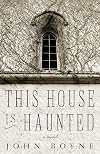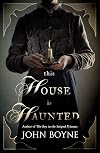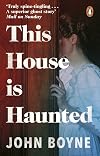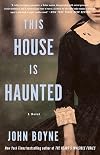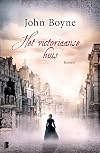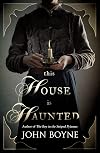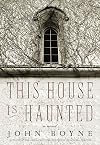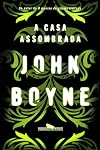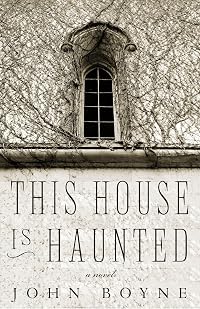
This House Is Haunted
by John Boyne
On This Page
Description
Written in Dickensian prose, This House Is Haunted is a striking homage to the classic nineteenth-century ghost story. Set in Norfolk in 1867, Eliza Caine responds to an ad for a governess position at Gaudlin Hall. When she arrives at the hall, shaken by an unsettling disturbance that occurred during her travels, she is greeted by the two children now in her care, Isabella and Eustace. There is no adult present to represent her mysterious employer, and the children offer no explanation. show more Later that night in her room, another terrifying experience further reinforces the sense that something is very wrong. From the moment Eliza rises the following morning, her every step seems dogged by a malign presence that lives within Gaudlin's walls. Eliza realizes that if she and the children are to survive its violent attentions, she must first uncover the hall's long-buried secrets and confront the demons of its past. Clever, captivating, and witty, This House Is Haunted is pure entertainment with a catch. show lessTags
Recommendations
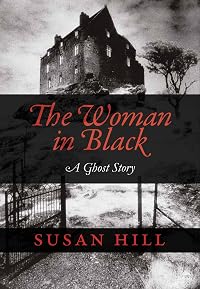
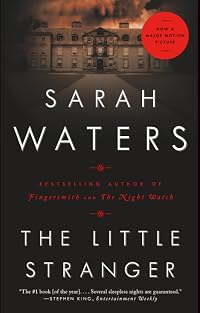
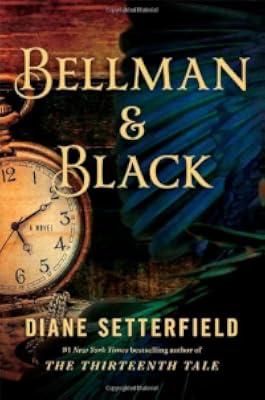
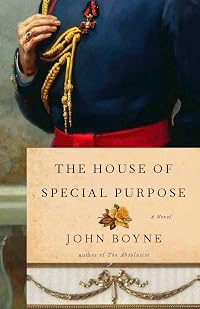
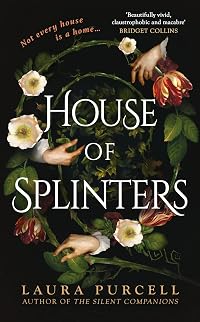
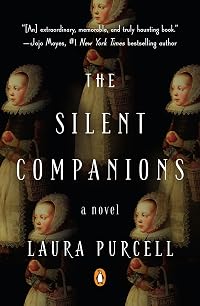
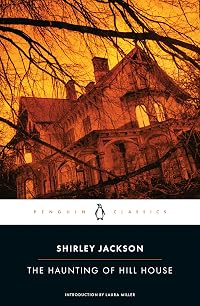
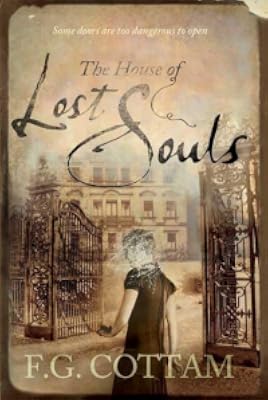
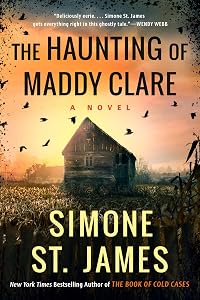
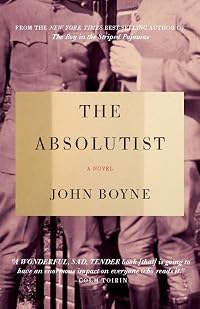
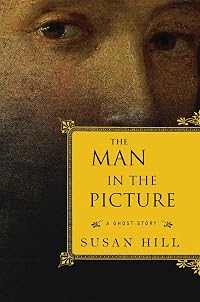
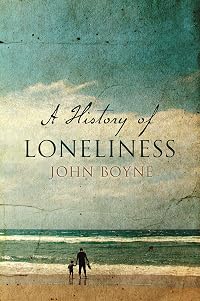
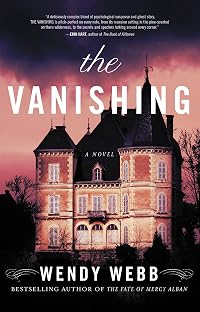

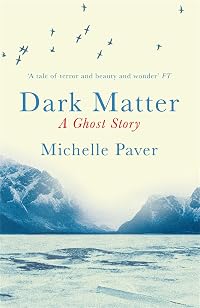
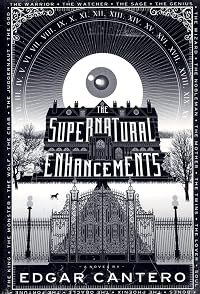
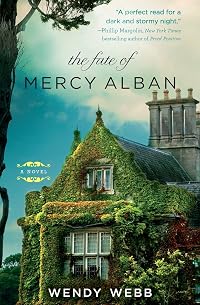
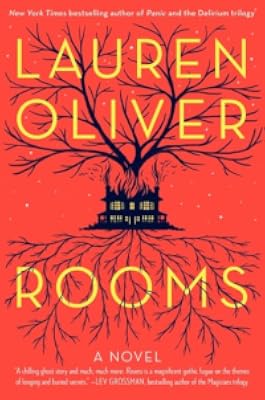
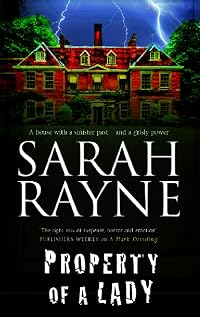
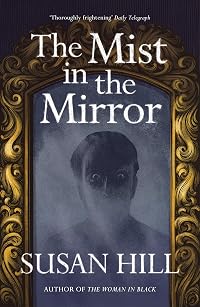
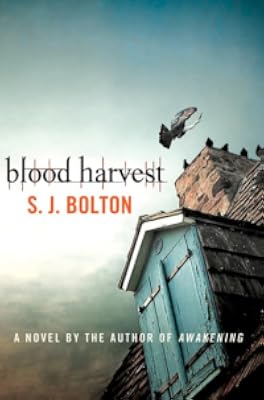
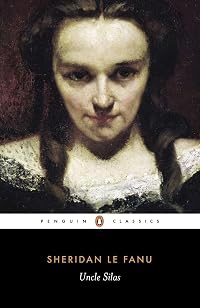
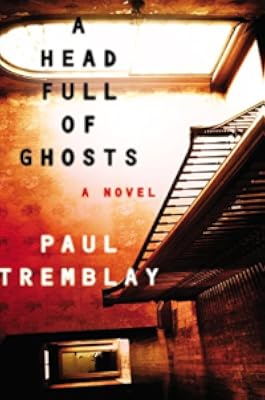
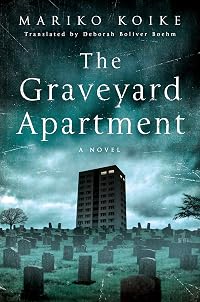
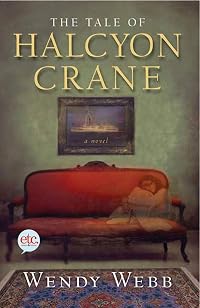
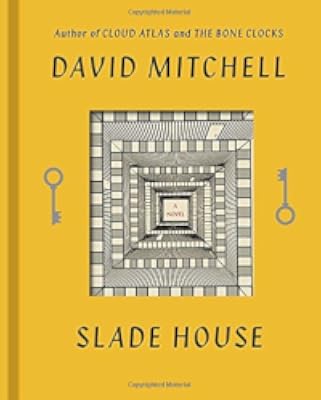
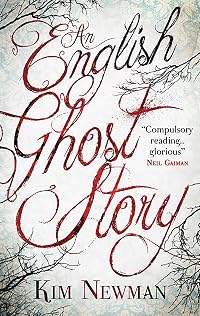
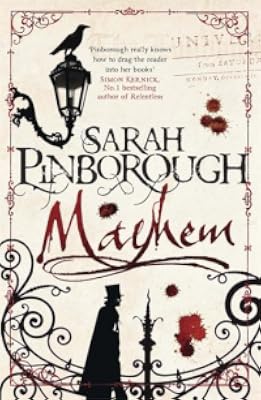
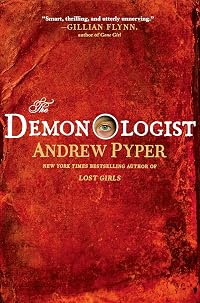

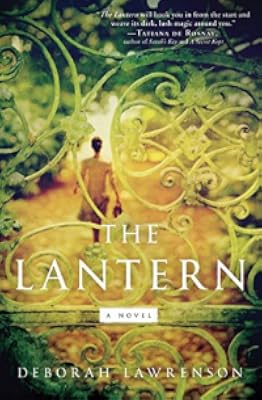
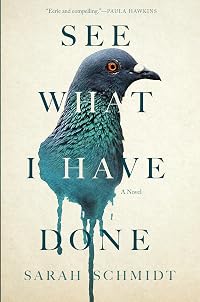

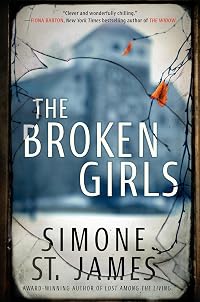
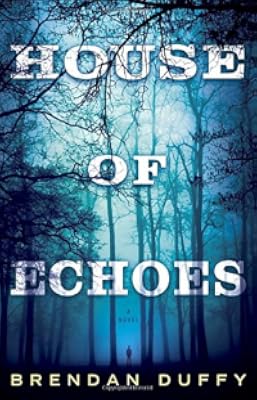
Member Recommendations
HollyMS Both are historical gothic mysteries that are heavily influenced by Henry Jame's The Turn of the Screw.
20
Member Reviews
A crumbling gothic mansion, eerily weird kids with no explanation as to why there are no other adults, several deceased prior governesses - and yet I still found this far less creepy than perhaps I was meant to. Somehow this fact did not matter.
As for [a:John Boyne|7195|John Boyne|https://images.gr-assets.com/authors/1591950120p2/7195.jpg] - well if you read any number of my reviews you will likely see that they all sound pretty much the same. I have now read three of his books, enjoyed each of them, and unlike my predictable writing, none of this man's books have sounded the same. It is a form of genius I'm sure.
As for [a:John Boyne|7195|John Boyne|https://images.gr-assets.com/authors/1591950120p2/7195.jpg] - well if you read any number of my reviews you will likely see that they all sound pretty much the same. I have now read three of his books, enjoyed each of them, and unlike my predictable writing, none of this man's books have sounded the same. It is a form of genius I'm sure.
I read John Boyne for the first time last year (The Heart's Invisible Furies) and fell in love. This is only my second book of his to read, but he is officially on my "read everything by an author" list now. This House is Haunted is a creepy, brooding, gothic ghost story, and I love everything about it. The characters are so fully fleshed out and the unwinding of their stories and motivations is superb.
Boyne's language skills are phenomenal and his writing is beautiful. He can set your heart racing and calm it down expertly, leading you into an uneasy security before he pounces again. I especially love the ending and the uneasy feeling I was left with once I closed the pages. Definitely one to recommend to anyone who loves a good ghost show more story. show less
Boyne's language skills are phenomenal and his writing is beautiful. He can set your heart racing and calm it down expertly, leading you into an uneasy security before he pounces again. I especially love the ending and the uneasy feeling I was left with once I closed the pages. Definitely one to recommend to anyone who loves a good ghost show more story. show less
Take The Turn of Screw, toss in a little Brontë and a little Dickens, mix well, and serve up this delicious gothic novel about a young woman persecuted by ghosts.
Eliza Cain impulsively accepts a position as a governess while grieving her father's untimely death. Upon arriving at Gaudlin Hall, she finds that her employers are nowhere to be found and that the help-wanted ad had actually been placed by the previous governess, who wanted to leave in an ungodly hurry. When she asks for information, the servants and the family lawyer stonewall her. The children are similarly closed-mouthed, and while little Eustice is a charmer, the elder Isabella is a tad imperious and unnaturally adult.
This was obviously derivative in the extreme, but it show more hit all the sweet spots and was great fun. It was a classic page-turner, with a big reveal at the end of almost every chapter. You could finish it off during one nice snowstorm. show less
Eliza Cain impulsively accepts a position as a governess while grieving her father's untimely death. Upon arriving at Gaudlin Hall, she finds that her employers are nowhere to be found and that the help-wanted ad had actually been placed by the previous governess, who wanted to leave in an ungodly hurry. When she asks for information, the servants and the family lawyer stonewall her. The children are similarly closed-mouthed, and while little Eustice is a charmer, the elder Isabella is a tad imperious and unnaturally adult.
This was obviously derivative in the extreme, but it show more hit all the sweet spots and was great fun. It was a classic page-turner, with a big reveal at the end of almost every chapter. You could finish it off during one nice snowstorm. show less
This House is Haunted, by John Boyne, is a good old-fashioned gothic ghost story, with feminist elements scattered throughout. We are introduced to Eliza Caine, a young woman brought up by her widowed father. By her own account she is plain (“…it is true I had never been attractive…”) and perhaps destined to become a spinster, at the ripe old age of 21. When her father dies, she is jolted into reality, learning that the house she grew up in was leased and the rent was in arrears. The landlord informed her to pay up or move out and Eliza, who hitherto enjoyed a quiet, modest, comfortable and trouble-free life, discovered that she would have to learn to support herself.
She had a teaching job that did not pay much. Believing that show more she would not be able to pay for lodging and support herself for long with the very small amount of money her father was able to settle on her upon his death, Eliza saw an advertisement for the position of governess at a manor house in the country, to begin immediately. Eliza was surprised that no references were required, and she did not bother to do any checking on her own before accepting the position, so the reader is not nearly as surprised as she is to find that nothing was as she expected. Upon arriving at her destination, Eliza is greeted by two children, Isabella and Eustace. No parents are in the picture, nor are there any servants. Also, it turns out that she is about the sixth governess in the past year! Hmmmmm!
There is a hint of Jane Eyre in the air (sorry about that), but that quickly dissipates. There are definitely one or two ghosts in residence at any given time – one of whom is particularly malevolent and dangerous. Eliza finds that she has a few accidents where she is inexplicably pushed or injured – and to make matters worse, it transpires that of her five predecessors, one was murdered, three died under mysterious circumstances, and the one before Eliza managed to get away, just barely, by virtue of the misleading advertisement she placed that enticed Eliza to replace her.
So, we have Eliza in a typical gothic, governess ghost story. What was different about this story is that the weak pathetic heroine turns out to have a strict moral compass and strong backbone which drive the story. During her relentless pursuit of the truth behind what is going on at the manor, she is savvy enough to repel the advances of the very married Estate solicitor (attracted though she may be), quite blasphemous in her attack upon the town vicar, and (very politely) doesn’t put up with any chauvinistic crap thrown her way by man or woman (which is how this character won me over).
For those of you who are tired of reading, stop here….four stars.
For those of you interested in a sample of Eliza’s sharp mind (tongue), dry wit, and social commentary mixed equally with humor and pathos, see the following reminiscence of a pupil and her family (often still ringing true today):
…Clara had the sort of brain that could organize and rationalize without difficulty and, as young as she was, I rather thought that she might in time follow me into the pedagogical profession. I even spoke to Mrs. Farnsworth about her on several occasions, and she suggested that with her mathematical skills Clara might someday have a future as a secretary for a bank manager. I recall the incident specifically because I made a remark, intended as a joke, that perhaps she could even be the bank manager one day, whereupon Mrs. Farnsworth removed her glasses and looked at me aghast and accused me of being a revolutionary, a charge I denied.
‘You’re not a modern are you Eliza?’ she asked, standing to her full height and looking down at me, filling me with as much trepidation as she had when I was a small girl and she my teacher. ‘I won't stand for moderns at Saint Elizabeth's. And neither will the board of governors.’
‘No, of course not,’ I replied blushing furiously. ‘I was being facetious that's all.’
‘Hmm,’ she said unsatisfied’. ‘I hope so, Clara Sharpe the manager of the bank! The very idea!’
And yet although I did not consider myself to be a modern at all, I found her level of offense to be in itself offensive. Why should a girl not strive for higher things, after all? Why should we all not?
…I thought of Clara now because she ended up in a rather distressed condition. Her father was a drunkard while her mother did all she could to keep the family home together despite the pittance her husband brought in for the upkeep of his wife and daughter. What little money the man earned was more likely to be spent on porter than on food or clothing, and there was more than one morning when Clara arrived in the classroom her face bruised, and I longed to live in a decent civilized society where I might make inquiries about who had done the bruising and why. Not that I had any doubts as to the answer to that question. On such days I dreaded to imagine what Clara's mother looked like, for I suspected her father of mistreating his wife just as badly as he did his daughter. I considered going to the police but of course they would have laughed at me and said that what an Englishman did in the privacy of his own home was his own business.
But the man must have gone too far one night and attacked Mrs. Sharpe when her ire was drawn, for she took a roasting pot from the oven, turned on her heel and hit him so sharply across the head with it that he fell to the ground, dead. The poor woman. a victim of unanswered violence for so long, was immediately arrested - for naturally, an assault upon her husband was a crime, whereas an assault upon a wife fell into the realm of marital privilege. Unlike Santina Westerley, however, who was clearly an unbalanced creature, Mrs. Sharpe was not sentenced to death. The judge, a modern sort - Mrs Farnsworth would not have approved of him, believed that she deserved some leniency and commuted her sentence to life imprisonment without any possibility of parole, a sentence which in the same position, I would have liked infinitely less than a week of nervous anticipation, a few seconds of extraordinary pain, and an eternity of peace ever after, the reward offered by the rope. Clara, having no other family to take her in ended up in the workhouse… show less
She had a teaching job that did not pay much. Believing that show more she would not be able to pay for lodging and support herself for long with the very small amount of money her father was able to settle on her upon his death, Eliza saw an advertisement for the position of governess at a manor house in the country, to begin immediately. Eliza was surprised that no references were required, and she did not bother to do any checking on her own before accepting the position, so the reader is not nearly as surprised as she is to find that nothing was as she expected. Upon arriving at her destination, Eliza is greeted by two children, Isabella and Eustace. No parents are in the picture, nor are there any servants. Also, it turns out that she is about the sixth governess in the past year! Hmmmmm!
There is a hint of Jane Eyre in the air (sorry about that), but that quickly dissipates. There are definitely one or two ghosts in residence at any given time – one of whom is particularly malevolent and dangerous. Eliza finds that she has a few accidents where she is inexplicably pushed or injured – and to make matters worse, it transpires that of her five predecessors, one was murdered, three died under mysterious circumstances, and the one before Eliza managed to get away, just barely, by virtue of the misleading advertisement she placed that enticed Eliza to replace her.
So, we have Eliza in a typical gothic, governess ghost story. What was different about this story is that the weak pathetic heroine turns out to have a strict moral compass and strong backbone which drive the story. During her relentless pursuit of the truth behind what is going on at the manor, she is savvy enough to repel the advances of the very married Estate solicitor (attracted though she may be), quite blasphemous in her attack upon the town vicar, and (very politely) doesn’t put up with any chauvinistic crap thrown her way by man or woman (which is how this character won me over).
For those of you who are tired of reading, stop here….four stars.
For those of you interested in a sample of Eliza’s sharp mind (tongue), dry wit, and social commentary mixed equally with humor and pathos, see the following reminiscence of a pupil and her family (often still ringing true today):
…Clara had the sort of brain that could organize and rationalize without difficulty and, as young as she was, I rather thought that she might in time follow me into the pedagogical profession. I even spoke to Mrs. Farnsworth about her on several occasions, and she suggested that with her mathematical skills Clara might someday have a future as a secretary for a bank manager. I recall the incident specifically because I made a remark, intended as a joke, that perhaps she could even be the bank manager one day, whereupon Mrs. Farnsworth removed her glasses and looked at me aghast and accused me of being a revolutionary, a charge I denied.
‘You’re not a modern are you Eliza?’ she asked, standing to her full height and looking down at me, filling me with as much trepidation as she had when I was a small girl and she my teacher. ‘I won't stand for moderns at Saint Elizabeth's. And neither will the board of governors.’
‘No, of course not,’ I replied blushing furiously. ‘I was being facetious that's all.’
‘Hmm,’ she said unsatisfied’. ‘I hope so, Clara Sharpe the manager of the bank! The very idea!’
And yet although I did not consider myself to be a modern at all, I found her level of offense to be in itself offensive. Why should a girl not strive for higher things, after all? Why should we all not?
…I thought of Clara now because she ended up in a rather distressed condition. Her father was a drunkard while her mother did all she could to keep the family home together despite the pittance her husband brought in for the upkeep of his wife and daughter. What little money the man earned was more likely to be spent on porter than on food or clothing, and there was more than one morning when Clara arrived in the classroom her face bruised, and I longed to live in a decent civilized society where I might make inquiries about who had done the bruising and why. Not that I had any doubts as to the answer to that question. On such days I dreaded to imagine what Clara's mother looked like, for I suspected her father of mistreating his wife just as badly as he did his daughter. I considered going to the police but of course they would have laughed at me and said that what an Englishman did in the privacy of his own home was his own business.
But the man must have gone too far one night and attacked Mrs. Sharpe when her ire was drawn, for she took a roasting pot from the oven, turned on her heel and hit him so sharply across the head with it that he fell to the ground, dead. The poor woman. a victim of unanswered violence for so long, was immediately arrested - for naturally, an assault upon her husband was a crime, whereas an assault upon a wife fell into the realm of marital privilege. Unlike Santina Westerley, however, who was clearly an unbalanced creature, Mrs. Sharpe was not sentenced to death. The judge, a modern sort - Mrs Farnsworth would not have approved of him, believed that she deserved some leniency and commuted her sentence to life imprisonment without any possibility of parole, a sentence which in the same position, I would have liked infinitely less than a week of nervous anticipation, a few seconds of extraordinary pain, and an eternity of peace ever after, the reward offered by the rope. Clara, having no other family to take her in ended up in the workhouse… show less
I blame Charles Dickens for the death of my father. Thus begins a story written in somewhat Dickensian prose, which is part tribute, part parody, and part modern take on the gothic governess & haunted house tropes. The problem is that it tries to be too many things at once.
I do believe this is supposed to be a parody of the governess story. Eliza, with her focus on her own plain appearance, her tendency to moon over any kind and somewhat attractive man, and her obstinate refusal to yield to warning signs, is an obvious play on Jane Eyre and her ilk. Still, it's all too subtle for my taste. I prefer the more obvious style of [b:My Plain Jane|36301023|My Plain Jane (The Lady Janies, #2)|Cynthia show more Hand|https://i.gr-assets.com/images/S/compressed.photo.goodreads.com/books/1507936746l/36301023._SY75_.jpg|51943406].
Eliza's take on the events around her is decidedly modern -- agnostic and almost bordering on feminist -- but without full commitment. For instance, when the headmistress at her former place of employment suggests that a mathematically talented student might become a bank manager's secretary, Eliza wonders why the girl couldn't actually be the bank manager, but then pretends that the comment was a joke when the headmistress accuses her of being "a modern."
The best part, for me, is the actual ghost story. Strange events begin to occur as soon as Eliza arrives at Gaudlin Hall and, despite the reticence of the local townsfolk, she finds out that she's the sixth governess in a year. This House is indeed Haunted, but Eliza must figure out by whom and why and attempt to save her young charges and herself, all while the adultier adults (she's a very young 21) around her claim that events are perfectly explainable OR in Eliza's imagination.
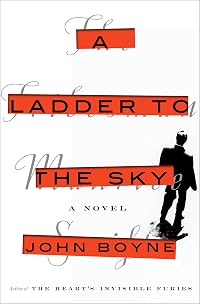
Overall, it's a fun Spooktober read, but not outstanding, and definitely not as good at the other two (much diffferent) John Boyne novels I've read ([b:The Heart's Invisible Furies|33253215|The Heart's Invisible Furies|John Boyne|https://i.gr-assets.com/images/S/compressed.photo.goodreads.com/books/1490803456l/33253215._SY75_.jpg|51438471] and [b:A Ladder to the Sky|40400269|A Ladder to the Sky|John Boyne|https://i.gr-assets.com/images/S/compressed.photo.goodreads.com/books/1532629758l/40400269._SY75_.jpg|61272155]). show less
I do believe this is supposed to be a parody of the governess story. Eliza, with her focus on her own plain appearance, her tendency to moon over any kind and somewhat attractive man, and her obstinate refusal to yield to warning signs, is an obvious play on Jane Eyre and her ilk. Still, it's all too subtle for my taste. I prefer the more obvious style of [b:My Plain Jane|36301023|My Plain Jane (The Lady Janies, #2)|Cynthia show more Hand|https://i.gr-assets.com/images/S/compressed.photo.goodreads.com/books/1507936746l/36301023._SY75_.jpg|51943406].
Eliza's take on the events around her is decidedly modern -- agnostic and almost bordering on feminist -- but without full commitment. For instance, when the headmistress at her former place of employment suggests that a mathematically talented student might become a bank manager's secretary, Eliza wonders why the girl couldn't actually be the bank manager, but then pretends that the comment was a joke when the headmistress accuses her of being "a modern."
The best part, for me, is the actual ghost story. Strange events begin to occur as soon as Eliza arrives at Gaudlin Hall and, despite the reticence of the local townsfolk, she finds out that she's the sixth governess in a year. This House is indeed Haunted, but Eliza must figure out by whom and why and attempt to save her young charges and herself, all while the adultier adults (she's a very young 21) around her claim that events are perfectly explainable OR in Eliza's imagination.
Overall, it's a fun Spooktober read, but not outstanding, and definitely not as good at the other two (much diffferent) John Boyne novels I've read ([b:The Heart's Invisible Furies|33253215|The Heart's Invisible Furies|John Boyne|https://i.gr-assets.com/images/S/compressed.photo.goodreads.com/books/1490803456l/33253215._SY75_.jpg|51438471] and [b:A Ladder to the Sky|40400269|A Ladder to the Sky|John Boyne|https://i.gr-assets.com/images/S/compressed.photo.goodreads.com/books/1532629758l/40400269._SY75_.jpg|61272155]). show less
"I blame Charles Dickens for the death of my father". Who can fail to be intrigued by this opening line? Despite having all the components of a book that I wouldn't have expected to like - gothic, Victorian, ghosts - I absolutely loved this story. In it, Eliza Caine, having lost her beloved father, moves from London to Norfolk to take up a role as governess to two children at Gaudlin Hall. But nothing is as it should be and Eliza becomes more and more convinced of a malevolent force at work.
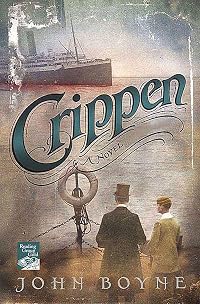
Maybe it's the quality of John Boyne's writing (Crippen is one of my favourite books and who can forget the wonderful The Boy in the Striped Pyjamas) but he managed to write a ghost book that rang true to me which not many do. Eliza herself tells the show more story and I liked her voice very much. She is a level-headed narrator who tells a completely plausible story.
I raced through this book and couldn't wait to find out what would happen next. And as well as the great opening lines, the book ends with a sinister, but not completely unexpected, turn of events. I enjoyed it all immensely.
Thank you to the publishers and Netgalley for providing a copy for review. show less
Maybe it's the quality of John Boyne's writing (Crippen is one of my favourite books and who can forget the wonderful The Boy in the Striped Pyjamas) but he managed to write a ghost book that rang true to me which not many do. Eliza herself tells the show more story and I liked her voice very much. She is a level-headed narrator who tells a completely plausible story.
I raced through this book and couldn't wait to find out what would happen next. And as well as the great opening lines, the book ends with a sinister, but not completely unexpected, turn of events. I enjoyed it all immensely.
Thank you to the publishers and Netgalley for providing a copy for review. show less
At the death of her father, plump, plain Eliza Caine at 21 finds herself in the common situation of 19th century English girls of good breeding but little money. With no real skills, Eliza’s only prospects are marriage or teaching. Earning little at a day school, Eliza thinks her prayers have been answered when she secures a better position as governess to two children in Norfolk.
Yet, almost immediately, Eliza begins to reconsider. She nearly suffers a fatal accident en route to her new abode. And when Miss Caine arrives at Gaudlin Hall, her charges — serious, precocious 12-year-old Isabella and her delicate younger brother Eustace — are the only occupants of the house. No employer. No live-in servants. No adults in residence at show more all! And no explanations from Isabella or Eustace. From her very first night at Gaudlin Hall, Eliza begins to see very frightening incidents, and she soon realizes that she — and these peculiar children — are in terrible danger from an unseen but malign presence. And she realizes it is up to her to bring them all to safety.
While the parallels to both The Turn of the Screw are obvious, Irish author John Boyne spins This House Is Haunted into a completely original — and chilling — direction in a novel nothing like his best-selling The Boy in the Striped Pajamas. In addition, Boyne captures the Victorian lady’s voice as aptly as Charlotte Brontë, Elizabeth Gaskell, Louisa May Alcott, Henry James, or the great Charles Dickens himself, who plays such a central role in this novel. For those listening to this as an audiobook, Alison Larkin effortlessly provides a proper Victorian atmosphere as the narrator.
Special thanks to my Great Escape sister Dana for suggesting this fabulous book for a Buddy Read. show less
Yet, almost immediately, Eliza begins to reconsider. She nearly suffers a fatal accident en route to her new abode. And when Miss Caine arrives at Gaudlin Hall, her charges — serious, precocious 12-year-old Isabella and her delicate younger brother Eustace — are the only occupants of the house. No employer. No live-in servants. No adults in residence at show more all! And no explanations from Isabella or Eustace. From her very first night at Gaudlin Hall, Eliza begins to see very frightening incidents, and she soon realizes that she — and these peculiar children — are in terrible danger from an unseen but malign presence. And she realizes it is up to her to bring them all to safety.
While the parallels to both The Turn of the Screw are obvious, Irish author John Boyne spins This House Is Haunted into a completely original — and chilling — direction in a novel nothing like his best-selling The Boy in the Striped Pajamas. In addition, Boyne captures the Victorian lady’s voice as aptly as Charlotte Brontë, Elizabeth Gaskell, Louisa May Alcott, Henry James, or the great Charles Dickens himself, who plays such a central role in this novel. For those listening to this as an audiobook, Alison Larkin effortlessly provides a proper Victorian atmosphere as the narrator.
Special thanks to my Great Escape sister Dana for suggesting this fabulous book for a Buddy Read. show less
Members
- Recently Added By
Published Reviews
ThingScore 100
BLOODY DISGUSTING bloody-disgusting.com
[BEST & WORST '13] Top 10 Horror Novels of the Year!
6. (Tie) The Darkling, by R.B. Chesterton (April 1; Pegasus)
This House is Haunted, John Boyne (October 8; Other Press)
These slow-burn ghost stories are equally good, and they have too much in common not to share a spot on this list. Both are deeply rooted in the gothic tradition, and if you like one, show more you’re virtually guaranteed to dig the hell out of the other. R.B. Chesterton is the alias for Carolyn Haines, the author of a cheeky series of novels about a female P.I., while John Boyne wrote The Boy in the Striped Pajamas, which Miramax made into a heart-crushing movie. But strange minds think alike. The authors did some sort of Vulcan mind meld for their respective ghost stories, resulting in a killer double-feature custom-made for fans of movies like The Others and The Orphanage. show less
[BEST & WORST '13] Top 10 Horror Novels of the Year!
6. (Tie) The Darkling, by R.B. Chesterton (April 1; Pegasus)
This House is Haunted, John Boyne (October 8; Other Press)
These slow-burn ghost stories are equally good, and they have too much in common not to share a spot on this list. Both are deeply rooted in the gothic tradition, and if you like one, show more you’re virtually guaranteed to dig the hell out of the other. R.B. Chesterton is the alias for Carolyn Haines, the author of a cheeky series of novels about a female P.I., while John Boyne wrote The Boy in the Striped Pajamas, which Miramax made into a heart-crushing movie. But strange minds think alike. The authors did some sort of Vulcan mind meld for their respective ghost stories, resulting in a killer double-feature custom-made for fans of movies like The Others and The Orphanage. show less
added by feeling.is.first
Lists

Top Five Books of 2013
1,562 works; 721 members

EU Fiction: 1950-2022
223 works; 70 members

Books Set in Great Britain
191 works; 13 members

ScaredyKIT 2020
16 works; 1 member

Houses and Buildings as Characters in Fiction
182 works; 29 members

Haunted Places and Ghost Stories Reading List
99 works; 4 members

Ghosts
278 works; 18 members

I Could Live There
185 works; 12 members

Haunted Britain and Ireland
51 works; 7 members

Books Read in 2017
4,249 works; 129 members

Books With Complete Sentence Titles
502 works; 17 members

Books Read in 2020
4,379 works; 124 members

Historical Figures in Fiction
51 works; 5 members

Llibres que he llegit el 2023
38 works; 1 member

Which house?
423 works; 16 members

Ghost Stories That Thrill Us
256 works; 115 members
Author Information

43+ Works 31,858 Members
Acclaimed Irish novelist John Boyne was born in Dublin, Ireland on April 30, 1971. He studied English Literature at Trinity College, Dublin and Creative Writing at the University of East Anglia. He has written dozens of short stories and many novels, including the New York Times bestseller The Boy in the Striped Pyjamas. An award-winning film show more adaptation of this work was released in 2008. In 2015 his title, A History of Lonelines made The New Zealand Best Seller List. (Bowker Author Biography) show less
Some Editions
Awards and Honors
Distinctions
Series
Belongs to Publisher Series
Common Knowledge
- Canonical title
- This House Is Haunted
- Original title
- This House Is Haunted
- Original publication date
- 2013-04-25
- People/Characters
- Eliza Caine; Mr. Caine; Isabella; Eustace
- Important places
- Norfolk, England, UK; England, UK; London, England, UK
- Dedication
- For Sinéad
- First words
- I blame Charles Dickens for the death of my father.
- Last words
- (Click to show. Warning: May contain spoilers.)'Isabella.'
- Original language*
- Inglese
- Canonical DDC/MDS
- 823.92
- Canonical LCC
- PR6102.O96
*Some information comes from Common Knowledge in other languages. Click "Edit" for more information.
Classifications
Statistics
- Members
- 957
- Popularity
- 27,656
- Reviews
- 81
- Rating
- (3.49)
- Languages
- 9 — Catalan, Czech, Dutch, English, German, Italian, Polish, Portuguese (Portugal), Spanish
- Media
- Paper, Audiobook, Ebook
- ISBNs
- 33
- ASINs
- 9