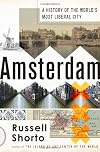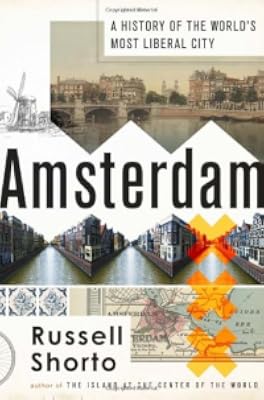
Amsterdam: A History of the World's Most Liberal City
by Russell Shorto
On This Page
Description
An endlessly entertaining portrait of the city of Amsterdam and the ideas that make it unique, by the author of the acclaimed Island at the Center of the WorldTourists know Amsterdam as a picturesque city of low-slung brick houses lining tidy canals; student travelers know it for its legal brothels and hash bars; art lovers know it for Rembrandt's glorious portraits.
But the deeper history of Amsterdam, what makes it one of the most fascinating places on earth, is bound up in its unique show more geography-the constant battle of its citizens to keep the sea at bay and the democratic philosophy that this enduring struggle fostered. Amsterdam is the font of liberalism, in both its senses. Tolerance for free thinking and free love make it a place where, in the words of one of its mayors, "craziness is a value." But the city also fostered the deeper meaning of liberalism, one that profoundly influenced America: political and economic freedom. Amsterdam was home not only to religious dissidents and radical thinkers but to the world's first great global corporation.
In this effortlessly erudite account, Russell Shorto traces the idiosyncratic evolution of Amsterdam, showing how such disparate elements as herring anatomy, naked Anabaptists parading through the streets, and an intimate gathering in a sixteenth-century wine-tasting room had a profound effect on Dutch-and world-history. Weaving in his own experiences of his adopted home, Shorto provides an ever-surprising, intellectually engaging story of Amsterdam from the building of its first canals in the 1300s, through its brutal struggle for independence, its golden age as a vast empire, to its complex present in which its cherished ideals of liberalism are under siege.
. show less
Tags
Recommendations



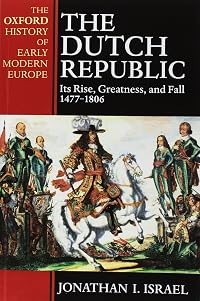


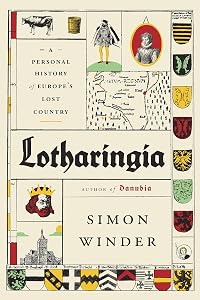
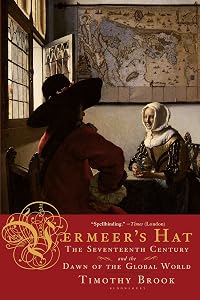
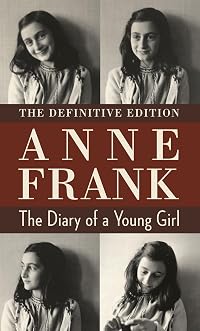









Member Recommendations


Member Reviews
Six stars. Russell Shorto has written a compact book about the centuries-long history of Amsterdam and made it lively, readable and so interesting I couldn't put it down. I'm going to Amsterdam in a couple of weeks and read the book to make the visit more meaningful. It will certainly do that and more. Shorto doesn't just describe events, he explores the motivations of historical figures from the servants to the artisans to the merchants to the kings, all the way up to the present. He provides just the right amount of detail about critical turning points and manages to tie it all together by showing how each event or citizen contributed to the development of a city that is liberal, secular and tolerant. As someone who didn't know much show more about Spinoza, I was fascinated by his role in pushing the society in the direction of secularism (though mostly after his death). The founding fathers of the USA have nothing on the writers, philosophers and public figures that influenced Amsterdam's direction. And with all that, it's the birth of the place - the community effort to drain, dig, dam and build - that starts the ball rolling to create a society that isn't feudal or monarchical but a collective of individuals who are public-spirited while pursuing their private interests.
If I'm giving the impression that this is an idealized view of Amsterdam, it's not. The book doesn't shy away from the dark periods when backlash against change or progress is violent and horrible. It also fairly analyzes the pros and cons of modern social programs and the city's approach to multiculturalism. As a bonus, there's a short digression into the effect of Amsterdam's values and institutions on New Amsterdam in our own United States.
Shorto makes the book personal in parts - he lives in Amsterdam and weaves in a bit about his life there - which provides a nice perspective and gives him a little more street cred when writing about modern Amsterdam. He also introduces us to a friend and holocaust survivor whose first person account includes her association with Anne Frank. show less
If I'm giving the impression that this is an idealized view of Amsterdam, it's not. The book doesn't shy away from the dark periods when backlash against change or progress is violent and horrible. It also fairly analyzes the pros and cons of modern social programs and the city's approach to multiculturalism. As a bonus, there's a short digression into the effect of Amsterdam's values and institutions on New Amsterdam in our own United States.
Shorto makes the book personal in parts - he lives in Amsterdam and weaves in a bit about his life there - which provides a nice perspective and gives him a little more street cred when writing about modern Amsterdam. He also introduces us to a friend and holocaust survivor whose first person account includes her association with Anne Frank. show less
Don’t be fooled by the subtitle. This is a headlong, breathless history of Amsterdam. But the heart of its project is global and abstract. Shorto, an American living in the city, explores the origin of the concept of liberalism in Amsterdam. Liberalism here is roughly defined as an ideology centering around the priority of the individual and the core value of human freedom. Shorto wants to convince us that these ideas originated in Amsterdam’s early history, were honed and amplified during the Dutch Golden Age of the 17th century, and then bequeathed to the world where they have played a outsized role ever since. However persuasive this considerable claim – and it succeeds in no small measure – the book takes the reader on a show more ride that is not confined to the intellectual. This history of an idea is the backbreaking work of a community reclaiming land from the sea, the voyage over distant seas to the riches of exotic Java, and the tolerance that allowed the Jewish Baruch Spinoza to dwell and blaspheme as a minority in the Protestant city.
Shorto tells a foundational story about the origins of liberalism in Amsterdam: the struggle to reclaim land from the sea required communal effort unlike conditions elsewhere in Europe. Reclaimed land became the property of individuals who were free to rent, buy or sell it. The sense of communal affiliation was enhanced, and individualism simultaneously strengthened. Feudalism thus never became entrenched in the Netherlands as the dominant economic form. I will tell you what Shorto does not: the story is a myth, with elements of reality. I am not qualified to weigh in on the proportions of the two. Scholars differ in accounting for the economic circumstances of Amsterdam from the Middle Ages into the Renaissance. But it is an effective story, one that makes for a coherent, if fanciful, narrative of what came after.
The rest of the book is a colorful romp through the last four centuries in Amsterdam through the lens of liberalism and the emergence of the individual. The exploits of the Dutch East India Corporation which enriched the city; the development of a stock market which afforded the small-fry the chance to get a piece of the action; Rembrandt’s depiction of the primacy of private individual experience; Spinoza’s revolutionary rejection of religious authority and the grounding of belief in human reason, something over which institutions hold no monopoly. And we are treated to the author’s account of the dissemination of these values through a variety of channels. Notable among these are a “Dutch-invasion” account of the Glorious Revolution of 1688 and its subsequent influence on the world through emerging English power; and the Dutch role in the establishment of New York and the spread of its ideas to the New World.
I can quibble over the details. Shorto has fallen in love with Amsterdam, and has a tendency to romanticize it. How much of Dutch tolerance and liberalism is deeply-held principle and how much expediency? What about the dark side of capitalism, if Amsterdam is its parent? But this is a colorful tale well-told. One cannot but emerge impressed with the dynamism of the story, and the power of the city’s history and influence. show less
Shorto tells a foundational story about the origins of liberalism in Amsterdam: the struggle to reclaim land from the sea required communal effort unlike conditions elsewhere in Europe. Reclaimed land became the property of individuals who were free to rent, buy or sell it. The sense of communal affiliation was enhanced, and individualism simultaneously strengthened. Feudalism thus never became entrenched in the Netherlands as the dominant economic form. I will tell you what Shorto does not: the story is a myth, with elements of reality. I am not qualified to weigh in on the proportions of the two. Scholars differ in accounting for the economic circumstances of Amsterdam from the Middle Ages into the Renaissance. But it is an effective story, one that makes for a coherent, if fanciful, narrative of what came after.
The rest of the book is a colorful romp through the last four centuries in Amsterdam through the lens of liberalism and the emergence of the individual. The exploits of the Dutch East India Corporation which enriched the city; the development of a stock market which afforded the small-fry the chance to get a piece of the action; Rembrandt’s depiction of the primacy of private individual experience; Spinoza’s revolutionary rejection of religious authority and the grounding of belief in human reason, something over which institutions hold no monopoly. And we are treated to the author’s account of the dissemination of these values through a variety of channels. Notable among these are a “Dutch-invasion” account of the Glorious Revolution of 1688 and its subsequent influence on the world through emerging English power; and the Dutch role in the establishment of New York and the spread of its ideas to the New World.
I can quibble over the details. Shorto has fallen in love with Amsterdam, and has a tendency to romanticize it. How much of Dutch tolerance and liberalism is deeply-held principle and how much expediency? What about the dark side of capitalism, if Amsterdam is its parent? But this is a colorful tale well-told. One cannot but emerge impressed with the dynamism of the story, and the power of the city’s history and influence. show less
Russell Shorto has written a splendid book about New Amsterdam, about early Dutch New York. This is his tribute to Old Amsterdam that he proclaims "the world's most liberal city", "liberal" in the neoliberal sense added with a bit of European conscience. Shorto's Amsterdammers are honorary or even better Americans cherishing free markets and tolerance above all. Unfortunately, such a teleological approach is bad history as actual history does not fit into neat boxes. In order to not see the blemishes of his love, Shorto either ignores it (such as the tiny fact that Spinoza spent most of his productive life outside of Amsterdam that had kicked him out - though not burned at the stake as could have been the matter elsewhere) or is simply show more unaware about most of European history. Another problematic aspect common in histories about capital cities that guide their whole nation (e.g. Paris/France) is the constant switching between Dutch national and city history. The Hague and other cities thus make frequent guest appearances but their relationship in terms of liberalism etc. isn't elaborated.
While he could rely on a good background in US history for his account of Dutch New York, he often proclaims Amsterdam's uniqueness in Europe whereas many other great cities displayed just the same behavior. A true historian is not a blind lover. While I could have done without being informed about Shorto's personal life and divorce, the city's history and the vignettes of some of its past and present are described with charm. show less
While he could rely on a good background in US history for his account of Dutch New York, he often proclaims Amsterdam's uniqueness in Europe whereas many other great cities displayed just the same behavior. A true historian is not a blind lover. While I could have done without being informed about Shorto's personal life and divorce, the city's history and the vignettes of some of its past and present are described with charm. show less
Shorto's history of the Dutch city of Amsterdam is built on a principal that the city defines liberalism in both senses of the word. There's economic Liberalism - the principle of laissez faire in free market capitalism, and there's social liberalism - which values communal action and individual liberty. While these two interpretations of liberalism are at odds with one another in much of the world, Amsterdam is a place where individual enterprise and community spirit work together surprisingly well. This may have it's origins in the creation of the city itself, literally reclaimed from the water by dint of communal work, and yet the new land became property of individuals at a time when most land was owned by royalty or the church. show more Shorto describes how the notable Dutch tolerance is based on the idea of gedogen, turning a blind eye rather than strictly enforcing the law.
The history of Amsterdam is broad and Shorto both compresses a lot of detail and tends to overstate Amsterdam's significance, but appropriate to Amsterdam's characteristic of establishing individual identity, he focuses historical periods through the eyes of specific historical Amsterdam personages. These include:
I found this an engaging history of this fascinating city. show less
The history of Amsterdam is broad and Shorto both compresses a lot of detail and tends to overstate Amsterdam's significance, but appropriate to Amsterdam's characteristic of establishing individual identity, he focuses historical periods through the eyes of specific historical Amsterdam personages. These include:
- Rembrandt van Rijn - the portrait artist who explored human interior life
- Baruch Spinoza - rational philosopher who foresaw modernism
- Frieda Menco - a contemporary of Anne Frank who also went into hiding in Amsterdam and then to concentration camps. Shorto refers to extensive interviews with Menco
- Robert Jasper Grootveld - anarchist organizer of the Provo movement who helped make the 60s counter-culture a permanent facet of Amsterdam
- Ayaan Hirsi Ali - a feminist activist known for her outspoken opposition to Islam
I found this an engaging history of this fascinating city. show less
Ordinarily, reading the biography of a city can be rather tedious, but this is an exception. Amsterdam is the home to individual and social liberalism and how those strands meshed makes for an interesting narrative. Because it has been widely (and justifiably) hailed as a city practicing tolerance, Amsterdam was a laboratory for many of the values that defined the Enlightenment. Its influence has been immense and America would be among the many beneficiaries.
On occasion, during periods of religious turmoil, and certainly during World War II, Amsterdam strayed from its noble traditions but it has managed to adapt and redefine itself in the post-war era and become again, a mecca of liberalism; sometimes, it could be argued, even being show more too tolerant and liberal.
Much of the narrative focuses on earlier centuries when The Netherlands were liberated from Spanish control and ongoing religious strife to became a center of finance and trade. Indeed, even moreso than England, they became the first " modern" country in terms of establishing corporations and successfully mixing private commerce with government coordination. Although its influence and power would wane, the first wave of " globalization" can be traced to the stock companies that were nurtured there. Translated into English, those companies are known as the Dutch East India Company, and Dutch West India Company.
Exploration and trade influenced culture, and the march of liberalism was on. How liberalism became transformed over the centuries still speaks to contemporary political and social dialogue. This work is highly recommended for anyone interested in the roots and tradition of liberalism, and it concludes with a poignant and powerful anecdote. show less
On occasion, during periods of religious turmoil, and certainly during World War II, Amsterdam strayed from its noble traditions but it has managed to adapt and redefine itself in the post-war era and become again, a mecca of liberalism; sometimes, it could be argued, even being show more too tolerant and liberal.
Much of the narrative focuses on earlier centuries when The Netherlands were liberated from Spanish control and ongoing religious strife to became a center of finance and trade. Indeed, even moreso than England, they became the first " modern" country in terms of establishing corporations and successfully mixing private commerce with government coordination. Although its influence and power would wane, the first wave of " globalization" can be traced to the stock companies that were nurtured there. Translated into English, those companies are known as the Dutch East India Company, and Dutch West India Company.
Exploration and trade influenced culture, and the march of liberalism was on. How liberalism became transformed over the centuries still speaks to contemporary political and social dialogue. This work is highly recommended for anyone interested in the roots and tradition of liberalism, and it concludes with a poignant and powerful anecdote. show less
http://nwhyte.livejournal.com/2232817.html
Russell Shorto has followed on from his fantastic book on Nieuw Amsterdam, The Island at the Centre of the World, which I hugely enjoyed back in 2005, with a history of the original from which New York took its template. There was lots of stuff here I didn't know, like Amsterdam's medieval significance as a cult centre, and the importance of the East India Company as a financial instrument and as a means of enriching the average citizen. It's also interesting to see bits and pieces put together - the marginal position of Amsterdam allowed it to develop a spirit of tolerance and freedom out of sight of local warlords, until the entire city suddenly became rich (I summarise brutally but show more fairly).
Shorto doesn't quite prove his main argument (expressed in his subtitle), which is that Amsterdam functioned as a beacon of tolerance which nurtured the creation of liberalism and modern civilisation; it was certainly important enough in that process, but there are sadly many examples of intolerance in the city's history. He also doesn't really situate Amsterdam in its wider Dutch, Low Countries, North-West Continental Europe context after the first few chapters; the forest is out of focus for the sake of a particularly large and interesting tree.
But he redeems this by going even smaller and following some of the personal histories of people who have built the historical image of Amsterdam, done much more briefly and humanely than Simon Schama. Three of them particularly stick with me - Spinoza, Rembrandt, and Anne Frank. The first two of these are of course world figures anyway, but it's interesting and indeed important to go through how Amsterdam as a city shaped their work. Spinoza in particular comes across as a vital link in the story of civilisation. The third is a more intricate and intimate tale.
Shorto starts and ends his book by interviewing Frieda Menco, a childhood friend of Anne Frank's, whose family went into hiding the same week as the Franks, but were betrayed at the same time, and who then unbelievably met up with the Franks again in Auschwitz. He follows through the history of the city in the late twentieth century, when the student protests broke out in the 1960s (against a mayor whose record in the Resistance was impeccable but forgotten). These are important stories too, particularly for gay rights (as that set of issues first became known) and integration of immigrants. But it feels like a slightly adolescent and oblivious footnote to the deadly drama of the Holocaust.
The book is paced slightly oddly as a result of Shorto's particular concentrations. The eighteenth and nineteenth centuries are not well served. But I think the average reader will forgive this; it's a history of the manifestation of a political idea, not a blow by blow chronology. (After all, Gibbon skipped most of the Byzantine Empire.) It's not quite as excellent a book as The Island at the Centre of the World, but it's still very very good. show less
Russell Shorto has followed on from his fantastic book on Nieuw Amsterdam, The Island at the Centre of the World, which I hugely enjoyed back in 2005, with a history of the original from which New York took its template. There was lots of stuff here I didn't know, like Amsterdam's medieval significance as a cult centre, and the importance of the East India Company as a financial instrument and as a means of enriching the average citizen. It's also interesting to see bits and pieces put together - the marginal position of Amsterdam allowed it to develop a spirit of tolerance and freedom out of sight of local warlords, until the entire city suddenly became rich (I summarise brutally but show more fairly).
Shorto doesn't quite prove his main argument (expressed in his subtitle), which is that Amsterdam functioned as a beacon of tolerance which nurtured the creation of liberalism and modern civilisation; it was certainly important enough in that process, but there are sadly many examples of intolerance in the city's history. He also doesn't really situate Amsterdam in its wider Dutch, Low Countries, North-West Continental Europe context after the first few chapters; the forest is out of focus for the sake of a particularly large and interesting tree.
But he redeems this by going even smaller and following some of the personal histories of people who have built the historical image of Amsterdam, done much more briefly and humanely than Simon Schama. Three of them particularly stick with me - Spinoza, Rembrandt, and Anne Frank. The first two of these are of course world figures anyway, but it's interesting and indeed important to go through how Amsterdam as a city shaped their work. Spinoza in particular comes across as a vital link in the story of civilisation. The third is a more intricate and intimate tale.
Shorto starts and ends his book by interviewing Frieda Menco, a childhood friend of Anne Frank's, whose family went into hiding the same week as the Franks, but were betrayed at the same time, and who then unbelievably met up with the Franks again in Auschwitz. He follows through the history of the city in the late twentieth century, when the student protests broke out in the 1960s (against a mayor whose record in the Resistance was impeccable but forgotten). These are important stories too, particularly for gay rights (as that set of issues first became known) and integration of immigrants. But it feels like a slightly adolescent and oblivious footnote to the deadly drama of the Holocaust.
The book is paced slightly oddly as a result of Shorto's particular concentrations. The eighteenth and nineteenth centuries are not well served. But I think the average reader will forgive this; it's a history of the manifestation of a political idea, not a blow by blow chronology. (After all, Gibbon skipped most of the Byzantine Empire.) It's not quite as excellent a book as The Island at the Centre of the World, but it's still very very good. show less
Shorto’s book is well-written and an enjoyable read, but it is not a conventional history. If you need a chronological account of Amsterdam’s history, you’ll need to go elsewhere. What Shorto has produced is an anecdotal history rooted in the geography of Amsterdam and his own experiences there. If you are familiar with Dutch history, Shorto will provide innumerable insights, particularly into the themes of Dutch independence and tolerance.
While not a guidebook, this would be a delightful book to read in Amsterdam. Seated by a canal or in a plaza, you can look around and ponder Shorto’s thoughts on the doings of William of Orange or Anne Frank in the buildings that surround you.
While not a guidebook, this would be a delightful book to read in Amsterdam. Seated by a canal or in a plaza, you can look around and ponder Shorto’s thoughts on the doings of William of Orange or Anne Frank in the buildings that surround you.
Members
- Recently Added By
Author Information

27+ Works 5,169 Members
Russell Shorto, author of the best-selling The Island at the Center of the World, Amsterdam, and Revolution Song, is a contributing writer at the New York Times Magazine. He lives in Cumberland, Maryland.
Some Editions
Awards and Honors
Distinctions
Series
Belongs to Publisher Series
Dwarsliggers (253)
Common Knowledge
- Original title
- Amsterdam : A History of the World's Most Liberal City
- Original publication date
- 2013
- Important places
- Amsterdam, North Holland, Netherlands
Classifications
- Genres
- History, Nonfiction, General Nonfiction, Travel
- DDC/MDS
- 949.2 — History & geography History of Europe Greece, Albania, Yugoslavia, Serbia, Romania, Bulgaria Netherlands
- LCC
- DJ411 .A55 .S56 — History of Europe, Asia, Africa and Oceania Netherlands (Holland) History of Netherlands (Holland) Local history and description Amsterdam
- BISAC
Statistics
- Members
- 678
- Popularity
- 42,470
- Reviews
- 23
- Rating
- (3.94)
- Languages
- Dutch, English, Russian, Spanish
- Media
- Paper, Audiobook, Ebook
- ISBNs
- 20
- ASINs
- 3