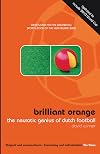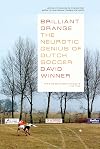
Brilliant Orange: The Neurotic Genius of Dutch Football
by David Winner
On This Page
Description
Brilliant Orange is a book about Dutch soccer that's not really about Dutch soccer. It's more about an enigmatic way of thinking peculiar to a people whose landscape is unrelentingly flat, mostly below sea level, and who owe their salvation to a boy who plugged a fractured dike with his little finger.Tags
Recommendations



























Member Recommendations


Member Reviews
You read this book and come away with a better understanding of what goes into the concept of being Dutch…the constant grappling with the concept of space, land and efficiency of use; the awkward WWII role of invaded collaborator; all entwined by the fragile Hapsburgian strand of latin Spain. It is then no great leap to understand how Total Football was inevitable and bound to bring rapture.
The pitch is finite but the passing lanes are not and with an orbit around late 20th-Century Ajax, David Winner tries to give us a taste of why, to the Dutch footballer, winning is not the goal, playing the beautiful game in a beautiful manner and having others talk about it is the ultimate target. In that, they, and Winner, have succeeded.
The pitch is finite but the passing lanes are not and with an orbit around late 20th-Century Ajax, David Winner tries to give us a taste of why, to the Dutch footballer, winning is not the goal, playing the beautiful game in a beautiful manner and having others talk about it is the ultimate target. In that, they, and Winner, have succeeded.
Brilliant Orange is subtitled “The Neurotic Genius of Dutch Soccer“. This tells you that the author acknowledges the superior quality of football produced by players from a small European country, and wants to explore both how this unusually high skill level came about, and then why it hasn’t translated into continuing high level international success.
The context for David Winner is how the presence of Johan Cruijff transformed Dutch football in the 1970s, propelling the national team to consecutive World Cup finals – both of which they lost.
Cruijff, and the coaches who successfully figured out how to play him and build a team around him, revolutionised Dutch soccer at Ajax and with the national team and then later did the same show more at Barcelona.
Dutch football waned when he left, but his legacy did much to inform a revival of sorts in the late ’80s to early ’90s. And yet, the Netherlands could not grasp the ultimate crown.
The context that I bring to the book is that while I have been removed from the day-to-day soap opera of Dutch football since the 1970s, this year’s World Cup brought everything back into focus.
You may recall I picked the Netherlands to win WC2010, based largely on my belief that they could beat Brazil, and if you can beat Brazil you can beat anyone.
What Winner does in this book is to look in every cultural and historical nook and cranny to find out how the Dutch became so good, and why they’re never quite good enough.
It would be an interesting journey through any nation’s development of prowess in a particular sport, or other area of endeavour, but this particular trip is a fascinating one.
You couldn’t make up the Dutch obsession with beating Germany, nor Cruijff’s gifts, nor how Netherlanders will dress up like clowns to cheer their team on. Winner pulls in the physical constraints of a small, flat country, European wars, the physical characteristics of the Dutch, colonial influences, social changes, art, architecture, politics, prejudices, fears – anything that might explain why Dutch football is the way it is.
There is, of course, no ultimate explanation. The best you can say is that the Dutch are the way they are because they’re Dutch.
Winner does identify certain specific events and occurrences that played a part – for example, the legacy of the Netherlands’s colonial past in delivering a generation of superbly skilled players of Surinamese descent in the 1980s.
And he’s gathered a great collection of quotes from people in and around the great Dutch and Ajax football teams.
I laughed, I cried, I gasped as I read. And I watched the Netherlands beat Brazil, and then Uruguay to set up another World Cup final, this time against Spain. And I watched them lose.
This is not the generation of Dutch football that invented Total Football, and it is not the generation that faced the trauma of reconciling black football and white football. And yet, like those two, this generation managed to get tantalisingly close to being called champions of the world.
The World Cup 2010 provided a fitting epilogue to Brilliant Orange, one that absolutely no-one would have predicted – and one that surprised absolutely no-one.
I should add that this book is ideal for people who like to see the connections between things. If you like Mark Kurlansky’s take on Cod or Salt, for instance, you’ll probably like this book, even if you’re not especially interested in football or the Netherlands. show less
The context for David Winner is how the presence of Johan Cruijff transformed Dutch football in the 1970s, propelling the national team to consecutive World Cup finals – both of which they lost.
Cruijff, and the coaches who successfully figured out how to play him and build a team around him, revolutionised Dutch soccer at Ajax and with the national team and then later did the same show more at Barcelona.
Dutch football waned when he left, but his legacy did much to inform a revival of sorts in the late ’80s to early ’90s. And yet, the Netherlands could not grasp the ultimate crown.
The context that I bring to the book is that while I have been removed from the day-to-day soap opera of Dutch football since the 1970s, this year’s World Cup brought everything back into focus.
You may recall I picked the Netherlands to win WC2010, based largely on my belief that they could beat Brazil, and if you can beat Brazil you can beat anyone.
What Winner does in this book is to look in every cultural and historical nook and cranny to find out how the Dutch became so good, and why they’re never quite good enough.
It would be an interesting journey through any nation’s development of prowess in a particular sport, or other area of endeavour, but this particular trip is a fascinating one.
You couldn’t make up the Dutch obsession with beating Germany, nor Cruijff’s gifts, nor how Netherlanders will dress up like clowns to cheer their team on. Winner pulls in the physical constraints of a small, flat country, European wars, the physical characteristics of the Dutch, colonial influences, social changes, art, architecture, politics, prejudices, fears – anything that might explain why Dutch football is the way it is.
There is, of course, no ultimate explanation. The best you can say is that the Dutch are the way they are because they’re Dutch.
Winner does identify certain specific events and occurrences that played a part – for example, the legacy of the Netherlands’s colonial past in delivering a generation of superbly skilled players of Surinamese descent in the 1980s.
And he’s gathered a great collection of quotes from people in and around the great Dutch and Ajax football teams.
I laughed, I cried, I gasped as I read. And I watched the Netherlands beat Brazil, and then Uruguay to set up another World Cup final, this time against Spain. And I watched them lose.
This is not the generation of Dutch football that invented Total Football, and it is not the generation that faced the trauma of reconciling black football and white football. And yet, like those two, this generation managed to get tantalisingly close to being called champions of the world.
The World Cup 2010 provided a fitting epilogue to Brilliant Orange, one that absolutely no-one would have predicted – and one that surprised absolutely no-one.
I should add that this book is ideal for people who like to see the connections between things. If you like Mark Kurlansky’s take on Cod or Salt, for instance, you’ll probably like this book, even if you’re not especially interested in football or the Netherlands. show less
ESPN had it right when they said on the back cover of Brilliant Orange, "you like soccer, you don't like soccer, it doesn't matter." It's true. Hate, indifference, like or love. No matter which way, this is an enjoyable read. Winner definitely knows his material and isn't dry in his delivery. He could write about the science of flies on fly paper and I would probably browse it. Be prepared to learn a lot about soccer/football. Be pleasantly surprised by everything else you learn. Among other things, Winner compares soccer to ballet in its artistry. He makes comparisons to politics. He sees similarities with architecture, society, humanity.
In Brilliant Orange, David Winner ties Dutch culture, politics, and the entire society together with football. Winner doesn’t write only about Dutch football, but about “the idea of Dutch football,” which encompasses many things Dutch.
He explores the origins of “total football,” personified by Ajax in the 60s and 70s and developed by Johan Cruyff and coach Rinus Michels, and how Dutch society and football graduated together from stodgy to mod.
Winner attributes the Dutch pre-occupation with space, due to living in a largely man-made country, with their creative use of space on the pitch. In a chapter 14, “Dutch Space is Different,” the artist Jeroen Henneman recalls Ajax in the 70s playing in “beautiful waves of show more abstract movement.” “Goalscoring was the possibility, but the real aim was the beauty of the football itself.”
Winner addresses the Dutch failure to win a World Cup and the propensity for self-destruction in vital matches. Infighting and even the continuing influence of Johan Cruyff are cited as reasons.
Brilliant Orange is a fascinating look into the Dutch psyche and football. The Netherlands national team is currently ranked fourth in the world by FIFA and may yet be successful in capturing a World Cup. show less
He explores the origins of “total football,” personified by Ajax in the 60s and 70s and developed by Johan Cruyff and coach Rinus Michels, and how Dutch society and football graduated together from stodgy to mod.
Winner attributes the Dutch pre-occupation with space, due to living in a largely man-made country, with their creative use of space on the pitch. In a chapter 14, “Dutch Space is Different,” the artist Jeroen Henneman recalls Ajax in the 70s playing in “beautiful waves of show more abstract movement.” “Goalscoring was the possibility, but the real aim was the beauty of the football itself.”
Winner addresses the Dutch failure to win a World Cup and the propensity for self-destruction in vital matches. Infighting and even the continuing influence of Johan Cruyff are cited as reasons.
Brilliant Orange is a fascinating look into the Dutch psyche and football. The Netherlands national team is currently ranked fourth in the world by FIFA and may yet be successful in capturing a World Cup. show less
Brilliant Orange: The Neurotic Genius of Dutch Football (2001) is an historic and poetic investigation into the culture and sport of the Netherlands by English journalist David Winner. At the heart of the book is the story of the Amsterdam club AFC Ajax which rose out of the Dutch version of 60's counterculture with a new style of play, Total Football. The club dominates Dutch football and becomes the first team from the Netherlands to make an impression in Europe as well winning three consecutive European Champion's Club cups from 1971-73.
Just as quickly as it rose the club falls apart amid intrasquad rivalries and star players moving on to richer fields in other countries. But many of the same players are reunited in 1974, this time show more representing the national team of the Netherlands in the FIFA World Cup. The Dutch side makes it to the finals only to lose to their rivals from West Germany. According to Winner, this loss takes on a national hubris and the lasting effect of the loss on Dutch culture takes up a whole chapter on its own.
There are many stars of Dutch football - in fact the key to Total Football is that all the players are highly skilled and versatile enough to move from positions to position - but there is one central figure that dominates this book, Johan Cruyff. Winner even contends that Cruyff is the most famous living Dutchman, and who am I to argue since I can't think of anyone other contenders for the title.
These are the central themes of Brilliant Orange, a book that also mixes in:
Just as quickly as it rose the club falls apart amid intrasquad rivalries and star players moving on to richer fields in other countries. But many of the same players are reunited in 1974, this time show more representing the national team of the Netherlands in the FIFA World Cup. The Dutch side makes it to the finals only to lose to their rivals from West Germany. According to Winner, this loss takes on a national hubris and the lasting effect of the loss on Dutch culture takes up a whole chapter on its own.
There are many stars of Dutch football - in fact the key to Total Football is that all the players are highly skilled and versatile enough to move from positions to position - but there is one central figure that dominates this book, Johan Cruyff. Winner even contends that Cruyff is the most famous living Dutchman, and who am I to argue since I can't think of anyone other contenders for the title.
These are the central themes of Brilliant Orange, a book that also mixes in:
- the effect of the Dutch landscape on Dutch architecture
- the Dutch hatred of Germany and the reasons they give for it
- how appreciation for football as the 'beautiful game' tends to overcome the desire to win
- the Netherlands 'anticlimactic' return to the World Cup final in 1978, again versus the host nation Argentina
- the oddity of Ajax's fan base identification with Judaism
- interviews with Dutch football stars past and present
The original English printing (Brilliant Orange: The Neurotic Genius of Dutch Football), currently out of print, gets five stars. While some find it too much of a stretch, I find the hypothesis that Total Football has a direct relationship to the culture in which it was developed to be fascinating. I love the analysis and the attempt to bring in cultural references from throughout Dutch life and history. This printing gets three stars for its Americanization of "football" and because it lacks the original's drawings and pictures. Why are the pictures gone?!
A great piece on how Dutch football directly relates to Dutch culture. Tells the story of Dutch football through the good and bad times and reveals how a number of 'Orange' players have influenced culture as much as they were influenced by coinciding cultural events. It is a tale of how important football is to the Dutch, not just because it is a game of delightful sights and outcomes (which it is), but because it is tied to life in the deepest of social perspectives.
Members
- Recently Added By
Lists

Best books on sport
33 works; 6 members
Author Information

19+ Works 708 Members
David Winner is a freelance journalist who splits his time between London and Rome. He is the author of Brilliant Orange: The Neurotic Genius of Dutch Soccer, also published by Overlook.
Some Editions
Awards and Honors
Common Knowledge
- Original publication date
- 2000
- People/Characters
- Johann Cruyff
- Important places
- Netherlands
Classifications
- Genres
- Sports and Leisure, Nonfiction, General Nonfiction, History, Art & Design
- DDC/MDS
- 796.33409492 — Arts & recreation Recreation, sports, and performing arts Athletic and outdoor sports and games Ball sports Inflated ball driven by the foot Soccer standard subdivisions Biography And History Europe
- LCC
- GV944 .N4 .W57 — Geography, Anthropology and Recreation Recreation. Leisure Recreation. Leisure Sports Ball games: Baseball, football, golf, etc.
- BISAC
Statistics
- Members
- 435
- Popularity
- 70,718
- Reviews
- 12
- Rating
- (3.83)
- Languages
- 5 — Dutch, English, German, Italian, Turkish
- Media
- Paper, Ebook
- ISBNs
- 11
- ASINs
- 4