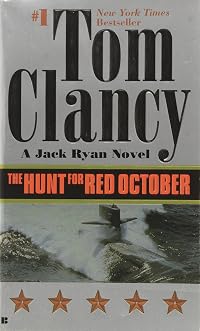
The Hunt for Red October
by Tom Clancy
Jack Ryan (Publication Order) (1), Jack Ryan (Chronological Order) (4)
On This Page
Description
The Soviets' new ballistic-missile submarine is attempting to defect to the United States, but the Soviet Atlantic fleet has been ordered to find and destroy her at all costs. Can Red October reach the U.S. safely?Tags
Recommendations



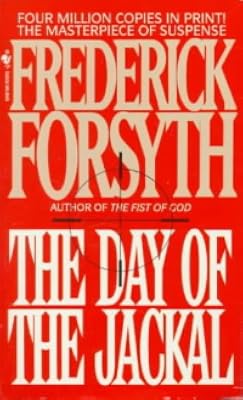
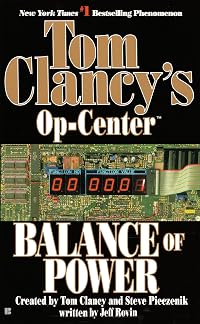
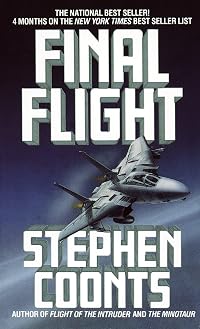
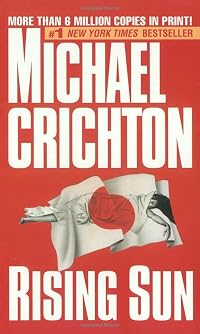
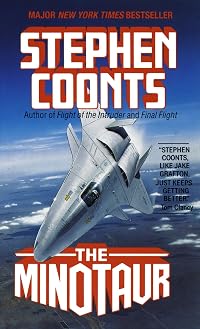
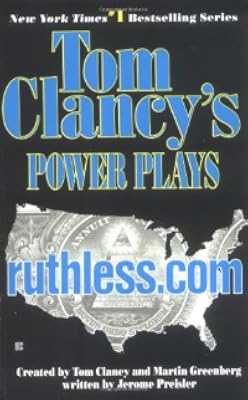
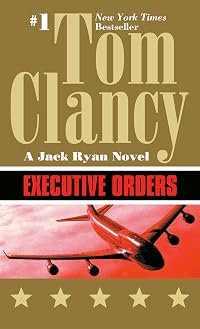
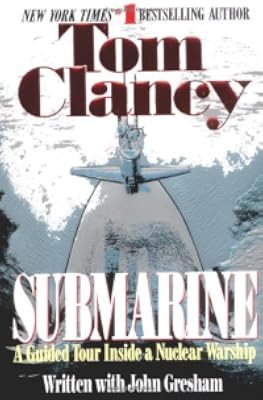
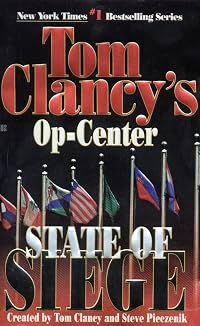
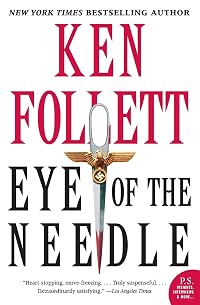
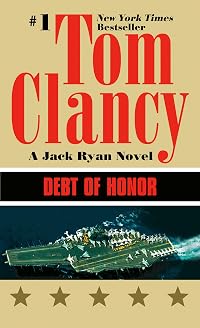
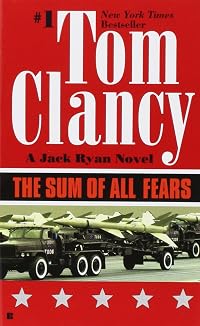


Member Recommendations

Member Reviews
It has been a long time since I last read this book, but it was still as gripping a tale as ever. The idea of a Soviet submarine crew defecting to the US and taking their sub along with them was an intriguing idea. Staring the story from Captain Ramius's point of view was an excellent way to set the hook. I loved getting a glimpse of what motivated him to do such a thing and an idea of what he was up against.
Next up was the addition of the American side of things. First, the American submarines tasked with keeping an eye on the Russian subs, tracking them and noting their capabilities. The first inkling of the difficulties tracing this sub comes when the Russian sub "disappears" from their scopes. The questions continue as Jack Ryan show more travels to CIA headquarters with clandestine photos taken of the Red October and a plan to get some answers. The intensity ramps up when the CIA receives word that Ramius is trying to defect, and the whole Russian navy is out to stop him.
The cat and mouse game kept me glued to the pages in spite of the fact I knew how it turns out. Each time I read it, I seem to pick up something new or am reminded of something I forgot. Jack's discomfort with being a "field agent" is evident, but he is determined to succeed. I loved seeing how his mind worked as he tried to anticipate Ramius's moves. Ramius's determination to avoid detection by both Russian and American subs kept everyone on their toes. My favorite parts are the ones with the sonarman, Jonesy, from the sub Dallas. I love his humor, his intensity, and his dogged determination.
The tension ramped up as all the moving parts came together to hide the defection of the Red October. But just when it looked like all was well, an unexpected player entered the game. The intensity of this part, with the difficulties posed by rules of engagement and the need to not start a war, had me on the edge of my seat until it was all over.
One of my favorite things about this book was after Ryan and the men from the Dallas joined Ramius on the Red October. Seeing these men, who had been enemies for so long learn about each other and see the similarities is a lesson that everyone should pay attention to. I especially liked seeing Jonesy and his Russian counterpart.
The author has an incredible talent for description that frequently made me feel as though I were right in the middle of the action. The descriptions of life onboard a submarine were especially vivid and often made me very happy I could look out a window while I was reading. show less
Next up was the addition of the American side of things. First, the American submarines tasked with keeping an eye on the Russian subs, tracking them and noting their capabilities. The first inkling of the difficulties tracing this sub comes when the Russian sub "disappears" from their scopes. The questions continue as Jack Ryan show more travels to CIA headquarters with clandestine photos taken of the Red October and a plan to get some answers. The intensity ramps up when the CIA receives word that Ramius is trying to defect, and the whole Russian navy is out to stop him.
The cat and mouse game kept me glued to the pages in spite of the fact I knew how it turns out. Each time I read it, I seem to pick up something new or am reminded of something I forgot. Jack's discomfort with being a "field agent" is evident, but he is determined to succeed. I loved seeing how his mind worked as he tried to anticipate Ramius's moves. Ramius's determination to avoid detection by both Russian and American subs kept everyone on their toes. My favorite parts are the ones with the sonarman, Jonesy, from the sub Dallas. I love his humor, his intensity, and his dogged determination.
The tension ramped up as all the moving parts came together to hide the defection of the Red October. But just when it looked like all was well, an unexpected player entered the game. The intensity of this part, with the difficulties posed by rules of engagement and the need to not start a war, had me on the edge of my seat until it was all over.
One of my favorite things about this book was after Ryan and the men from the Dallas joined Ramius on the Red October. Seeing these men, who had been enemies for so long learn about each other and see the similarities is a lesson that everyone should pay attention to. I especially liked seeing Jonesy and his Russian counterpart.
The author has an incredible talent for description that frequently made me feel as though I were right in the middle of the action. The descriptions of life onboard a submarine were especially vivid and often made me very happy I could look out a window while I was reading. show less
I haven't read this since soon after it came out in the late 80's, although I've seen the movies numerous times over the years. It's every bit as good as I remember - even better, really, because this time around I didn't have any trouble keeping track of the boats and the subs. True, bits of it are dated (the average American salary being 20k a year, or even more startling, the superiority of the CRAY-2 supercomputer, which cost tens of millions of dollars, was available only at NASA and a few military centers, ,,, and had the same computing power of the first iPad.), but overall the action is fast, the writing intelligent, and the suspense top notch.
Having gone so long between reads, and having seen the movie enough times in between, show more I had forgotten how much the movie deviates - especially at the end - from the book. I'm generally pretty vitriolic about movie adaptations, especially when they significantly alter things, but full credit to the screenwriters; I don't know that the book's ending would have worked as well on-screen, but the spirit of the thing was caught perfectly. Re-reading this ending was like experiencing it for the first time and it was tense.
I'm thankful to Peregrinations for getting me thinking about this book again. I'm sort of tempted to re-read a few other Ryan books now. Or, at least, after Halloween Bingo.
I read this for Halloween Bingo 2022, but I'm still not sure which square I want to use it for - either Fear the Drowning Deep, or Film at 11. For now, I think I'll assign it to Fear the Drowning Deep, since that square has already been called. show less
Having gone so long between reads, and having seen the movie enough times in between, show more I had forgotten how much the movie deviates - especially at the end - from the book. I'm generally pretty vitriolic about movie adaptations, especially when they significantly alter things, but full credit to the screenwriters; I don't know that the book's ending would have worked as well on-screen, but the spirit of the thing was caught perfectly. Re-reading this ending was like experiencing it for the first time and it was tense.
I'm thankful to Peregrinations for getting me thinking about this book again. I'm sort of tempted to re-read a few other Ryan books now. Or, at least, after Halloween Bingo.
I read this for Halloween Bingo 2022, but I'm still not sure which square I want to use it for - either Fear the Drowning Deep, or Film at 11. For now, I think I'll assign it to Fear the Drowning Deep, since that square has already been called. show less
It was March, 1984 when I read a blurb in Time Magazine about a book that was all the buzz in Washington, D.C. Written by a sometime insurance salesman, it was a Cold War thriller about submarine cat and mouse in the Atlantic between the United States and the U.S.S.R.
What the "buzz" was about was the possibility that the young bureaucrat who had written the book had somehow gotten hold of classified information. Some felt the book was so detailed in its description of cutting-edge submarine technology, he had to have had inside information.
So I went down to the bookstore and bought what must have been a second or third edition hardback of the book, and remember being truly impressed by the sheer quality of the book itself. From the show more dustjacket to the stitching to the sheer . . . tightness of the book, it was clear Naval Institute Press put out a fine product.
The now familiar plot goes that the Soviet Union launches a new submarine named the Red October that ostensibly, because of new cavitation technology, is inaudible to Americans, thus making it a potential game-changing "first strike" weapon. A young naval commander named Jack Ryan has a theory that the commander of the new sub might very well be planning to defect to the United States, taking his sub with him.
In terms of the book, yes, the plot intrigued me, and yes, I liked the Jack Ryan character. But what had so impressed all those folks in D.C., all those details about submarine technology, those I found a little . . . boring. Just thought it was too much, is all.
When he put out his next book, Red Storm Rising, I immediately went out and bought it in hardback, brought it on a plane, tried to get into it, and just could not suspend my disbelief that there could be ANY scenario in which the U.S. and the U.S.S.R. would ever fight a conventional, non-nuclear war. I put it down not even half-read, and never read another Clancy. Enjoyed the hell out of the movies, though.
At any rate, I hadn't at all intended to leave my thoughts on this book, or on Clancy, however hearing the news today that Tom Clancy had passed, I thought I'd jot a few things down.
And of course, it turned out Tom Clancy had no special access to classified information while writing The Hunt for Red October. He simply did his homework.
RIP, Mr. Clancy. You certainly did something right. show less
What the "buzz" was about was the possibility that the young bureaucrat who had written the book had somehow gotten hold of classified information. Some felt the book was so detailed in its description of cutting-edge submarine technology, he had to have had inside information.
So I went down to the bookstore and bought what must have been a second or third edition hardback of the book, and remember being truly impressed by the sheer quality of the book itself. From the show more dustjacket to the stitching to the sheer . . . tightness of the book, it was clear Naval Institute Press put out a fine product.
The now familiar plot goes that the Soviet Union launches a new submarine named the Red October that ostensibly, because of new cavitation technology, is inaudible to Americans, thus making it a potential game-changing "first strike" weapon. A young naval commander named Jack Ryan has a theory that the commander of the new sub might very well be planning to defect to the United States, taking his sub with him.
In terms of the book, yes, the plot intrigued me, and yes, I liked the Jack Ryan character. But what had so impressed all those folks in D.C., all those details about submarine technology, those I found a little . . . boring. Just thought it was too much, is all.
When he put out his next book, Red Storm Rising, I immediately went out and bought it in hardback, brought it on a plane, tried to get into it, and just could not suspend my disbelief that there could be ANY scenario in which the U.S. and the U.S.S.R. would ever fight a conventional, non-nuclear war. I put it down not even half-read, and never read another Clancy. Enjoyed the hell out of the movies, though.
At any rate, I hadn't at all intended to leave my thoughts on this book, or on Clancy, however hearing the news today that Tom Clancy had passed, I thought I'd jot a few things down.
And of course, it turned out Tom Clancy had no special access to classified information while writing The Hunt for Red October. He simply did his homework.
RIP, Mr. Clancy. You certainly did something right. show less
In an ever-ongoing mission to clear my library shelves, I decided to reread Clancy and see if his books warranted inclusion on the permanent library - they don't.
Let's be clear, I like Jack Ryan as a character, and the idea of an analyst moving up the ladder in the CIA because of his square-peg in the field antics. But it turns out I overlooked Clancy's incessant use of technical jargon and prose, which ultimately makes the book more of a slog. I first read all of these back in my military days, and just allowed for Clancy's penchant for the technical to fill out the story. And I'm sure there are those readers who like the inclusions for an air of credibility, even if the rest of it is wholly incredible. It's not a bad book, but I don't show more need these tech manuals clogging up my shelves,. The only one I saved is [Without Remorse] because I like John Kelly as a character even better than Ryan - only wish he'd spent as much time on Kelly.
3 bones!!! show less
Let's be clear, I like Jack Ryan as a character, and the idea of an analyst moving up the ladder in the CIA because of his square-peg in the field antics. But it turns out I overlooked Clancy's incessant use of technical jargon and prose, which ultimately makes the book more of a slog. I first read all of these back in my military days, and just allowed for Clancy's penchant for the technical to fill out the story. And I'm sure there are those readers who like the inclusions for an air of credibility, even if the rest of it is wholly incredible. It's not a bad book, but I don't show more need these tech manuals clogging up my shelves,. The only one I saved is [Without Remorse] because I like John Kelly as a character even better than Ryan - only wish he'd spent as much time on Kelly.
3 bones!!! show less
Tom Clancy is a fingernail biting storyteller with a bad habit. He loves his technology. Nevertheless, this book left me breathless. Sheer moxy sparking between political factions raises the hair on my arms as the plot comes to a close, shall we say, nearly missing disaster.
I was 12 years old, living at the height of the Cold War in 1984 and The Hunt for Red October hit me like a lightning bolt. I hadn’t read anything like it – in fact, nobody had. What can you say about a book and an author who single-handedly invented a genre – the techno-thriller – and became one of the bestselling authors of the 1990s? The Hunt for Red October has it all – fast pacing, great characters, a highly inventive plot that was so realistic it had people wondering if Clancy was privy to some inside information. He also used this book (and all his subsequent ones) to showcase technology at a time when the world was changing so rapidly that it was frightening to think where it might lead.
Perhaps most importantly, show more Clancy gave us an everyman hero that readers could identify with. Jack Ryan isn’t James Bond. Instead, he is someone who uses his intelligence and wits to outthink the opposition. Still, he wasn’t afraid to get his hands dirty, even if that was outside of his comfort zone. That is the great attraction of his character. He could be the guy you have a couple drinks with at the bar before taking in a ballgame. He was one of us in a way the “super spies” never could be.
Even though the world has changed a lot since 1984, that identifiable protagonist certainly hasn’t. That’s why The Hunt for Red October rings as true today as it did then. One of the truly great yarns of its time that spawned generations of writers we enjoy to this day. show less
Perhaps most importantly, show more Clancy gave us an everyman hero that readers could identify with. Jack Ryan isn’t James Bond. Instead, he is someone who uses his intelligence and wits to outthink the opposition. Still, he wasn’t afraid to get his hands dirty, even if that was outside of his comfort zone. That is the great attraction of his character. He could be the guy you have a couple drinks with at the bar before taking in a ballgame. He was one of us in a way the “super spies” never could be.
Even though the world has changed a lot since 1984, that identifiable protagonist certainly hasn’t. That’s why The Hunt for Red October rings as true today as it did then. One of the truly great yarns of its time that spawned generations of writers we enjoy to this day. show less
"The Hunt for Red October" has been on my bookshelf for about five years (I bought it for $1.99 on sale). I'd often looked at it longingly, with a plan to read it as soon as I'd finished reading my current book. But, for some reason, it continued to be put aside for something else.
I loved each of the Jack Ryan movies; even the most recent one with Chris Pine was pretty good. If you haven't seen them, I recommend you check them out.
Anyone who has seen a Jack Ryan movie should know what to expect from this story. Unparalleled action, intrigue, and some nice twists and turns. I would define "The Hunt for Red October" as an intelligent thriller that is highly technical in nature.
The general story itself is pretty straightforward:
A highly show more accomplished Submarine Captain has been given their most sophisticated sub to test. Not only is it large, driven by a nuclear reactor and capable to single handledly destroying the United States, it also has a near silent "catapillar" drive to make them invisible to enemy ships. The problem is, Captain Ramius, has no intention of just testing the submarine; he (and many of his crew) plan to defect to America.
But, when the Russians find out what Ramius is doing they send their entire fleet of subs and ships to try and catch him before he can make it to the US.
To the Americans, seeing their enemy's fleet suddenly turn and head towards the US shores leads them to believe the Russians are about to attack. Argh! Scary!
Only one person, Jack Ryan - an analyst for the CIA - believes otherwise - and correctly. So, he's given a short amount of time to prove the Red October and her crew are defecting, rather than attacking.
But, having the US and Russians in close proximity is very dangerous, and both political sides are essentially in the dark as to what's happening underwater.
As a result, it's up to Ryan to find the Red October - which is diffult given their silent drive - and then find a way to contact them to confirm their plans - which is difficult given the sub is underwater.
In between the core story, a reader has to deal with technical jargon, the likes of which I've never come across.
Here's an example (there are many!):
"The reactor coolant pumps went to fast speed. An increased amount of hot, pressurised water entered the exchanger, where its heat was transferred to the stream on the outside loop. When the coolant returned to the reactor it was cooler than it had been and therefore denser. Being denser, it trapped more neutrons in the reactor pile, increasing the ferocity of the fission reaction and giving off yet more power. Farther aft, saturated steam in the "outside" or nonradioactive loop of the heat exchange system emerged through clusters of control valves to strike the blades of the high-pressure turbine."
Blah, blah, blah blah blah.
Sorry, but, BORING!!!
The underlying story of "The Hunt for Red October" is great, but unfortunately it's bogged down by technical blurb like this (and some a lot more technical).
Personally, as a reader, this type of writing takes away from the story. And, as a writer, it's something I was very attentive to. When jargon like this takes place in the middle of a scene it becomes more than simple padding, it's just becomes annoying, and confusing.
Tom Clancy's has many loyal fans because of the highly technical nature of his books, but for me it just detracted from the story.
Overall, I gave this book three stars out of five, because of the story and characterisation and whilst I greatly respect Tom Clancy's technical knowledge, knowing all the details just detracted from the book, and as a result I won't be picking up another Clancy book. show less
I loved each of the Jack Ryan movies; even the most recent one with Chris Pine was pretty good. If you haven't seen them, I recommend you check them out.
Anyone who has seen a Jack Ryan movie should know what to expect from this story. Unparalleled action, intrigue, and some nice twists and turns. I would define "The Hunt for Red October" as an intelligent thriller that is highly technical in nature.
The general story itself is pretty straightforward:
A highly show more accomplished Submarine Captain has been given their most sophisticated sub to test. Not only is it large, driven by a nuclear reactor and capable to single handledly destroying the United States, it also has a near silent "catapillar" drive to make them invisible to enemy ships. The problem is, Captain Ramius, has no intention of just testing the submarine; he (and many of his crew) plan to defect to America.
But, when the Russians find out what Ramius is doing they send their entire fleet of subs and ships to try and catch him before he can make it to the US.
To the Americans, seeing their enemy's fleet suddenly turn and head towards the US shores leads them to believe the Russians are about to attack. Argh! Scary!
Only one person, Jack Ryan - an analyst for the CIA - believes otherwise - and correctly. So, he's given a short amount of time to prove the Red October and her crew are defecting, rather than attacking.
But, having the US and Russians in close proximity is very dangerous, and both political sides are essentially in the dark as to what's happening underwater.
As a result, it's up to Ryan to find the Red October - which is diffult given their silent drive - and then find a way to contact them to confirm their plans - which is difficult given the sub is underwater.
In between the core story, a reader has to deal with technical jargon, the likes of which I've never come across.
Here's an example (there are many!):
"The reactor coolant pumps went to fast speed. An increased amount of hot, pressurised water entered the exchanger, where its heat was transferred to the stream on the outside loop. When the coolant returned to the reactor it was cooler than it had been and therefore denser. Being denser, it trapped more neutrons in the reactor pile, increasing the ferocity of the fission reaction and giving off yet more power. Farther aft, saturated steam in the "outside" or nonradioactive loop of the heat exchange system emerged through clusters of control valves to strike the blades of the high-pressure turbine."
Blah, blah, blah blah blah.
Sorry, but, BORING!!!
The underlying story of "The Hunt for Red October" is great, but unfortunately it's bogged down by technical blurb like this (and some a lot more technical).
Personally, as a reader, this type of writing takes away from the story. And, as a writer, it's something I was very attentive to. When jargon like this takes place in the middle of a scene it becomes more than simple padding, it's just becomes annoying, and confusing.
Tom Clancy's has many loyal fans because of the highly technical nature of his books, but for me it just detracted from the story.
Overall, I gave this book three stars out of five, because of the story and characterisation and whilst I greatly respect Tom Clancy's technical knowledge, knowing all the details just detracted from the book, and as a result I won't be picking up another Clancy book. show less
Members
- Recently Added By
Lists

Tagged by Tim or Meh!
91 works; 9 members

First Novels
373 works; 17 members

Books We Couldn't Put Down
443 works; 197 members

Thriller Authors to read
59 works; 1 member

The 100 Best Crime Novels and Thrillers since 1945
100 works; 6 members

Mustich's 1000 Books to Read Before You Die: A Life Changing List
1,001 works; 20 members

Best Spy Fiction
153 works; 102 members
Top 100 Mystery Novels of All Time
98 works; 9 members

100 Best Thrillers of All Time
100 works; 6 members

PBS The Great American Read
100 works; 21 members

Tagged Cold War
10 works; 2 members

Books with Colourful Titles
171 works; 8 members

Best War Fiction Books
41 works; 4 members

Read the book and saw the movie
1,170 works; 195 members

100 Mysteries and Thrillers to Read in a Lifetime
99 works; 22 members

1980s
356 works; 23 members

Summer Reading 2015
18 works; 1 member

Blue Pyramid 1,276 Best Books of All Time
1,248 works; 32 members

A Rainbow of Books: Colors in the Title
570 works; 24 members

NPRs your picks: top 100 Killer Thrillers
100 works; 17 members

NPRs audience picks: 100 best beach reads
105 works; 12 members

Science and Techno Thrillers
9 works; 2 members

water on the brain: maritime fiction
74 works; 18 members

Watched the Movie, Probably Won't Read the Book
185 works; 34 members

Books We Want To Read Again For The First Time
384 works; 160 members
Author Information

180+ Works 121,991 Members
Tom Clancy was born in Baltimore, Maryland on April 12, 1947. He graduated with a degree in English from Loyola College in 1969, became an insurance agent, and in 1973 became the owner of an insurance agency. It was not until 1980 that he started writing novels. His works include Red Storm Rising, The Cardinal of the Kremlin, The Sum of All Fears, show more Rainbow Six, Dead or Alive, and Threat Vector. His books The Hunt for Red October, Patriot Games, and Clear and Present Danger were adapted into major motion pictures. He also wrote nonfiction books including Into the Storm: A Study in Command, Submarine, Armored Cav, Fighter Wing, Airborne, and Reality Check: What's Going on Out There? He died on October 2, 2013 at the age of 66. His last book, Command Authority, co-authored with Mark Greaney, was published posthumously in December 2013 and made the New York Times bestseller list. (Bowker Author Biography) show less
Some Editions
Awards and Honors
Distinctions
Notable Lists
Series


Work Relationships
Is contained in
Has the adaptation
Is abridged in
Common Knowledge
- Canonical title
- The Hunt for Red October
- Original title
- The Hunt for Red October
- Original publication date
- 1984
- People/Characters
- Jack Ryan; Bart Mancuso; Captain Marko Ramius; Admiral Daniel Foster; Admiral Gorshkov; Admiral Yuri Ilych Padorin (show all 20); Captain Lieutenant Gregoriy Kamarov; Captain Second Rank Ivan Yurievich Putin; Captain Second Rank Vasily Borodin; Captain Second Rank Viktor Alexievich Tupolev; Robert Ritter; Arthur Moore; Dr. Petrov; Lieutenant Mannion; Oliver Wendell Tyler; Rear Admiral Charles Davenport; Rear Admiral Joshua Painter; Ronald Jones; Admiral James Greer; Vice Admiral Vincent Gallery
- Important places
- Polyarny, Murmansk Oblast, Russia; Murmansk Oblast, Russia; Russia; Morrow, England, UK; England, UK; Moscow, Russia (show all 15); Langley, Virginia, USA; Virginia, USA; USA; Red October (Submarine); V. K. Konovalov (Submarine); USS Dallas (Submarine); USS Pogy (Submarine); E. S. Politovskiy (Submarine); HMS Invincible (Ship)
- Related movies
- The Hunt for Red October (1990 | IMDb)
- Dedication
- For Ralph Chatham,
a sub driver who spoke the truth,
and for all the men who wear dolphins - First words
- Captain First Rank Marko Ramius of the Soviet Navy was dressed for the Arctic conditions normal to the Northern Fleet submarine base at Polyarnyy.
- Last words
- (Click to show. Warning: May contain spoilers.)For the first time in his life, Jack Ryan fell asleep on an airplane.
- Blurbers
- Higgins, Jack; Wambaugh, Joseph; Beach, Edward L.; Moore, John; Turner, Stansfield; Cussler, Clive (show all 8); Alden, John R.; Beddow, Reid
- Original language
- English
- Disambiguation notice
- ISBN 0792187156 is the movie; not the book.
Classifications
Statistics
- Members
- 12,575
- Popularity
- 668
- Reviews
- 133
- Rating
- (4.01)
- Languages
- 19 — Czech, Danish, Dutch, English, Finnish, French, German, Hungarian, Italian, Japanese, Lithuanian, Norwegian (Bokmål), Norwegian, Polish, Portuguese, Russian, Spanish, Swedish, Chinese, traditional
- Media
- Paper, Audiobook, Ebook
- ISBNs
- 144
- UPCs
- 3
- ASINs
- 77