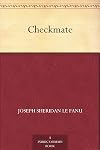
Checkmate
by Joseph Sheridan Le Fanu
On This Page
Description
He may have vast stores of family money at his disposal, but no one would accuse sleazy Walter Longcluse of being a noble gentleman. After worming his way into the good graces of the genteel Arden clan, Longcluse develops an unsettling obsession with their daughter, Alice. Will his ulterior motives be revealed before it's too late?.
Tags
Recommendations








































Member Reviews
What a layered and complex drama! . . .and how strange it seems, objectively, how little a murder committed very nearly on the page early on features in the following twists and turns, almost as though quite fallen out of mind of those affected by the investigation. Within the narrative, however, it is quite sensible how the focus turns to other things, more pressing and immediate, and how well wrapped up even more disparate threads eventually became all together by the end - and for such a slow-paced novel, how rapidly that very last peak of drama seemed to occur.
Sometimes I read a book like this and wonder how it can have been so thoroughly forgotten ... and sometimes I read one and think there's a pretty good reason not many people read it. This was one from the latter category. Unless you're a very committed le Fanu fan, this one's probably safely skipped.
Checkmate is the story of a disfigured man and his unknown past, and how he comes to involve himself with a prominent family. Set in Victorian England, the story moves along quickly and comes to resolution only at the very last.
A most excellent novel in the gothic tradition; Le Fanu is one of my favorite writers of all time. Recommended
A most excellent novel in the gothic tradition; Le Fanu is one of my favorite writers of all time. Recommended
Ratings
Members
- Recently Added By
Lists

Books mentioned in Julian Symons’ Bloody Murder
438 works; 6 members
Author Information

267+ Works 12,400 Members
The greatest author of supernatural fiction during the nineteenth century was undoubtedly J. Sheridan Le Fanu. Le Fanu was born in Dublin and, as with so many other English popular fiction authors of his time, entered the genre of fiction by way of journalism, working on such publications as the Evening Mail and the Dublin University Magazine. Le show more Fanu came from a middle-class background; his family was of Huguenot descent. He graduated from Trinity College and married in 1844. After his wife died in 1858, until his own death, Le Fanu was known as a recluse, creating his ghost fiction late at night in bed. Probably he began writing ghost fiction in 1838; his earliest supernatural story is often cited as being either "The Ghost and the Bone-Setter" or the "Fortunes of Sir Robert Ardagh," both of which were later collected in the anthology entitled The Purcell Papers (1880). Writing most effectively in the short story form, Le Fanu's tales such as "Carmilla" (a vampire story that is thought possibly to have influenced Bram Stoker's Dracula) and the problematic "Green Tea" are considered by many literary scholars to be classics of the supernatural genre. His lengthy Gothic novels, such as Uncle Silas (1864), though less highly regarded than his shorter fiction, are nonetheless wonderfully atmospheric. Le Fanu's particular brand of literary horror tends toward the refined, subtle fright rather than the graphic sensationalism of Matthew Gregory Lewis. His work influenced other prominent horror fiction authors, including M. R. James. (Bowker Author Biography) show less
Work Relationships
Is contained in
Common Knowledge
- Original publication date
- 1871
Classifications
Statistics
- Members
- 55
- Popularity
- 557,041
- Reviews
- 3
- Rating
- (3.57)
- Languages
- English
- Media
- Paper, Ebook
- ISBNs
- 17
- ASINs
- 3