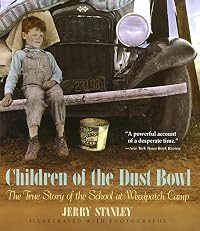
Children of the Dust Bowl
by Jerry Stanley
On This Page
Description
Describes the plight of the migrant workers who traveled from the Dust Bowl to California during the Depression and were forced to live in a federal labor camp and discusses the school that was built for their children.Tags
Recommendations








Member Reviews
Jerry Stanley's "Children of the Dust Bowl: The True Story of the School at Weedpatch Camp" is the inspirational story of a man who was willing to defy the social conventions of the time to help a downtrodden people. These children of the Dust Bowl were the children of migrant farmers who left the desolate areas of Oklahoma, Texas, Kansas, New Mexico, and Colorado in search of agricultural jobs in California. Their lands had suffered from years of drought, and most of these families teetered between life and death due to starvation and illness. Upon arrival in California, jobs were scare, and the migrant farmers were rejected by the locals. These "Okies" were forced to live in makeshifts camps littered with makeshift tents. They were show more dirty, uneducated, and dying from diseases due to their poor living conditions and nonexistent medical care. Americans were dying and living in squalor because their fellow citizens did not think they were worth helping. Leo B. Hart disagreed and fought to save these people, particularly their children. Hart and his team of educators built a school in one of these government funded emergency camps and offered these children the chance of an education.
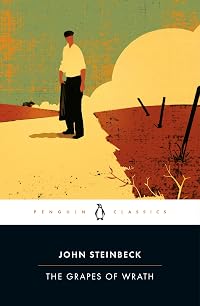
I found this story to be wonderfully told and wonderfully crafted. I do not question Stanley's accuracy because he has a PhD and teaches history. He specializes in American and Californian history, and he even lives right outside the San Joaquin Valley (where the Okie camps were located). It is also stated in his biography that he interviewed Hart, students, and former teachers of the "Weedpatch School." He incorporated beautiful images that help show readers how truly dire the situation was in these camps, and he also included various songs and poems that became popular in the camp. I enjoyed his comparison to Steinbeck's "The Grapes of Wrath." This work of literature is synonymous with this period in history, and I enjoyed that Stanley repeatedly referred to the book. Steinbeck played a large part in advocating the plight of these people, and it is as if Stanley has been passed the torch. He brought the hardships of these people to life, but he also did a wonderful job showing how just one person can make a difference.
Since I am studying to become a teacher, stories like this make me remember why I want to be a teacher. All of the teachers and volunteers at the Weedpatch School committed themselves to this community and enriched the lives of every student. I hope to do the same one day. As a future secondary Social Studies teacher, I would definitely incorporate this book into my lessons about the Great Depression and the Dust Bowl. I found it hard to relate to this period and truly understand the hardships they faced since my life was so different. I always had every basic need fulfilled. That unfortunately might not be the case for every student in my class, but I believe books like this can help students like myself understand the situation of these people a little bit more. I would use this book and excerpts from "The Grapes of Wrath" during this lesson, and hopefully my students will understand this period better. I could even present the idea of advocacy and explore was in which our class could help those less fortunate in our community. show less
I found this story to be wonderfully told and wonderfully crafted. I do not question Stanley's accuracy because he has a PhD and teaches history. He specializes in American and Californian history, and he even lives right outside the San Joaquin Valley (where the Okie camps were located). It is also stated in his biography that he interviewed Hart, students, and former teachers of the "Weedpatch School." He incorporated beautiful images that help show readers how truly dire the situation was in these camps, and he also included various songs and poems that became popular in the camp. I enjoyed his comparison to Steinbeck's "The Grapes of Wrath." This work of literature is synonymous with this period in history, and I enjoyed that Stanley repeatedly referred to the book. Steinbeck played a large part in advocating the plight of these people, and it is as if Stanley has been passed the torch. He brought the hardships of these people to life, but he also did a wonderful job showing how just one person can make a difference.
Since I am studying to become a teacher, stories like this make me remember why I want to be a teacher. All of the teachers and volunteers at the Weedpatch School committed themselves to this community and enriched the lives of every student. I hope to do the same one day. As a future secondary Social Studies teacher, I would definitely incorporate this book into my lessons about the Great Depression and the Dust Bowl. I found it hard to relate to this period and truly understand the hardships they faced since my life was so different. I always had every basic need fulfilled. That unfortunately might not be the case for every student in my class, but I believe books like this can help students like myself understand the situation of these people a little bit more. I would use this book and excerpts from "The Grapes of Wrath" during this lesson, and hopefully my students will understand this period better. I could even present the idea of advocacy and explore was in which our class could help those less fortunate in our community. show less
With respect to Leo Hart's amazing feat of building a world class school for the poor "Okies" who had migrated to California, a quote by Emerson comes to mind: "Once you make a decision, the universe conspires to make it happen". This is a case which seems to prove this assertion. Leo Hart worked around all of the things that should have stopped him: lack of money, public disapproval of the Okies, lack of facilities, and lack of teachers. He started out using his own money and somehow got supplies donated; he got the school approved by playing on the fact that nobody wanted the Okies at their own schools; he, with help from the students, built the facilities; and he traveled around and found the teachers. It is nothing short of amazing. show more The Okies got an education that would be the envy of students anywhere. They didn't just learn reading, writing, and arithmetic; they learned plumbing, electrical wiring, carpentry, plastering, masonry,agricultural skills,music, dressmaking, aircraft mechanics, typing, stenography, and even how to make cosmetics. The school taught academics, life skills, manners, self confidence, and everything in between. The students all did well as adults. Leo Hart's school was a utopian undertaking in which the kids not only learned well, but appreciated the things that were done for them. I thoroughly enjoyed reading about the story of the Okies and the happy ending that this school brought about for the people who had been through hell.
The book is effective on many levels: the cover, which feels like a Norman Rockwell piece, is interesting; the photographs and maps are informative and well-placed; and the story is well told. There is an afterword about Leo Hart,bibliographic notes, picture credits, and an index which includes photographs. Jerry, Stanley, the author, seems well equipped to write a book such as this as a history professor. I found the introduction particularly informative, as it ties in John Steinbeck's novel, The Grapes of Wrath, and shows the reader how it relates to the time period and the lives of the people they are about to read about.
With respect to the story itself, Stanley engages the reader by following the Okies on their journey from the Dust Bowl to California, giving a good indication of the trials they went through on their almost impossible journey. He relates what the challenges were that forced them out of their homes, and significantly, that it was through no fault of their own. The reader goes along for the journey, and feels the hope of a better life for the Okies that was promised by the fliers they saw. The reader also feels some of the devastation they felt when they arrive and there are no jobs--even worse that they are hated by the populace. The build up of this story makes the success of the Weedpatch School that much sweeter. I enjoyed this book and would recommend it for almost all ages; certainly it could even be used in high school for a one day history lesson. show less
The book is effective on many levels: the cover, which feels like a Norman Rockwell piece, is interesting; the photographs and maps are informative and well-placed; and the story is well told. There is an afterword about Leo Hart,bibliographic notes, picture credits, and an index which includes photographs. Jerry, Stanley, the author, seems well equipped to write a book such as this as a history professor. I found the introduction particularly informative, as it ties in John Steinbeck's novel, The Grapes of Wrath, and shows the reader how it relates to the time period and the lives of the people they are about to read about.
With respect to the story itself, Stanley engages the reader by following the Okies on their journey from the Dust Bowl to California, giving a good indication of the trials they went through on their almost impossible journey. He relates what the challenges were that forced them out of their homes, and significantly, that it was through no fault of their own. The reader goes along for the journey, and feels the hope of a better life for the Okies that was promised by the fliers they saw. The reader also feels some of the devastation they felt when they arrive and there are no jobs--even worse that they are hated by the populace. The build up of this story makes the success of the Weedpatch School that much sweeter. I enjoyed this book and would recommend it for almost all ages; certainly it could even be used in high school for a one day history lesson. show less
An informative book with many first hand accounts about the Dust Bowl and the School at Weedpatch Camp.
This book was very informative and heartbreaking. I found out many things I had never known about the Dust Bowl, including the length of time it lasted and the droughts leading up to it. It was interesting to think about how deeply farming practices can impact a biome and cause devastation to those living there. The story of Leo Hart was very uplifting, but it left a little bit of a bad taste in my mouth. Whenever I read stories of kind and generous individuals stepping in to solve an injustice I can't help but think about what would happen if the public entities that are supposed to help these people actually did. Yes, Leo Hart was a show more wonderful man who had a vision, but what if his vision had been different and at odds with what the Okies needed? show less
This book was very informative and heartbreaking. I found out many things I had never known about the Dust Bowl, including the length of time it lasted and the droughts leading up to it. It was interesting to think about how deeply farming practices can impact a biome and cause devastation to those living there. The story of Leo Hart was very uplifting, but it left a little bit of a bad taste in my mouth. Whenever I read stories of kind and generous individuals stepping in to solve an injustice I can't help but think about what would happen if the public entities that are supposed to help these people actually did. Yes, Leo Hart was a show more wonderful man who had a vision, but what if his vision had been different and at odds with what the Okies needed? show less
Of course I cried. I'm a training teacher reading about outcast children who are given a place of their own. OK. That's out of the way.
What I really want to talk about is this book's relevance in our current climate. Today, we face a national immigration crisis, and I'm not just talking about Syria. National news sources demonize immigrants "flooding in" from Central America, immigrants they say are "uneducated, unable to speak the language, who will drain taxpayers of their resources and never be able to adjust to support themselves and become successful in the United States." I'm quoting from my memory of a recent O'Reilly Factor on Fox News. If this book is fresh for you, I don't think I have to list the parallel phrases from its show more pages. That Okies are ignorant, too dumb to learn, cost the taxpayers money. And, of course, there's the "Bum Blockade" at the California border that resembles nothing so much as a wall with border patrol.
This book is concerned with the fate of Dustbowl children. At this moment, the majority of Central American immigrants are children. Families facing death from gang and police violence in Honduras, El Salvador and Guatemala send their children North because they have no other choice. Just as Dustbowl farmers went West because they had no other choice. The agricultural industry over-advertised jobs and took advantage of the surplus of workers to lower wages. May I point out that when California ran out of white migrant workers from the Dustbowl states, they repeated the very same tactic in the fifties inviting migrant workers from Mexico and Central America. In both cases, the workers suffered both the poverty and the resulting abuse and discrimination.
Both groups were lured to the area to benefit industry and then abused for stealing jobs and driving up taxes. And now we read Children of the Dustbowl or The Grapes of Wrath in classrooms across America, but the stereotypes of Latinos that rise from the same conditions remain unchallenged. One reason, of course, is color. Whiteness can fade back into familiar whiteness, but color can't hide. Those stereotypes get to stick around, even when we forget their origins.
I was struck by a moment in this book when a woman yells that there are "more Okies in California than white people." I've been talking to my students about whiteness. We discussed how it is a construct used to name the people with power. This was a perfect example of how "white" applies to privilidge. But I also began to think about how these children, once they grew past this moment in history, were able to leave the disadvantage of being "Okies" and rejoin the class of "whiteness," while our disadvantaged students of color have, historically, been burdened with stereotypes and animosity over all the decades of their lives.
Like Leo Hart, as educators we must make sure our students have a place of their own, where "everyone is for them," where their dreams and aspirations are the center of energy. And like Hart, we must work to find a way to help them to their "rightful place." Unlike the Dustbowl children, our students are not products of one historical moment or a single disaster. Many of our students are working against centuries of discrimination. What kinds of schools do we need now? How do help our students create this same sense of ownership and power when sometimes it seems the whole country is screaming "Okies, go back home."? show less
What I really want to talk about is this book's relevance in our current climate. Today, we face a national immigration crisis, and I'm not just talking about Syria. National news sources demonize immigrants "flooding in" from Central America, immigrants they say are "uneducated, unable to speak the language, who will drain taxpayers of their resources and never be able to adjust to support themselves and become successful in the United States." I'm quoting from my memory of a recent O'Reilly Factor on Fox News. If this book is fresh for you, I don't think I have to list the parallel phrases from its show more pages. That Okies are ignorant, too dumb to learn, cost the taxpayers money. And, of course, there's the "Bum Blockade" at the California border that resembles nothing so much as a wall with border patrol.
This book is concerned with the fate of Dustbowl children. At this moment, the majority of Central American immigrants are children. Families facing death from gang and police violence in Honduras, El Salvador and Guatemala send their children North because they have no other choice. Just as Dustbowl farmers went West because they had no other choice. The agricultural industry over-advertised jobs and took advantage of the surplus of workers to lower wages. May I point out that when California ran out of white migrant workers from the Dustbowl states, they repeated the very same tactic in the fifties inviting migrant workers from Mexico and Central America. In both cases, the workers suffered both the poverty and the resulting abuse and discrimination.
Both groups were lured to the area to benefit industry and then abused for stealing jobs and driving up taxes. And now we read Children of the Dustbowl or The Grapes of Wrath in classrooms across America, but the stereotypes of Latinos that rise from the same conditions remain unchallenged. One reason, of course, is color. Whiteness can fade back into familiar whiteness, but color can't hide. Those stereotypes get to stick around, even when we forget their origins.
I was struck by a moment in this book when a woman yells that there are "more Okies in California than white people." I've been talking to my students about whiteness. We discussed how it is a construct used to name the people with power. This was a perfect example of how "white" applies to privilidge. But I also began to think about how these children, once they grew past this moment in history, were able to leave the disadvantage of being "Okies" and rejoin the class of "whiteness," while our disadvantaged students of color have, historically, been burdened with stereotypes and animosity over all the decades of their lives.
Like Leo Hart, as educators we must make sure our students have a place of their own, where "everyone is for them," where their dreams and aspirations are the center of energy. And like Hart, we must work to find a way to help them to their "rightful place." Unlike the Dustbowl children, our students are not products of one historical moment or a single disaster. Many of our students are working against centuries of discrimination. What kinds of schools do we need now? How do help our students create this same sense of ownership and power when sometimes it seems the whole country is screaming "Okies, go back home."? show less
"If you think you have it tough, read history books." These words once uttered by famous comedian and political commentator Bill Mahr have never ceased to hold validity for me when reading books such as Stanley's Children of the Dust Bowl: The True Story of the School at Weedpatch Camp. This book--like many nonfiction books that address the real plight and hardships often endured by humanity--reminded me of the frequently overlooked period of time in which millions of American citizens once suffered day in and day out for years.
Stanley does an excellent job of setting up his main topic of discussion with a brief but thorough background description of the mass exodus of Oklahomans who sought refuge and employment in other states as a show more result of the effects of the Dust Bowl droughts. As he recounts the journey, his descriptions evokes a strong sense of sympathy from readers for the dust-covered, weary travelers.
By the time Stanley details the building of the Weepatch Camp School and the people that made it possible, readers are hooked into the story. They too feel a sense of pride in these Oakies' grand accomplishment.
Stanley's book includes several amazing pictures and quotes that compliment his narration perfectly. Whenever a picture is wanted, it is given.
Additionally, I found his close attention to describing the effects of the school and its selfless faculty brought out the true purpose of the book, while making the entire story all the more richer in substance.
Though Stanley drives home the fact that the refugees were treated unfairly and as social outcasts among Californians specifically, I think he missed opportunities to draw comparisons to the racial discrimination that was still prevelant in the South during those times. Furthermore, I also felt that the author's choice not to include any mention of other historical events or happenings during that time was a disappointment. I have come to enjoy nonfiction books that incorporate such references, because they help me gain a sense of the times. However, I can accept that Stanley may have not wanted to divert his focus from the central idea of the book.
I think this is a perfect book to present to a class as a story of how people throughout history have always found a way to overcome adversity, as well as a story of how one person's acts of selflessness and determination can change another person or persons' life forever. Although aimed to be read by juvenile readers, this is a book that is inspiring for young and old readers alike. With that in mind, I would not hesitate to use this in a high school setting--especially in a History classroom full of anti-history students. show less
Stanley does an excellent job of setting up his main topic of discussion with a brief but thorough background description of the mass exodus of Oklahomans who sought refuge and employment in other states as a show more result of the effects of the Dust Bowl droughts. As he recounts the journey, his descriptions evokes a strong sense of sympathy from readers for the dust-covered, weary travelers.
By the time Stanley details the building of the Weepatch Camp School and the people that made it possible, readers are hooked into the story. They too feel a sense of pride in these Oakies' grand accomplishment.
Stanley's book includes several amazing pictures and quotes that compliment his narration perfectly. Whenever a picture is wanted, it is given.
Additionally, I found his close attention to describing the effects of the school and its selfless faculty brought out the true purpose of the book, while making the entire story all the more richer in substance.
Though Stanley drives home the fact that the refugees were treated unfairly and as social outcasts among Californians specifically, I think he missed opportunities to draw comparisons to the racial discrimination that was still prevelant in the South during those times. Furthermore, I also felt that the author's choice not to include any mention of other historical events or happenings during that time was a disappointment. I have come to enjoy nonfiction books that incorporate such references, because they help me gain a sense of the times. However, I can accept that Stanley may have not wanted to divert his focus from the central idea of the book.
I think this is a perfect book to present to a class as a story of how people throughout history have always found a way to overcome adversity, as well as a story of how one person's acts of selflessness and determination can change another person or persons' life forever. Although aimed to be read by juvenile readers, this is a book that is inspiring for young and old readers alike. With that in mind, I would not hesitate to use this in a high school setting--especially in a History classroom full of anti-history students. show less
When I reflect on my recent read of Children of the Dust Bowl, I feel imbued with a certain sense of optimism. I feel satisfied by this book, and I don’t mean that in the “this book was satisfactory” sense. I mean it in the, “I ate well, and I am satiated” sense of the word. Jerry Stanley fed me with words, pictures and song, and I leave this text with a deeper understanding of the trials and triumphs of the Okies. I also leave it with musings that I didn’t expect to surface. Memories of my own childhood and musings about the current state of our planet all begged to written. I gave into their demands below.
***
I feel a kinship to the Okies. They remind me of my own Alabama family. Like the Okies, my roots are humble. The show more Okies are of dust. I am of the red Alabama dirt. And though I haven’t subsisted on the coffee grounds and apple seeds, or slept on the side of a run-down Route 66, there is a whisper of poverty in my family’s past. My father, born in 1939 to a Belgian immigrant, knew the toil of the working poor. Before he could grasp a number two pencil between his chubby little-boy fingers, he learned to hoe around the collard greens in my grandmother’s garden. As a lanky boy, my dad knew the ache of ferrying tree stumps from the remains of giant oaks felled by my grandfather and sold to turpentine factories. Even today, my father’s hands are still rough. Hewn hard from years upon years of working with lathe, hammer and wood.
I imagine the Okie women’s calloused hands were much like my grandmother’s - prematurely gnarled, wrinkled and spotted from the sun. I remember my grandmother’s hands. How they peeled potatoes for Christmas dinner. How the paring knife she held flicked away the flesh of peaches before she sugared them down and baked them into pies. How her hands washed dish after dish when her extended family, a hundred of us or so, would flock home for the holidays. There were so many of us that we had to eat in shifts. Butter beans, fried chicken and okra, a lane cake, so impregnated with liquor that my sister put a sign on it that said, “Don’t eat and drive,” adorned the tables, one in the kitchen, one in the dining room. The latter was the same table my dad used to sleep under as a child when there weren’t enough beds to hold all ten of my grandmother’s brood.
Perhaps I draw too close a similarity between the Okies and my family. My father was poor - poor enough that he didn’t have shoes to wear to school, but he wasn’t Okie poor. In feeling a kinship with the Okies, perhaps I romanticise their plight. It was anything but. How is it that even with the camera shooting straight on, not shying away from their wan and weathered features, not flinching at the squalor of their dwellings, that I can somehow still wax romantic and imbue their stories with a Old-West tinged, Rodgers and Hammerstein-like nostalgia?
Stop it, Desi.
There’s nothing nostalgia-inducing about how the Okies were mistreated. These people were refugees in their own country, and the unbridled scorn they endured is nothing short of abuse. Children in chicken-feed sacks packed in the back of school houses. Families who had run from an black wind apocalypse being shouted down with, of all words, “Okie, go home!” Families being ejected from fields where they scavenged for harvest castoffs. All of these unconscionable actions belie the notions of equality upon which America was supposedly built. Liberty and justice for all, my ass. I might have to go all Alan Ginsberg on my country if I dwell too long on the ignominy of it all.
And by it all, I don’t mean just Jerry Sander’s rendering of the Okie’s plight. I mean all of it. I mean, considering this book in light of the times it depicts. I mean coming to terms with the idea that bigotry was the brand of the day from American’s sea to shining sea. Red lines were being drawn on maps in the north. In the south, red oozed onto the ropes of trees that swayed with bloated bodies of the lynched, mingling with the red clay in which I used to play as a child. Add to this ledger of red deeds, Stanley’s account in the west of Okie’s doomed to live in the red no matter how hard they worked. What a clusterfuck of injustice. And yet, peddlers of “Make America Great Again” paraphernalia would have us believe that we need to go back to a time when the only way to ensure that some kids get educated is to eject them from their current school system?
I know, I know. Children of the Dust Bowl tells more than just the story of injustices wrought. It’s a story of hope. Leo Hart the lionhearted. The weedpatch school. Teachers who gave back their paychecks and gave their weekends to sick children. People tangling with the system and beating it (well, mostly).
I get it.
And I still need to get riled up about the dark-Hyde side of humanity that existed then and is rearing its head again this election year. I need to move in the energy of righteous anger even if just on the page because reading children Children of the Dust Bowl when I did, setting this story alongside the sins of my fathers, and even my family, who, for all their poverty still enjoyed that privilege that came with their white birthright, triggered a visceral desire to strike out. And yet, I know that the way to wage war is not to meet out like for like, eye for eye, slur for slur.
So I hold myself in check and remember others from this same time period: Dr. King, Gandhi, Rosa, Claudette, Emmet’s mother. I take heart from these heroes to live open-heartedly even in a world that wants to build walls, turn insular, homogenize the planet.
The Buddhists have a word for these type of warriors, bodhichitta. Enlightened compassionate ones. And though compassion has become a buzzword of sorts in recent years (better than grit, I suppose), the truth is that compassion and the connectedness are the weapons of those who want to follow in the footsteps of Leo and Edna Hart. Cliche as it sounds, empathy really does foster lasting change.
Hell, maybe I need to find some hippy-dippy-doo, woo-woo non-profit and get a grant to write compassion curricula. Or maybe I need to stop this blog-like discourse and get on with my writing for other classes. Or maybe I need to practice some of that compassion I’ve been espousing, turn it inward and get on with my life. I bet the Okies (and my grandma) would say, “Tain’t no use to sit and whine.”
They’d probably right, but it sure felt good! show less
***
I feel a kinship to the Okies. They remind me of my own Alabama family. Like the Okies, my roots are humble. The show more Okies are of dust. I am of the red Alabama dirt. And though I haven’t subsisted on the coffee grounds and apple seeds, or slept on the side of a run-down Route 66, there is a whisper of poverty in my family’s past. My father, born in 1939 to a Belgian immigrant, knew the toil of the working poor. Before he could grasp a number two pencil between his chubby little-boy fingers, he learned to hoe around the collard greens in my grandmother’s garden. As a lanky boy, my dad knew the ache of ferrying tree stumps from the remains of giant oaks felled by my grandfather and sold to turpentine factories. Even today, my father’s hands are still rough. Hewn hard from years upon years of working with lathe, hammer and wood.
I imagine the Okie women’s calloused hands were much like my grandmother’s - prematurely gnarled, wrinkled and spotted from the sun. I remember my grandmother’s hands. How they peeled potatoes for Christmas dinner. How the paring knife she held flicked away the flesh of peaches before she sugared them down and baked them into pies. How her hands washed dish after dish when her extended family, a hundred of us or so, would flock home for the holidays. There were so many of us that we had to eat in shifts. Butter beans, fried chicken and okra, a lane cake, so impregnated with liquor that my sister put a sign on it that said, “Don’t eat and drive,” adorned the tables, one in the kitchen, one in the dining room. The latter was the same table my dad used to sleep under as a child when there weren’t enough beds to hold all ten of my grandmother’s brood.
Perhaps I draw too close a similarity between the Okies and my family. My father was poor - poor enough that he didn’t have shoes to wear to school, but he wasn’t Okie poor. In feeling a kinship with the Okies, perhaps I romanticise their plight. It was anything but. How is it that even with the camera shooting straight on, not shying away from their wan and weathered features, not flinching at the squalor of their dwellings, that I can somehow still wax romantic and imbue their stories with a Old-West tinged, Rodgers and Hammerstein-like nostalgia?
Stop it, Desi.
There’s nothing nostalgia-inducing about how the Okies were mistreated. These people were refugees in their own country, and the unbridled scorn they endured is nothing short of abuse. Children in chicken-feed sacks packed in the back of school houses. Families who had run from an black wind apocalypse being shouted down with, of all words, “Okie, go home!” Families being ejected from fields where they scavenged for harvest castoffs. All of these unconscionable actions belie the notions of equality upon which America was supposedly built. Liberty and justice for all, my ass. I might have to go all Alan Ginsberg on my country if I dwell too long on the ignominy of it all.
And by it all, I don’t mean just Jerry Sander’s rendering of the Okie’s plight. I mean all of it. I mean, considering this book in light of the times it depicts. I mean coming to terms with the idea that bigotry was the brand of the day from American’s sea to shining sea. Red lines were being drawn on maps in the north. In the south, red oozed onto the ropes of trees that swayed with bloated bodies of the lynched, mingling with the red clay in which I used to play as a child. Add to this ledger of red deeds, Stanley’s account in the west of Okie’s doomed to live in the red no matter how hard they worked. What a clusterfuck of injustice. And yet, peddlers of “Make America Great Again” paraphernalia would have us believe that we need to go back to a time when the only way to ensure that some kids get educated is to eject them from their current school system?
I know, I know. Children of the Dust Bowl tells more than just the story of injustices wrought. It’s a story of hope. Leo Hart the lionhearted. The weedpatch school. Teachers who gave back their paychecks and gave their weekends to sick children. People tangling with the system and beating it (well, mostly).
I get it.
And I still need to get riled up about the dark-Hyde side of humanity that existed then and is rearing its head again this election year. I need to move in the energy of righteous anger even if just on the page because reading children Children of the Dust Bowl when I did, setting this story alongside the sins of my fathers, and even my family, who, for all their poverty still enjoyed that privilege that came with their white birthright, triggered a visceral desire to strike out. And yet, I know that the way to wage war is not to meet out like for like, eye for eye, slur for slur.
So I hold myself in check and remember others from this same time period: Dr. King, Gandhi, Rosa, Claudette, Emmet’s mother. I take heart from these heroes to live open-heartedly even in a world that wants to build walls, turn insular, homogenize the planet.
The Buddhists have a word for these type of warriors, bodhichitta. Enlightened compassionate ones. And though compassion has become a buzzword of sorts in recent years (better than grit, I suppose), the truth is that compassion and the connectedness are the weapons of those who want to follow in the footsteps of Leo and Edna Hart. Cliche as it sounds, empathy really does foster lasting change.
Hell, maybe I need to find some hippy-dippy-doo, woo-woo non-profit and get a grant to write compassion curricula. Or maybe I need to stop this blog-like discourse and get on with my writing for other classes. Or maybe I need to practice some of that compassion I’ve been espousing, turn it inward and get on with my life. I bet the Okies (and my grandma) would say, “Tain’t no use to sit and whine.”
They’d probably right, but it sure felt good! show less
Children of the Dust Bowl has the most upward-sweeping trajectory in recent memory: the first half is unspeakably sad, the second half inexpressibly joyful.
Author Jerry Stanley sets the scene with a nightmarish description of the Dust Bowl: the endless drought accompanied by shriveling crops, followed by gale-force winds that swept away topsoil, darkened skies, and blew dust into the faces and lungs of the increasingly desperate farmers and their families. Loading old jalopies with as many possessions as they could carry (and selling the rest), many families headed to the promised land of California, where an abundance of high-paying agricultural jobs awaited them (or so they were told). Those who survived the journey discovered they'd show more been sold a bill of goods: there were far more migrant workers than available jobs. Regarded as dirty, ignorant outsiders who were driving wages down and taxes up, the Okies lived in deplorable conditions, setting up camp wherever they could. The children had it the worst, vulnerable to bacterial illness, shunned at school, and unable to comprehend why they were being treated as subhuman. The establishment of Weedpatch Camp (a New Deal program) relieved their plight somewhat, but it wasn't until the arrival of Kern County superintendent Leo Hart that the Okie children were able to envision a better future for themselves.
This is when things get good. With the help of a dedicated group of teachers and donations of old books, supplies, and building materials, Hart enlisted the Okie children in the construction of a unique school that blended traditional education and vocational training—one that could easily serve as an educational model today. Readers get a close look at how the school was built, how the curriculum was cobbled together (with each heroic teacher taking on multiple roles), and how the students took ownership not just of their learning but of the school itself. What comes through again and again is the sheer joy of productive work for anyone with a vision. When Hart allows the students who score well on a math test to assist in digging the hole for the swimming pool, I was reminded of Tom Sawyer's mind trick of bargaining with his friends for the "privilege" of whitewashing Aunt Polly's fence—the difference being that the Okie children know they will get to enjoy the fruits of their labor, so the work is genuinely gratifying to them (no tricks necessary). Stanley does an admirable job of helping readers get to know the children at Weedpatch School (he interviewed several of them, along with Hart himself) and giving us a sense of how their lives were transformed by this wonderfully inspiring experiment.
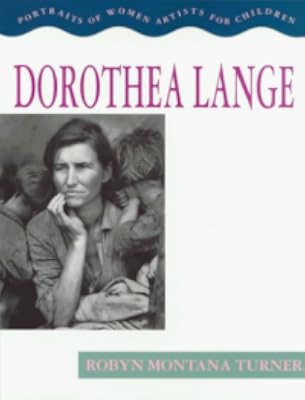
The book is stuffed with fascinating period photographs, including Dorothea Lange's famous shot of an Okie woman and her children. The Weedpatch kids are shown laying the foundation of a building, sawing scrap lumber, digging an irrigation channel, preparing meals, raising livestock, and learning how to read, write, sew, and operate farm machinery. We also see them during well-earned moments of leisure, laughing, playing volleyball, and diving into their beloved pool. For all its scholastic and literary merits—the book is carefully researched and well written—Children of the Dust Bowl is almost unimaginable without these photos. Stanley provides a lengthy bibliographic note listing his many sources, including the work of photographers employed by the Farm Security Administration (Lange being prominent among them). The book would be a fine resource in a middle-school social studies classroom, and in an ELA classroom it would make an excellent companion piece to a Depression-era novel such as Of Mice and Men. show less
Author Jerry Stanley sets the scene with a nightmarish description of the Dust Bowl: the endless drought accompanied by shriveling crops, followed by gale-force winds that swept away topsoil, darkened skies, and blew dust into the faces and lungs of the increasingly desperate farmers and their families. Loading old jalopies with as many possessions as they could carry (and selling the rest), many families headed to the promised land of California, where an abundance of high-paying agricultural jobs awaited them (or so they were told). Those who survived the journey discovered they'd show more been sold a bill of goods: there were far more migrant workers than available jobs. Regarded as dirty, ignorant outsiders who were driving wages down and taxes up, the Okies lived in deplorable conditions, setting up camp wherever they could. The children had it the worst, vulnerable to bacterial illness, shunned at school, and unable to comprehend why they were being treated as subhuman. The establishment of Weedpatch Camp (a New Deal program) relieved their plight somewhat, but it wasn't until the arrival of Kern County superintendent Leo Hart that the Okie children were able to envision a better future for themselves.
This is when things get good. With the help of a dedicated group of teachers and donations of old books, supplies, and building materials, Hart enlisted the Okie children in the construction of a unique school that blended traditional education and vocational training—one that could easily serve as an educational model today. Readers get a close look at how the school was built, how the curriculum was cobbled together (with each heroic teacher taking on multiple roles), and how the students took ownership not just of their learning but of the school itself. What comes through again and again is the sheer joy of productive work for anyone with a vision. When Hart allows the students who score well on a math test to assist in digging the hole for the swimming pool, I was reminded of Tom Sawyer's mind trick of bargaining with his friends for the "privilege" of whitewashing Aunt Polly's fence—the difference being that the Okie children know they will get to enjoy the fruits of their labor, so the work is genuinely gratifying to them (no tricks necessary). Stanley does an admirable job of helping readers get to know the children at Weedpatch School (he interviewed several of them, along with Hart himself) and giving us a sense of how their lives were transformed by this wonderfully inspiring experiment.
The book is stuffed with fascinating period photographs, including Dorothea Lange's famous shot of an Okie woman and her children. The Weedpatch kids are shown laying the foundation of a building, sawing scrap lumber, digging an irrigation channel, preparing meals, raising livestock, and learning how to read, write, sew, and operate farm machinery. We also see them during well-earned moments of leisure, laughing, playing volleyball, and diving into their beloved pool. For all its scholastic and literary merits—the book is carefully researched and well written—Children of the Dust Bowl is almost unimaginable without these photos. Stanley provides a lengthy bibliographic note listing his many sources, including the work of photographers employed by the Farm Security Administration (Lange being prominent among them). The book would be a fine resource in a middle-school social studies classroom, and in an ELA classroom it would make an excellent companion piece to a Depression-era novel such as Of Mice and Men. show less
Members
- Recently Added By
Author Information

8 Works 1,756 Members
Jerry Stanley is the author of several highly praised books for young readers, including Children of the Dust Bowl, an ALA Notable Book, a Horn Book Fanfare Outstanding Book of the Year, a Booklist Editors' Choice, and winner of the Orbis Pictus Award; I Am an American, an ALA Notable Book; and Hurry Freedom: African Americans in Gold Rush show more California, a National Book Award finalist and winner of the Orbis Pictus Award. A former professor of history at California State University, he lives in Bakersfield show less
Awards and Honors
Awards
Distinctions
Common Knowledge
- Canonical title
- Children of the Dust Bowl
Classifications
- Genre
- Nonfiction
- DDC/MDS
- 371.96 — Society, government, & culture Education Schools and their activities; special education Education of special classes By Socioeconomic Status
- LCC
- LC5152 .C2 .S73 — Education Special aspects of education Special aspects of education Education of special classes of persons Other special classes
- BISAC
Statistics
- Members
- 1,088
- Popularity
- 23,386
- Reviews
- 235
- Rating
- (4.22)
- Languages
- English, French
- Media
- Paper, Audiobook, Ebook
- ISBNs
- 19
- ASINs
- 6