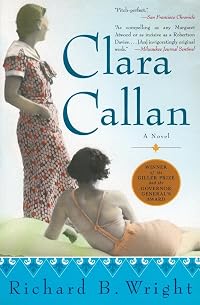
Clara Callan
by Richard B. Wright
On This Page
Description
Two sisters, small-town Ontario, 1934. Canadian author Richard Wright tells their story, from the ordinary to the extraordinary, with an eye for the commonplace and poignant sense of the larger undercurrents that change people's lives. Letters and journal entries form a portal into the desires and passions of two very different women, underscoring the larger tableau of an era stirring with great events - the Depression, rumblings of another world war, and the infancy of radio and show show more business entertainment. Love and betrayal, friendship and family, hope and deception are the forces that temper the lives of Clara, the spinster schoolteacher, and her sister Nora, "whose entire life is a performance." Wright, a master of revealing the drama of seemingly unremarkable lives, constructs a powerful, mesmerizing narrative. show lessTags
Recommendations











Member Recommendations
Zorrie by Laird Hunt
by aprille
Member Reviews
What we may think of as simpler times weren't really all that simple, at least not to those living in those times. So Canadian writer Richard B. Wright makes clear in this absorbing 2002 novel. Set during the years from 1934 to 1938, Wright's characters wrestle with confusing new technology like party-line telephones, home entertainment delivered via radio, long-distance air transportation and the conversion of coal furnaces to oil. And as for personal relationships, well they were certainly as complex then as now.
Clara Callan is a young school teacher, introverted and unmarried, in an Ontario village a few miles outside of Toronto. Her younger sister, Nora, more beautiful and outgoing than Clara, has just moved to New York City and show more very quickly become a star on a popular radio soap opera. The entire novel is told through Clara's diary entries during those years and in letters exchanged between the two sisters and with a few other characters.
Clara's quiet life is disrupted when she is raped while walking along some railroad tracks. When she discovers she is pregnant, she enlists Nora's help, without telling her how the pregnancy happened, in getting an abortion in New York. Wright leaves hints that Clara might seek revenge against the man who raped her, as she seeks him out and stalks him, but then she meets a man in a Toronto theater and, for the first time in her life, falls in love. Of course, Frank turns out to be married. And so this bland schoolteacher has another secret she must hide from the nosy people of her village, made all the more difficult when she gets one of those party-line telephones.
How this timid teacher ultimately becomes the bravest, if not the wisest, resident of her village makes fine reading. show less
Clara Callan is a young school teacher, introverted and unmarried, in an Ontario village a few miles outside of Toronto. Her younger sister, Nora, more beautiful and outgoing than Clara, has just moved to New York City and show more very quickly become a star on a popular radio soap opera. The entire novel is told through Clara's diary entries during those years and in letters exchanged between the two sisters and with a few other characters.
Clara's quiet life is disrupted when she is raped while walking along some railroad tracks. When she discovers she is pregnant, she enlists Nora's help, without telling her how the pregnancy happened, in getting an abortion in New York. Wright leaves hints that Clara might seek revenge against the man who raped her, as she seeks him out and stalks him, but then she meets a man in a Toronto theater and, for the first time in her life, falls in love. Of course, Frank turns out to be married. And so this bland schoolteacher has another secret she must hide from the nosy people of her village, made all the more difficult when she gets one of those party-line telephones.
How this timid teacher ultimately becomes the bravest, if not the wisest, resident of her village makes fine reading. show less
I haven't read a bad Richard B. Wright book yet. They are all EXCELLENT. And CLARA CALLAN is no exception. Easy to see why it won both the Giller Prize and the Governor General's Award in Canada.
I was reminded of old classic potboilers I had read forty and fifty years ago - books like MILDRED PIERCE or SO BIG. By this I mean this is simply old-fashioned storytelling, and in the most literary sense. Clara Callan's story is told in the form of letters and her personal journal, and spans the years 1934-38, with an important Afterword tacked on. The title character is a woman who will linger in my imagination for a long time. Clara is a thirty-ish small town school teacher in Ontario in the mid-1930s, on her way to spinsterhood, when a show more series of unexpected events occur which irrevocably change her humdrum life. I hate to say anything more than this, because it would be so easy to spoil this finely crafted tale. And there is her younger sister, Nora, who goes off to New York City where she becomes a star on a radio soap opera, "The House on Chestnut Street." Meanwhile, against this backdrop, Clara's life on Church Street, back in tiny Whitfield, begins to reflect those of the soap opera folks. I mean, somehow, Wright has managed to craft an utterly human drama that is ... well, it's like a soap opera, and absolutely, grippingly believable, and is simply, as so many blurbs and trailers often say, "compelling human drama." The years between the wars come alive in these pages.
I've already mentioned the MILDRED PIERCE comparison, and, in fact, Clara is, at one point, fascinated by James M. Cain's even more famous book, THE POSTMAN ALWAYS RINGS TWICE. As a school teacher, Clara is a reader, and one who appreciates classical music (she plays the piano too) and fine literature, but she is not above indulging her curiosity in pulp magazines like True Detective. Hence, perhaps her interest in Cain. She also knows poetry, Shakespeare, and other writers of the era. Taylor Caldwell is mentioned peripherally, as a 'new writer' (her first novel, DYNASTY OF DEATH, was a sensation in 1938).
I know I have not done justice to CLARA CALLAN, mostly because I don't wish to give anything away that might spoil the story. But trust me, this is just a wonderful, eminently readable novel. A rare treat for book lovers like me. I loved it.
- Tim Bazzett, author of the memoir, BOOKLOVER show less
I was reminded of old classic potboilers I had read forty and fifty years ago - books like MILDRED PIERCE or SO BIG. By this I mean this is simply old-fashioned storytelling, and in the most literary sense. Clara Callan's story is told in the form of letters and her personal journal, and spans the years 1934-38, with an important Afterword tacked on. The title character is a woman who will linger in my imagination for a long time. Clara is a thirty-ish small town school teacher in Ontario in the mid-1930s, on her way to spinsterhood, when a show more series of unexpected events occur which irrevocably change her humdrum life. I hate to say anything more than this, because it would be so easy to spoil this finely crafted tale. And there is her younger sister, Nora, who goes off to New York City where she becomes a star on a radio soap opera, "The House on Chestnut Street." Meanwhile, against this backdrop, Clara's life on Church Street, back in tiny Whitfield, begins to reflect those of the soap opera folks. I mean, somehow, Wright has managed to craft an utterly human drama that is ... well, it's like a soap opera, and absolutely, grippingly believable, and is simply, as so many blurbs and trailers often say, "compelling human drama." The years between the wars come alive in these pages.
I've already mentioned the MILDRED PIERCE comparison, and, in fact, Clara is, at one point, fascinated by James M. Cain's even more famous book, THE POSTMAN ALWAYS RINGS TWICE. As a school teacher, Clara is a reader, and one who appreciates classical music (she plays the piano too) and fine literature, but she is not above indulging her curiosity in pulp magazines like True Detective. Hence, perhaps her interest in Cain. She also knows poetry, Shakespeare, and other writers of the era. Taylor Caldwell is mentioned peripherally, as a 'new writer' (her first novel, DYNASTY OF DEATH, was a sensation in 1938).
I know I have not done justice to CLARA CALLAN, mostly because I don't wish to give anything away that might spoil the story. But trust me, this is just a wonderful, eminently readable novel. A rare treat for book lovers like me. I loved it.
- Tim Bazzett, author of the memoir, BOOKLOVER show less
Getting to know these two sisters and sharing their lives was the most important part as well as the most enjoyable part of Wright's book. The sisters, Clara and Nora, are from a village in Ontario bound by the typical social mores of the 1930s. The story is told through their letters after the younger one goes to work in the glamorous world of radio soap opera. Clara, a teacher, remains at home. I loved the gentle writing, the look back at life in the 1930s. It's hard to believe the author is male yet was able to portray the women so perfectly.
I once read a satirical website that boasted a recipe for the composition award-winning literature. It had dictums like "thou shalt sneer at conflict" and "thou shalt commit no plot". I thought it was hilarious, sinister, at the time, distant. Now that I have wasted hours of my life - gone, irretrievably gone like the wind - reading Clara Callan, winner of the Giller Prize and the Governor General's Award for Fiction, I now find new bitter meaning in "suckitudinous" fiction.
Clara Callan has no real plot. The titular character lives in rural Ontario in the 1930s. She is a school teacher living along, unmarried. An odd woman (incidentally have also recently read The Odd Women, a much better read) she loses her belief in religion, is show more victim to a random, senseless act of violence by a tramp, goes to New York (where sister Nora resides) to get an abortion and returns to Ontario to become more and more eccentric until she meets the man of her dream: a Catholic, married man who regularly cheats on his wife with the odd women - unmarried women who have given up on finding marital bliss, trapped in a mundane experience, alone, unprotected and perfect for him to stalk and meet in movie theatres. From beginning to end, it's just one long series of events - meaningless violence, meaningless disbelief in God, meaningless sex, etc.
The book is told through letters of Clara to her sister Nora and her friend Evelyn and her diary entries. Sister Nora is a radio actress in New York, a minor celebrity, and is very Sister Carrie. My problem is that it was absolutely dull. Certainly things happen, but there's no connecting theme. Does Clara change at all? I think not. There's no evolution of character. In the beginning, she sees the town drunk wearing her deceased father's donated coat and delights in the sight. In the end, she attends his funeral; distinctly out of place amongst the poor, lewd man's rough, unkempt acquaintances. Even after all that's happened to her, she is still the same and sees things around her the same way. No forward motion. No development.
And all the references to the 1930s (this book was a piece of historical fiction published in 2006) are corny. Old King George died, handsome King Edward abdicated for that crass American woman, that book Gone with the Wind was published and filmed - it was so tacky. I'm reading the volume of Anais Nin from the same period and the way she references things that we now consider to be historically important is altogether different. The feeling I get when I find familiar things that Anais encounters at the time (Otto Rank for example) is vastly different from the same type of thing in Clara's letters - it is not forced or ostentatious or jarring.
And honestly, people with interesting lives don't give vague summaries of current affairs and weather updates in their diaires. In fact, interesting people living dull, sequestered lives don't write mundane drivel either - like Emily Dickinson, for example. This establishes that Clara Callan has the prize-winning combination of being an uninteresting person living an uninteresting life.
If you're determined to read this, then I have to offer this Rushdie-ian advice: if dullness be your drug, make your will. show less
Clara Callan has no real plot. The titular character lives in rural Ontario in the 1930s. She is a school teacher living along, unmarried. An odd woman (incidentally have also recently read The Odd Women, a much better read) she loses her belief in religion, is show more victim to a random, senseless act of violence by a tramp, goes to New York (where sister Nora resides) to get an abortion and returns to Ontario to become more and more eccentric until she meets the man of her dream: a Catholic, married man who regularly cheats on his wife with the odd women - unmarried women who have given up on finding marital bliss, trapped in a mundane experience, alone, unprotected and perfect for him to stalk and meet in movie theatres. From beginning to end, it's just one long series of events - meaningless violence, meaningless disbelief in God, meaningless sex, etc.
The book is told through letters of Clara to her sister Nora and her friend Evelyn and her diary entries. Sister Nora is a radio actress in New York, a minor celebrity, and is very Sister Carrie. My problem is that it was absolutely dull. Certainly things happen, but there's no connecting theme. Does Clara change at all? I think not. There's no evolution of character. In the beginning, she sees the town drunk wearing her deceased father's donated coat and delights in the sight. In the end, she attends his funeral; distinctly out of place amongst the poor, lewd man's rough, unkempt acquaintances. Even after all that's happened to her, she is still the same and sees things around her the same way. No forward motion. No development.
And all the references to the 1930s (this book was a piece of historical fiction published in 2006) are corny. Old King George died, handsome King Edward abdicated for that crass American woman, that book Gone with the Wind was published and filmed - it was so tacky. I'm reading the volume of Anais Nin from the same period and the way she references things that we now consider to be historically important is altogether different. The feeling I get when I find familiar things that Anais encounters at the time (Otto Rank for example) is vastly different from the same type of thing in Clara's letters - it is not forced or ostentatious or jarring.
And honestly, people with interesting lives don't give vague summaries of current affairs and weather updates in their diaires. In fact, interesting people living dull, sequestered lives don't write mundane drivel either - like Emily Dickinson, for example. This establishes that Clara Callan has the prize-winning combination of being an uninteresting person living an uninteresting life.
If you're determined to read this, then I have to offer this Rushdie-ian advice: if dullness be your drug, make your will. show less
I really loved this book about 2 sisters from smaal-town Ontario. One, the younger, goes off to find fame and fortune as an actress in New York. The older sister stays behind to teach. The year is 1934. Nora does succeed as an actress in a popular radio show but Clara's life is eventful too. We follow their separate paths through their letters and Clara's diary entries. What astounded me is that the writer is a man and yet he convincingly portrays a woman's emotions. This book won both the Giller Prize and the Governor General's Award in 2001.
Dear Clara,
I thoroughly enjoyed my time reading your journals and letters from those four years during the 1930s. You provided a nice overview of events during the Depression, just as background, as well as what life might be like for a single lady living alone in small town Ontario. But more importantly, you showed the struggle to find personal happiness and our place in this world.
I liked your voice, and your mistakes, and your dignity in the face of difficulties. Your loving but realistic relationship with your sister, the big time radio actress living in New York City. I hope more readers discover your wonderful story.
In appreciation,
raidergirl3
I thoroughly enjoyed my time reading your journals and letters from those four years during the 1930s. You provided a nice overview of events during the Depression, just as background, as well as what life might be like for a single lady living alone in small town Ontario. But more importantly, you showed the struggle to find personal happiness and our place in this world.
I liked your voice, and your mistakes, and your dignity in the face of difficulties. Your loving but realistic relationship with your sister, the big time radio actress living in New York City. I hope more readers discover your wonderful story.
In appreciation,
raidergirl3
Engaged. Engaged is the word I would describe how I read Clara Callan. I think I read it in four days. Despite its name, Clara Callan is actually about two women, sisters in fact. Clara is the elder, living in their deceased parents house in a small rural town outside Toronto. She is a no-nonsense serious schoolteacher who loves to play the piano, read and write poetry; a perfect candidate for spinsterhood and self righteousness despite the fact she no longer believes in God. Since it is the 1930s and Clara is so mysterious, she is also fodder for constant gossip and worry in her village. Meanwhile younger sister Nora Callan has flown the coop to America and the Big Apple to seek fame and fortune as a radio star. Despite their vasts show more differences the sisters remain close, sharing letters to keep in touch. Clara's journal rounds out the epistolary tale and fills in the gaps.
Probably my favorite subliminal element to Clara Callan is how Wright weaves current events into to the story. Nora, being in show business, complains of a bratty young man hanging around a pretty brunette. The talented brunette would go on to star in a little movie about a wizard from Oz. Or the radio program designed to sound like a real newscast scaring the bejesus out of everyone. Or the new sensational book, Gone with the Wind. It is very tempting to put together a list of every book Clara reads or every song she mentions.
The novel has a Bridges of Madison County kind of feel to the ending. I was a little disappointed with the tactic. show less
Probably my favorite subliminal element to Clara Callan is how Wright weaves current events into to the story. Nora, being in show business, complains of a bratty young man hanging around a pretty brunette. The talented brunette would go on to star in a little movie about a wizard from Oz. Or the radio program designed to sound like a real newscast scaring the bejesus out of everyone. Or the new sensational book, Gone with the Wind. It is very tempting to put together a list of every book Clara reads or every song she mentions.
The novel has a Bridges of Madison County kind of feel to the ending. I was a little disappointed with the tactic. show less
Members
- Recently Added By
Lists

The Best of Canadian Literature
235 works; 33 members

Best Books With Sisters
130 works; 30 members

Favourite Books
1,820 works; 308 members

Giller Prize Winners
32 works; 6 members

Female Protagonist
1,056 works; 57 members

Governor General of Canada's English Fiction Awards
89 works; 3 members

Books Read in 2023
5,638 works; 147 members

Most Popular Books Tagged Ontario
35 works; 2 members
Five star books
1,767 works; 110 members

CBC's Great Canadian Reading List
149 works; 5 members

BingoDOG 2015 Challenge
49 works; 3 members

Alphabetical Books
211 works; 3 members

Favorite Epistolary Fiction
143 works; 144 members

Canadian Historical Fiction 🇨🇦
157 works; 8 members
Author Information

17 Works 1,710 Members
Some Editions
Awards and Honors
Common Knowledge
- Canonical title
- Clara Callan
- Original publication date
- 2001
- People/Characters
- Clara Callan; Nora Callan; Evelyn Dowling
- Important places
- Whitfield, Ontario, Canada; New York, New York, USA; Toronto, Ontario, Canada; Rome, Italy
- Important events
- Great Depression ( [1930]); World War II
- Epigraph
- "And if the worldly forget you,
say to the silent earth; I flow.
To the swift water say: I am."
- Rainer Maria Rilke
The Sonnets to Orpheus - Dedication
- For P again, with love and gratitude.
- First words
- Nora left for New York City today.
- Quotations
- This homely Englishwoman had triumphed over all our presumptions and was now pursuing a life of romantic adventure, reminding me that things are never as they seem, and that in fact we know very little about the lives of othe... (show all)rs. (p. 175)
- Last words
- (Click to show. Warning: May contain spoilers.)It is.
- Canonical DDC/MDS
- 813.54
- Canonical LCC
- PR9199.3.W7
Classifications
Statistics
- Members
- 927
- Popularity
- 28,974
- Reviews
- 22
- Rating
- (3.80)
- Languages
- Dutch, English, Spanish
- Media
- Paper, Audiobook, Ebook
- ISBNs
- 22
- UPCs
- 2
- ASINs
- 14