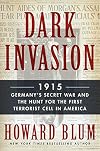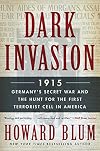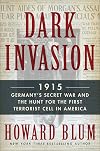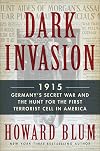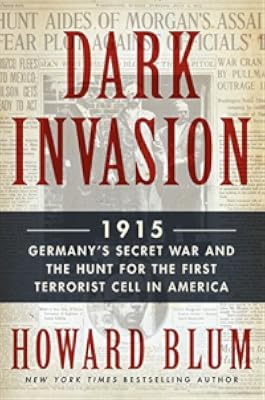
Dark Invasion: 1915: Germany's Secret War and the Hunt for the First Terrorist Cell in America
by Howard Blum
On This Page
Description
"Combining the pulsating drive of Showtime's Homeland with the fascinating historical detail of such of narrative nonfiction bestsellers as Double Cross and In the Garden of Beasts, Dark Invasion is Howard Blum's gritty, high-energy true-life tale of German espionage and terror on American soil during World War I, and the NYPD Inspector who helped uncover the plot--the basis for the film to be produced by and starring Bradley Cooper. When a "neutral" United States becomes a trading partner show more for the Allies early in World War I, the Germans implement a secret plan to strike back. A team of saboteurs--including an expert on germ warfare, a Harvard professor, and a brilliant, debonair spymaster--devise a series of "mysterious accidents" using explosives and biological weapons, to bring down vital targets such as ships, factories, livestock, and even captains of industry like J.P. Morgan. New York Police Inspector Tom Tunney, head of the department's Bomb Squad, is assigned the difficult mission of stopping them. Assembling a team of loyal operatives, the cunning Irish cop hunts for the conspirators among a population of more than eight million Germans. But the deeper he finds himself in this labyrinth of deception, the more Tunney realizes that the enemy's plan is far more complex and more dangerous than he suspected.Full of drama and intensity, illustrated with eight pages of black and-white photos, Dark Invasion is riveting war thriller that chillingly echoes our own time"-- show lessTags
Recommendations




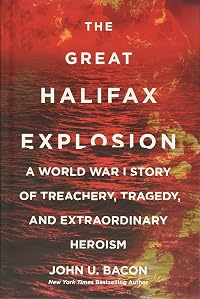
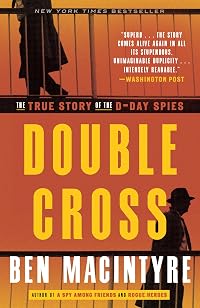
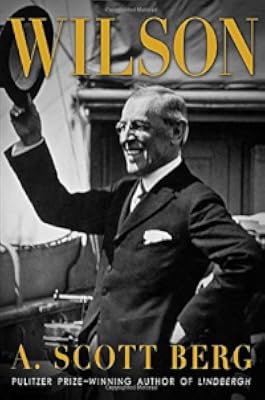
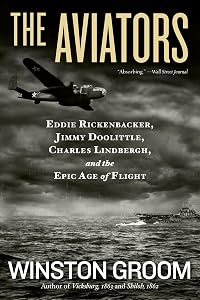


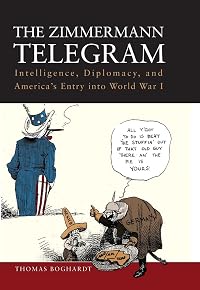




Member Recommendations

Coltime Deals with the events surrounding the explosion at Black Tom During WWI.
Member Reviews
Apart from the 1916 explosion at the Black Tom munitions plant in New Jersey, a surprisingly minor part of this book, German covert operations in America during World War One have largely been forgotten. They included attempted assassination, physical and economic sabotage, and even biological warfare.
It’s not that these events were unknown. Blum’s narrative, as suspenseful as a novel, is largely based on the memoirs of the Germans and Americans involved. Blum resurrects this history and puts it in the context of the current War on Terror with his protagonist, Captain Tom Tunney, head of New York City’s Bomb and Neutrality Squad, being dubbed as, effectively, America’s first head of Homeland Security.
His cast of characters – show more and this book opens with a helpful listing of them since there are so many – includes German diplomats Johann von Bernstorff and Franz von Papen, Franz von Rintelen (sent over to rectify the shortcomings of the diplomats), a former German infantry man on the Western Front turned saboteur, a German-American chemist, a medical doctor turned biowarfare specialist, and, most bizarrely of all, an ex-Harvard professor wanted for the murder of his wife.
Though the outlines of this story, apart from the biological warfare (which did result in American deaths though horses, a vital war resource exported to the Allies, were the target), were known to me through G. J. A. O’Toole’s Honorable Treachery, I appreciated this book. It not only shows the counterespionage activities against the Germans that existed outside the Federal government, but it also shows how espionage operations can be affected by contingencies of fortune and personality. One agent’s cheapness results in a major breach of operational security. The resentment of another recruit, over not being paid, points to another major operative in the German network. Blum also details what for me, apart from the biological warfare, was the most interesting part of the story: German financial sabotage through the creation of fake companies to divert munitions from the allies and the creation of fake labor unions to disrupt production.
A major part of the story is the evolution of Tunney’s work from simply preventing anarchist bombings and getting criminal convictions toward the more nebulous activity of operating in the context of international espionage. He and his men proved, due to their experience in undercover operations, surprisingly inventive at interrogations and deceptions to get information out of suspects. Wiretaps were also used.
Blum also shows the frustrations of the Germans which motivated their covert war against a country they regarded as anything but neutral. Their own ships were impounded in American harbors at the beginning of the war – thus supplying a wealth of maritime personnel willing to aid sabotage on American soil. While the American government proclaimed that Germany could certainly buy American munitions and other supplies, in fact, due to the British naval blockade, it was only an option on paper. All the while, the US continued to sell to the Allies and loan them money when needed. It was no wonder the Germans felt compelled to engage in sabotage, unlimited submarine warfare, and, most fatally of all for the sake of German-US relations, incite Mexico to invade the United States.
Since Blum keeps a suspense novelist’s tight focus on his characters, he can be forgiven for a too simplistic explanation for the origins of World War One. Why the war happened is really not that important to his story.
Though he wants us to consider this early war on terror in the context of our own, Blum doesn’t really touch the issue of dual loyalties. The German military certainly found a lot of recruits among American citizens. While the large majority of German-Americans remained loyal, certainly many had sympathies with Germany and aided it when asked. How many more would have aided it if asked? The latter question is, of course, beyond the scope of Blum’s book, but, given that he’s the one that brought up the analogy between our time and 1915, the problem of dual loyalties with Moslem Americans comes to mind. Another question brought to mind, again outside of the scope of Blum’s intent, is how much the commission of sabotage by German Americans influenced the Roosevelt Administration’s decision to inter Japanese-Americans.
Those are relatively minor quibbles. Anyone looking for murder and mayhem and cat-and-mouse games of espionage in a setting old enough to be exotic, modern enough to be easily understood, will appreciate this book. show less
It’s not that these events were unknown. Blum’s narrative, as suspenseful as a novel, is largely based on the memoirs of the Germans and Americans involved. Blum resurrects this history and puts it in the context of the current War on Terror with his protagonist, Captain Tom Tunney, head of New York City’s Bomb and Neutrality Squad, being dubbed as, effectively, America’s first head of Homeland Security.
His cast of characters – show more and this book opens with a helpful listing of them since there are so many – includes German diplomats Johann von Bernstorff and Franz von Papen, Franz von Rintelen (sent over to rectify the shortcomings of the diplomats), a former German infantry man on the Western Front turned saboteur, a German-American chemist, a medical doctor turned biowarfare specialist, and, most bizarrely of all, an ex-Harvard professor wanted for the murder of his wife.
Though the outlines of this story, apart from the biological warfare (which did result in American deaths though horses, a vital war resource exported to the Allies, were the target), were known to me through G. J. A. O’Toole’s Honorable Treachery, I appreciated this book. It not only shows the counterespionage activities against the Germans that existed outside the Federal government, but it also shows how espionage operations can be affected by contingencies of fortune and personality. One agent’s cheapness results in a major breach of operational security. The resentment of another recruit, over not being paid, points to another major operative in the German network. Blum also details what for me, apart from the biological warfare, was the most interesting part of the story: German financial sabotage through the creation of fake companies to divert munitions from the allies and the creation of fake labor unions to disrupt production.
A major part of the story is the evolution of Tunney’s work from simply preventing anarchist bombings and getting criminal convictions toward the more nebulous activity of operating in the context of international espionage. He and his men proved, due to their experience in undercover operations, surprisingly inventive at interrogations and deceptions to get information out of suspects. Wiretaps were also used.
Blum also shows the frustrations of the Germans which motivated their covert war against a country they regarded as anything but neutral. Their own ships were impounded in American harbors at the beginning of the war – thus supplying a wealth of maritime personnel willing to aid sabotage on American soil. While the American government proclaimed that Germany could certainly buy American munitions and other supplies, in fact, due to the British naval blockade, it was only an option on paper. All the while, the US continued to sell to the Allies and loan them money when needed. It was no wonder the Germans felt compelled to engage in sabotage, unlimited submarine warfare, and, most fatally of all for the sake of German-US relations, incite Mexico to invade the United States.
Since Blum keeps a suspense novelist’s tight focus on his characters, he can be forgiven for a too simplistic explanation for the origins of World War One. Why the war happened is really not that important to his story.
Though he wants us to consider this early war on terror in the context of our own, Blum doesn’t really touch the issue of dual loyalties. The German military certainly found a lot of recruits among American citizens. While the large majority of German-Americans remained loyal, certainly many had sympathies with Germany and aided it when asked. How many more would have aided it if asked? The latter question is, of course, beyond the scope of Blum’s book, but, given that he’s the one that brought up the analogy between our time and 1915, the problem of dual loyalties with Moslem Americans comes to mind. Another question brought to mind, again outside of the scope of Blum’s intent, is how much the commission of sabotage by German Americans influenced the Roosevelt Administration’s decision to inter Japanese-Americans.
Those are relatively minor quibbles. Anyone looking for murder and mayhem and cat-and-mouse games of espionage in a setting old enough to be exotic, modern enough to be easily understood, will appreciate this book. show less
Although President Wilson was determined to remain neutral when the first World War broke out in Europe, the nation's "neutrality" was mostly one-sided. Even if America didn't officially take sides, huge amounts of munitions and weapons were sold to the Allies (Britain enforced a sea blockade, preventing any possibility of trade with Germany). And as German frustration mounted, they began a secret campaign of sabotage against American ships. Inventive cigar-shaped incendiaries and bombs attached to ship's rudders crippled or destroyed ships when they were far from land and sent bullets that would have been fired at German soldiers instead to the bottom of the sea. A bomb blew up in the U.S. Capitol and an assassin tried to kill J. P. show more Morgan, whose support for the Allies was never in doubt. German spies even initiated germ-warfare against America, all in an attempt to keep America out of the war.
We tend to think terrorism directed at America started with the Sept. 11, 2001 attacks on the World Trade Center. But even before the "infamy" of Pearl Harbor, America was secretly attacked on her own soil by an enemy nation. Howard Blum has pieced together the plots and intrigue of Germany at the beginning of WWI, and it's a lot more extensive that most people realize, and it goes far beyond blowing up the munitions depot at Black Tom, NJ. Blum's "hero" in the story is NYPD Inspector Tom Tunney, who was charged with finding out who was responsible for the ship fires. Blum tells the story in a novel-like way that highlights the action of the story without bogging it down with too many details. Still, there's a lot of information in his narrative - so much that it runs over 400 pages, and sometimes I felt it grew a little tedious. Tunney isn't the most heroic figure either, and he seems to have always been a step or two behind the bad guys (although I'm not faulting him - his was a near impossible task), and President Wilson is portrayed as simple and only looking for excuses to keep his head in the sand. But it's a good story, and I appreciated the many period photos of the people and places. show less
We tend to think terrorism directed at America started with the Sept. 11, 2001 attacks on the World Trade Center. But even before the "infamy" of Pearl Harbor, America was secretly attacked on her own soil by an enemy nation. Howard Blum has pieced together the plots and intrigue of Germany at the beginning of WWI, and it's a lot more extensive that most people realize, and it goes far beyond blowing up the munitions depot at Black Tom, NJ. Blum's "hero" in the story is NYPD Inspector Tom Tunney, who was charged with finding out who was responsible for the ship fires. Blum tells the story in a novel-like way that highlights the action of the story without bogging it down with too many details. Still, there's a lot of information in his narrative - so much that it runs over 400 pages, and sometimes I felt it grew a little tedious. Tunney isn't the most heroic figure either, and he seems to have always been a step or two behind the bad guys (although I'm not faulting him - his was a near impossible task), and President Wilson is portrayed as simple and only looking for excuses to keep his head in the sand. But it's a good story, and I appreciated the many period photos of the people and places. show less
This book reads like fast-paced fiction and I didn't want to put it down. I knew about the RMS Lusitania of course and the plot to have Mexico invade the United States as part of Germany's war strategies but I wasn't aware of the assassination attempt on J.P. Morgan, all the ship bombs, and land based explosions that were going on. Woodrow Wilson's staff were beside themselves with frustration in his not wanting to believe that a "civilized" nation could commit such acts. I did think it was fitting that the doctor who was cultivating glanders and anthrax should in the end die of the Swine Flu that swept the globe during WWI
I won this book in a GoodReads first reads giveaway.
While this is a subject I had known next to nothing about prior to reading the book, I am always in the lookout for an engaging historical narrative, and Dark Invasion provided an entertaining read.
The book's focus is fairly narrow, focusing mainly on the German Spy/Saboteur ring operating in and around New York City in the year prior to the United States entering World War One. Howard Blum has put together a great spy story from a vast array of first hand accounts, memoirs, and contemporaneous accounts. The book follows the investigations of Tom Tunney, who headed the New York City Bomb Squad, and is tasked with tracking down the web of conspirators responsible for bombing allied show more ships, setting fire to munitions factories, and attempted assassinations.
The intrigue is satisfyingly convoluted, and several threads, seeming disparate at the start, weave together to show just how vast and far reaching Germany's efforts at sabotage in America were.
This glimpse at how big the web really was keeps the book from seeming overly narrow. As Blum's history unfolds, we follow the spy network in its attempts to prod Mexico into invading the US, to engage in germ warfare, to undermine the manufacture and supply of munitions, among other plots. We also see the effects these efforts have on the tortured decision to bring America into WWI, and the mighty efforts President Woodrow Wilson made (some might say, against all sense) to keep the country out of the war.
Overall, this is in interesting and engaging historical narrative, well executed and highly readable. I would recommend it for any history buff, not just war- or WWI scholars. show less
While this is a subject I had known next to nothing about prior to reading the book, I am always in the lookout for an engaging historical narrative, and Dark Invasion provided an entertaining read.
The book's focus is fairly narrow, focusing mainly on the German Spy/Saboteur ring operating in and around New York City in the year prior to the United States entering World War One. Howard Blum has put together a great spy story from a vast array of first hand accounts, memoirs, and contemporaneous accounts. The book follows the investigations of Tom Tunney, who headed the New York City Bomb Squad, and is tasked with tracking down the web of conspirators responsible for bombing allied show more ships, setting fire to munitions factories, and attempted assassinations.
The intrigue is satisfyingly convoluted, and several threads, seeming disparate at the start, weave together to show just how vast and far reaching Germany's efforts at sabotage in America were.
This glimpse at how big the web really was keeps the book from seeming overly narrow. As Blum's history unfolds, we follow the spy network in its attempts to prod Mexico into invading the US, to engage in germ warfare, to undermine the manufacture and supply of munitions, among other plots. We also see the effects these efforts have on the tortured decision to bring America into WWI, and the mighty efforts President Woodrow Wilson made (some might say, against all sense) to keep the country out of the war.
Overall, this is in interesting and engaging historical narrative, well executed and highly readable. I would recommend it for any history buff, not just war- or WWI scholars. show less
Engaging and well-written account of Germany's sabotage efforts in the United States in the 1914-1917 period, largely from the perspective of the NYPD squad that tried to run down the conspirators. Interestingly, while some plans aren't covered in detail (such as the 1916 Black Tom explosion, covered deeply in Jules Witcover's book), other plots, like plans to poison horses with germs, and the "cigar bomb" plots, are covered in deep detail that you don't see in many other places. The illustrations are well-chosen, since they largely show the players involved. Recommended as a good read.
Fascinating account of the first case of terrorism in American history, and it was not September 11, 2011. Woodrow Wilson, a pacifist and our president was attempting to keep us out of the war that was beginning in Europe. A war that began after the assassination of Archduke Franz Ferdinand. As the war was being waged the Germans believed they could wage war on US soil and keep us in fear of jumping into the war including stopping our help with munitions, horses and food to our allies. A variety of tactics were used and all just led us closer to helping our Allies, including bio terrorism, instead of scaring us from entering the war.
I loved the quote at the beginning of the book by the then Police Commissioner, Arthur Woods, who said, show more "The lessons to America are clear as day. We must not again be caught napping with no national intelligence organization. The several Federal bureaus should be welded into one, and that one should be eternally and comprehensively vigilant."
Unfortunately, we still have not learned anything from history and it will continue to repeat itself. The same thing police Commissioner Woods said in 1919 rang true when it was repeated again after September 11 in the commissioned report after the terrorist attack.
Well written reading like a mystery thriller with many intersecting characters. show less
I loved the quote at the beginning of the book by the then Police Commissioner, Arthur Woods, who said, show more "The lessons to America are clear as day. We must not again be caught napping with no national intelligence organization. The several Federal bureaus should be welded into one, and that one should be eternally and comprehensively vigilant."
Unfortunately, we still have not learned anything from history and it will continue to repeat itself. The same thing police Commissioner Woods said in 1919 rang true when it was repeated again after September 11 in the commissioned report after the terrorist attack.
Well written reading like a mystery thriller with many intersecting characters. show less
Mostly well written with a wealth of detail. I was disappointed in the end as I think the author went, somewhat abruptly, a bit too philosophical. A gripping and intricate story and a good read.
Members
- Recently Added By
Lists

2015 Notable Books for Adults
26 works; 4 members
Author Information

16 Works 2,852 Members
Howard Blum (born in 1948) is an American author and journalist. Blum earned his undergraduate degree from Stanford University, where he also received an M.A. in government in 1970. He was formerly a reporter for the The Village Voice and The New York Times, where he earned two Pulitzer Prize nominations. Since 1994 he has been a contributing show more editor at Vanity Fair. Blum has also authored several non-fiction books, including the New York Times bestseller and Edgar Award winner: American Lightning: Terror, Mystery, the Birth of Hollywood, and the Crime of the Century. (Bowker Author Biography) show less
Some Editions
Awards and Honors
Common Knowledge
- Original publication date
- 2014
- Important events
- World War I
- Publisher's editor
- Ottewell, Miranda
- Original language
- English
Classifications
Statistics
- Members
- 256
- Popularity
- 126,279
- Reviews
- 9
- Rating
- (4.03)
- Languages
- English
- Media
- Paper, Audiobook, Ebook
- ISBNs
- 13
- ASINs
- 2