On This Page
Description
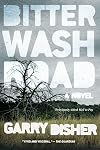
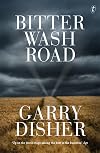
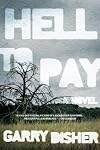
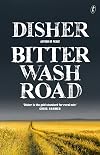
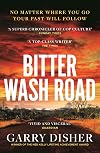
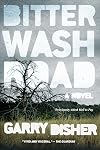
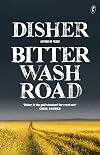
When Hirsch heads up Bitter Wash Road to investigate the gunfire he finds himself cut off without back-up. A pair of thrill killers has been targeting isolated farmhouses on lonely backroads, but Hirsch's first thought is that 'back-up' is nearby - and about to put a bullet in him. That's because Hirsch is a whistleblower. Formerly a promising metropolitan officer, now demoted and exiled to a one-cop station in South Australia's wheatbelt. Called a dog by his brother officers. Threats; show more pistol cartridge in the mailbox. But the shots on Bitter Wash Road don't tally with Hirsch's assumptions. The truth turns out to be a lot more mundane. And the events that unfold subsequently, a hell of a lot more sinister. show lessTags
Recommendations





















Member Reviews
I've enjoyed other books by Garry Disher, and Australia has always been a favorite destination for my armchair travels, so I picked up Hell to Pay anticipating a good read. What I didn't foresee was how quickly Disher would hook me with his main character and how deeply I would be drawn into this story. Even before the author relates the mess in which Hirsch was embroiled in Adelaide, I was on his side. It's the way Hirsch carries out his duties as a police officer, and it is in the way he treats the people who live in Tiverton and the surrounding area. Disher knows that actions often speak much louder than words.
Perhaps I also sided with Hirsch so quickly because I normally prefer the underdog. The few characters who like him seem to show more be ones who can't do him much good-- and I wanted Hirsch to have some good in his life. Few people would be able to withstand the sort of verbal and mental abuse that he has to deal with every single day. Yes, Disher has put a fascinating character right in the middle of a first-rate mystery, and if it didn't sound overblown I'd say it was an honor to watch Hirsch solve the young girl's murder despite everyone who's against him.
The setting is perfect for the story. Hirsch is out in country with sparsely settled land spreading in all directions under a limitless sky. Turning the pages, readers can almost feel themselves squinting into the sun while wiping dust and sweat off the backs of their necks. The country Hirsch finds himself in may be big, but it's been made to feel small and claustrophobic by shattered dreams and hatred. It's land turned minefield by the secrets of the people who live there, and even though I picked out whodunnit early on, it didn't matter. Constable Paul Hirschhausen is a character I'll remember for a good long time. I recommend all of you to make his acquaintance, too. show less
Perhaps I also sided with Hirsch so quickly because I normally prefer the underdog. The few characters who like him seem to show more be ones who can't do him much good-- and I wanted Hirsch to have some good in his life. Few people would be able to withstand the sort of verbal and mental abuse that he has to deal with every single day. Yes, Disher has put a fascinating character right in the middle of a first-rate mystery, and if it didn't sound overblown I'd say it was an honor to watch Hirsch solve the young girl's murder despite everyone who's against him.
The setting is perfect for the story. Hirsch is out in country with sparsely settled land spreading in all directions under a limitless sky. Turning the pages, readers can almost feel themselves squinting into the sun while wiping dust and sweat off the backs of their necks. The country Hirsch finds himself in may be big, but it's been made to feel small and claustrophobic by shattered dreams and hatred. It's land turned minefield by the secrets of the people who live there, and even though I picked out whodunnit early on, it didn't matter. Constable Paul Hirschhausen is a character I'll remember for a good long time. I recommend all of you to make his acquaintance, too. show less
I suppose the noticeable lack of crime fiction set in my home state has the advantage of not making me peer worryingly around every corner lest the figments of imagination come to life but it can make a local fan feel like a poor relation with nothing to bring to the feast that is Australian crime fiction. So I was particularly thrilled to learn that one of the country’s best crime writers, South Australia’s own Garry Disher, was publishing a new crime novel set right here. The wait, as is so often the case, was worth it: BITTER WASH ROAD is about as good as it gets.
It is the story of Tiverton, a tiny scrap of a town several hours’ drive north of Adelaide, and the policeman posted to its one-man station as his punishment for being show more mixed up in a corruption scandal at a suburban station. Paul Hirschhausen, inevitably known as Hirsch, displays a complex mixture of bitterness, pragmatism, paranoia and determination as he settles uneasily into the role of general fixer, father figure and upholder of those laws it suits the locals to uphold that is the lot of a country cop. Those locals are wary of Hirsch unless they want something of him; the cops from the nearest town are overtly antagonistic to someone they view as a traitor and Hirsch is looking for a place he can call home without having to sleep with one eye open.
He does so against the backdrop of a deceptively simple case in which a teenage girl’s half-naked body is found by the side of the road. Hirsch is the only person willing to treat it as anything other than the hit and run first appearances suggest, and he fights an uphill battle to gain access to forensics and interview subjects. But fight he does…slowly building up a picture of who has power in the area and what sinister uses some of that power is put to. It is a worryingly plausible depiction of the narrowness of the margin that separates good people from bad ones; and even more disturbing is the sense that the bad guys look just like everyone else.
Hirsch’s first encounter with the book’s eponymous road is just the first of many examples of Disher’s skill at drawing the reader in, making it impossible not to imagine the places and people he has created
Five kilometres south of Tiverton he turned left at the Bitter Wash turnoff, heading east into the hills, and here there was some movement in the world. Stones smacked the chassis. Skinny sheep fled, a dog snarled across a fence line, crows rose untidily from a flattened lizard. The road turned and rose and fell, taking him deeper into hardscrabble country, just inside the rain shadow. He passed a tumbled stone wall dating from the 1880′s and a wind farm turbine.
When her turns his keen observation skills to people it is, on more than one occasion, enough to make me squirm. There is, for example a passage of no more than 10 or so lines about half-way through the story that made me put the book down in something akin to horror. As Hirsch dozes in the back seat of a car the two constables up front chat breezily about their new female colleague and what they’d do to her in a heartbeat that is repugnant in its contempt for her particularly and women in general. So much so that I can’t even bring myself to quote it here to illustrate my point. But for days afterwards I couldn’t stop thinking about these lines and their realism; wondering how many men there are in the world who think like constables Nicholson and Revell.
For all its darkness BITTER WASH ROAD does not leave its readers in complete despair and some moments of redemption come from pleasantly surprising quarters. Even so it is the harsh landscape and tough people that linger in my mind. That and the fact this is probably the best book I’ve read all year. show less
It is the story of Tiverton, a tiny scrap of a town several hours’ drive north of Adelaide, and the policeman posted to its one-man station as his punishment for being show more mixed up in a corruption scandal at a suburban station. Paul Hirschhausen, inevitably known as Hirsch, displays a complex mixture of bitterness, pragmatism, paranoia and determination as he settles uneasily into the role of general fixer, father figure and upholder of those laws it suits the locals to uphold that is the lot of a country cop. Those locals are wary of Hirsch unless they want something of him; the cops from the nearest town are overtly antagonistic to someone they view as a traitor and Hirsch is looking for a place he can call home without having to sleep with one eye open.
He does so against the backdrop of a deceptively simple case in which a teenage girl’s half-naked body is found by the side of the road. Hirsch is the only person willing to treat it as anything other than the hit and run first appearances suggest, and he fights an uphill battle to gain access to forensics and interview subjects. But fight he does…slowly building up a picture of who has power in the area and what sinister uses some of that power is put to. It is a worryingly plausible depiction of the narrowness of the margin that separates good people from bad ones; and even more disturbing is the sense that the bad guys look just like everyone else.
Hirsch’s first encounter with the book’s eponymous road is just the first of many examples of Disher’s skill at drawing the reader in, making it impossible not to imagine the places and people he has created
Five kilometres south of Tiverton he turned left at the Bitter Wash turnoff, heading east into the hills, and here there was some movement in the world. Stones smacked the chassis. Skinny sheep fled, a dog snarled across a fence line, crows rose untidily from a flattened lizard. The road turned and rose and fell, taking him deeper into hardscrabble country, just inside the rain shadow. He passed a tumbled stone wall dating from the 1880′s and a wind farm turbine.
When her turns his keen observation skills to people it is, on more than one occasion, enough to make me squirm. There is, for example a passage of no more than 10 or so lines about half-way through the story that made me put the book down in something akin to horror. As Hirsch dozes in the back seat of a car the two constables up front chat breezily about their new female colleague and what they’d do to her in a heartbeat that is repugnant in its contempt for her particularly and women in general. So much so that I can’t even bring myself to quote it here to illustrate my point. But for days afterwards I couldn’t stop thinking about these lines and their realism; wondering how many men there are in the world who think like constables Nicholson and Revell.
For all its darkness BITTER WASH ROAD does not leave its readers in complete despair and some moments of redemption come from pleasantly surprising quarters. Even so it is the harsh landscape and tough people that linger in my mind. That and the fact this is probably the best book I’ve read all year. show less
In this first installment of Disher's series featuring Constable Paul Hirschausen, our protagonist is a cop whose testimony against other members of the force has made him a pariah, assigned to a one-man station in a district where seemingly there are nothing BUT corrupt lawmen. The citizenry see him as just one more of those, and his Sergeant treats him like something to be scraped off the sole of his boot. Yet he is expected to solve the odd burglary here and there, and do the bidding of his higher-ups, right or wrong. Naturally, Hirsch has his own ideas about how to relate, when to see nothing and when to take action, but they don't usually coincide with "protocol". When a young girl's hit-and-run death makes him suspect something show more more than an accident, Hirsch doesn't let harassment and threats prevent him from investigating. A difficult, disturbing read--much of the first half felt like watching a teenager being tormented by bullies for being a "good kid". But Hirsch bides his time, does his job, and eventually the arc begins to turn slightly toward justice. I'm glad I stuck with it, and will probably seek out the next installment after a while. show less
Peter Temple and Ian Rankin are two of my all-time favourite contemporary crime writers - and Garry Disher is definitely in that league. I guarantee that if you like Temple or Rankin, you'll like Disher. They each have a similar economy of words, yet their descriptions are beautiful in their simplicity. I've just finished Disher's Bitter Wash Road, which brilliantly captures the sense of isolation and desolation of many Australian small country towns. It's the story of outsiders, battling against each other and the environment, each other. The harsh outback landscape is a character in itself and the part it plays in the characters' lives explains so much about their behaviour. His sparse, vivid prose adds to the stifling, hard show more atmosphere. The exchanges are sharp and menacing; the conniving and intimidation unrelenting. Unwavering courage, resilience and intelligence provide the only possibility of survival. This is a gripping tale of murder and intrigue with twists and turns that kept me reading all night. show less
Reviewed for Reviewing the Evidence. I've reposted here with permission.
Garry Disher makes it all look so easy. With nearly fifty books under his belt, including general fiction, children's literature, non-fiction, two well-respected crime fiction series, and two Ned Kelly awards along with other honors, he is a pro, and his latest release in the US, HELL TO PAY, is typical of his work: seamlessly fluid if spare narration, vivid characters molded out of Australian soil, and a story that doesn't rely on gimmicks to make you keep turning the pages.
In this novel, a constable from Adelaide has transferred to the small town of Tiverton trailed by rumors. Paul Hirschhausen, or Hirsch (as he is known) is caught between residents who don't show more trust cops and cops who don't trust him. Three weeks into the new job he literally comes under fire when he's sent out to Bitter Wash Road after a resident reported shots fired. When a bullet whizzes past his head he ducks behind his vehicle, wondering if there's any point in calling for backup. It could be that the same jokers who left a bullet in his letterbox are making good on a threat.
It turns out to be something else – but for a small town, Tiverton has a way of keeping Hirsch busy. He's soon dispatched to check out a report of a body found beside a highway. It's an aboriginal girl in her teens. Hirsch has experience above his pay grade and quickly realizes her body had been moved. The doctor who pronounces here death recognizes her – a sweet girl, but wild. It looks as though she was struck by a car, but whether it was an accident or murder is unclear. Hirsch's colleagues are none too pleased to have to investigate the death of someone who they don't believe is worth the bother.
Disher's portrait of this rural farming region is harsh and gritty, but he appreciates its hardscrabble beauty and the history that has shaped the narrow-mindedness of some of its residents. Hirsch is so new to it he's still using a GPS to find his way, but he has an eye for the landscape: "You might find a fleck of gold in these creek beds if you were lucky, or turn your ankle if you were not. It was land you walked away from sooner or later: Hirsch saw a dozen stone chimneys and eyeless cottages back in the stunted mallee, little heartaches that had struggled on a patch of red dirt and were sinking back into it."
There's something of the Western in this story. Hirsch rides into an isolated town, a man of mystery with a badge and the moral authority to set things right. Yet he's a thoroughly Australian bloke who just wants to do his job properly and, in this unwholesome situation, is up for the fight it will take.
There's nothing flashy about this story. The characters are not larger than life, there are no explosions or breathtaking cliffhangers, and yet it's shot through with honesty and effortless style. If you're looking for fine writing that doesn't call attention to itself about an investigation that is as real as yesterday's newspaper featuring a quietly decent cop, you can't do better than this. show less
Garry Disher makes it all look so easy. With nearly fifty books under his belt, including general fiction, children's literature, non-fiction, two well-respected crime fiction series, and two Ned Kelly awards along with other honors, he is a pro, and his latest release in the US, HELL TO PAY, is typical of his work: seamlessly fluid if spare narration, vivid characters molded out of Australian soil, and a story that doesn't rely on gimmicks to make you keep turning the pages.
In this novel, a constable from Adelaide has transferred to the small town of Tiverton trailed by rumors. Paul Hirschhausen, or Hirsch (as he is known) is caught between residents who don't show more trust cops and cops who don't trust him. Three weeks into the new job he literally comes under fire when he's sent out to Bitter Wash Road after a resident reported shots fired. When a bullet whizzes past his head he ducks behind his vehicle, wondering if there's any point in calling for backup. It could be that the same jokers who left a bullet in his letterbox are making good on a threat.
It turns out to be something else – but for a small town, Tiverton has a way of keeping Hirsch busy. He's soon dispatched to check out a report of a body found beside a highway. It's an aboriginal girl in her teens. Hirsch has experience above his pay grade and quickly realizes her body had been moved. The doctor who pronounces here death recognizes her – a sweet girl, but wild. It looks as though she was struck by a car, but whether it was an accident or murder is unclear. Hirsch's colleagues are none too pleased to have to investigate the death of someone who they don't believe is worth the bother.
Disher's portrait of this rural farming region is harsh and gritty, but he appreciates its hardscrabble beauty and the history that has shaped the narrow-mindedness of some of its residents. Hirsch is so new to it he's still using a GPS to find his way, but he has an eye for the landscape: "You might find a fleck of gold in these creek beds if you were lucky, or turn your ankle if you were not. It was land you walked away from sooner or later: Hirsch saw a dozen stone chimneys and eyeless cottages back in the stunted mallee, little heartaches that had struggled on a patch of red dirt and were sinking back into it."
There's something of the Western in this story. Hirsch rides into an isolated town, a man of mystery with a badge and the moral authority to set things right. Yet he's a thoroughly Australian bloke who just wants to do his job properly and, in this unwholesome situation, is up for the fight it will take.
There's nothing flashy about this story. The characters are not larger than life, there are no explosions or breathtaking cliffhangers, and yet it's shot through with honesty and effortless style. If you're looking for fine writing that doesn't call attention to itself about an investigation that is as real as yesterday's newspaper featuring a quietly decent cop, you can't do better than this. show less
An unexpected tour de force from an author I've long admired (Wyatt, Hal Challis series). This is a masterclass in the genre: taut, harsh suspense in an unexpectedly grim setting. The spartan, wild west, "No Country for Old Men" scenery is perfect for the bitter, spiteful, small-minded pettiness of the characters painted onto it. Such powerful writing suggests to me that Garry Disher was determined to stay disciplined in telling the story with economy, but the evocative language brings depth to the characters. This would make a terrifically suspenseful movie.
'Vivid and visceral', says The Guardian. Spot on. Highly recommended.
'Vivid and visceral', says The Guardian. Spot on. Highly recommended.
BITTER WASH ROAD is set smack bang in the present day; more than that, in a South Australia I recognise: fragile economic climate, police corruption and whistleblowing, small rural communities struggling to survive, reduced resources, drought - you name the issue, it's there.
Until I did a bit of research I thought Tiverton, South Australia, the wheat belt town near the Barrier Highway where Paul Hirschhausen is posted, was fictitious. But it exists all right. Garry Disher seems to me to have played a little with the geography, but the flavour of the setting rings true.
This is Australian crime fiction at its best. A body is discovered but Hirsch is frustrated when his local boss Sergeant Kropp seems determined to keep him away from any show more real action. Hirsch faces real issues of getting himself established in the small town. The cops in nearby Redruth where Kropp is have a reputation for being bullies, mates with every one and turning a blind eye to what their mates get up to, perhaps even participating in crime themselves.
I absolutely loved this book. show less
Until I did a bit of research I thought Tiverton, South Australia, the wheat belt town near the Barrier Highway where Paul Hirschhausen is posted, was fictitious. But it exists all right. Garry Disher seems to me to have played a little with the geography, but the flavour of the setting rings true.
This is Australian crime fiction at its best. A body is discovered but Hirsch is frustrated when his local boss Sergeant Kropp seems determined to keep him away from any show more real action. Hirsch faces real issues of getting himself established in the small town. The cops in nearby Redruth where Kropp is have a reputation for being bullies, mates with every one and turning a blind eye to what their mates get up to, perhaps even participating in crime themselves.
I absolutely loved this book. show less
Members
- Recently Added By
Lists

Best Crime Fiction
262 works; 39 members

Books Read in 2022
5,226 works; 115 members
Author Information

68+ Works 3,688 Members
Awards and Honors
Series

Belongs to Publisher Series
Common Knowledge
- Canonical title
- Bitter Wash Road
- Alternate titles
- Hell to Pay
- Original publication date
- 2013
- People/Characters
- Paul Hirschhausen; Wendy Street; Sergeant Kropp
- Important places
- Tiverton, South Australia, Australia
- Disambiguation notice
- Australian title: Bitter Wash Road; US Title: Hell to Pay
Classifications
Statistics
- Members
- 259
- Popularity
- 125,941
- Reviews
- 21
- Rating
- (4.01)
- Languages
- English, German
- Media
- Paper, Audiobook, Ebook
- ISBNs
- 29
- ASINs
- 10